Antioxidant Masterbatch
CN → US| HS Code | Tariff Rate | Origin | Destination | Doc |
|---|---|---|---|---|
| 3824995500 | 38.7% | CN | US | Official Doc |
| 3824994900 | 41.5% | CN | US | Official Doc |
| 3901909000 | 41.5% | CN | US | Official Doc |
| 3911902500 | 41.1% | CN | US | Official Doc |
Product Images
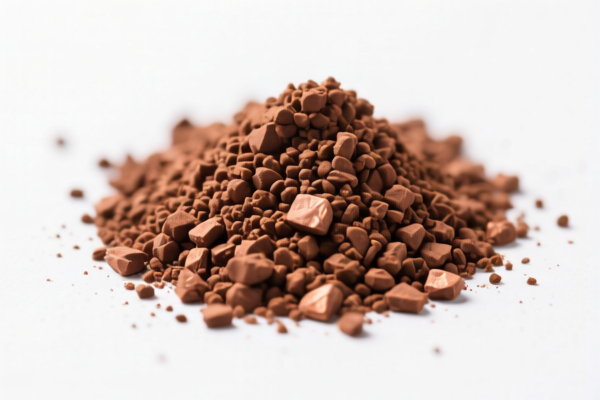
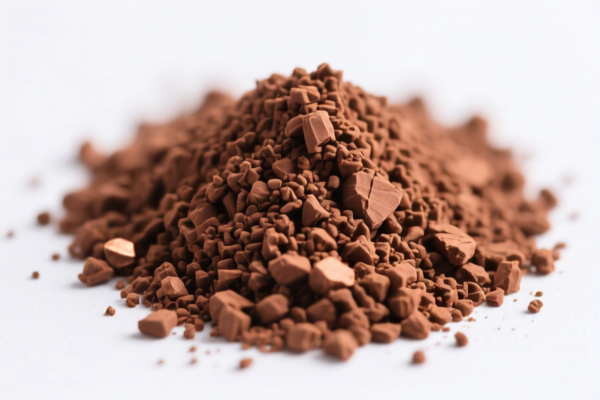
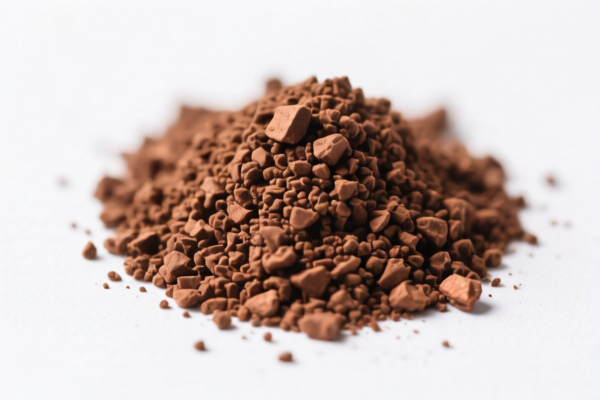
AI Analysis
🧪 Antioxidant Masterbatch (High-Performance Polymer Additive)
🌐 HS Code Reference & Customs Clearance Guide | 2024/2025 Latest Tariff Analysis | Professional Clearance Strategy
📌 1. Product Definition & Classification: What Exactly is "Antioxidant Masterbatch"?
Antioxidant Masterbatch is a specialized carrier resin mixed with high-concentration antioxidant additives. It is used to prevent the degradation of polymer materials (like PE, PP, PET) during processing and long-term use. In international trade, its classification is highly sensitive to its chemical nature, carrier type, and physical form.
⚠️ Key Distinction Point:
- If classified as a "Chemical Preparation/Mixture" → Focus on Chapter 38.
- If classified as a "Polymer/Forming Material" → Focus on Chapter 39.
- Critical Factor: Is it primarily a chemical additive or a polymer raw material? This determines the HS Code and the tariff burden.
📦 2. HS Code Classification Details (Based on Provided Data)
The following four HS Codes are derived from the specific characteristics of the Antioxidant Masterbatch. Each reflects a different customs interpretation of the product's primary function and material composition.
| HS Code | Product Description & Logic | Primary Classification Basis | Tax Rate Summary |
|---|---|---|---|
3824.99.55.00 |
High-Performance Antioxidant Masterbatch: Classified as a primary form masterbatch, falling under "Other Chemical Products and Preparations." | Chemical Preparation: Emphasizes the additive/chemical nature over the polymer carrier. | 38.7% |
3824.99.49.00 |
Antioxidant Masterbatch: Classified as a chemical product/preparation, fitting the logic of chemical mixtures/preparations. | Chemical Mixture: Broad classification for chemical products that don't fit specific additive codes. | 41.5% |
3901.90.90.00 |
Polyethylene Antioxidant Masterbatch: Material is polyethylene, form is masterbatch, fitting the classification of "Ethylene Polymers, Primary Forms." | Polymer (PE): Focuses on the carrier resin (Polyethylene) as the primary identity. | 41.5% |
3911.90.25.00 |
Polyethylene Antioxidant Masterbatch: Material is polyolefin-derived, form is masterbatch, fitting the classification of "Thermoplastic Resins." | Polymer (Polyolefin): Focuses on the thermoplastic/resin nature of the compound. | 41.1% |
🔍 Key Insight:
- Chapter 38 (3824...) is generally preferred for additives because it recognizes the functional aspect (antioxidant) rather than just the carrier (plastic).
- Chapter 39 (3901.../3911...) treats the product primarily as a plastic raw material (pellets/resin). This can lead to higher base tariffs in some contexts, though here the total tax is similar due to trade measures.
💰 3. 2024/2025 Latest Tariff Rate Breakdown (Including Additional Duties & Policy Surcharges)
✅ Applicable Country: USA (US)
✅ Origin: China (CN)
✅ Effective Time: Current trade war measures (Section 301 & IEEPA) apply.
🎯 1. 3824.99.55.00 —— High-Performance Antioxidant Masterbatch (Chemical Prep.)
| Item | Content |
|---|---|
| Base Tariff | 3.7% (Ad Valorem) |
| Section 301 Tariff (Add-on) | +25.0% |
| IEEPA Tariff (Section 122 / China Specific) | +10.0% |
| Total Tax Rate | 38.7% |
| Tax Calculation | CIF Value × 38.7% |
| De Minimis Exemption | ❌ Not Available (Denied for Chinese goods under these codes) |
| Legal Basis Path | HTSUS:3824.99.55 → Section 301: Footnote 9903.88.01 → IEEPA:9903.01.24 |
📌 Explanation:
- Base 3.7%: Standard MFN rate for "Other chemical products."
- +25% Section 301: Imposed on specific chemical preparations from China.
- +10% IEEPA: Additional surcharge for Chinese-origin goods under International Emergency Economic Powers Act.
- Total 38.7%: This is the lowest total tax rate among the options, making it the most cost-effective if customs accepts this classification.
🎯 2. 3824.99.49.00 —— Other Chemical Preparations
| Item | Content |
|---|---|
| Base Tariff | 6.5% (Ad Valorem) |
| Section 301 Tariff (Add-on) | +25.0% |
| IEEPA Tariff (Section 122 / China Specific) | +10.0% |
| Total Tax Rate | 41.5% |
| Tax Calculation | CIF Value × 41.5% |
| De Minimis Exemption | ❌ Not Available |
| Legal Basis Path | HTSUS:3824.99.49 → Section 301: Footnote 9903.88.01 → IEEPA:9903.01.24 |
📌 Note:
- Higher base rate (6.5%) compared to3824.99.55.00.
- Same additional duties.
- Use this only if3824.99.55.00is rejected due to specific product composition nuances.
🎯 3. 3901.90.90.00 —— Polyethylene Polymers (Masterbatch as PE Resin)
| Item | Content |
|---|---|
| Base Tariff | 6.5% (Ad Valorem) |
| Section 301 Tariff (Add-on) | +25.0% |
| IEEPA Tariff (Section 122 / China Specific) | +10.0% |
| Total Tax Rate | 41.5% |
| Tax Calculation | CIF Value × 41.5% |
| De Minimis Exemption | ❌ Not Available |
| Legal Basis Path | HTSUS:3901.90.90 → Section 301: Footnote 9903.88.01 → IEEPA:9903.01.24 |
📌 Warning:
- Classifying as PE polymer ignores the chemical additive function.
- Customs may challenge this if the antioxidant content is significant, arguing it’s not a "primary form" of PE but a compounded product.
🎯 4. 3911.90.25.00 —— Other Thermoplastic Resins (Polyolefin)
| Item | Content |
|---|---|
| Base Tariff | 6.1% (Ad Valorem) |
| Section 301 Tariff (Add-on) | +25.0% |
| IEEPA Tariff (Section 122 / China Specific) | +10.0% |
| Total Tax Rate | 41.1% |
| Tax Calculation | CIF Value × 41.1% |
| De Minimis Exemption | ❌ Not Available |
| Legal Basis Path | HTSUS:3911.90.25 → Section 301: Footnote 9903.88.01 → IEEPA:9903.01.24 |
📌 Note:
- Slightly lower total tax (41.1%) than other polymer codes, but still higher than the preferred Chapter 38 code (3824.99.55.00at 38.7%).
- Risk of reclassification to Chapter 38 remains.
🛠️ 4. Customs Clearance Practical Advice (Avoiding Pitfalls)
✅ 1. Documentation Checklist (Non-Negotiable)
| Document | Required | Description |
|---|---|---|
| ✅ Technical Data Sheet (TDS) | ✔️ | Must specify Antioxidant Content %, Carrier Resin Type (PE/PP), and Processing Temperature. |
| ✅ Certificate of Analysis (COA) | ✔️ | Confirms active ingredient concentration and purity. |
| ✅ Product Photos | ✔️ | Show packaging, labels, and physical form (pellets/powder). |
| ✅ Commercial Invoice | ✔️ | Clearly state "Antioxidant Masterbatch" AND "Chemical Preparation" in description. |
| ✅ Free Sale Certificate | ✔️ | From manufacturer, confirming legal sale in origin country. |
| ✅ Origin Certificate (CO) | ✔️ | To prove CN origin and apply correct trade war duties. |
✅ 2. Declaration Strategy (Key Tips)
🔥 "Declare Function, Not Just Form!"
| Scenario | Recommended HS Code | Reasoning | Risk |
|---|---|---|---|
| High Antioxidant Concentration (>5-10%) | 3824.99.55.00 |
Primary function is chemical protection, not polymer formation. | Low if documented well. |
| Low Concentration, Bulk Carrier | 3901.90.90.00 / 3911.90.25.00 |
Treated as a compounded resin for molding. | Medium-High risk of reclassification. |
| Unspecified Product Name | 3824.99.99.00 (Other) |
Generic fallback. | Very High risk of audit and penalties. |
📌 Crucial Point:
- Do NOT simply declare as "Plastic Pellets." This triggers Chapter 39 scrutiny.
- DO emphasize "Chemical Additive Masterbatch" or "Antioxidant Preparation."
- Provide TDS proving the active chemical ingredient is the defining feature.
✅ 3. Special Situations
| Situation | Handling Advice |
|---|---|
| OEM/Private Label | Provide both supplier and brand labels. Ensure chemical composition is identical. |
| Mixed Shipments | Separate Masterbatch from other plastics in declaration. Mixed shipments increase audit risk. |
| Sample vs. Commercial | Commercial shipments require full duty payment. Samples may use different values but same HS logic. |
| Dispute with Customs | File a Pre-Immigration Ruling (if possible) or Post-Entry Protest with chemical expert testimony. |
🌍 5. Global Market Comparison (2024/2025)
| Country/Region | Recommended HS Code | Est. Tariff (China Origin) | Key Certification | Notes |
|---|---|---|---|---|
| 🇺🇸 USA | 3824.99.55.00 |
38.7% (3.7% + 25% + 10%) | None specific, but TDS needed | High trade war burden. |
| 🇪🇺 EU | 3824.99.95 |
~6.5% + Local VAT | REACH Registration | No Section 301, but REACH compliance is strict. |
| 🇨🇳 China | 3824.99.99 |
~5-8% | CCC (if applicable) | Lower base tariffs, no trade war. |
| 🇬🇧 UK | 3824.99.99 |
~6.5% + Local VAT | UK REACH | Post-Brexit rules apply. |
📌 Conclusion:
- USA remains the most expensive market due to Section 301 + IEEPA.
- Diversification: Consider sourcing from Vietnam or Thailand (if origin rules allow) to avoid Chinese tariffs, but beware of anti-circumvention investigations.
📌 6. Common Errors & Pitfalls (Lessons Learned)
❌ Error 1: Declaring as "Plastic Granules" without chemical specs.
👉 Consequence: Customs reclassifies to 3901/3911, potentially increasing scrutiny or denying duty benefits.
❌ Error 2: Under-declaring value or mislabeling as "Sample."
👉 Consequence: Seizure, fines, and potential ban on future shipments.
❌ Error 3: Ignoring IEEPA 10% surcharge.
👉 Consequence: Unexpected 10% cost increase at border. Always calculate Total Tax = Base + 301 + IEEPA.
❌ Error 4: Providing vague product names like "Additive."
👉 Consequence: Customs requires additional documentation, delaying clearance by weeks.
✅ Correct Practice:
"Antioxidant Masterbatch (PE Carrier, Irganox 1010 Active, 20% Concentration), HS 3824.99.55.00, TDS Attached."
🎯 7. Conclusion: Precision in Classification Saves Money
🎯 Key Takeaways:
🔹 "Function Over Form": If it’s an antioxidant, fight for Chapter 38.
🔹 "38.7% is the Target":3824.99.55.00offers the lowest total tax rate (38.7%) among all options.
🔹 "Documents are King": TDS and COA are non-negotiable for successful clearance.
🔹 "Total Cost Matters": 3.7% Base + 25% Section 301 + 10% IEEPA = 38.7%. Plan your pricing accordingly!
📌 Pro Tip:
If your masterbatch contains phthalates or halogenated flame retardants, additional environmental regulations (TSCA, REACH) may apply. Ensure full chemical disclosure.
📣 Immediate Action:
📞 Contact a Licensed Customs Broker + Prepare TDS/COA + Confirm HS Code via Pre-Ruling
🚀 Ensure Smooth Clearance, Minimize Duty, Maximize Profit!
✨ Professional Clearance Starts with Accurate Classification!
💼 Your Bottom Line Depends on the First 8 Digits!
Customer Reviews
About HS Code Classification
The Harmonized System (HS) is an internationally standardized nomenclature developed by the World Customs Organization (WCO) to classify traded products. Over 200 countries use the HS system as the basis for customs tariffs, trade statistics, and import/export regulations.
Each HS code follows a hierarchical structure:
- Chapter (2 digits) — Broad category of goods (e.g., Chapter 84: Machinery and Mechanical Appliances)
- Heading (4 digits) — More specific grouping within the chapter
- Subheading (6 digits) — Internationally standardized breakdown, used by all WCO member countries
- National subdivisions (8-10 digits) — Country-specific extensions for further classification, such as US HTSUS 10-digit codes
Correct HS code classification is essential for smooth customs clearance, accurate duty payment, and compliance with trade regulations. Misclassification can lead to customs delays, overpayment of duties, or penalties.
When importing from CN to US, the applicable tariff rates may include:
- Most-Favored-Nation (MFN) rate — The standard duty rate applied to WTO members
- General rate — Applied to countries without trade agreements
- Trade remedy duties — Additional tariffs such as Section 301 (anti-dumping), Section 232 (national security), or countervailing duties
The information provided on this page is for reference purposes only. For official classification, please consult with your local customs authority or a licensed customs broker.