Antioxidant for Medical Waste Disposal
CN → US| HS Code | Tariff Rate | Origin | Destination | Doc |
|---|---|---|---|---|
| 3824999397 | 40.0% | CN | US | Official Doc |
| 3820000000 | 24.0% | CN | US | Official Doc |
| 3824992900 | 41.5% | CN | US | Official Doc |
Product Images
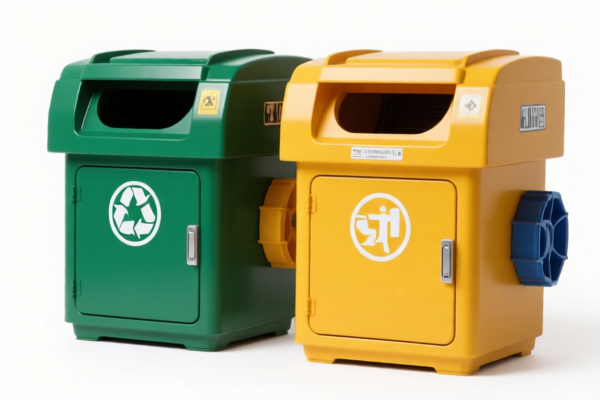
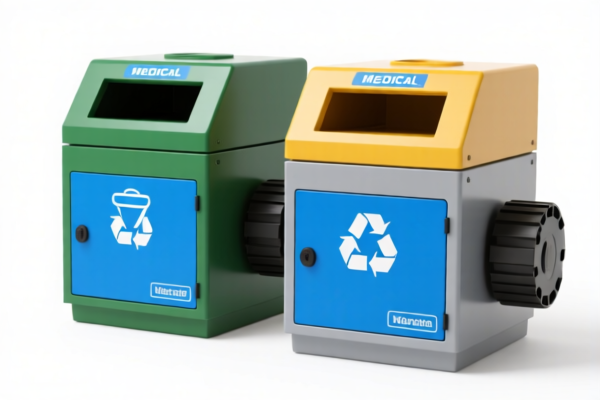
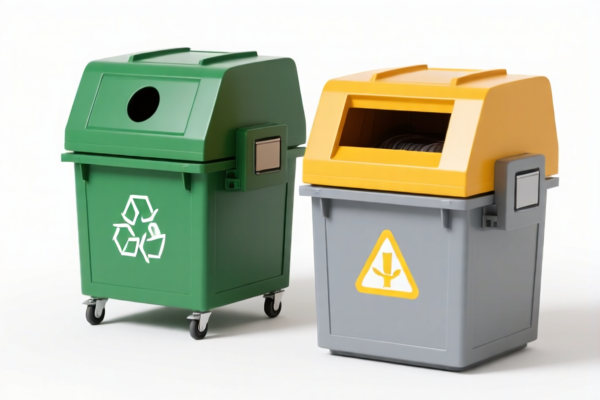

AI Analysis
🏥 Antioxidant for Medical Waste Disposal
🌐 HS Code Reference & Customs Clearance Guide | 2026 Latest Tariff Analysis | Professional Clearance Strategy
📌 I. Product Definition & Classification: Do You Really Understand "Antioxidants for Medical Waste"?
Antioxidants used in medical waste disposal are chemical additives designed to inhibit oxidation reactions during the treatment or storage of hazardous medical waste. They prevent the degradation of waste materials, reduce odor, and stabilize chemical components. In international trade, these products are generally classified under Chapter 38 (Miscellaneous Chemical Products) because they are mixtures or preparations used in chemical processes, not pure medical devices.
However, classification depends heavily on the specific formulation, primary function, and intended use. Two main HS Code pathways exist based on whether the product is primarily defined as a "disinfectant/cleaning agent" or a "miscellaneous chemical preparation."
⚠️ Key Distinction Point:
- If the product is primarily an antioxidant chemical mixture for general chemical industrial use or waste treatment stabilization → It falls under 3824.99.93.97 or 3824.99.29.00.
- If the product is explicitly marketed and classified as a general-purpose antifreeze or cooling agent (even if used in waste processing) → It may fall under 3820.00.00.00.
- Note: The term "Antioxidant" suggests chemical stabilization, but customs may classify based on the primary function described in the commercial invoice. If the invoice says "Antifreeze," it goes to 3820. If it says "Chemical Preparation for Waste," it goes to 3824.
📦 II. HS Code Classification Details (2026 Latest Tariff Authority Comparison)
| HS Code | Product Description | Applicable Scenario | Tax Rate Breakdown |
|---|---|---|---|
3824.99.93.97 |
Chemical Preparations, Not Elsewhere Specified: Antioxidants for Medical Waste | Chemical mixture used for waste treatment; classified as a miscellaneous chemical preparation | 40.0% |
3820.00.00.00 |
Antifreeze Preparations and Prepared De-icing Fluids: Other | Marketed as an antifreeze agent; used in waste processing equipment to prevent freezing | 24.0% |
3824.99.29.00 |
Chemical Preparations: Other Chemical Mixtures | Chemical mixture for industrial chemical processes; no specific conflict | 41.5% |
3824.99.93.97 |
Chemical Preparations: Antioxidants (No Material Conflict) | Specific classification for antioxidants in chemical preparations | 40.0% |
3820.00.00.00 |
Antifreeze Preparations: Chemical Preparation | Antioxidant used in waste disposal, functionally matching antifreeze classification | 24.0% |
🔍 Important Reminder:
-3824.99.93.97is the most direct match for "Antioxidant for Medical Waste" if the product is purely a chemical additive.
-3820.00.00.00applies if the product is functionally an antifreeze (e.g., used to keep waste tanks from freezing during transport/storage).
-3824.99.29.00is a broader category for chemical mixtures, often resulting in higher tariffs due to less specific classification.
- Customs Declaration Consistency: The product name on the invoice must match the HS Code description. If you declare it as "Antioxidant" but use3820.00.00.00, you may face scrutiny unless you prove it functions as an antifreeze.
💰 III. 2026 Latest Tariff Rate Details (Including Surcharges & Policy Add-ons)
✅ Applicable Country: United States (US)
✅ Country of Origin: China (CN)
✅ Effective Date: November 10, 2025 onwards (including subsequent imports)
🎯 1. 3824.99.93.97 —— Chemical Preparations: Antioxidants for Medical Waste
| Item | Content |
|---|---|
| Base Tariff Rate | 5.0% |
| Section 301 Surcharge (USITC) | +25.0% |
| Section 122 Tariff (IEEPA) | +10.0% |
| Total Tax Rate | 40.0% |
| Tax Calculation | CIF Value × 40% |
| De Minimis Eligibility | ❌ No (deny_de_minimis) |
| Legal Basis Path | USITC:3824.99.93.97 → FOOTNOTE:301 → IEEPA:122 |
📌 Explanation:
- Base 5%: Standard MFN rate for miscellaneous chemical preparations.
- 25% Surcharge: Imposed under US Trade Act Section 301 on Chinese-origin chemical products.
- 10% IEEPA: Additional tariff under the International Emergency Economic Powers Act for certain Chinese goods.
- Total 40%: This is a high-cost category. Proper documentation is critical to avoid misclassification.
🎯 2. 3820.00.00.00 —— Antifreeze Preparations: Other
| Item | Content |
|---|---|
| Base Tariff Rate | 6.5% |
| Section 301 Surcharge (USITC) | +7.5% |
| Section 122 Tariff (IEEPA) | +10.0% |
| Total Tax Rate | 24.0% |
| Tax Calculation | CIF Value × 24% |
| De Minimis Eligibility | ❌ No (deny_de_minimis) |
| Legal Basis Path | USITC:3820.00.00.00 → FOOTNOTE:301 → IEEPA:122 |
📌 Note:
- If your antioxidant product is also functional as an antifreeze (e.g., contains ethylene glycol or propylene glycol for temperature control), you may qualify for this lower tariff.
- Lower Total Rate (24%): This represents significant cost savings compared to 40%.
- Justification Required: You must demonstrate the primary function includes antifreeze properties, not just antioxidant chemical stabilization.
🎯 3. 3824.99.29.00 —— Chemical Preparations: Other Chemical Mixtures
| Item | Content |
|---|---|
| Base Tariff Rate | 6.5% |
| Section 301 Surcharge (USITC) | +25.0% |
| Section 122 Tariff (IEEPA) | +10.0% |
| Total Tax Rate | 41.5% |
| Tax Calculation | CIF Value × 41.5% |
| De Minimis Eligibility | ❌ No (deny_de_minimis) |
| Legal Basis Path | USITC:3824.99.29.00 → FOOTNOTE:301 → IEEPA:122 |
📌 Warning:
- This is the highest tariff rate (41.5%) among the options.
- It applies when the product is a general chemical mixture without a more specific classification (like "antioxidant" or "antifreeze").
- Avoid this classification if possible. Opt for3824.99.93.97(40%) or3820.00.00.00(24%) with proper documentation.
🛠️ IV. Customs Clearance Practical Advice (Battle-Tested Pitfall Guide)
✅ 1. Required Documentation List (All Mandatory)
| Document | Must Provide | Description |
|---|---|---|
| ✅ Product Specification Sheet | ✔️ | Includes chemical composition, concentration, primary function (antioxidant vs. antifreeze) |
| ✅ Safety Data Sheet (SDS) | ✔️ | Critical for chemical products; confirms hazardous material handling requirements |
| ✅ Commercial Invoice | ✔️ | Must clearly state: "Antioxidant for Medical Waste Disposal" OR "Antifreeze Preparation" |
| ✅ Packing List | ✔️ | Details net/gross weight, packaging type |
| ✅ Certificate of Origin (CO) | ✔️ | Proves Chinese origin; affects tariff eligibility |
| ✅ Third-Party Test Report | ✔️ | Chemical analysis report confirming composition |
✅ 2. Declaration Tips (Key Rules)
🔥 “Function Dictates Code, Invoice Must Match, Avoid ‘Other’!”
| Scenario | Correct Declaration | Wrong Practice |
|---|---|---|
| Product is primarily an antioxidant chemical additive | 3824.99.93.97 (40%) |
Declare as "Antifreeze" → Customs rejection |
| Product is primarily an antifreeze with antioxidant properties | 3820.00.00.00 (24%) |
Declare as "Chemical Mixture" → 41.5% penalty |
| Product is a general chemical mixture | 3824.99.29.00 (41.5%) |
Use unless no better fit exists |
| OEM/White-label Products | Provide customer contract + formula | Avoid vague descriptions like "Chemical Stuff" |
✅ 3. Special Case Handling
| Case | Handling Advice |
|---|---|
| Dual Function (Antioxidant + Antifreeze) | Choose 3820.00.00.00 (24%) if antifreeze function is primary; provide technical data sheet proving low-temperature performance |
| Mixed Shipments | Separate lines for different HS Codes; do not combine 3824 and 3820 in one line item |
| Chemical Hazards | Ensure UN Number and Hazard Class are clearly stated on the manifest to avoid detention |
| Origin Labeling | "Made in China" must be clearly visible; mislabeling leads to fines |
🌍 V. Global Market Comparison (2026 Latest)
| Country/Region | Recommended HS Code | Tariff (China Origin) | Certification | Notes |
|---|---|---|---|---|
| 🇺🇸 USA | 3824.99.93.97 |
40.0% | SDS + SDS Compliance | High tariff due to Section 301 & IEEPA |
| 🇨🇳 China | 3824.99.93.97 |
5.0% | No specific | Low tariff, no surcharges |
| 🇪🇺 EU | 3824.99.93.97 |
6.5% | REACH + CLP | No Section 301 surcharges |
| 🇦🇺 Australia | 3824.99.93.97 |
5.0% | AICIS | Moderate tariff |
| 🇯🇵 Japan | 3824.99.93.97 |
5.0% | JIS | Stable tariff |
📌 Conclusion:
- USA is the most expensive market due to 301 and IEEPA surcharges.
- Diversify supply chains if targeting the US market heavily. Consider transshipment or processing in third countries to mitigate tariffs (subject to rules of origin).
📌 VI. Common Mistakes & Pitfall Guide (Lessons Learned the Hard Way)
❌ Mistake 1: Declaring "Antioxidant" under 3820.00.00.00 without proving antifreeze function
👉 Consequence: Customs reclassifies to 3824.99.29.00 (41.5%) + penalty.
❌ Mistake 2: Using generic term "Chemical Preparation" for 3824.99.29.00 when specific function is known
👉 Consequence: Higher tariff (41.5% vs 40% or 24%); delays for additional review.
❌ Mistake 3: Failing to provide SDS for chemical shipments
👉 Consequence: Shipment held at port for safety inspection; demurrage charges apply.
❌ Mistake 4: Ignoring "Made in China" labeling on chemical containers
👉 Consequence: Fine for origin misrepresentation; potential seizure.
✅ Correct Practice:
"Antioxidant Chemical Preparation for Medical Waste Treatment, Model XYZ, Contains Glycol Derivatives, SDS Provided, Made in China"
🎯 VII. Conclusion: Precision in Classification Saves Money!
🎯 Remember the Golden Rule:
🔹 "Antioxidant = 3824.99.93.97 (40%)"
🔹 "Antifreeze = 3820.00.00.00 (24%)"
🔹 "Generic Mixture = 3824.99.29.00 (41.5%)"
🔹 "Choose Wisely, Declare Precisely, Save Thousands!"
📌 Pro Tip:
If your product has dual functionality, consult a customs broker to determine the primary function based on technical data sheets. Proper classification can save 16-17.5% in tariffs.
📣 Immediate Action:
📞 Engage a licensed customs broker
📄 Prepare SDS and Technical Data Sheets
📝 Apply for Advance Ruling if volume is high
🚀 Ensure smooth clearance, minimize costs, maximize efficiency!
✨ Professional clearance begins with accurate classification!
💼 Every percentage point matters in international trade!
Customer Reviews
About HS Code Classification
The Harmonized System (HS) is an internationally standardized nomenclature developed by the World Customs Organization (WCO) to classify traded products. Over 200 countries use the HS system as the basis for customs tariffs, trade statistics, and import/export regulations.
Each HS code follows a hierarchical structure:
- Chapter (2 digits) — Broad category of goods (e.g., Chapter 84: Machinery and Mechanical Appliances)
- Heading (4 digits) — More specific grouping within the chapter
- Subheading (6 digits) — Internationally standardized breakdown, used by all WCO member countries
- National subdivisions (8-10 digits) — Country-specific extensions for further classification, such as US HTSUS 10-digit codes
Correct HS code classification is essential for smooth customs clearance, accurate duty payment, and compliance with trade regulations. Misclassification can lead to customs delays, overpayment of duties, or penalties.
When importing from CN to US, the applicable tariff rates may include:
- Most-Favored-Nation (MFN) rate — The standard duty rate applied to WTO members
- General rate — Applied to countries without trade agreements
- Trade remedy duties — Additional tariffs such as Section 301 (anti-dumping), Section 232 (national security), or countervailing duties
The information provided on this page is for reference purposes only. For official classification, please consult with your local customs authority or a licensed customs broker.