Antistatic Fiber Reinforced Tape
CN → US| HS Code | Tariff Rate | Origin | Destination | Doc |
|---|---|---|---|---|
| 3919905020 | 40.8% | CN | US | Official Doc |
| 3926909989 | 22.8% | CN | US | Official Doc |
| 3926905500 | 40.1% | CN | US | Official Doc |
| 3919102010 | 40.8% | CN | US | Official Doc |
| 5603110070 | 35.0% | CN | US | Official Doc |
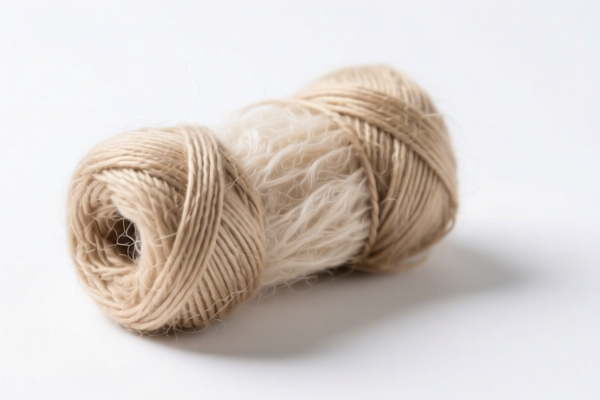
Product Images



AI Analysis
🧬 Antistatic Fiber Reinforced Tape (Adhesive & Nonwoven Types)
🌐 HS Code Reference & Customs Clearance Guide | 2026 Latest Tariff Analysis | Professional Strategy
📌 I. Product Definition & Classification: What Exactly Is "Antistatic Fiber Reinforced Tape"?
Antistatic Fiber Reinforced Tape is a specialized industrial material combining structural integrity (fiber reinforcement) with surface functionality (antistatic properties) and adhesive backing. In international trade, its classification depends heavily on its base material (plastic vs. textile/non-woven) and form factor (rolled tape vs. finished article).
⚠️ Critical Distinction:
- If the base is Plastic/Polymer with fiber reinforcement → It falls under Chapter 39 (Plastics).
- If the base is Non-woven Textile/Fiber → It may fall under Chapter 56 (Non-wovens).
- Antistatic Property is usually a surface treatment and does not change the HS code to a dedicated "antistatic" category unless it is a standalone component.
📦 II. HS Code Classification Details (2026 Latest Tariff Authority Mapping)
Based on the provided data, here are the precise classifications for different variations of Antistatic Fiber Reinforced Tape.
| HS Code | Product Description | Application Scenario | Key Characteristics |
|---|---|---|---|
3919.90.50.20 |
Fiber Reinforced Tape, Material & Form Matched | Structural sealing, industrial bundling | Plastic base + Fiber reinforcement + Adhesive tape form |
3926.90.99.89 |
Other Articles of Plastic and Other Materials, Inc. Fiber Reinforced Tape | General purpose plastic goods containing tape elements | Broader category; includes mixed-material制品 where tape is part of a larger assembly |
3926.90.55.00 |
Plastic Products Containing Textile Fibers, Tape Form | Decorative or specialized binding | Plastic base explicitly infused with textile fibers |
3919.10.20.10 |
Fiber Reinforced Roll-Type Self-Adhesive Tape, Material & Form Consistent | Industrial packaging, heavy-duty holding | Standard roll format, self-adhesive, fiber-reinforced plastic |
5603.11.00.70 |
Artificial Filament/Synthetic Fiber Nonwovens, Tape Application | ESD-safe packaging, lining, filtration | Non-woven fabric base (not woven), synthetic fibers, used for tape-like applications |
🔍 Key Insight:
- The majority of reinforced adhesive tapes (plastic + fiber) are classified under Chapter 39.
- If the tape is made entirely of non-woven synthetic fibers (no plastic film base), it falls under 5603.
- "Antistatic" is a functional feature; ensure the HS code reflects the material composition first.
💰 III. 2026 Latest Tariff Rate Breakdown (Including Surcharges & Policy Add-ons)
✅ Applicable Country: United States (US)
✅ Origin: China (CN)
✅ Effective Date: Post-November 10, 2025 (Includes subsequent imports)
🎯 1. 3919.90.50.20 & 3919.10.20.10 —— Fiber Reinforced Plastic Tape
| Item | Detail |
|---|---|
| Base Tariff | 5.8% (ad valorem) |
| Section 301 Surcharge | +25.0% |
| 122-Clause Tariff | +10.0% (Specific to certain Chinese imports) |
| Total Tax Rate | 40.8% |
| Calculation Basis | CIF Value × 40.8% |
| De Minimis Eligibility | ❌ No (Not eligible for $800 exemption) |
| Legal Basis Path | Base Tariff: 5.8% → Section 301: 25% → 122-Clause: 10% |
📌 Explanation:
- Base Tariff (5.8%): Standard US duty for plastic tapes.
- Section 301 (25%): The major trade war tariff on Chinese plastic products.
- 122-Clause (10%): Additional duty for specific Chinese-origin goods under recent executive orders.
- Total: 40.8% – This is a high-cost classification.
🎯 2. 3926.90.55.00 —— Plastic Products with Textile Fibers
| Item | Detail |
|---|---|
| Base Tariff | 5.1% |
| Section 301 Surcharge | +25.0% |
| 122-Clause Tariff | +10.0% |
| Total Tax Rate | 40.1% |
| Calculation Basis | CIF Value × 40.1% |
| De Minimis Eligibility | ❌ No |
| Legal Basis Path | Base Tariff: 5.1% → Section 301: 25% → 122-Clause: 10% |
📌 Note:
- Slightly lower than3919codes due to a lower base rate (5.1% vs 5.8%), but still heavily impacted by surcharges.
🎯 3. 3926.90.99.89 —— Other Plastic/Other Material Articles
| Item | Detail |
|---|---|
| Base Tariff | 5.3% |
| Section 301 Surcharge | +7.5% |
| 122-Clause Tariff | +10.0% |
| Total Tax Rate | 22.8% |
| Calculation Basis | CIF Value × 22.8% |
| De Minimis Eligibility | ❌ No |
| Legal Basis Path | Base Tariff: 5.3% → Section 301: 7.5% → 122-Clause: 10% |
📌 Key Advantage:
- This code has a lower Section 301 surcharge (7.5% vs 25%), resulting in a significantly lower total tax (22.8%).
- Strategy: If your product can be classified here (e.g., as a "mixed material article" rather than pure "tape"), it offers substantial savings.
🎯 4. 5603.11.00.70 —— Synthetic Fiber Nonwovens
| Item | Detail |
|---|---|
| Base Tariff | 0.0% |
| Section 301 Surcharge | +25.0% |
| 122-Clause Tariff | +10.0% |
| Total Tax Rate | 35.0% |
| Calculation Basis | CIF Value × 35.0% |
| De Minimis Eligibility | ❌ No |
| Legal Basis Path | Base Tariff: 0.0% → Section 301: 25% → 122-Clause: 10% |
📌 Note:
- Zero base tariff helps, but the 25% + 10% surcharges still make it expensive.
- Only applicable if the product is non-woven fabric used in tape form, not plastic film tape.
🛠️ IV. Customs Clearance Practical Advice (Avoiding Pitfalls)
✅ 1. Required Documentation Checklist
| Document | Mandatory? | Description |
|---|---|---|
| ✅ Product Specification Sheet | ✔️ | Must detail: Base material (Plastic vs. Non-woven), Fiber type, Antistatic rating, Adhesive type. |
| ✅ Composition Breakdown | ✔️ | Percentage of plastic, fiber, adhesive. Crucial for distinguishing 3919 (Tape) from 3926 (Article). |
| ✅ Photos (Labeled) | ✔️ | Clear view of roll, cross-section (showing fiber layers), and antistatic labeling. |
| ✅ Commercial Invoice | ✔️ | Must accurately reflect "Fiber Reinforced Tape" and origin (China). |
| ✅ Certificate of Origin | ✔️ | To confirm CN origin for surcharge calculation. |
✅ 2. Classification Strategy & Tips
🔥 "Material First, Form Second! Check Section 301 Rates!"
| Scenario | Recommended HS Code | Total Tax | Reasoning |
|---|---|---|---|
| Plastic Film + Fiber + Adhesive (Standard Tape) | 3919.90.50.20 or 3919.10.20.10 |
40.8% | Most common classification for reinforced plastic tape. |
| Plastic Product with Fiber (Not strictly "Tape" form) | 3926.90.99.89 |
22.8% | Best for Savings! If product can be argued as "other article" (e.g., coated fabric strips), use this to save ~18%. |
| Plastic with Textile Fibers Embedded | 3926.90.55.00 |
40.1% | Specific for plastic-textile composites. Higher base than 3926.99 but same surcharges. |
| Non-Woven Synthetic Fiber Mat/Sheet | 5603.11.00.70 |
35.0% | Only if no plastic film is present. Base material is synthetic non-woven. |
📌 Critical Warning:
- Do not misdeclare plastic tape as non-woven (5603) to avoid duties if it contains plastic film. This is a common red flag for CBP.
- Antistatic property does not warrant a separate HS code. It is a feature, not a classification basis.
✅ 3. Special Cases
| Situation | Handling Advice |
|---|---|
| Custom OEM Tape | Provide client design + material spec. Avoid vague terms like "industrial tape." Use "Fiber-Reinforced Self-Adhesive Plastic Tape." |
| Mixed Shipment (Tape + Non-Tape Parts) | Do not split if sold as a unit. Declare as the principal component. If separate, classify individually. |
| ESD-Specific Use (Electronics) | Still classified by material. If used in electronics, mention in description but keep HS based on composition. |
🌍 V. Global Market Comparison (2026 Latest)
| Country/Region | Recommended HS Code | Tariff (China Origin) | Certification | Notes |
|---|---|---|---|---|
| 🇺🇸 USA | 3919.90.50.20 / 3926.90.99.89 |
22.8% – 40.8% | None specific | High surcharges due to Section 301 & 122-Clause. |
| 🇨🇳 China | 3919.90 / 3926.90 |
~5-8% | CCC (if applicable) | Lower import duties. |
| 🇪🇺 EU | 3919.90 / 3926.90 |
~6.5% | REACH | No Section 301 equivalent, but VAT applies. |
| 🇬🇧 UK | 3919.90 / 3926.90 |
~6.5% | UKCA | Post-Brexit rules apply. |
| 🇦🇺 Australia | 3919.90 / 3926.90 |
~5% | A-TEX | No major surcharges. |
📌 Conclusion:
- USA is the most challenging market due to the 25% + 10% surcharges.
- EU/UK/AU offer much better tax efficiency for Chinese-origin goods.
- Consider supply chain diversification (e.g., producing in Vietnam/Mexico) to avoid US surcharges if volume is high.
📌 VI. Common Mistakes & Pitfalls (Lessons Learned)
❌ Mistake 1: Classifying plastic-reinforced tape as 5603 (Non-woven)
👉 Consequence: Rejected by CBP, penalties, delays. Plastic film presence mandates Chapter 39.
❌ Mistake 2: Ignoring the "122-Clause" 10% surcharge
👉 Consequence: Underpaid duties by 10%, leading to audits and back-taxes.
❌ Mistake 3: Declaring "Antistatic Tape" without material detail
👉 Consequence: CBP may assign a default, often higher, tariff code.
❌ Mistake 4: Splitting "Tape" and "Fiber" in invoice if they are integrated
👉 Consequence: Misclassification risk. Declare as a composite product.
✅ Correct Practice:
"Fiber-Reinforced Self-Adhesive Tape, Polypropylene Base, Glass Fiber Reinforced, Antistatic Surface Treatment, Roll Form, CN Origin"
🎯 VII. Conclusion: Smart Classification, Cost Savings!
🎯 Remember the Key Rules:
🔹 "Plastic + Fiber = Chapter 39"
🔹 "Non-Woven Fiber = Chapter 56"
🔹 "Check Section 301 & 122-Clause Rates: 25% + 10% adds up!"
🔹 "Try for3926.90.99.89(22.8%) if possible to save vs.3919(40.8%)."
📌 Pro Tip:
If your Antistatic Fiber Reinforced Tape is used in semiconductor or cleanroom applications, ensure you have cleanroom certification documents. While it doesn't change the HS code, it speeds up customs inspection for high-value industrial goods.
📣 Take Action Now:
📞 Consult a licensed customs broker for a Pre-Ruling on your specific material composition.
🚀 Optimize your HS Code to3926.90.99.89if possible to save 18% in duties!
✨ Professional Clearance Starts with Accurate Classification!
💼 Every Percent Saved is Pure Profit!
Customer Reviews
About HS Code Classification
The Harmonized System (HS) is an internationally standardized nomenclature developed by the World Customs Organization (WCO) to classify traded products. Over 200 countries use the HS system as the basis for customs tariffs, trade statistics, and import/export regulations.
Each HS code follows a hierarchical structure:
- Chapter (2 digits) — Broad category of goods (e.g., Chapter 84: Machinery and Mechanical Appliances)
- Heading (4 digits) — More specific grouping within the chapter
- Subheading (6 digits) — Internationally standardized breakdown, used by all WCO member countries
- National subdivisions (8-10 digits) — Country-specific extensions for further classification, such as US HTSUS 10-digit codes
Correct HS code classification is essential for smooth customs clearance, accurate duty payment, and compliance with trade regulations. Misclassification can lead to customs delays, overpayment of duties, or penalties.
When importing from CN to US, the applicable tariff rates may include:
- Most-Favored-Nation (MFN) rate — The standard duty rate applied to WTO members
- General rate — Applied to countries without trade agreements
- Trade remedy duties — Additional tariffs such as Section 301 (anti-dumping), Section 232 (national security), or countervailing duties
The information provided on this page is for reference purposes only. For official classification, please consult with your local customs authority or a licensed customs broker.