Anvil Pruner Shear
CN → US| HS Code | Tariff Rate | Origin | Destination | Doc |
|---|---|---|---|---|
| 8201500000 | 0.0% | CN | US | Official Doc |
| 8201600000 | 0.0% | CN | US | Official Doc |
| 8213006000 | 0.0% | CN | US | Official Doc |
| 8213009000 | 0.0% | CN | US | Official Doc |
Product Images
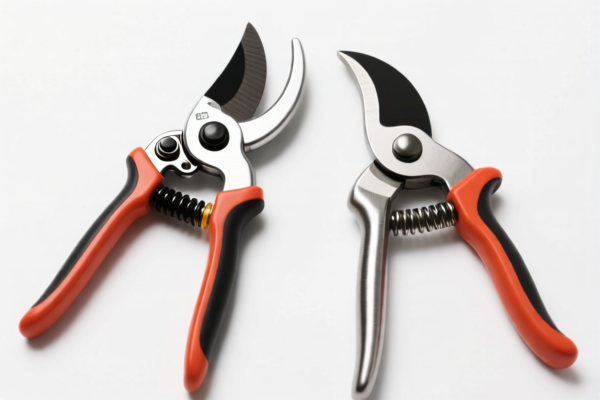
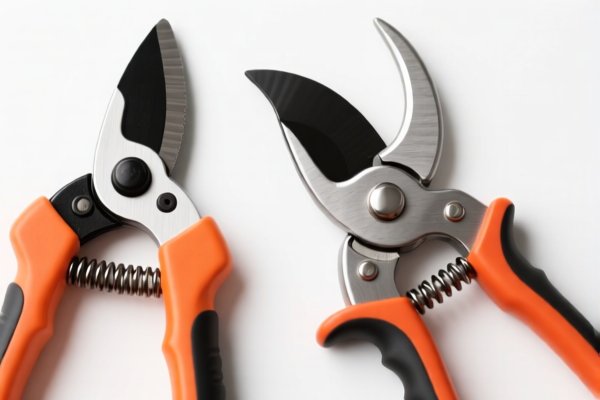
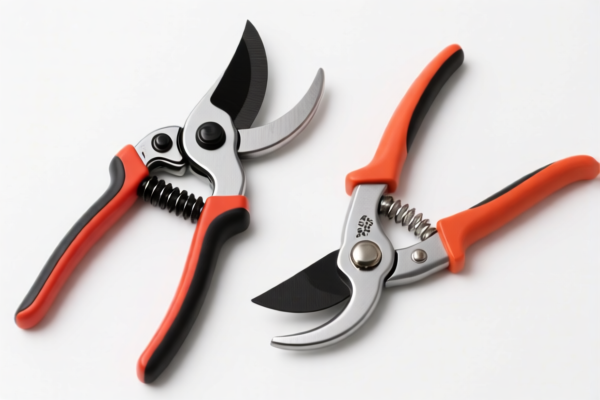

AI Analysis
✂️ Anvil Pruner Shears (Garden Hand Tools)
🌐 HS Code Reference & Customs Clearance Guide | 2026 Latest Tariff Analysis | Professional Clearance Strategy for Hand Pruners
📌 I. Product Definition & Classification: Do You Really Understand "Anvil Pruners"?
Anvil Pruner Shears are essential garden hand tools used for pruning small branches, stems, and twigs. Unlike bypass pruners (which cut like scissors), anvil pruners work by pressing the blade against a flat metal plate (the "anvil"). They are categorized under Chapter 82 (Articles of Base Metal) and specifically within headings for hand tools and scissors.
In international trade, precise classification is critical because tax rates vary significantly based on whether the tool is classified as a general "pruning shear" or a generic "scissor-like" device. Below is the breakdown based on the provided data.
⚠️ Key Distinction Point:
- If the tool is specifically designed for gardening/pruning (blunt tip, safety lock, ergonomic handle for garden use) → Likely 8201.60 or 8201.50.
- If the tool is a general-purpose metal cutting scissor (similar to tailor’s scissors) → Likely 8213.00.
- Note: "Anvil" mechanism does not automatically exclude it from Chapter 82; it is still a "hand-operated tool."
📦 II. HS Code Classification Details (2026 Latest Tariff Reference)
| HS Code | Product Description | Application Scenario | Key Characteristics |
|---|---|---|---|
8201.50.00.00 |
Hand Pruners (Single-Hand Operated) | Gardening, trimming small branches, fruit trees | Blunt tip, single-hand squeeze action, often includes safety lock |
8201.60.00.00 |
Pruning Shears in Gardening Hand Tools | Professional horticulture, vineyard pruning | May include loppers or heavier-duty pruning variants under "gardening hand tools" |
8213.00.60.00 |
Scissors, Tailor’s Scissors & Similar | General household, fabric cutting, craft work | Sharp points, scissor-like pivot, not specifically "gardening" design |
8213.00.90.00 |
Other Scissors of Base Metal (Fallback Category) | Miscellaneous metal cutting tools | Generic "catch-all" for scissors not specifically listed elsewhere |
🔍 Critical Reminder:
- Gardening tools (even if metal) are often preferred for lower additional tariffs if classified under 8201.
- General scissors (8213) may face no Section 301 additional tariff (25%) but have higher base duties and 122 Clause tariffs.
- Misclassification Risk: Declaring a gardening pruner as "scissors" to avoid high Section 301 tariffs can lead to customs audits, penalties, or retroactive duty assessments.
💰 III. 2026 Latest Tariff Rate Breakdown (Including Supplementary Taxes & Policy Surcharges)
✅ Applicable Country: USA (US)
✅ Origin: China (CN)
✅ Effective Date: As per current trade rules (2025–2026)
🎯 1. 8201.50.00.00 —— Hand Pruners (Single-Hand Operated)
| Item | Detail |
|---|---|
| Product Summary | 单手操作的修枝剪 (Single-hand operated pruning shears) |
| Base Tariff | 1¢ each + 2.8% (ad valorem) |
| Section 301 Additional Tariff | +25.0% (High Section 301 duty for Chapter 82) |
| Section 122 Tariff | +10.0% |
| Total Effective Rate | 1¢ each + 2.8% + 35.0% (25% + 10%) |
| De Minimis Exemption? | ❌ No (Deny de minimis for these codes) |
| Legal Basis Path | USITC:8201.50.00.00 → Section 301: Footnote 9903.88.01 → Section 122: 10% |
📌 Explanation:
- Base Duty: 2.8% + 1¢/unit.
- Section 301 (25%): Applies because hand tools like pruning shears are often targeted in US-China trade tensions.
- Section 122 (10%): Applies to specific steel/aluminum products or tools under trade remedy laws.
- Total Surcharge: 35% on top of base duty.
- Impact: High tariff burden. Must declare accurately as "gardening tool" to avoid being miscategorized.
🎯 2. 8201.60.00.00 —— Pruning Shears in Gardening Hand Tools
| Item | Detail |
|---|---|
| Product Summary | 园艺类手工具中的修剪剪刀 (Pruning shears in gardening hand tools) |
| Base Tariff | 1¢ each + 2.8% |
| Section 301 Additional Tariff | +25.0% |
| Section 122 Tariff | +10.0% |
| Total Effective Rate | 1¢ each + 2.8% + 35.0% |
| De Minimis Exemption? | ❌ No |
| Legal Basis Path | USITC:8201.60.00.00 → Section 301 → Section 122 |
📌 Note:
- Identical tax structure to8201.50.
- Use this code if the tool is part of a set of gardening hand tools or has specific horticultural design features.
- Same high tariff risk.
🎯 3. 8213.00.60.00 —— Scissors, Tailor’s Scissors & Similar
| Item | Detail |
|---|---|
| Product Summary | 剪刀、裁缝剪及类似剪刀 (Scissors, tailor’s scissors, and similar) |
| Base Tariff | 8¢ each + 8% |
| Section 301 Additional Tariff | 0.0% (Often exempt from Section 301 if not considered "industrial/hand tools" under 8201) |
| Section 122 Tariff | +10.0% |
| Total Effective Rate | 8¢ each + 8% + 10.0% |
| De Minimis Exemption? | ❌ No |
| Legal Basis Path | USITC:8213.00.60.00 → Section 122 |
📌 Advantage:
- No 25% Section 301 tariff!
- Lower total surcharge: Only 10% vs. 35%.
- Risk: If U.S. Customs determines the item is clearly a gardening pruner (not scissors), they may reclassify it to 8201, leading to back taxes + penalties.
- Use Only If: The product resembles standard office/scissor-style cutters and lacks specific "gardening" features.
🎯 4. 8213.00.90.00 —— Other Scissors of Base Metal (Fallback)
| Item | Detail |
|---|---|
| Product Summary | 金属材质的剪刀类兜底类目 (Fallback category for metal scissors) |
| Base Tariff | 3¢ each + 3% |
| Section 301 Additional Tariff | 0.0% |
| Section 122 Tariff | +10.0% |
| Total Effective Rate | 3¢ each + 3% + 10.0% |
| De Minimis Exemption? | ❌ No |
| Legal Basis Path | USITC:8213.00.90.00 → Section 122 |
📌 Strategy:
- Lowest total tariff: Only 13% (3% base + 10% 122).
- High Risk: This is a fallback code. Customs officers are likely to question this classification for a dedicated pruning tool.
- Recommendation: Only use if the product is generic, non-branded, and clearly resembles household scissors rather than professional garden tools.
🛠️ IV. Customs Clearance Practical Advice (Avoid Pitfalls)
✅ 1. Documentation Checklist (Essential)
| Document | Required? | Notes |
|---|---|---|
| ✅ Product Specification Sheet | ✔️ | Include: Type (Anvil vs. Bypass), Handle Material, Blade Material, Intended Use (Gardening vs. General) |
| ✅ Photos (Labeled) | ✔️ | Show entire tool, blade edge, handle grip, safety lock (if any) |
| ✅ Commercial Invoice | ✔️ | Clearly state: "Garden Pruning Shears" or "Scissors" – Do not use vague terms |
| ✅ Packing List | ✔️ | Itemize quantity, weight, and dimensions |
| ✅ Origin Certificate | ✔️ | If claiming non-China origin (e.g., Vietnam), provide proof |
| ✅ Third-Party Test Report | Optional | If claiming specific safety standards (e.g., OSHA, CE) |
✅ 2. Declaration Strategy (Key Rules)
🔥 "Match Product to Code, Don’t Guess!"
| Scenario | Recommended HS Code | Risk Level |
|---|---|---|
| Professional Garden Pruner (blunt tip, ergonomic handle, labeled "Garden") | 8201.50.00.00 or 8201.60.00.00 |
✅ Safe (Higher tax, but correct) |
| Household Scissors (sharp points, metal handles, no garden branding) | 8213.00.60.00 |
⚠️ Medium (Avoids 301, but must justify) |
| Generic Metal Cutting Tool (no specific design) | 8213.00.90.00 |
❌ High (Likely to be reclassified) |
📌 Warning:
- Do NOT declare a garden pruner as "scissors" unless it genuinely lacks gardening-specific features. U.S. Customs uses algorithmic checks and physical inspections to detect misclassification.
- Penalty for Misclassification: Back payment of 25% difference + interest + potential fines (up to 3x duty).
✅ 3. Special Circumstances
| Situation | Recommendation |
|---|---|
| OEM Branding | If branded for a garden retailer (e.g., "Gardena," "Fiskars"), use 8201 codes. |
| Multi-Tool (Pruner + Screwdriver) | Declare as "Garden Hand Tool Set" under 8201. |
| Plastic Handles + Metal Blades | Still classified under 82 (base metal article) if metal is the essential character. |
| Small Quantity (< $800) | De Minimis (Section 321) does NOT apply to these codes due to Section 301/122 exclusions. |
🌍 V. Global Market Comparison (2026)
| Country/Region | Recommended HS Code | Duty Rate (China Origin) | Notes |
|---|---|---|---|
| 🇺🇸 USA | 8201.50.00.00 |
35% + Base | High Section 301 duty. |
| 🇺🇸 USA (Scissors) | 8213.00.60.00 |
10% + Base | Lower tax, but high misclassification risk. |
| 🇪🇺 EU | 8201.50.00 |
2.5% + 0% Surcharge | No Section 301. Lower overall cost. |
| 🇨🇳 China | 8201.50 |
5–10% | Domestic import duty. |
| 🇬🇧 UK | 8201.50 |
2.5% + 0% | Post-Brexit, similar to EU. |
📌 Conclusion:
- USA is the most expensive market for pruning shears due to Section 301 tariffs.
- EU/UK offer lower duties but require CE/UKCA certification.
- Consider supply chain shift to Vietnam/Mexico to avoid Section 301 if targeting the US market.
📌 VI. Common Mistakes & Pitfalls (Lessons Learned)
❌ Mistake 1: Declaring "Garden Pruners" as "Kitchen Scissors"
👉 Consequence: Customs reclassifies → 25% penalty + back taxes.
❌ Mistake 2: Assuming "De Minimis" applies to <$800 shipments
👉 Consequence: Section 301 duties still apply even for small parcels. No exemption.
❌ Mistake 3: Using vague descriptions like "Cutting Tool"
👉 Consequence: Customs flags for manual review → Delay in clearance.
❌ Mistake 4: Ignoring Section 122 Tariff (10%)
👉 Consequence: Underpayment → Audit and penalties.
✅ Correct Approach:
"Anvil Pruning Shears, Garden Hand Tool, Stainless Steel Blade, Plastic Handle, Model: AP-100"
🎯 VII. Conclusion: Professional Declaration, Cost Savings!
🎯 Remember:
🔹 "Garden Pruners = 8201 = High Tax (35%) but Safe."
🔹 "Scissors = 8213 = Low Tax (10%) but Risky."
🔹 "De Minimis Does NOT Apply to These Codes!"
📌 Pro Tip:
If you are shipping small quantities (<$800), consult a customs broker to confirm if any exemptions apply. For bulk imports, consider HTS pre-ruling from U.S. Customs to lock in classification.
📣 Action Steps:
📞 Contact a Licensed Customs Broker
🖼️ Provide Clear Product Photos
📄 Apply for HTS Pre-Ruling (if high value)
🚀 Ensure Smooth Clearance & Maximize Profit Margins!
✨ Professional Classification Saves Thousands!
💼 Every Dollar of Duty Counts!
Customer Reviews
About HS Code Classification
The Harmonized System (HS) is an internationally standardized nomenclature developed by the World Customs Organization (WCO) to classify traded products. Over 200 countries use the HS system as the basis for customs tariffs, trade statistics, and import/export regulations.
Each HS code follows a hierarchical structure:
- Chapter (2 digits) — Broad category of goods (e.g., Chapter 84: Machinery and Mechanical Appliances)
- Heading (4 digits) — More specific grouping within the chapter
- Subheading (6 digits) — Internationally standardized breakdown, used by all WCO member countries
- National subdivisions (8-10 digits) — Country-specific extensions for further classification, such as US HTSUS 10-digit codes
Correct HS code classification is essential for smooth customs clearance, accurate duty payment, and compliance with trade regulations. Misclassification can lead to customs delays, overpayment of duties, or penalties.
When importing from CN to US, the applicable tariff rates may include:
- Most-Favored-Nation (MFN) rate — The standard duty rate applied to WTO members
- General rate — Applied to countries without trade agreements
- Trade remedy duties — Additional tariffs such as Section 301 (anti-dumping), Section 232 (national security), or countervailing duties
The information provided on this page is for reference purposes only. For official classification, please consult with your local customs authority or a licensed customs broker.