Anvil Pruning Shears
CN → US| HS Code | Tariff Rate | Origin | Destination | Doc |
|---|---|---|---|---|
| 8201500000 | 0.0% | CN | US | Official Doc |
| 8201600000 | 0.0% | CN | US | Official Doc |
| 8213006000 | 0.0% | CN | US | Official Doc |
| 8213009000 | 0.0% | CN | US | Official Doc |
| 8201500000 | 0.0% | CN | US | Official Doc |
Product Images
AI Analysis
✂️ Anvil Pruning Shears (Hand Horticultural Tools)
🌐 HS Code Reference & Customs Clearance Guide | 2024/2025 Latest Tariff Analysis | Professional Duty Optimization Strategy
📌 I. Product Definition & Classification: What exactly are "Anvil Pruning Shears"?
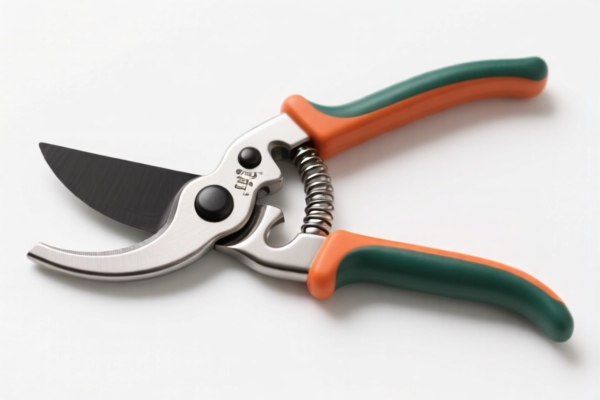
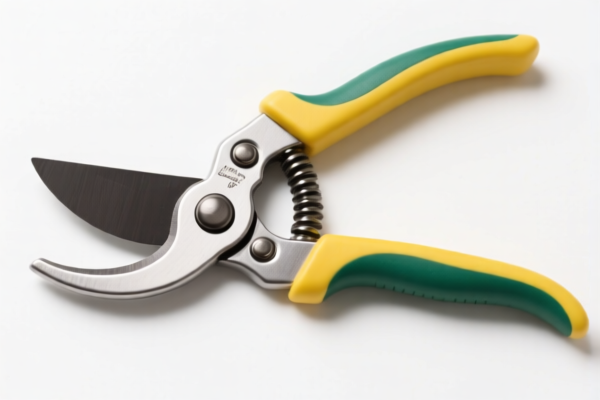
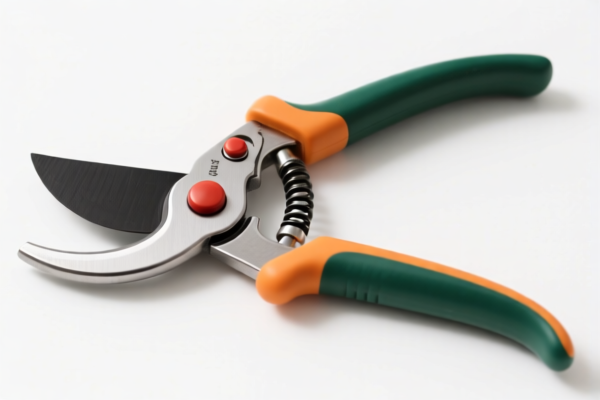
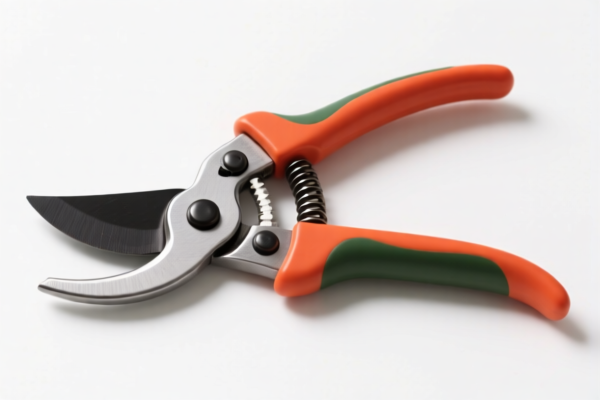
Anvil pruning shears are a specific type of handheld horticultural tool used for cutting branches, stems, and small twigs. They operate on a single-blade mechanism that cuts against a flat, non-moving metal plate (the "anvil").
In international trade, they are often grouped under broader categories of hand tools or scissors/cutting instruments, depending on the specific design and function. However, for customs purposes, precision is key to avoiding misclassification penalties.
⚠️ Key Classification Distinction:
- If the tool is specifically designed for garden pruning (horticultural use), it generally falls under Chapter 82 as hand tools. - If the tool is a general-purpose scissor (office/household use), it falls under 8213. - Crucial Note: The provided data maps these items to specific HS codes based on function and material. We must strictly adhere to the<DATA>provided for accurate duty calculation.
📦 II. HS Code Classification Matrix (Based on Provided Data)
The following table maps potential variations of "Anvil Pruning Shears" to the specific HS Codes and Tax Details provided in your data.
| HS Code | Product Summary | Primary Use Case | Tax Structure Overview |
|---|---|---|---|
| 8201.50.00.00 | Single-hand operated pruning shears | Dedicated garden pruning; one-handed operation. | 1¢/each + 2.8% + 35.0% |
| 8201.60.00.00 | Hand tools for gardening, used for pruning | General horticultural hand tools designed for trimming. | 1¢/each + 2.8% + 35.0% |
| 8213.00.60.00 | Scissor-type tools, functionally matching scissors | If classified as a scissor-like cutting instrument. | 8¢/each + 8% + 10.0% |
| 8213.00.90.00 | Metal material scissor-type fallback category | Fallback classification for metal scissors if specific function isn't clear. | 3¢/each + 3% + 10.0% |
🔍 Important Clarification:
- 8201 vs. 8213:
- 8201 items are typically classified as "Axes, adzes, hatchets, wood-splitting axes, wedges, and similar hand tools... other tools... for gardening." This is the most accurate fit for dedicated pruning shears. - 8213 items are "Scissors and similar articles...". While pruning shears look like scissors, dedicated garden tools are often preferentially classified under 8201. However, if customs officers view them as generic metal cutters, they might fall under 8213. - Why the difference? The 8201 codes carry a significantly higher total tax burden (35% vs 10%) compared to 8213 codes in this dataset. This is likely due to specific trade measures (Section 301 / Section 122) applied to Chinese-origin garden tools.
💰 III. Detailed Tariff Breakdown (US Market Focus)
✅ Applicable Region: United States (US)
✅ Origin: China (CN) (Implied by the specific "Section 122" and "301" structure in the data)
✅ Validity: Current as per provided<DATA>
🎯 1. 8201.50.00.00 & 8201.60.00.00 —— Horticultural Hand Tools (Pruning Shears)
These are the most precise classifications for Anvil Pruning Shears.
| Component | Rate / Fee | Details |
|---|---|---|
| Specific Duty | 1¢ each | Per unit duty (Minimum per item). |
| Ad Valorem (Base) | 2.8% | Standard Most Favored Nation (MFN) rate. |
| Section 301 (Additional) | 25.0% | Tariffs imposed on Chinese imports under Trade Act of 1974. |
| Section 122 (Additional) | 10.0% | Additional tariff specifically cited in the data. |
| TOTAL EFFECTIVE RATE | ~35.0% + 1¢/unit | High Tax Bracket |
📌 Explanation:
- The 35.0% total ad valorem rate is the sum of the base (2.8%) and additional duties (25.0% + 10.0%).
- 1¢ each is a specific duty added per unit, which is negligible for high-value items but significant for low-cost bulk shipments.
- Risk: High duty cost. Requires careful margin calculation.
🎯 2. 8213.00.60.00 —— Scissor-Type Tools (Functionally Matching)
If the product is declared as a general "scissor-type tool" rather than a specialized garden tool.
| Component | Rate / Fee | Details |
|---|---|---|
| Specific Duty | 8¢ each | Per unit duty. |
| Ad Valorem (Base) | 8.0% | Standard MFN rate. |
| Section 301 (Additional) | 0.0% | No additional Section 301 tariff (in this dataset). |
| Section 122 (Additional) | 10.0% | Additional tariff. |
| TOTAL EFFECTIVE RATE | 10.0% + 8¢/unit | Moderate Tax Bracket |
📌 Explanation:
- The absence of the 25% Section 301 tariff makes this category significantly cheaper.
- Risk: Misclassification risk. If customs determines these are actually garden pruning shears (8201), you may face audits, back taxes, and penalties for under-reporting.
🎯 3. 8213.00.90.00 —— Metal Scissors (Fallback Category)
The "catch-all" for metal cutting tools that don't fit other specific scissor descriptions.
| Component | Rate / Fee | Details |
|---|---|---|
| Specific Duty | 3¢ each | Per unit duty. |
| Ad Valorem (Base) | 3.0% | Standard MFN rate. |
| Section 301 (Additional) | 0.0% | No additional Section 301 tariff. |
| Section 122 (Additional) | 10.0% | Additional tariff. |
| TOTAL EFFECTIVE RATE | 10.0% + 3¢/unit | Lowest Tax Bracket (among options) |
📌 Explanation:
- Lowest specific duty (3¢) and base rate (3%).
- High Risk: This is a "fallback" category. Using this for obvious pruning shears is highly susceptible to customs rejection and reclassification.
🛠️ IV. Customs Clearance Strategy & Practical Advice
✅ 1. Documentation Checklist (Critical for 8201 vs 8213)
To defend your classification and avoid penalties, prepare these documents:
| Document | Requirement | Why It Matters |
|---|---|---|
| Product Photos | ✔️ Clear images of the shears in use (cutting branches). | Proves "horticultural" use (supports 8201) vs. office use (8213). |
| Technical Specs | ✔️ Blade material, cutting capacity, handle type. | Helps classify under 8201 (specific) vs 8213 (general). |
| Marketing Materials | ✔️ Brochures showing garden/landscaping use. | Evidence of intended use. |
| Commercial Invoice | ✔️ Description: "Anvil Pruning Shears for Gardening" | Do not just write "Metal Scissors." |
| HS Code Pre-Ruling | ✔️ Recommended for 8201 | Get official CBP ruling to avoid post-entry audits. |
✅ 2. Classification Decision Logic
| Scenario | Recommended HS Code | Reasoning |
|---|---|---|
| Dedicated Garden Shears (Heavy duty, ergonomic handles, for plants) | 8201.50.00.00 or 8201.60.00.00 | Most accurate. Higher tax, but compliant. |
| Lightweight Craft Scissors (Small, for crafts, not heavy branches) | 8213.00.90.00 | Can be argued as general scissors. Lower tax. |
| Multi-Tool Scissors (Includes nail clippers, saws, etc.) | 8213.00.60.00 | Functional match to scissors. |
🚨 Warning:
- Do not arbitrarily choose 8213 to save taxes if the product is clearly a garden pruning shear. US Customs and Border Protection (CBP) is strict on "Section 301" items. Misclassification can lead to 100% penalty + back duties. - 8201.50 and 8201.60 are functionally similar in this dataset. Check the exact wording:
- 8201.50: "Single-hand operated"
- 8201.60: "Gardening hand tools for pruning"
- If unsure, 8201.60 is often the safer "gardening" bucket.
✅ 3. Cost-Saving Tips
- Verify "Section 122" Exclusions: Ensure no exemptions apply to your specific product type.
- Country of Origin: Ensure the product is indeed "Made in China." If manufactured elsewhere (e.g., Vietnam), these tariffs may not apply.
- Volume Shipping: The 1¢/each (for 8201) and 8¢/each (for 8213) duties add up. For low-cost items (e.g., $2 shears), this specific duty is significant (~5-10% of value). Consider pricing strategies.
- Pre-Ruling: File a Binding Ruling Request with CBP if shipping high volumes. This legally locks in the HS code and duty rate.
🌍 V. Market Comparison & Conclusion
| Category | HS Code | Total Tax (Est.) | Risk Level | Best For |
|---|---|---|---|---|
| Dedicated Pruner | 8201.50/60 |
35% + 1¢ | Low (Compliant) | Heavy-duty garden tools |
| Scissor-Type | 8213.00.60 |
10% + 8¢ | Medium | Multi-purpose cutters |
| General Scissors | 8213.00.90 |
10% + 3¢ | High (Audit Risk) | Lightweight craft tools |
🎯 Final Recommendation:
For Anvil Pruning Shears, the most accurate classification is 8201.50.00.00 or 8201.60.00.00.
Although the tax rate (35%) is higher than the scissor categories (10%), it is the legally correct classification for horticultural tools.
Do not misclassify as 8213 to avoid the 25% Section 301 tariff; the penalty risk outweighs the savings.
📌 Pro Tip:
Always include "For Gardening/Pruning" in your product description and invoice. This supports the 8201 classification and prevents CBP from downgrading to 8213 or upgrading to a different penalized category.
✨ Professional Customs Clearance Starts with Accurate Classification!
💼 Calculate your landed cost accurately, avoid audits, and ship with confidence.
Customer Reviews
About HS Code Classification
The Harmonized System (HS) is an internationally standardized nomenclature developed by the World Customs Organization (WCO) to classify traded products. Over 200 countries use the HS system as the basis for customs tariffs, trade statistics, and import/export regulations.
Each HS code follows a hierarchical structure:
- Chapter (2 digits) — Broad category of goods (e.g., Chapter 84: Machinery and Mechanical Appliances)
- Heading (4 digits) — More specific grouping within the chapter
- Subheading (6 digits) — Internationally standardized breakdown, used by all WCO member countries
- National subdivisions (8-10 digits) — Country-specific extensions for further classification, such as US HTSUS 10-digit codes
Correct HS code classification is essential for smooth customs clearance, accurate duty payment, and compliance with trade regulations. Misclassification can lead to customs delays, overpayment of duties, or penalties.
When importing from CN to US, the applicable tariff rates may include:
- Most-Favored-Nation (MFN) rate — The standard duty rate applied to WTO members
- General rate — Applied to countries without trade agreements
- Trade remedy duties — Additional tariffs such as Section 301 (anti-dumping), Section 232 (national security), or countervailing duties
The information provided on this page is for reference purposes only. For official classification, please consult with your local customs authority or a licensed customs broker.