Arc Welding Gun
CN → US| HS Code | Tariff Rate | Origin | Destination | Doc |
|---|---|---|---|---|
| 8468801000 | 37.9% | CN | US | Official Doc |
| 8468805000 | 35.0% | CN | US | Official Doc |
| 8515390040 | 36.6% | CN | US | Official Doc |
| 8515902000 | 86.6% | CN | US | Official Doc |
| 8479899599 | 87.5% | CN | US | Official Doc |
Product Images
AI Analysis
🔩 Arc Welding Gun (Arc Welding Torch)
🌐 HS Code Reference & Customs Clearance Guide | 2026 Latest Tariff Breakdown | Professional Classification Strategy
📌 I. Product Definition & Classification: Do You Really Know the "Arc Welding Gun"?
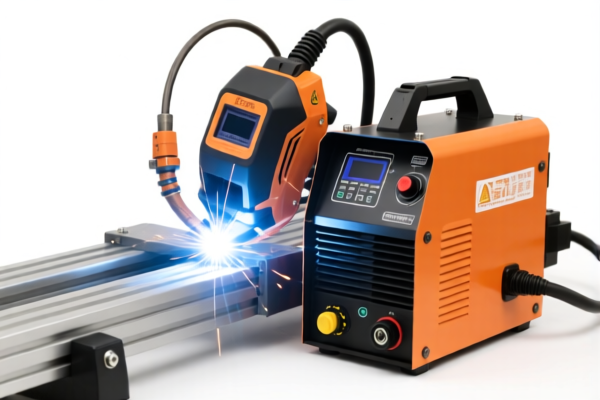
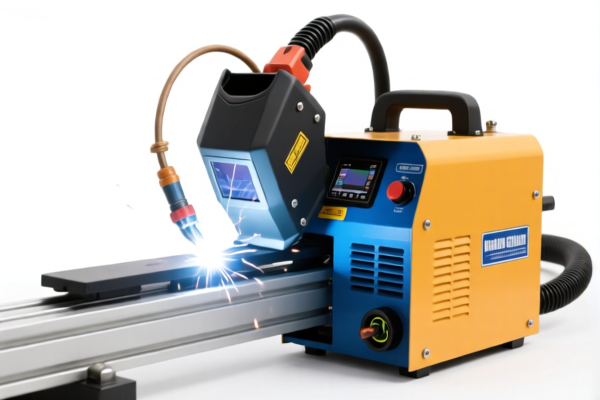
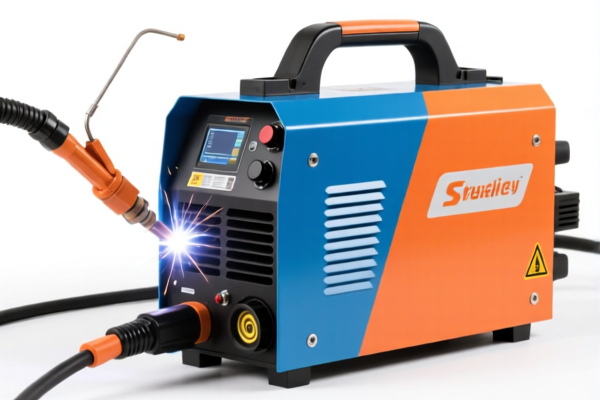
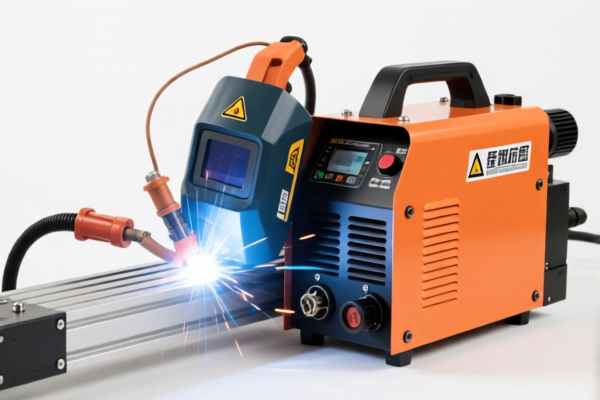
An Arc Welding Gun (also known as an Arc Welding Torch) is a critical component in welding equipment. Its primary function is to deliver electrical current to the workpiece and shield the weld pool with gas or flux, depending on the welding process (e.g., MIG/MAG, TIG, or MMA).
In international trade, classification depends heavily on whether it is classified as a standalone apparatus or a part/accessory of a larger welding machine. This distinction significantly impacts the tariff rate.
⚠️ Key Distinction:
- If it is considered a component/part of a welding machine → Typically falls under 8468.80 or 8515.90.
- If it is considered the main unit of a non-rotary welding device → Typically falls under 8515.39.
- Material composition (Steel, Aluminum, Copper) may trigger additional Section 301 tariffs.
📦 II. HS Code Classification Details (2026 Tariff Authority Cross-Reference)
Based on the provided data, there are 5 potential HS Codes depending on how customs interprets the function and structure of the "Arc Welding Gun."
| HS Code | Product Description (Summary) | Key Classification Logic | Tax Rate Impact |
|---|---|---|---|
| 8468.80.10.00 | Arc welding heads/key components of welding equipment | Viewed as a key part of welding devices; assumes metal material. | 37.9% |
| 8468.80.50.00 | Spare parts/accessories for welding machinery | Viewed as a part for welding/brazing machines and devices. | 35.0% |
| 8515.39.00.40 | Component of a welding apparatus; non-rotary welding device | Classified under non-rotary other welding devices; usage matches arc welding. | 36.6% |
| 8515.90.20.00 | Part/Accessory of welding machines | Directly classified as a part of welding machines/devices. | 86.6% (Highest Risk) |
| 8479.89.95.99 | Independent functional mechanical accessory | Viewed as a standalone mechanical part; assumes metal material. | 87.5% (Highest Risk) |
🔍 Critical Analysis:
- The lowest tariff is found in 8468.80.50.00 (35.0%) and 8468.80.10.00 (37.9%).
- The highest tariffs (>85%) occur when classified under 8515.90 or 8479.89. These higher rates often include additional 50% tariffs for Steel/Aluminum/Copper products under Section 301/122.
- Why the difference?
- 8468/8515 Series: Specific to welding.
- 8479 Series: General mechanical parts, which often attract higher punitive tariffs because they are not explicitly exempted like specific welding accessories.
💰 III. 2026 Latest Tariff Rate Details (Including Surtaxes & Policy Add-ons)
✅ Applicable Country: United States (US)
✅ Origin: China (CN)
✅ Effective Time: Current Trade Policies (2025-2026)
🎯 1. 8468.80.50.00 – Recommended Low-Rate Option
Summary: Spare parts for welding machinery and apparatus.
| Item | Details |
|---|---|
| Base Tariff | 0.0% |
| Section 301 Surtax | +25.0% |
| Section 122 Tariff | +10.0% |
| Total Tariff | 35.0% |
| Calculation | CIF Value × 35% |
| De Minimis Exemption | ❌ Not Eligible (De Minimis applies only to base duty, not surtaxes) |
| Legal Path | Base Duty (0%) → Sec 301 (25%) → Sec 122 (10%) |
📌 Explanation:
- This is the most favorable classification if the gun is considered a part of a larger welding system.
- No additional "50% tariff" for steel/aluminum/copper applies here because the base rate is 0%, and the surtaxes are fixed percentages.
🎯 2. 8468.80.10.00 – Metal Component Classification
Summary: Arc welding heads, inferred as metal components.
| Item | Details |
|---|---|
| Base Tariff | 2.9% |
| Section 301 Surtax | +25.0% |
| Section 122 Tariff | +10.0% |
| Total Tariff | 37.9% |
| Calculation | CIF Value × 37.9% |
| De Minimis Exemption | ❌ Not Eligible |
📌 Explanation:
- Slightly higher due to the 2.9% base duty.
- Still significantly cheaper than the 80%+ brackets.
🎯 3. 8515.39.00.40 – Non-Rotary Welding Device
Summary: Part of a non-rotary welding apparatus.
| Item | Details |
|---|---|
| Base Tariff | 1.6% |
| Section 301 Surtax | +25.0% |
| Section 122 Tariff | +10.0% |
| Total Tariff | 36.6% |
| Calculation | CIF Value × 36.6% |
| De Minimis Exemption | ❌ Not Eligible |
📌 Explanation:
- Positioned under Chapter 85 (Electrical Machinery).
- Good balance if the item is seen as an active electrical component.
🚨 4. 8515.90.20.00 & 8479.89.95.99 – High-Risk Categories
Summary: Parts of welding machines / Independent mechanical parts.
| HS Code | Total Tariff | Breakdown |
|---|---|---|
| 8515.90.20.00 | 86.6% | Base 1.6% + Sec 301 25% + Sec 122 10% + Section 301/122 Steel/Al/Cu 50% |
| 8479.89.95.99 | 87.5% | Base 2.5% + Sec 301 25% + Sec 122 10% + Section 301/122 Steel/Al/Cu 50% |
⚠️ CRITICAL WARNING:
- These two codes trigger an additional 50% tariff on top of the standard 35% surtaxes because they are classified as Steel, Aluminum, or Copper products under specific trade remedy clauses.
- Avoid these classifications unless absolutely necessary, as they will destroy profit margins.
🛠️ IV. Customs Clearance Practical Advice (Avoiding Pitfalls)
✅ 1. Document Preparation Checklist
| Document | Must Provide | Purpose |
|---|---|---|
| Product Specifications | ✔️ | Detail dimensions, material (Steel/Aluminum/Copper), and electrical ratings. |
| Function Description | ✔️ | Explicitly state: "Used as a part/accessory for [Model Name] Welding Machine." |
| Material Declaration | ✔️ | Crucial for avoiding the 50% additional tariff. Specify if non-metallic parts exist. |
| Commercial Invoice | ✔️ | List as "Arc Welding Torch/Head – Part for Welding Machine." Avoid vague terms like "Metal Gun." |
| Original Certificate of Origin | ✔️ | Required for US Customs to apply surtaxes accurately. |
| Photos | ✔️ | Show the item connected to a welding machine or packaged as a component, not a standalone final product. |
✅ 2. Declaration Strategy (Key Tips)
🔥 Mantra: "Classify as Part, Not Standalone; Avoid Metal Surtaxes!"
| Scenario | Correct Declaration | Wrong Declaration | Risk |
|---|---|---|---|
| Selling to a Welding Machine Manufacturer | "Arc Welding Torch Part for MIG Welder" | "Arc Welding Machine" or "Welding Gun" | Misclassification → 86.6-87.5% |
| Selling as a Replacement Part | "Spare Part for Welding Equipment (8468.80.50)" | "Hand Tool" or "Power Tool" | Potential audit & penalty |
| Mixed Material (Ceramic Tip + Metal Body) | Declare as "Part" with material breakdown | Declare as "Steel Product" | Triggers 50% extra tariff |
💡 Pro Tip:
- If possible, argue that the Arc Welding Gun is a specialized part for welding apparatus (8468.80) rather than a general mechanical part (8479) or a broad electrical part (8515.90).
- The 8468.80.50.00 code has a 0% base tariff, making it the most tax-efficient option.
✅ 3. Special Cases
| Case | Handling Advice |
|---|---|
| Integrated Power Supply | If the gun includes a control box with power supply, it may be reclassified as a complete welding machine (8515.39), leading to 36.6%. Still better than 86%+. |
| OEM Custom Parts | Provide end-user documentation showing it is a component for a larger system. |
| High-Value Copper Tips | If copper content is high, ensure the description emphasizes "Assembly Part" rather than "Copper Product" to mitigate the 50% surtax risk under 8515.90 or 8479.89. |
🌍 V. Global Market Comparison (2026)
| Region | Recommended HS Code | Est. Tariff (China Origin) | Key Requirement |
|---|---|---|---|
| 🇺🇸 USA | 8468.80.50.00 |
35.0% | Avoid 50% Steel/Al surtax by careful classification. |
| 🇨🇳 China | 8468.80.50.00 |
~0-6% (Import Duty) | Domestic consumption tax may apply. |
| 🇪🇺 EU | 8468.80.50.00 |
0% | Standard WCO classification; no punitive tariffs. |
| 🇬🇧 UK | 8468.80.50.00 |
0% | Post-Brexit trade deal benefits. |
📌 Conclusion:
- The US market is the most challenging due to Section 301 and Section 122 tariffs.
- Strategic Classification is Key: Choosing 8468.80.50.00 saves ~50% in duties compared to misclassification.
📌 VI. Common Mistakes & Pitfalls (Lessons Learned)
❌ Mistake 1: Declaring "Arc Welding Gun" without specifying it is a part.
👉 Consequence: Customs may classify it as a standalone device (8515.39 or 8479.89), triggering the 50% additional tariff.
👉 Result: Total tax jumps from 35% to 86.6%.
❌ Mistake 2: Ignoring the Material Composition.
👉 Consequence: If classified under 8515.90 or 8479.89, and made of Steel/Al/Cu, the 50% surtax applies.
👉 Result: Unpredictable high costs and potential audits.
❌ Mistake 3: Using vague descriptions like "Welding Tool."
👉 Consequence: High chance of classification error by CBP officers.
👉 Result: Delays, storage fees, and potential reclassification penalties.
✅ Correct Approach:
"Arc Welding Torch Assembly, Model XYZ, Spare Part for MIG Welding Machines, Material: Aluminum/Steel, NOT a standalone machine."
🎯 VII. Conclusion: Precision Classification Saves Money!
🎯 Remember the Mantra:
🔹 "Part over Product, 8468 over 8515, Avoid the 50% Metal Surtax!"
🔹 "A 51% duty difference exists: 35% vs 86%. Choose wisely!"
📌 Actionable Advice:
1. Pre-Classification Request: Submit a Pre-Import Classification Ruling to US CBP if importing large volumes.
2. Supplier Documentation: Require suppliers to provide a material breakdown to argue against the "Steel/Al/Cu" surtax in broader categories.
3. Logistics Planning: Factor in the 35% tariff (for 8468.80.50.00) into your cost model. Do not assume de minimis applies.
📣 Immediate Action:
📞 Consult a licensed customs broker.
📄 Provide technical drawings showing the gun as a component.
🚀 Secure the 35% Rate, Not the 86% Penalty!
✨ Professional Customs Clearance Starts with Accurate Classification!
💼 Your Bottom Line Depends on the First Few Digits of the HS Code!
Customer Reviews
About HS Code Classification
The Harmonized System (HS) is an internationally standardized nomenclature developed by the World Customs Organization (WCO) to classify traded products. Over 200 countries use the HS system as the basis for customs tariffs, trade statistics, and import/export regulations.
Each HS code follows a hierarchical structure:
- Chapter (2 digits) — Broad category of goods (e.g., Chapter 84: Machinery and Mechanical Appliances)
- Heading (4 digits) — More specific grouping within the chapter
- Subheading (6 digits) — Internationally standardized breakdown, used by all WCO member countries
- National subdivisions (8-10 digits) — Country-specific extensions for further classification, such as US HTSUS 10-digit codes
Correct HS code classification is essential for smooth customs clearance, accurate duty payment, and compliance with trade regulations. Misclassification can lead to customs delays, overpayment of duties, or penalties.
When importing from CN to US, the applicable tariff rates may include:
- Most-Favored-Nation (MFN) rate — The standard duty rate applied to WTO members
- General rate — Applied to countries without trade agreements
- Trade remedy duties — Additional tariffs such as Section 301 (anti-dumping), Section 232 (national security), or countervailing duties
The information provided on this page is for reference purposes only. For official classification, please consult with your local customs authority or a licensed customs broker.