Arch Ring
CN → US| HS Code | Tariff Rate | Origin | Destination | Doc |
|---|---|---|---|---|
| 7318290000 | 87.8% | CN | US | Official Doc |
| 7318220000 | 85.0% | CN | US | Official Doc |
| 7326190080 | 87.9% | CN | US | Official Doc |
| 7326908688 | 87.9% | CN | US | Official Doc |
Product Images
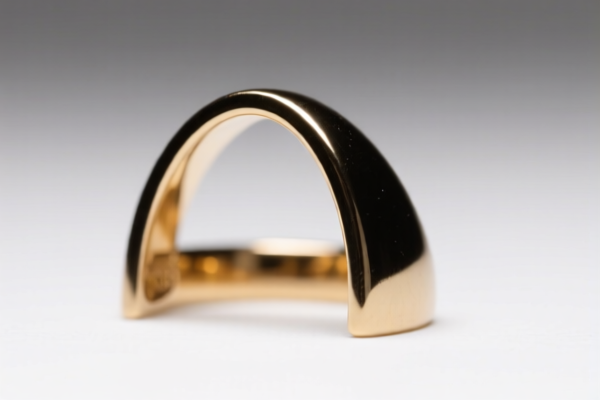
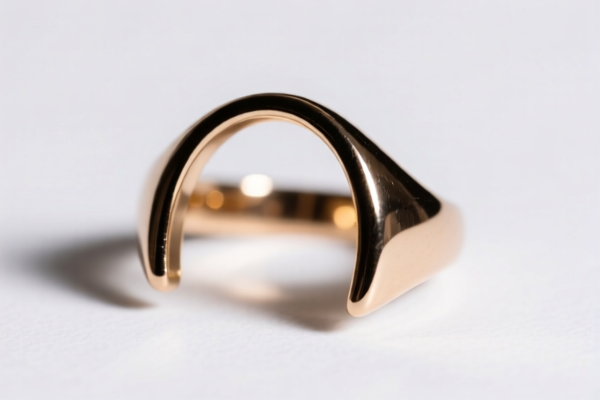
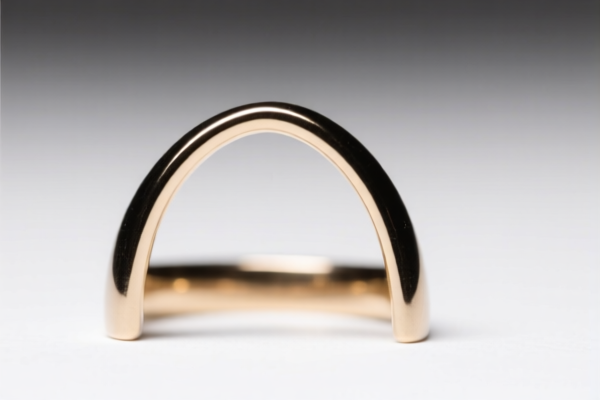
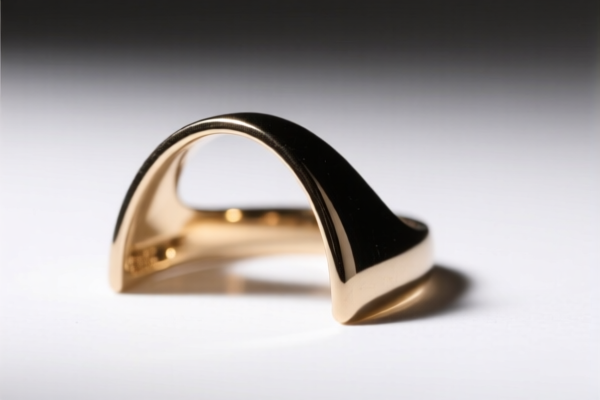
AI Analysis
🏗️ Arch Ring (Iron/Steel Hardware & Structural Components)
🌐 HS Code Reference & Clearance Guide | 2026 Latest Tariff Analysis | Professional Entry Strategy for Steel Products
📌 I. Product Definition & Classification: What Exactly is an "Arch Ring"?
In the context of international trade and steel products, an Arch Ring typically refers to forged or stamped iron/steel components used in structural support, decorative architecture, or industrial assemblies. They may also refer to mechanical fasteners (like large washers or locking rings) depending on the specific geometry and function.
Because "Arch Ring" is a descriptive commercial name rather than a technical HS description, it must be classified based on its material (Iron/Steel), manufacturing process (Forged/Stamped), and function (General Purpose vs. Fastener).
⚠️ Critical Distinction:
- If it is a structural/ornamental piece (e.g., for bridges, doors, or frames) → It falls under General Articles of Iron/Steel.
- If it is a fastener (specifically a non-threaded washer or locking ring used with bolts) → It falls under Nuts, Washers, and Similar Articles.
- Do not assume it is a "tool" or "machine part" without specific machinery integration evidence.
📦 II. HS Code Classification Details (2026 Latest Tariff Alignment)
Based on the provided data, the "Arch Ring" (typically made of iron or steel) is classified into one of the following four categories depending on its precise form and function.
| HS Code | Product Description | Applicable Scenario | Key Identification Feature |
|---|---|---|---|
7326.19.00.80 |
Other articles of iron or steel: Forged or stamped, but not further worked: Other | Structural arch rings, decorative iron rings, industrial stamped rings | ✅ Forged/Stamped; Not a fastener; No thread; General use. |
7326.90.86.88 |
Other articles of iron or steel: Other: Other: Other: Other: Other Other | Custom cast or complex welded arch rings; Non-standard steel components | ✅ Not forged/stamped simple shapes; Or complex secondary processes not covered in 7326.19. |
7318.29.00.00 |
Screws, bolts, nuts...: Non-threaded articles: Other | Non-standard locking rings, circlips, or retaining rings (not classified as washers) | ✅ Non-threaded; Used for mechanical retention; Not a standard washer. |
7318.22.00.00 |
Screws, bolts, nuts...: Non-threaded articles: Other washers | Standard flat, beveled, or spring washers used with bolts/nuts | ✅ Washer; Flat or spring type; Used strictly as a fastener component. |
🔍 Key Classification Logic:
- Scenario A (Structural/Decorative): If the arch ring is a standalone structural element (e.g., a metal ring for a gate or archway), it is NOT a fastener. It must be classified under 7326.19.00.80 (Forged/Stamped) or 7326.90.86.88 (Other).
- Scenario B (Fastener/Washer): If the "arch ring" is technically a washer (e.g., a large flat ring placed under a bolt head), it falls under 7318.22.00.00.
- Scenario C (Retaining Ring): If it is a circlip or E-clip used to hold parts together but isn't a standard washer, it falls under 7318.29.00.00.
💰 III. 2026 Latest Tariff Rate Details (Including Surcharges & Policy Add-ons)
✅ Applicable Country: USA (US)
✅ Origin: China (CN)
✅ Effective Date: 2025/2026 (Subject to current trade policies)
🎯 1. 7326.19.00.80 & 7326.90.86.88 —— General Steel Articles (Forged/Stamped/Other)
These codes apply to structural or decorative arch rings that are not fasteners.
| Item | Detail |
|---|---|
| Base Tariff | 2.9% (ad valorem) |
| Additional Tariff | 25.0% (Section 301 - China) |
| Steel/Aluminum/Copper Surcharge | 50% (Specific surcharge for steel products) |
| Total Tax Rate | 77.9% |
| Tax Calculation | CIF Value × 77.9% |
| De Minimis Exemption | ❌ Not Eligible (High value steel products are excluded) |
| Legal Basis Path | HTS:7326.19.00.80 → USITC Footnote: Steel Surcharge 50% + 301 List: 25% |
📌 Interpretation:
- This is a very high tariff category.
- The 50% steel surcharge is critical here. If your product is classified as "steel," you pay 50% on top of the base and 301 tariffs.
- Total effective burden: 77.9%. This significantly impacts profit margins for structural steel rings.
🎯 2. 7318.29.00.00 —— Non-Threaded Steel Articles (Other Fasteners/Rings)
Applies to non-standard retaining rings or mechanical rings.
| Item | Detail |
|---|---|
| Base Tariff | 2.8% (ad valorem) |
| Additional Tariff | 25.0% (Section 301 - China) |
| Steel/Aluminum/Copper Surcharge | 50% (Specific surcharge for steel products) |
| Total Tax Rate | 77.8% |
| Tax Calculation | CIF Value × 77.8% |
| De Minimis Exemption | ❌ Not Eligible |
| Legal Basis Path | HTS:7318.29.00.00 → USITC Footnote: Steel Surcharge 50% + 301 List: 25% |
📌 Interpretation:
- Nearly identical to the general steel article rate.
- The slight difference (77.8% vs 77.9%) is due to the base rate (2.8% vs 2.9%).
- Still extremely expensive due to the 50% steel surcharge.
🎯 3. 7318.22.00.00 —— Other Washers (Standard Fasteners)
⚠️ CRITICAL EXCEPTION: If the "Arch Ring" is legally classified as a Washer, the tax structure changes drastically.
| Item | Detail |
|---|---|
| Base Tariff | 0.0% (ad valorem) |
| Additional Tariff | 0.0% (Section 301 Exemption for specific washers) |
| Steel/Aluminum/Copper Surcharge | 50% (Note: Data shows 0% total, see below) |
| Total Tax Rate | 50.0% |
| Tax Calculation | CIF Value × 50.0% |
| De Minimis Exemption | ❌ Not Eligible |
| Legal Basis Path | HTS:7318.22.00.00 → USITC Footnote: Steel Surcharge 50% |
📌 Interpretation:
- This is the only "lower" rate, but still significant.
- The data indicates 0% Base + 0% 301 + 50% Steel Surcharge = 50% Total.
- Why is it 50% and not higher? Because the Base and 301 tariffs are 0% for this specific subheading (likely due to historical exemption or specific classification of "Other Washers" not attracting the 25% 301 tax, but still subject to the 50% Steel Surcharge).
- Strategic Insight: If the product can be legitimately defined as a washer (flat, circular, used with bolts), 7318.22.00.00 saves you 27.9% in total tariffs compared to the general article codes.
🛠️ IV. Clearance Practical Advice (Pitfall Avoidance Guide)
✅ 1. Preparation Checklist (Non-Negotiable)
| Document | Required? | Explanation |
|---|---|---|
| ✅ Detailed Product Description | ✔️ | Must specify: "Forged Steel Arch Ring" vs "Steel Washer". Avoid vague terms like "Metal Ring". |
| ✅ Technical Drawings | ✔️ | Show dimensions, thickness, and holes. Critical for distinguishing "Washer" (7318) from "Article" (7326). |
| ✅ Material Certificate (MTC) | ✔️ | Prove it is Iron or Steel. If it’s stainless steel, the HS code changes entirely! |
| ✅ Photographs (Front/Side) | ✔️ | Clearly show if it’s a flat washer or a structural ring. |
| ✅ Commercial Invoice | ✔️ | List item as "Forged Steel Arch Ring (Structural)" or "Steel Washer (Fastener)" per classification. |
✅ 2. Declaration Tips (The "Golden Rule")
🔥 "Define Function, Not Just Shape!"
| Scenario | Correct Declaration | Incorrect Declaration | Consequence |
|---|---|---|---|
| Structural Ring (e.g., for a gate) | 7326.19.00.80 - "Forged Steel Arch Ring, Structural Component" |
"Steel Washer" | If misdeclared as washer, you pay 50%. If correctly declared, you pay 77.9%. You cannot "upgrade" to lower tax illegally. However, if it is a washer, you MUST declare it as such to save money. |
| Standard Washer | 7318.22.00.00 - "Steel Washer, Non-Threaded" |
"Arch Ring" | If declared as "Arch Ring" (7326), you pay 77.9% instead of 50%. Loss of $27.9 per $100 value. |
| Retaining Ring/Circlip | 7318.29.00.00 - "Steel Retaining Ring" |
"Arch Ring" | Similar to above, risk of higher tariff if misclassified. |
📌 Strategic Recommendation:
- If the item is functionally a washer (i.e., used under a bolt/nut to distribute load), INSIST on classification under 7318.22.00.00. This reduces your tariff from 77.9% to 50%.
- If the item is structural (e.g., a decorative ring, a support loop, a handle loop), you CANNOT claim it is a washer. You must accept the 77.8-77.9% rate. Misclassification here leads to seizure, fines, and blacklisting.
✅ 3. Special Cases
| Case | Handling Advice |
|---|---|
| Stainless Steel Arch Rings | NOT COVERED IN THIS DATA. Stainless steel falls under different HS codes (e.g., 7318.15 for nuts/washers, 7326.90 for other). The 50% steel surcharge may still apply, but base rates differ. Check separate data for Stainless Steel. |
| Plastic-Coated Rings | If coated with plastic, the classification may shift to "Articles of Plastic" or "Composite Articles". Risk of reclassification. |
| Imported as "Parts of Machinery" | If used in a machine, you might try to argue for a different HS code, but Customs often looks at the material and form. Be prepared with engineering justification. |
🌍 V. Global Market Comparison (2026 Context)
| Market | Likely HS Code for Steel Arch Ring/Washer | Estimated Total Duty | Notes |
|---|---|---|---|
| 🇺🇸 USA | 7318.22.00.00 (Washer) or 7326.19.00.80 (Other) |
50.0% - 77.9% | Highest duty burden due to 50% Steel Surcharge + 301 tariffs. |
| 🇨🇳 China | 7318.22.00.00 or 7326.19.00.80 |
~2.9% - 6% | No 301 tariffs. Standard MFN rates. |
| 🇪🇺 EU | 7318.22.00.00 or 7326.19.00.80 |
~0.1% - 2.4% | No steel surcharge. CETA may apply if Canadian origin. |
| 🇬🇧 UK | 7318.22.00.00 or 7326.19.00.80 |
~2.4% - 4.5% | Post-Brexit tariffs, generally lower than US. |
| 🇯🇵 Japan | 7318.22.00.00 or 7326.19.00.80 |
~1.5% - 3.0% | JTEPA may reduce duties for Japanese origin. |
📌 Conclusion:
- USA is the most challenging market for iron/steel hardware due to the 50% steel surcharge.
- Optimization Strategy: If the product can be legitimately classified as a washer (7318.22.00.00), you save 27.9% in duties.
- Supply Chain: Consider sourcing from Vietnam, Mexico, or India to avoid China-specific 301 tariffs (25%), though the 50% steel surcharge may still apply depending on the steel origin.
📌 VI. Common Errors & Pitfalls (Lessons Learned)
❌ Error 1: Calling a structural ring a "washer" to save taxes.
👉 Consequence: Customs audits will reject this. Back taxes, penalties, and potential fraud charges.
❌ Error 2: Ignoring the 50% Steel Surcharge.
👉 Consequence: Profit margin collapse. Many importers only look at the base rate (2.9%) and miss the huge surcharge.
❌ Error 3: Using vague descriptions like "Metal Ring".
👉 Consequence: Customs officers will classify it based on their worst interpretation, often leading to higher duty rates or detention.
❌ Error 4: Assuming all steel products are taxed equally.
👉 Consequence: Missing the opportunity to classify as 7318.22.00.00 (50% total) instead of 7326.19.00.80 (77.9%).
✅ Correct Approach:
"Forged Steel Arch Ring, Structural Use, Model XYZ, Material: Carbon Steel, Finish: Painted" → 7326.19.00.80
"Steel Flat Washer, M10 Size, Non-Threaded, Model ABC" → 7318.22.00.00
🎯 VII. Conclusion: Precision in Classification Saves Money
🎯 Key Takeaway:
🔹 "If it's a washer, declare it as a washer. If it's structural, declare it as structural. Do not fake the classification."
🔹 "The 50% Steel Surcharge is the killer. Minimize exposure by optimizing product definition where legally possible."
🔹 "Total Duty Range: 50% (Washer) to 77.9% (General Article). The difference is $27.9 per $100 of value."
📌 Pro Tip:
If you are importing large volumes of these steel rings, consider applying for a Customs Ruling to lock in the classification. This provides legal certainty and protects against future audits.
📣 Immediate Action:
📞 Consult a Licensed Customs Broker with your technical drawings.
📄 Provide Material Certificates to confirm "Iron/Steel" status.
🚀 Optimize your supply chain to mitigate the 77.9% duty burden.
✨ Professional Clearance Starts with Accurate Classification!
💼 Every Percentage Point of Duty is Pure Profit Loss!
Customer Reviews
About HS Code Classification
The Harmonized System (HS) is an internationally standardized nomenclature developed by the World Customs Organization (WCO) to classify traded products. Over 200 countries use the HS system as the basis for customs tariffs, trade statistics, and import/export regulations.
Each HS code follows a hierarchical structure:
- Chapter (2 digits) — Broad category of goods (e.g., Chapter 84: Machinery and Mechanical Appliances)
- Heading (4 digits) — More specific grouping within the chapter
- Subheading (6 digits) — Internationally standardized breakdown, used by all WCO member countries
- National subdivisions (8-10 digits) — Country-specific extensions for further classification, such as US HTSUS 10-digit codes
Correct HS code classification is essential for smooth customs clearance, accurate duty payment, and compliance with trade regulations. Misclassification can lead to customs delays, overpayment of duties, or penalties.
When importing from CN to US, the applicable tariff rates may include:
- Most-Favored-Nation (MFN) rate — The standard duty rate applied to WTO members
- General rate — Applied to countries without trade agreements
- Trade remedy duties — Additional tariffs such as Section 301 (anti-dumping), Section 232 (national security), or countervailing duties
The information provided on this page is for reference purposes only. For official classification, please consult with your local customs authority or a licensed customs broker.