Aromatic Herbicide Granules
CN → US| HS Code | Tariff Rate | Origin | Destination | Doc |
|---|---|---|---|---|
| 2942003500 | 41.5% | CN | US | Official Doc |
| 3808931500 | 41.5% | CN | US | Official Doc |
| 3808935040 | 40.0% | CN | US | Official Doc |
| 2942000500 | 41.5% | CN | US | Official Doc |
| 3808931500 | 41.5% | CN | US | Official Doc |
Product Images
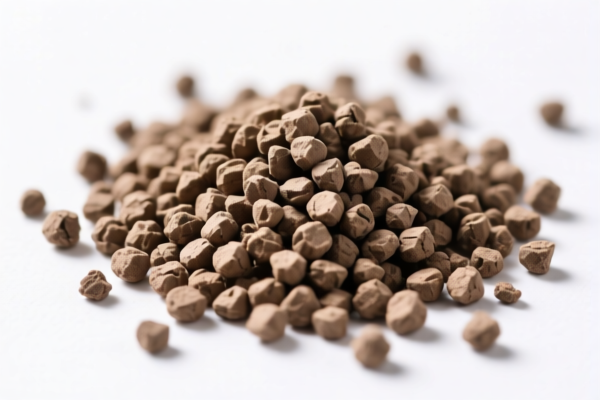
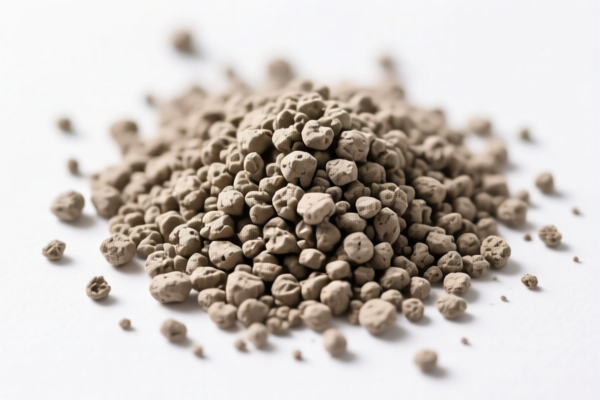
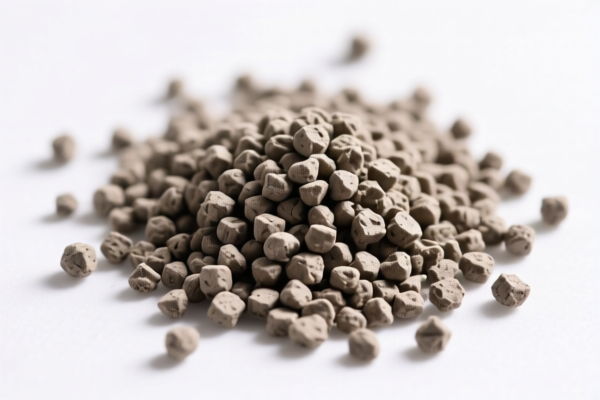

AI Analysis
🧪 Aromatic Herbicide Granules (芳香族除草剂颗粒/散装)
🌐 HS Code Reference & Customs Clearance Guide | 2026 Latest Tariff Analysis | Professional Level Strategy
📌 I. Product Definition & Classification: What exactly are "Aromatic Herbicide Granules"?
Aromatic herbicides are agricultural chemicals where the active ingredient contains an aromatic ring structure. In international trade, the classification depends heavily on whether the product is a pure chemical substance (active ingredient) or a formulated mixture (pesticide product).
1. Pure Active Ingredients (Chemicals):
If the product is a single, defined aromatic chemical compound intended for further formulation or industrial use.
Key Feature:* High purity, no additives, organic compound structure.
2. Formulated Herbicides (Mixtures):
If the product is a finished agricultural product containing the aromatic herbicide mixed with carriers, surfactants, or other inert ingredients.
Key Feature:* Pre-mixed, ready-to-use or ready-to-dilute, classified under "Pesticides."
⚠️ Critical Distinction Point:
- If it is a pure organic compound with an aromatic ring → Classify under Chapter 29.
- If it is a mixture/formulation (even if it contains aromatic components) → Classify under Chapter 38.
- Granules or Bulk Packaging do not change the fundamental chemical vs. mixture distinction but may influence the specific subheading within those chapters.
📦 二、HS Code Classification Details (2026 Latest Tariff Authority Match)
Based on the provided data, here is the precise mapping for Aromatic Herbicide Granules. Note that two main HS Code families appear, reflecting the Chemical vs. Formulation split.
| HS Code | Product Description | Applicable Scenario | Classification Logic |
|---|---|---|---|
2942.00.35.00 |
Aromatic Herbicide Bulk Packaging – Matches aromatic material with herbicide use | Pure aromatic chemical ingredient, bulk form | ✅ Chemical (Chapter 29): Pure aromatic organic compound |
3808.93.15.00 |
Aromatic Herbicide Bulk or Formulation – Matches formulation form or containing aromatic components | Finished pesticide product, mixture, or granules containing aromatic herbicide + carriers | ✅ Formulation (Chapter 38): Pesticide mixture/formulation |
3808.93.50.40 |
Aromatic Herbicide Bulk Packaging – Matches non-specific ingredients herbicide category | Non-specific aromatic herbicide mix, bulk granules | ✅ Formulation (Chapter 38): Non-specific pesticide mixture |
2942.00.05.00 |
Aromatic Herbicide Bulk Packaging – Matches aromatic material & organic compound raw material form | Raw organic aromatic compound, bulk state | ✅ Chemical (Chapter 29): Raw organic aromatic material |
🔍 Key Reminder:
- Chapter 29 Codes (2942...) are for pure chemicals. If your granules are 100% active ingredient with no binders/carriers, use these.
- Chapter 38 Codes (3808...) are for pesticide formulations. Most commercial "herbicide granules" contain carriers (clay, sand, etc.), so they often fall here.
- Do not mix these categories. Classifying a formulation as a pure chemical (or vice versa) leads to customs delays, fines, or reclassification.
💰 三、2026 Latest Tariff Rate Breakdown (Including Surtaxes & Policy Add-ons)
✅ Applicable Country: United States (US)
✅ Origin: China (CN)
✅ Effective Date: Includes imports from 2025-11-10 onwards (subject to current 301/122 measures)
🎯 1. For Chapter 29 Codes: 2942.00.35.00 & 2942.00.05.00
| Item | Detail |
|---|---|
| Basic Duty Rate | 6.5% (Ad Valorem) |
| Section 301 Surtax | +25.0% (USITC Footnote 9903.88.01 equivalent for chemicals) |
| Section 122 Tariff | +10.0% (IEEPA/Specific provision for certain imports) |
| Total Tax Rate | 41.5% |
| Tax Calculation | CIF Value × 41.5% |
| De Minimis Eligibility | ❌ Not Eligible (deny_de_minimis) |
| Legal Basis Path | Basic Rate: 6.5% → Section 301: 25% → Section 122: 10% |
📌 Explanation:
- The 6.5% is the standard Most Favored Nation (MFN) rate for aromatic organic compounds.
- The 25% is the standard US-China trade war tariff (Section 301).
- The 10% is an additional surcharge (Section 122) applied to specific categories of Chinese imports.
- Total: 41.5%. This is a high tariff bracket. Accurate classification as a "pure chemical" is critical to avoid misclassification penalties, but the cost remains high.
🎯 2. For Chapter 38 Codes: 3808.93.15.00 & 3808.93.50.40
| Item | Detail |
|---|---|
| Basic Duty Rate | 6.5% (for 3808.93.15.00) / 5.0% (for 3808.93.50.40) |
| Section 301 Surtax | +25.0% |
| Section 122 Tariff | +10.0% |
| Total Tax Rate | 41.5% (for 3808.93.15.00) / 40.0% (for 3808.93.50.40) |
| Tax Calculation | CIF Value × 41.5% or 40.0% |
| De Minimis Eligibility | ❌ Not Eligible (deny_de_minimis) |
| Legal Basis Path | Basic Rate → Section 301: 25% → Section 122: 10% |
📌 Explanation:
-3808.93.15.00: Often used for specific aromatic herbicide formulations. Total tax is 41.5%.
-3808.93.50.40: Used for non-specific aromatic herbicide categories. It has a slightly lower basic rate (5.0%), resulting in a total tax of 40.0%.
- Surtaxes are identical for both: The 25% and 10% additional duties apply equally to formulations as they do to pure chemicals under current US trade policies.
🛠️ 四、Customs Clearance Practical Advice (Real-World Pitfall Guide)
✅ 1. Required Documentation Checklist (Non-negotiable)
| Document | Mandatory? | Description |
|---|---|---|
| ✅ Product Specification Sheet | ✔️ | Must specify: Active Ingredient %, Chemical Name (IUPAC), CAS Number, Formulation Type (Granule/Liquid/Powder). |
| ✅ Structure Diagram | ✔️ | Crucial for Chapter 29 vs. 38 classification. Prove if it's a pure molecule or a mixture. |
| ✅ Product Photos (Bulk/Package) | ✔️ | Show packaging type (bulk bag, drum, etc.) to match "Bulk Packaging" summary. |
| ✅ Certificate of Analysis (COA) | ✔️ | Confirms purity % and absence of other regulated substances. |
| ✅ Commercial Invoice | ✔️ | Must clearly state "Aromatic Herbicide" and the exact HS Code. |
| ✅ Origin Certificate | ✔️ | To confirm Chinese origin for 301/122 tariff application. |
| ✅ MSDS (SDS) | ✔️ | For safety classification and hazmat compliance (DOT/IMO if shipping). |
✅ 2. Declaration Tips (Key Mnemonics)
🔥 “Pure Chemical = Ch29, Mixture = Ch38. Granules don’t change the chemistry, only the form!”
| Scenario | Correct Declaration | Wrong Practice |
|---|---|---|
| Pure Aromatic Compound (Bulk) | HS: 2942.00.35.00 or 2942.00.05.00Name: "Pure Aromatic Herbicide Ingredient" |
Misdeclare as pesticide mixture → Potential under/over-tax |
| Formulated Herbicide Granules | HS: 3808.93.15.00Name: "Herbicide Formulation, Aromatic, Granular" |
Declare as pure chemical → High risk of seizure for misdeclaration |
| Non-Specific Herbicide Mix | HS: 3808.93.50.40Name: "Non-Specific Aromatic Herbicide, Bulk" |
Use generic term "Herbicide" → Customs may guess wrong code |
| Mixed Container (Chem + Formulation) | Split Declaration | Combine in one line item → Customs will split and charge highest rate |
✅ 3. Special Circumstances Handling
| Situation | Handling Advice |
|---|---|
| OEM/White Label | Provide original manufacturer’s spec sheet + contract. Do not hide the active ingredient name. |
| Granules with Binders | If >95% active ingredient, argue for Chapter 29. If significant binders/carriers, use Chapter 38. |
| Hazardous Material | Herbicides are often hazmat. Ensure DOT/UN packaging is correct to avoid shipping delays. |
| EPA Registration | For Chapter 38 products, ensure the product is EPA Registered in the US before import. No registration = Entry Refused. |
🌍 五、Global Market Comparison (2026 Update)
| Country/Region | Recommended HS Code | Tariff (China Origin) | Key Certification | Notes |
|---|---|---|---|---|
| 🇺🇸 USA | 2942... or 3808... |
40.0% - 41.5% | EPA Registration + SDS | High Surtaxes Apply. De Minimis ($800) does NOT apply. |
| 🇨🇳 China | 2942... or 3808... |
5.0% - 6.5% | None for export | Low base duty, but high for US export. |
| 🇪🇺 EU | 2933... or 3808... |
Varies (0-6.5%) | REACH Registration | REACH is critical. No Section 301/122 taxes, but high compliance costs. |
| 🇨🇦 Canada | 2942... or 3808... |
5.0% - 6.5% | PMRA Approval | No major surtaxes, but strict pesticide regulations. |
📌 Conclusion:
- The USA imposes the highest combined duty (40-41.5%) due to 301/122 tariffs.
- Canada and EU have lower tariffs but higher regulatory barriers (REACH, PMRA).
- China origin products face significant tariff penalties in the US. Consider supply chain diversification if volumes are high.
📌 六、Common Mistakes & Pitfalls (Blood & Tears Lessons)
❌ Mistake 1: Declaring formulated granules as "Pure Chemicals" to save taxes.
👉 Consequence: Customs lab test shows carriers → Rejected + Penalty + Back Tax.
❌ Mistake 2: Ignoring the Section 122 10% surtax.
👉 Consequence: Under-declared duty by 10% → Seizure or Delay.
❌ Mistake 3: Using "Herbicide" as the only description.
👉 Consequence: Customs officer cannot determine if Ch29 or Ch38 → Manual Examination + Delay.
❌ Mistake 4: Assuming De Minimis ($800) applies.
👉 Consequence: DENIED. All agricultural chemicals from China are excluded. Pay full duty on every shipment.
✅ Correct Approach:
"Aromatic Herbicide, Granular Form, Containing [Active Ingredient Name] CAS#[XXX], Bulk Packed in 25kg Bags, EPA Reg #[XXX]"
🎯 七、Conclusion: Precision Classification Saves Money!
🎯 Remember the Mantra:
🔹 “Pure = Ch29 (41.5%), Mix = Ch38 (40-41.5%).”
🔹 “No De Minimis. No EPA, No Entry.”
🔹 “Granules are just form, Chemistry is King.”
📌 Pro Tip:
If you are importing large volumes, consider applying for a Customs Binding Ruling (Pre-classification) for your specific product formula. This locks in the HS Code and tax rate, protecting you from future changes or disputes.
Also, check if your product qualifies for any exclusions under Section 301 (though rare for herbicides).
📣 Immediate Action Required:
📞 Contact a licensed customs broker.
📄 Provide CAS Number and Formulation %.
🛡️ Ensure EPA Registration is valid for the US market.
✨ Professional Clearance Starts with Accurate Classification!
💼 Every Percent of Duty Matters – Don’t Let Misclassification Eat Your Margins!
Customer Reviews
About HS Code Classification
The Harmonized System (HS) is an internationally standardized nomenclature developed by the World Customs Organization (WCO) to classify traded products. Over 200 countries use the HS system as the basis for customs tariffs, trade statistics, and import/export regulations.
Each HS code follows a hierarchical structure:
- Chapter (2 digits) — Broad category of goods (e.g., Chapter 84: Machinery and Mechanical Appliances)
- Heading (4 digits) — More specific grouping within the chapter
- Subheading (6 digits) — Internationally standardized breakdown, used by all WCO member countries
- National subdivisions (8-10 digits) — Country-specific extensions for further classification, such as US HTSUS 10-digit codes
Correct HS code classification is essential for smooth customs clearance, accurate duty payment, and compliance with trade regulations. Misclassification can lead to customs delays, overpayment of duties, or penalties.
When importing from CN to US, the applicable tariff rates may include:
- Most-Favored-Nation (MFN) rate — The standard duty rate applied to WTO members
- General rate — Applied to countries without trade agreements
- Trade remedy duties — Additional tariffs such as Section 301 (anti-dumping), Section 232 (national security), or countervailing duties
The information provided on this page is for reference purposes only. For official classification, please consult with your local customs authority or a licensed customs broker.