Aromatic Herbicide Microcapsule
CN → USProduct Images
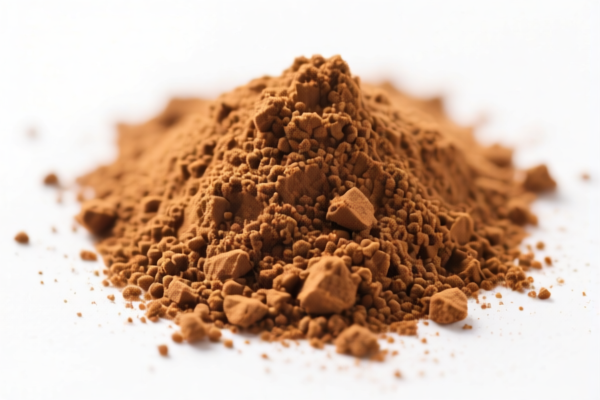
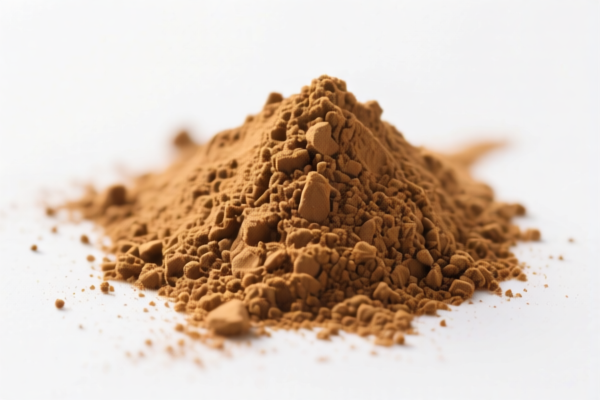
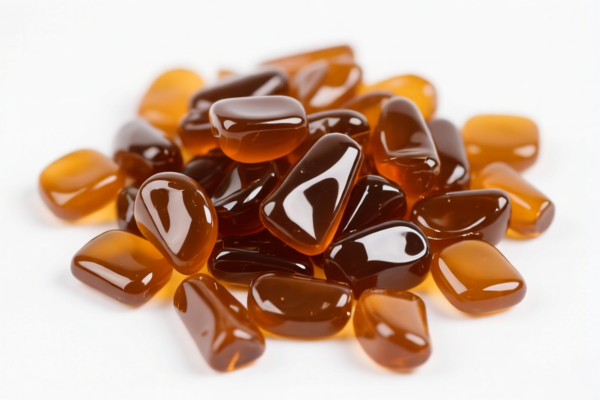
AI Analysis
🌿 Aromatic Herbicide Microcapsule (Herbicidal Formulation)
🌐 HS Code Reference & Customs Clearance Guide | 2026 Latest Tariff Analysis | Professional-Level Clearance Strategy
📌 I. Product Definition & Classification: Do You Really Understand "Herbicidal Microcapsules"?
Aromatic Herbicide Microcapsules refer to a specialized pesticide formulation where herbicidal active ingredients (typically aromatic compounds like pyridine derivatives, triazines, or sulfonamides) are encapsulated within a polymeric shell to control release rate, reduce volatility, and improve safety.
In international trade, these are classified as pesticide preparations, not raw chemicals. The key distinction lies in the formulation state:
- Raw Active Ingredients: Pure aromatic compounds (e.g., 2,4-D, Glyphosate derivatives) → Classified under Chapter 29.
- Formulated Products (Microcapsules): Ready-to-use or diluted pesticides containing carrier agents, emulsifiers, stabilizers, AND the active ingredient → Classified under Chapter 38.
⚠️ Critical Distinction:
- If the product is pure chemical powder without carriers → Chapter 29
- If it is a dispersion, emulsion, or microcapsule containing carriers → Chapter 38.08
📦 II. HS Code Classification Details (2026 Latest Tariff Authority Comparison)
| HS Code | Product Description | Applicable Scenario | Contains Active Ingredient + Carrier? |
|---|---|---|---|
3808.92.00.00 |
Insecticides, rodenticides, fungicides, herbicides... (Other preparations) | Liquid microcapsules, granules, emulsions for herbicidal use | ✅ Yes |
2933.39.80.00 |
Heterocyclic compounds with nitrogen heteroatoms only (e.g., Pyridine derivatives) | Raw aromatic herbicide active ingredients (e.g., Bipyridylium) | ❌ No (Pure) |
3808.94.00.00 |
Fumigants (if applicable) | Not typically for microcapsules | ❌ No |
3004.90.99.00 |
Medicaments for human use (if misclassified) | Incorrect - Pesticides are not medicines | ❌ N/A |
🔍 Key Reminder:
- Microcapsules are formulations. Even if the active ingredient is "aromatic," the final product falls under 3808.92 if it’s a prepared pesticide.
- Do NOT classify as 2933/2934/2935 (chemical classes) unless declaring pure active ingredient powder.
- If the microcapsule contains multiple active ingredients, it still generally falls under 3808.92 (other preparations).
💰 III. 2026 Latest Tariff Rate Details (Including Surtaxes & Policy Surcharges)
✅ Applicable Country: United States (US)
✅ Origin: China (CN)
✅ Effective Time: From November 10, 2025 (Including subsequent imports)
🎯 1. 3808.92.00.00 —— Pesticidal Preparations (Microcapsules)
| Item | Content |
|---|---|
| Base Tariff Rate | 0% (ad valorem) |
| USITC Surtax | +25% (From USITC Footnote 9903.88.01) |
| IEEPA Surtax | +10% (For China/HK products, effective from Nov 10, 2025) |
| Total Tariff Rate | 35% |
| Tax Calculation | CIF Value × 35% |
| De Minimis Exemption Applicable? | ❌ No (deny_de_minimis) |
| Legal Basis Path | IEEPA:9903.01.25 → IEEPA:9903.01.24 → USITC:3808.92.00.00 → FOOTNOTE:9903.88.01 |
📌 Explanation:
- "USITC Surtax 25%" comes from the Section 301 tariffs under the U.S. Trade Act;
- "IEEPA 10%" is the additional tariff on Chinese products under the International Emergency Economic Powers Act;
- Total 35%, which is a high tariff rate. Must be anticipated in advance!
🎯 2. Comparison: Raw Active Ingredient (If Misclassified as Chemical)
| Item | Content |
|---|---|
| HS Code | 2933.39.80.00 (Example for Pyridine Derivatives) |
| Base Tariff | 0% |
| USITC Surtax | +25% |
| IEEPA Surtax | +10% |
| Total Tariff | 35% |
| Note | Even if classified as a chemical, the surtaxes often apply similarly. However, misclassification risks penalties. |
📌 Note:
- Whether classified as 3808.92 (formulation) or 29xx (raw chemical), the effective rate may be similar due to Section 301 and IEEPA tariffs.
- Risk: Misclassifying a formulation as a raw chemical may lead to customs detention, fines, or retroactive duties.
- Compliance: Always declare as pesticide preparation (3808.92) for microcapsules.
🛠️ IV. Customs Clearance Practical Advice (Real-World Pitfall Guide)
✅ 1. Required Documents Checklist (None Missing)
| Document | Must Provide | Explanation |
|---|---|---|
| ✅ Product Specification Sheet | ✔️ | Includes active ingredient name, concentration, formulation type (microcapsule), and physical state |
| ✅ MSDS / SDS | ✔️ | Safety Data Sheet for hazardous material handling |
| ✅ Pesticide Registration Certificate | ✔️ | EPA Registration Number (for US import) is mandatory |
| ✅ Product Photos (Label & Container) | ✔️ | Clear display of "EPA Reg. No.", "Microencapsulated," and warning labels |
| ✅ Commercial Invoice | ✔️ | Must state "Herbicidal Microcapsule Preparation, Not for Human Use" |
| ✅ Certificate of Origin | ✔️ | If non-China origin, may qualify for exemptions |
| ✅ Packing List | ✔️ | Detail gross/net weight, package dimensions |
✅ 2. Declaration Tips (Key Mantra)
🔥 "Formulation is Key, EPA No. is King, Misclassifying Leads to Wringing!"
| Scenario | Correct Declaration | Wrong Practice |
|---|---|---|
| Microcapsule Herbicide | 3808.92.00.00 + EPA Reg. No. |
Declaring as 2933 (Chemical) → Penalty |
| Raw Powder (No Carrier) | 2933.xx.xx.xx + Pure Chemical Name |
Declaring as 3808 → Rejection |
| Herbicide + Fertilizer Mix | 3105.90.00.00 (if fertilizer dominant) |
Declaring as 3808 → Incorrect |
| Household Spray (Non-Pesticide) | 3926.90.97.90 (Plastic container) |
Declaring as 3808 → Error |
✅ 3. Special Situation Handling
| Situation | Handling Advice |
|---|---|
| EPA Registration Missing | Cannot clear. Must obtain EPA registration before shipment. |
| OEM Private Label | Provide contract + EPA license authorization. |
| Sample Shipment (< $800) | De Minimis does NOT apply for pesticides from China. Must declare fully. |
| Combined Product (Herbicide + Tool) | Separate declaration. Herbicide under 3808, tool under appropriate chapter. |
🌍 V. Global Market Comparison (2026 Latest)
| Country/Region | Recommended HS Code | Tariff | Certification Required | Note |
|---|---|---|---|---|
| 🇺🇸 USA | 3808.92.00.00 |
35% (China) | EPA Registration | High compliance cost |
| 🇨🇳 China | 3808.92.00.00 |
5% | Pesticide License | No surtax |
| 🇪🇺 EU | 3808.92.00.00 |
0-6% | EU Pesticide Regulation | Strict MRL limits |
| 🇦🇺 Australia | 3808.92.00.00 |
5% | APVMA Registration | Mandatory registration |
| 🇯🇵 Japan | 3808.92.00.00 |
0% | FIEC Registration | No surtax for China |
📌 Conclusion:
- USA is the most challenging market due to EPA requirements + 35% tariff.
- China-origin microcapsules face high barriers in the US. Consider supply chain diversification (e.g., Vietnam, India) for tariff relief.
📌 VI. Common Errors & Pitfalls (Blood & Tears Lessons)
❌ Error 1: Declaring microcapsules as "Pure Chemical"
👉 Consequence: Customs detects carriers → Penalty + Back Taxes + EPA Violation.
❌ Error 2: Omitting EPA Registration Number on Invoice
👉 Consequence: Shipment held or destroyed. EPA strictly enforces this.
❌ Error 3: Using "Agrochemicals" as vague description
👉 Consequence: Customs requests clarification → Delay + Demurrage Fees.
❌ Error 4: Trying to use De Minimis ($800) for Pesticides
👉 Consequence: Banned. Pesticides from China are excluded from de minimis relief.
✅ Correct Practice:
"Herbicidal Microcapsule Preparation, EPA Reg. No. 12345-67-8, Contains [Active Ingredient] 10%, Net Weight 1L, Not for Human Consumption"
🎯 VII. Conclusion: Professional Declaration, Save Time, Cut Costs!
🎯 Remember the Mantra:
🔹 "Microcapsule is Preparation, EPA No. is Mandatory!"
🔹 "HS Code 3808, Tariff 35%, De Minimis No!"
🔹 "Wrong Code Means Stop, Clearance Stops, Cargo Blops!"
📌 Tips:
- If your microcapsules are originated from India, Vietnam, or Brazil, you may avoid IEEPA surtaxes, reducing the effective rate to 0-25%.
- Apply for Advance Ruling with US CBP for complex formulations to avoid disputes.
📣 Act Now:
📞 Contact Licensed Pesticide Importers + Provide EPA Certificate + Declare Accurately
🚀 Let your herbicide clear customs smoothly, expand markets, and maximize profit!
✨ Professional Clearance Starts with Accurate Classification!
💼 Every Cent of Cost Deserves Precision Calculation!
Customer Reviews
About HS Code Classification
The Harmonized System (HS) is an internationally standardized nomenclature developed by the World Customs Organization (WCO) to classify traded products. Over 200 countries use the HS system as the basis for customs tariffs, trade statistics, and import/export regulations.
Each HS code follows a hierarchical structure:
- Chapter (2 digits) — Broad category of goods (e.g., Chapter 84: Machinery and Mechanical Appliances)
- Heading (4 digits) — More specific grouping within the chapter
- Subheading (6 digits) — Internationally standardized breakdown, used by all WCO member countries
- National subdivisions (8-10 digits) — Country-specific extensions for further classification, such as US HTSUS 10-digit codes
Correct HS code classification is essential for smooth customs clearance, accurate duty payment, and compliance with trade regulations. Misclassification can lead to customs delays, overpayment of duties, or penalties.
When importing from CN to US, the applicable tariff rates may include:
- Most-Favored-Nation (MFN) rate — The standard duty rate applied to WTO members
- General rate — Applied to countries without trade agreements
- Trade remedy duties — Additional tariffs such as Section 301 (anti-dumping), Section 232 (national security), or countervailing duties
The information provided on this page is for reference purposes only. For official classification, please consult with your local customs authority or a licensed customs broker.