Aromatic Herbicide Sustained Release Agent
CN → US| HS Code | Tariff Rate | Origin | Destination | Doc |
|---|---|---|---|---|
| 3808591000 | 16.5% | CN | US | Official Doc |
| 3824401000 | 41.5% | CN | US | Official Doc |
| 3824992900 | 41.5% | CN | US | Official Doc |
| 3808990800 | 41.5% | CN | US | Official Doc |
| 3808931500 | 41.5% | CN | US | Official Doc |
Product Images
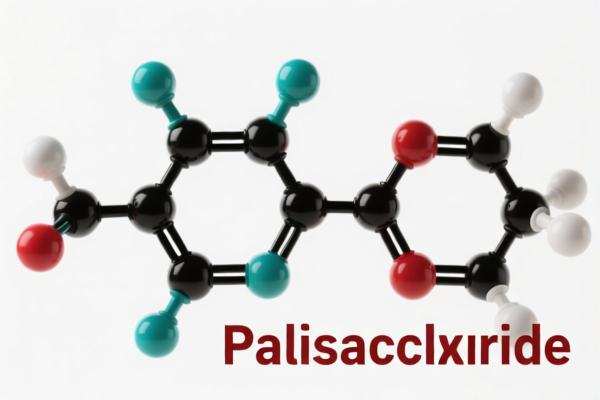

AI Analysis
🌿 Aromatic Herbicide Sustained Release Agent
🌐 HS Code Reference & Customs Clearance Guide | 2026 Latest Tariff Analysis | Professional Clearance Strategy
📌 I. Product Definition & Classification: Do You Really Understand "Aromatic Herbicide Sustained Release Agent"?
An Aromatic Herbicide Sustained Release Agent is a specialized chemical preparation used in agriculture to ensure the prolonged and controlled release of aromatic-based herbicides. In international trade, its classification depends heavily on its primary function, chemical composition, and intended use.
The product falls into one of two main categories depending on whether it is primarily a biocidal/pesticidal preparation or a specialized chemical additive/formulation:
- Pesticidal/Biocidal Preparations (Chapter 3808): If the agent is primarily designed to act as a herbicide or contains active herbicidal ingredients derived from aromatic compounds.
- Chemical Preparations/Additives (Chapter 3824): If the agent is primarily a carrier, matrix, or additive that modifies the release profile but is not itself a pesticide, but rather a chemical mixture for industrial or agricultural use.
⚠️ Key Distinction Point:
- If the product’s main purpose is killing weeds via aromatic compounds → Look at HS Code 3808.xx
- If the product is a functional additive/modifier for slow release, not necessarily killing on its own → Look at HS Code 3824.xx
📦 II. HS Code Classification Details (2026 Latest Tariff Authority Comparison)
| HS Code | Product Description | Application Scenario | Key Determining Factor |
|---|---|---|---|
3808.59.10.00 |
Modified aromatic fungicide/biocidal sustained release agent | Contains aromatic material + sustained release function, primarily for biocidal use | ✅ Matches modified aromatic biocidal function |
3824.40.10.00 |
Chemical additives containing aromatic substances | Functional additive category, fits chemical preparation for specific technical purposes | ✅ Matches aromatic chemical additive |
3824.99.29.00 |
Chemical preparations containing aromatic substances | General chemical products/preparations, not specifically pesticidal | ✅ Matches general chemical formulation |
3808.99.08.00 |
Biocidal preparations containing modified aromatic materials | Key limiting condition: modified aromatic material in biocidal form | ✅ Matches modified aromatic biocidal |
3808.93.15.00 |
Herbicides containing aromatic components | Material and use consistency: aromatic herbicide formulation | ✅ Matches aromatic herbicide material/use |
🔍 Key Reminder:
- Products with herbicidal intent and aromatic components should lean toward 3808 codes if the active ingredient is pesticidal.
- Products that are non-active modifiers or chemical matrices should lean toward 3824 codes.
- Misclassification can lead to significant tariff differences due to additional duties.
💰 III. 2026 Latest Tariff Rate Breakdown (Including Additional Taxes & Policy Surcharges)
✅ Applicable Country: United States (US)
✅ Origin: China (CN)
✅ Effective Time: Post-2025 (Current 2026 Framework)
🎯 1. 3808.59.10.00 —— Modified Aromatic Biocidal Sustained Release Agent
| Item | Content |
|---|---|
| Base Tariff | 6.5% |
| Section 301 Additional Duty | 0.0% |
| Section 122 Duty | 10.0% |
| Total Tariff | 16.5% |
| Tax Calculation | CIF Value × 16.5% |
| De Minimis Exemption? | ❌ No (High-value chemical import) |
| Legal Basis Path | USITC:3808.59.10.00 → Section 122: 10% → Section 301: 0% |
📌 Explanation:
- This code benefits from 0% Section 301 duty, making it the most cost-effective option if the product qualifies.
- The 10% Section 122 duty is a specific surcharge for certain chemical imports.
- Total 16.5% is relatively low compared to other chemical codes.
🎯 2. 3824.40.10.00 —— Chemical Additives Containing Aromatic Substances
| Item | Content |
|---|---|
| Base Tariff | 6.5% |
| Section 301 Additional Duty | 25.0% |
| Section 122 Duty | 10.0% |
| Total Tariff | 41.5% |
| Tax Calculation | CIF Value × 41.5% |
| De Minimis Exemption? | ❌ No |
| Legal Basis Path | USITC:3824.40.10.00 → Section 301: 25% → Section 122: 10% |
📌 Note:
- Section 301 duty of 25% significantly increases the cost.
- This code is for non-pestedical aromatic chemical additives.
🎯 3. 3824.99.29.00 —— Chemical Preparations Containing Aromatic Substances
| Item | Content |
|---|---|
| Base Tariff | 6.5% |
| Section 301 Additional Duty | 25.0% |
| Section 122 Duty | 10.0% |
| Total Tariff | 41.5% |
| Tax Calculation | CIF Value × 41.5% |
| De Minimis Exemption? | ❌ No |
| Legal Basis Path | USITC:3824.99.29.00 → Section 301: 25% → Section 122: 10% |
📌 Note:
- Same tariff structure as3824.40.10.00.
- Used for general chemical formulations with aromatic content.
🎯 4. 3808.99.08.00 —— Biocidal Preparations Containing Modified Aromatic Materials
| Item | Content |
|---|---|
| Base Tariff | 6.5% |
| Section 301 Additional Duty | 25.0% |
| Section 122 Duty | 10.0% |
| Total Tariff | 41.5% |
| Tax Calculation | CIF Value × 41.5% |
| De Minimis Exemption? | ❌ No |
| Legal Basis Path | USITC:3808.99.08.00 → Section 301: 25% → Section 122: 10% |
📌 Note:
- Despite being in Chapter 3808 (pesticides), this specific subheading incurs Section 301 duties.
- Use only if the product does not qualify for3808.59.10.00.
🎯 5. 3808.93.15.00 —— Herbicides Containing Aromatic Components
| Item | Content |
|---|---|
| Base Tariff | 6.5% |
| Section 301 Additional Duty | 25.0% |
| Section 122 Duty | 10.0% |
| Total Tariff | 41.5% |
| Tax Calculation | CIF Value × 41.5% |
| De Minimis Exemption? | ❌ No |
| Legal Basis Path | USITC:3808.93.15.00 → Section 301: 25% → Section 122: 10% |
📌 Note:
- Specifically for herbicides with aromatic components.
- If your product is truly a herbicide but doesn’t fit3808.59.10.00, this is the fallback.
🛠️ IV. Customs Clearance Practical Advice (Battle-Tested Pitfall Avoidance Guide)
✅ 1. Required Documentation Checklist (Non-negotiable)
| Document | Required | Notes |
|---|---|---|
| ✅ Product Specification Sheet | ✔️ | Must detail chemical composition, release mechanism, active ingredients |
| ✅ Safety Data Sheet (SDS) | ✔️ | Essential for chemical classification and hazard assessment |
| ✅ Technical Data Sheet | ✔️ | Explains the "sustained release" mechanism (polymer matrix, encapsulation, etc.) |
| ✅ Third-Party Test Report | ✔️ | EPA registration (if pesticidal), or ISO certification for chemical additives |
| ✅ Commercial Invoice | ✔️ | Must clearly state "Aromatic Herbicide Sustained Release Agent" or "Chemical Additive" |
| ✅ Bill of Lading | ✔️ | Ensure proper packaging details to avoid damage or leakage claims |
| ✅ Certificate of Origin (CO) | ✔️ | If applicable for any preferential treatment (unlikely for CN origin) |
✅ 2. Declaration Strategy (Key Mantras)
🔥 "Function First, Chemistry Second, Name Precise, Tax Minimized!"
| Scenario | Correct Declaration | Incorrect Action |
|---|---|---|
| Product is primarily a herbicide with aromatic base | 3808.93.15.00 (41.5%) or 3808.59.10.00 (16.5%) |
Declare as generic chemical → Audit risk |
| Product is a release modifier/additive without active herbicide | 3824.40.10.00 or 3824.99.29.00 (41.5%) |
Declare as pesticide → Wrong HS, penalty |
| Product is a modified aromatic biocidal agent | 3808.59.10.00 (16.5%) |
Declare as generic chemical → Missed savings |
| Product is a general chemical formulation | 3824.99.29.00 (41.5%) |
Overcomplicate with pesticidal claims |
✅ 3. Special Handling Cases
| Situation | Recommendation |
|---|---|
| EPA Registered Pesticide | Must provide EPA Registration Number. If registered, lean toward 3808 codes. |
| Non-Active Carrier/Matrix | Provide proof that the product itself is not pesticidal. Lean toward 3824 codes. |
| Hybrid Product | If it contains both active herbicide and release agent, classify based on principal function. |
| Uncertain Classification | Apply for Advance Ruling (Customs Ruling) from CBP to lock in the HS code and avoid post-clearance audits. |
🌍 V. Global Customs Clearance Comparison (2026 Latest)
| Country/Region | Recommended HS Code | Tariff | Certification | Notes |
|---|---|---|---|---|
| 🇺🇸 United States | 3808.59.10.00 |
16.5% | EPA + SDS | Lowest tariff if qualifies |
| 🇺🇸 United States | 3824.40.10.00 |
41.5% | SDS + ISO | High tariff due to Section 301 |
| 🇨🇳 China | 3808.59.10.00 |
~6.5% | GB Standards | No Section 301 or 122 |
| 🇪🇺 EU | 3808.93 / 3824.99 |
6.5% | REACH + BPR | No Section 301 |
| 🇯🇵 Japan | 3808.93 / 3824.99 |
6.0-6.5% | JIS Standards | No Section 301 |
📌 Conclusion:
- US Market has the highest tariff variance (16.5% vs 41.5%).
- Accurate classification is critical to save up to 25% in duties.
- China-origin goods face Section 301 and 122 duties in the US.
📌 VI. Common Errors & Pitfall Guide (Lessons Learned)
❌ Error 1: Declaring a herbicide as a generic chemical additive
👉 Consequence: CBP reclassifies → Back taxes + penalties.
👉 Fix: Provide EPA registration or active ingredient proof.
❌ Error 2: Assuming all aromatic chemicals qualify for 16.5% tariff
👉 Consequence: Only 3808.59.10.00 qualifies. Others are 41.5%.
👉 Fix: Verify product function and composition carefully.
❌ Error 3: Missing SDS during clearance
👉 Consequence: Customs delays, testing requests, possible detention.
👉 Fix: Always include SDS with clear chemical breakdown.
❌ Error 4: Over-declaring pesticidal claims for non-active additives
👉 Consequence: EPA review triggers → Delays and potential non-compliance.
👉 Fix: Clearly distinguish between active herbicide and release agent.
✅ Correct Declaration Example:
"Aromatic Herbicide Sustained Release Agent, Chemical Matrix for Controlled Release, Not an Active Pesticide, Contains Aromatic Polymers, SDS Provided, Model XYZ, For Agricultural Use"
🎯 VII. Conclusion: Precise Classification Saves Money
🎯 Remember:
🔹 "If it’s a pesticide, check 3808.59.10.00 first."
🔹 "If it’s an additive, expect 41.5% in the US."
🔹 "Get an Advance Ruling if in doubt."
📌 Pro Tip:
If your product is modified aromatic biocidal sustained release agent, fight for 3808.59.10.00 to save 25% in Section 301 duties. Provide strong technical documentation to prove it fits this category.
📣 Call to Action:
📞 Consult a customs broker + Provide technical data + Apply for Advance Ruling
🚀 Clear goods faster, pay less tax, and stay compliant!
✨ Professional Clearance Starts with Accurate Classification!
💼 Every percentage point counts in chemical imports!
Customer Reviews
About HS Code Classification
The Harmonized System (HS) is an internationally standardized nomenclature developed by the World Customs Organization (WCO) to classify traded products. Over 200 countries use the HS system as the basis for customs tariffs, trade statistics, and import/export regulations.
Each HS code follows a hierarchical structure:
- Chapter (2 digits) — Broad category of goods (e.g., Chapter 84: Machinery and Mechanical Appliances)
- Heading (4 digits) — More specific grouping within the chapter
- Subheading (6 digits) — Internationally standardized breakdown, used by all WCO member countries
- National subdivisions (8-10 digits) — Country-specific extensions for further classification, such as US HTSUS 10-digit codes
Correct HS code classification is essential for smooth customs clearance, accurate duty payment, and compliance with trade regulations. Misclassification can lead to customs delays, overpayment of duties, or penalties.
When importing from CN to US, the applicable tariff rates may include:
- Most-Favored-Nation (MFN) rate — The standard duty rate applied to WTO members
- General rate — Applied to countries without trade agreements
- Trade remedy duties — Additional tariffs such as Section 301 (anti-dumping), Section 232 (national security), or countervailing duties
The information provided on this page is for reference purposes only. For official classification, please consult with your local customs authority or a licensed customs broker.