Aromatic Insecticide
CN → US| HS Code | Tariff Rate | Origin | Destination | Doc |
|---|---|---|---|---|
| 3808611000 | 41.5% | CN | US | Official Doc |
| 3808591000 | 16.5% | CN | US | Official Doc |
| 3307490000 | 41.0% | CN | US | Official Doc |
| 3808912501 | 41.5% | CN | US | Official Doc |
| 3808911500 | 35.0% | CN | US | Official Doc |
Product Images
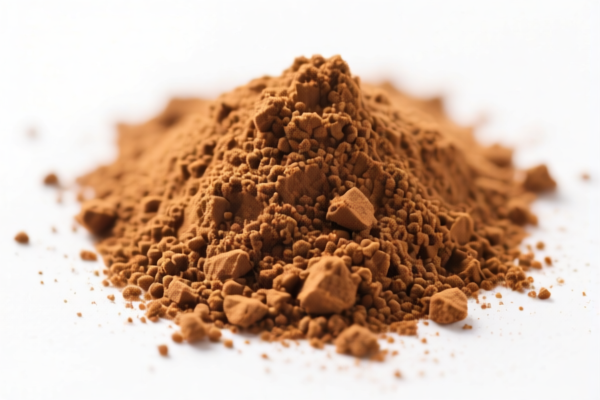
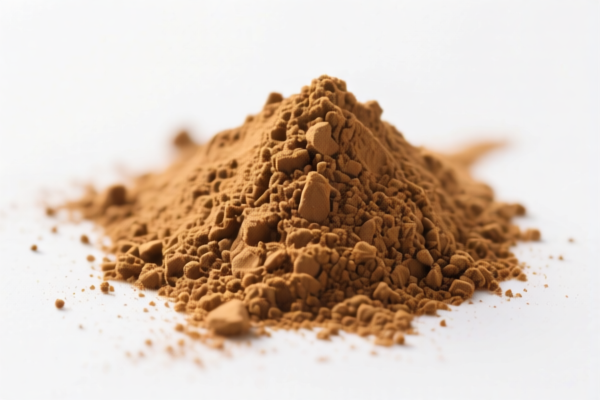
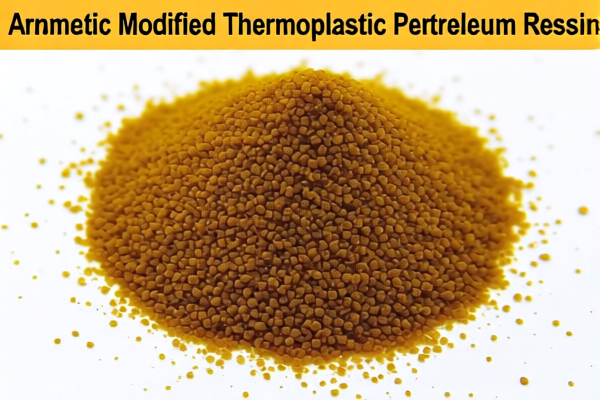
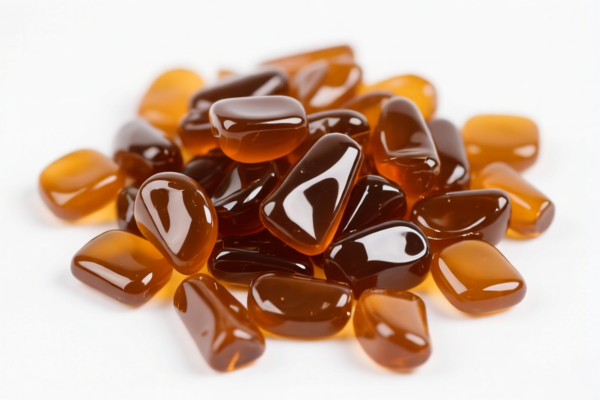
AI Analysis
🐜 Aromatic Insecticide | 芳香型杀虫剂
🌐 HS Code Reference & Customs Clearance Guide | 2026 Latest Tariff Analysis | Professional Clearance Strategy
📌 I. Product Definition & Classification: What Exactly is an "Aromatic Insecticide"?
In international trade, "Aromatic Insecticides" typically refer to pest control products where the active or supplementary components rely on aromatic compounds (often essential oils, musk derivatives, or synthetic aromatic substances) for their insecticidal effect or strong masking odor. These products are generally used in households, gardens, or commercial spaces to repel or kill insects like mosquitoes, flies, and moths.
⚠️ Key Distinction Point:
- Powder Form (粉剂): If the product is strictly a powder containing aromatic insecticidal ingredients → Likely falls under Chapter 38 (Miscellaneous Chemical Products).
- Liquid/Spray/Form (家用制剂): If it’s a ready-to-use household spray, liquid, or aerosol containing aromatic insecticides → Likely falls under Chapter 38 or Chapter 33 (Perfumery/Fragrances) depending on primary function.
- Deodorizer vs. Insecticide: If the primary function is fragrance/odor removal rather than killing insects, it may be classified under 3307, leading to different tax liabilities.
📦 II. HS Code Classification Details (2026 Latest Tariff Authority Comparison)
| HS Code | Product Description | Application Scenario | State/Form | Key Identifier |
|---|---|---|---|---|
3808.61.10.00 |
Aromatic insecticidal powder, containing aromatic substances, powder form | Household/garden insect killer powder | Powder | Active insecticidal + Aromatic |
3808.59.10.00 |
Aromatic insecticidal powder, containing aromatic substances, powder form | Household/garden insect killer powder (Different subheading) | Powder | Non-specific aromatic insecticide powder |
3808.91.25.01 |
Household aromatic insecticide, containing aromatic substances | Ready-to-use household sprays, coils, liquids | Liquid/Solid | Household use + Aromatic |
3808.91.15.00 |
Household aromatic insecticide, containing aromatic substances | Ready-to-use household sprays, coils, liquids | Liquid/Solid | Household use + Aromatic (Base duty 0%) |
3307.49.00.00 |
Household aromatic insecticide, prepared for room fragrance or deodorizing | Fragrance sprays, odor eliminators with mild insect-repelling property | Liquid/Gel | Primary function: Fragrance/Deodorizing |
🔍 Critical Note:
- The distinction between 3808 (Insecticides/Fungicides) and 3307 (Prepared Perfumes/Deodorizers) is crucial.
- If the product’s primary purpose is to kill insects, even if it smells good, it should generally be classified under 3808.
- If it’s primarily a room freshener with minor insect-repelling properties, it may be classified under 3307.49, which can result in a lower tax burden.
- Powder forms are distinctly categorized under 3808.61 or 3808.59, while ready-to-use household products fall under 3808.91.
💰 III. 2026 Latest Tariff Rate Details (Including Surtaxes & Policy Add-ons)
✅ Applicable Country: United States (US)
✅ Origin: China (CN)
✅ Effective Date: From November 10, 2025 (including subsequent imports)
✅ Trade War Context: Subject to Section 301 duties and IEEPA surcharges.
🎯 1. 3808.61.10.00 —— Aromatic Insecticidal Powder (Specific Subheading)
| Item | Content |
|---|---|
| Base Duty | 6.5% |
| Surtax (Section 301) | +25.0% |
| IEEPA Surtax | +10.0% |
| Total Tariff Rate | 41.5% |
| Tax Calculation | CIF Value × 41.5% |
| De Minimis Eligible? | ❌ No (Deny de minimis) |
| Legal Basis Path | IEEPA:9903.01.25 → USITC:3808.61.10.00 → FOOTNOTE:301 |
📌 Explanation:
- Base Duty: 6.5% applies to specific aromatic insecticidal powders.
- 25% Surtax: Applied due to US-China trade tensions (Section 301).
- 10% IEEPA: Additional surcharge on Chinese-origin goods under International Emergency Economic Powers Act.
- Total 41.5%: This is a high-cost category. Misclassification as a fragrance item could save money but risks penalties.
🎯 2. 3808.59.10.00 —— Aromatic Insecticidal Powder (General Subheading)
| Item | Content |
|---|---|
| Base Duty | 6.5% |
| Surtax (Section 301) | +0.0% |
| IEEPA Surtax | +10.0% |
| Total Tariff Rate | 16.5% |
| Tax Calculation | CIF Value × 16.5% |
| De Minimis Eligible? | ❌ No (Deny de minimis) |
| Legal Basis Path | IEEPA:9903.01.24 → USITC:3808.59.10.00 |
📌 Note:
- This is a significant saving compared to3808.61.10.00.
- The 0% Section 301 surtax suggests this subheading might be less targeted or exempt under specific policy footnotes.
- Crucial: Ensure the product truly fits the "general" aromatic insecticide powder definition to justify this lower rate. Misclassification can lead to audits.
🎯 3. 3808.91.25.01 —— Household Aromatic Insecticide (General Household)
| Item | Content |
|---|---|
| Base Duty | 6.5% |
| Surtax (Section 301) | +25.0% |
| IEEPA Surtax | +10.0% |
| Total Tariff Rate | 41.5% |
| Tax Calculation | CIF Value × 41.5% |
| De Minimis Eligible? | ❌ No |
| Legal Basis Path | IEEPA:9903.01.25 → USITC:3808.91.25.01 → FOOTNOTE:301 |
📌 Explanation:
- Standard household aromatic insecticides (sprays, liquids) face the highest tariff burden.
- The 25% surtax is fully applied.
- High Cost Alert: This is one of the most expensive categories for Chinese-made insecticides entering the US.
🎯 4. 3808.91.15.00 —— Household Aromatic Insecticide (Exempt Subheading)
| Item | Content |
|---|---|
| Base Duty | 0.0% |
| Surtax (Section 301) | +25.0% |
| IEEPA Surtax | +10.0% |
| Total Tariff Rate | 35.0% |
| Tax Calculation | CIF Value × 35.0% |
| De Minimis Eligible? | ❌ No |
| Legal Basis Path | IEEPA:9903.01.24 → USITC:3808.91.15.00 |
📌 Note:
- Although the Section 301 surtax is 25%, the Base Duty is 0%, resulting in a 35% total rate.
- This is cheaper than 41.5% but still expensive.
- Ensure the product description matches the specific criteria for3808.91.15.00to avoid penalties.
🎯 5. 3307.49.00.00 —— Fragrance/Deodorizing Preparation (Misclassification Risk)
| Item | Content |
|---|---|
| Base Duty | 6.0% |
| Surtax (Section 301) | +25.0% |
| IEEPA Surtax | +10.0% |
| Total Tariff Rate | 41.0% |
| Tax Calculation | CIF Value × 41.0% |
| De Minimis Eligible? | ❌ No |
| Legal Basis Path | IEEPA:9903.01.25 → USITC:3307.49.00.00 |
📌 Critical Warning:
- Even if classified as a fragrance/deodorizer, the total rate is 41.0%, which is almost as high as the insecticide categories.
- Do NOT assume fragrance codes are cheaper. Due to IEEPA and Section 301, the savings are minimal.
- Risk: If the product is an insecticide but declared as fragrance, Customs may reclassify and impose penalties + back taxes.
🛠️ IV. Customs Clearance Practical Advice (Battle-Tested Pitfall Guide)
✅ 1. Document Checklist (Non-Negotiable)
| Document | Required? | Explanation |
|---|---|---|
| ✅ Product Specification Sheet | ✔️ | Must clearly state: "Insecticidal," "Aromatic," active ingredients, and form (powder/liquid). |
| ✅ MSDS (Material Safety Data Sheet) | ✔️ | Essential for chemical products. Shows composition and safety handling. |
| ✅ Product Photos (Label & Packaging) | ✔️ | Must show "Insect Killer" claims. If it says "Freshener," but acts as insecticide, it’s high risk. |
| ✅ EPA Registration Number | ✔️ | In the US, insecticides must be registered with the EPA. Provide EPA Reg. No. if applicable. |
| ✅ Commercial Invoice | ✔️ | Must accurately describe the product as "Aromatic Insecticide" or "Fragrance" based on true function. |
| ✅ Certificate of Origin | ✔️ | Required for tariff calculation. |
✅ 2. Declaration Strategy (Key Mnemonic)
🔥 "Function First, Form Second, EPA Number is King!"
| Scenario | Correct Declaration | Incorrect Approach |
|---|---|---|
| Powder Insecticide | 3808.61.10.00 or 3808.59.10.00 |
Declare as "Perfume Powder" → High audit risk |
| Household Spray | 3808.91.25.01 (41.5%) or 3808.91.15.00 (35%) |
Declare as 3307.49 (41%) → No savings, high penalty risk |
| Room Deodorizer | 3307.49.00.00 |
Declare as "Insecticide" → 41% vs. 41% (No benefit, unnecessary risk) |
| Coils/Traps | 3808.91.xxxx |
Declare as "Fragrance" → If EPA registered as pesticide, penalty applies |
✅ 3. Special Case Handling
| Situation | Handling Advice |
|---|---|
| EPA Registered Product | Must declare as 3808. Even if aromatic, EPA registration proves insecticidal function. |
| Dual-Use Product | If it’s both a fragrance and insecticide, declare based on primary purpose. If killing insects is the main claim, use 3808. |
| Powder vs. Liquid | Powder has specific subheadings (3808.61/3808.59). Liquid/spray falls under 3808.91. Do not mix forms. |
| "Natural" or "Essential Oil" Claims | Still classified under 3808 if insecticidal. "Natural" does not exempt from tariff rates. |
🌍 V. Global Market Comparison (2026 Latest)
| Country/Region | Recommended HS Code | Tariff (China Origin) | Certification Requirement | Note |
|---|---|---|---|---|
| 🇺🇸 USA | 3808.91.25.01 / 3808.61.10.00 |
41.5% (Most Common) | EPA Registration + CBP Compliance | High tariff due to Section 301 + IEEPA |
| 🇨🇳 China | 3808.91.25.01 |
5-10% | China EPA Registration | Lower import tax, but domestic regulation strict |
| 🇪🇺 EU | 3808.94.10 |
0-6.5% | EU Biocidal Products Regulation (BPR) | BPR is stricter than US EPA |
| 🇬🇧 UK | 3808.94.10 |
0-6.5% | UK Biocides Regulation | Post-Brexit, similar to EU |
| 🇦🇺 Australia | 3808.94.10 |
5% | APVMA Registration | Moderate tariff, strict safety standards |
📌 Conclusion:
- USA has the highest tariff burden for aromatic insecticides due to trade war policies.
- EPA Registration is mandatory for any product claiming insecticidal action in the US.
- Misclassification as fragrance (3307) offers no significant tax savings in the US and carries high compliance risk.
📌 VI. Common Mistakes & Pitfall Guide (Lessons Learned)
❌ Mistake 1: Declaring an EPA-registered insecticide as "Room Fragrance"
👉 Consequence: Customs may reclassify to 3808, apply 41.5% tariff, and impose penalties for fraud.
❌ Mistake 2: Using 3808.59.10.00 (16.5%) for a product that clearly fits 3808.61.10.00 (41.5%)
👉 Consequence: Audit leads to back taxes + interest. Ensure the product’s aromatic composition matches the specific subheading criteria.
❌ Mistake 3: Ignoring EPA Registration Number
👉 Consequence: Product held at customs, delays, and potential import ban until EPA documentation is provided.
❌ Mistake 4: Assuming "Natural" or "Essential Oil" means lower tariff
👉 Consequence: Tariffs are based on HS Code function, not ingredient origin. "Natural" insecticides still face 41.5% in the US.
✅ Correct Approach:
"Aromatic Insecticidal Powder, EPA Reg. No. XXXXX-XXXXX, Contains [Active Ingredient], For Household Use, Powder Form"
🎯 VII. Conclusion: Professional Declaration, Cost Efficiency & Compliance!
🎯 Key Takeaways:
🔹 "If it kills insects, it’s 3808, not 3307!"
🔹 "Powder is 3808.61/59, Liquid is 3808.91."
🔹 "EPA Registration is non-negotiable in the US."
🔹 "Tariff is 41.5% for most household aromatic insecticides from China."
📌 Pro Tip:
- If your product is primarily a deodorizer with negligible insecticidal effect, consider declaring under 3307.49.00.00 (41.0%), but ensure no insecticidal claims are on the label.
- For powder formulations, carefully verify if
3808.59.10.00(16.5%) applies to your specific chemical composition to achieve significant savings.
📣 Immediate Action:
📞 Consult a Customs Broker to verify EPA compliance and HS Code accuracy.
🚀 Ensure EPA Registration is in place before shipping to avoid customs holds.
💡 Review Labeling: Remove any "Insect Killing" claims if you intend to declare as fragrance (but be honest).
✨ Professional Clearance Starts with Accurate Classification!
💼 Every Percent of Tariff Saved is Profit Earned!
Customer Reviews
About HS Code Classification
The Harmonized System (HS) is an internationally standardized nomenclature developed by the World Customs Organization (WCO) to classify traded products. Over 200 countries use the HS system as the basis for customs tariffs, trade statistics, and import/export regulations.
Each HS code follows a hierarchical structure:
- Chapter (2 digits) — Broad category of goods (e.g., Chapter 84: Machinery and Mechanical Appliances)
- Heading (4 digits) — More specific grouping within the chapter
- Subheading (6 digits) — Internationally standardized breakdown, used by all WCO member countries
- National subdivisions (8-10 digits) — Country-specific extensions for further classification, such as US HTSUS 10-digit codes
Correct HS code classification is essential for smooth customs clearance, accurate duty payment, and compliance with trade regulations. Misclassification can lead to customs delays, overpayment of duties, or penalties.
When importing from CN to US, the applicable tariff rates may include:
- Most-Favored-Nation (MFN) rate — The standard duty rate applied to WTO members
- General rate — Applied to countries without trade agreements
- Trade remedy duties — Additional tariffs such as Section 301 (anti-dumping), Section 232 (national security), or countervailing duties
The information provided on this page is for reference purposes only. For official classification, please consult with your local customs authority or a licensed customs broker.