Aromatic Insecticide Formula
CN → US| HS Code | Tariff Rate | Origin | Destination | Doc |
|---|---|---|---|---|
| 3808915001 | 40.0% | CN | US | Official Doc |
| 3808591000 | 16.5% | CN | US | Official Doc |
| 2942000500 | 41.5% | CN | US | Official Doc |
| 2942003500 | 41.5% | CN | US | Official Doc |
| 3808912501 | 41.5% | CN | US | Official Doc |
| 3808911500 | 35.0% | CN | US | Official Doc |
Product Images
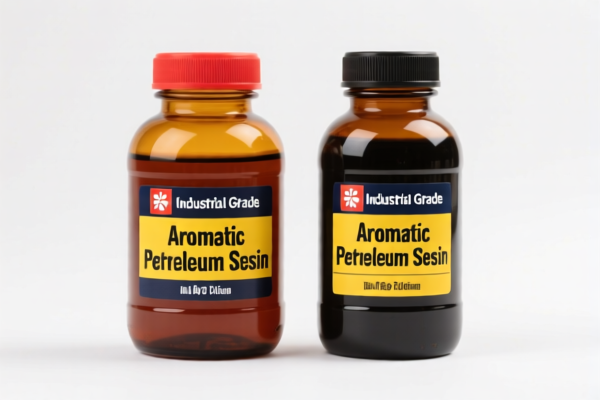
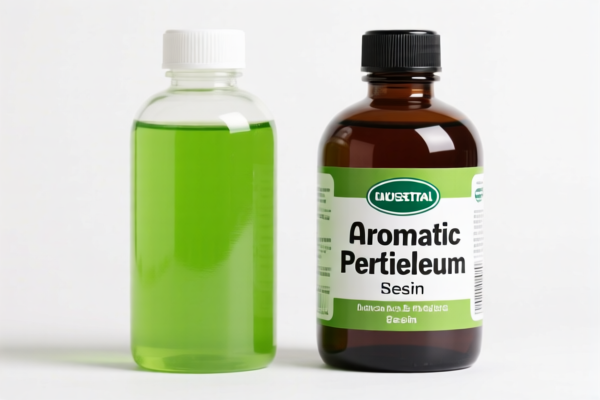
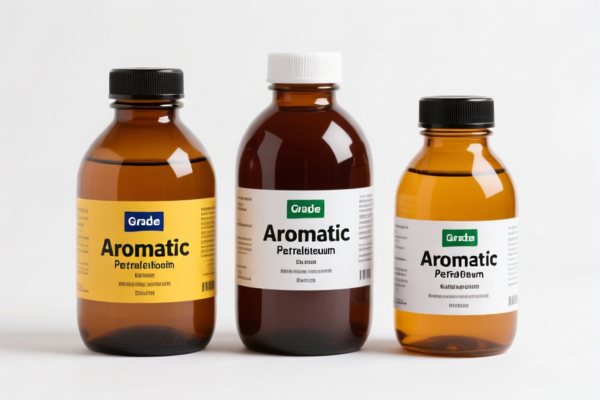
AI Analysis
🧪 Aromatic Insecticide Formula
🌐 HS Code Reference & Customs Clearance Guide | 2026 Latest Tariff Analysis | Professional-Level Clearance Strategy
📌 I. Product Definition & Classification: Do You Really Understand "Aromatic Insecticide Formula"?
An Aromatic Insecticide Formula is a specialized pest control preparation containing aromatic organic compounds. In international trade, it is primarily classified based on its chemical composition and functional form. The key distinction lies in whether it is classified as a chemical preparation (Chapter 38) or an organic chemical mixture (Chapter 29).
1. Chemical Preparations (Chapter 38):
- Insecticides (3808.91.xx): Formulations specifically designed for pest control, often containing active ingredients dissolved or suspended in a solvent/carrier.
- Aromatic Nature: If the formulation emphasizes "aromatic" characteristics (e.g., scent-based repellents or aromatic active ingredients), specific sub-headings like 3808.91.15 or 3808.91.25 may apply.
2. Organic Chemical Mixtures (Chapter 29):
- Miscellaneous Organic Compounds (2942.00.xx): If the product is primarily a mixture of organic chemicals not specifically categorized as a finished insecticide preparation elsewhere, it may fall under Chapter 29.
- Aromatic Compounds: Specific sub-headings like 2942.00.35 target aromatic compounds.
⚠️ Key Distinction Point:
- If it is a ready-to-use formulation specifically for killing insects → Classify under 3808 (Preparations).
- If it is a chemical intermediate/mixture of organic compounds → Classify under 2942 (Organic Chemicals).
- "Aromatic" implies the presence of benzene rings or similar structures, which influences the sub-heading within both chapters.
📦 II. HS Code Classification Details (2026 Latest Tariff Authority Comparison)
| HS Code | Product Description | Application Scenario | Chemical Nature |
|---|---|---|---|
3808.91.50.01 |
Insecticide formulation, in prepared form, classified under "Other insecticides" | General professional or household insecticide sprays/aerosols | ✅ Prepared Formulation |
3808.59.10.00 |
Insecticide formulation, purpose fully matches insecticides, in prepared form | Standard insecticide products without specific aromatic classification | ✅ Prepared Formulation |
2942.00.05.00 |
Insecticide formula, classified as a mixture of organic compounds, fitting "Other organic compounds" | Chemical mixtures sold as raw materials or intermediates | ❌ Organic Mixture |
2942.00.35.00 |
Insecticide formula, composed of organic substances, fitting "Aromatic" category under organic compounds | Chemical mixtures with dominant aromatic structures | ❌ Organic Mixture (Aromatic) |
3808.91.25.01 |
Household aromatic insecticide, explicitly contains aromatic components, purpose is insecticidal | Scented home insecticide sprays, mosquito coils, plug-ins | ✅ Prepared (Household/Aromatic) |
3808.91.15.00 |
Household aromatic insecticide, consistent with classification for insecticides (containing aromatics) | Specific household aromatic pest control products | ✅ Prepared (Household/Aromatic) |
🔍 Important Reminder:
- "Preparation" vs. "Chemical": Customs authorities will examine the formulation intent. If it is sold for immediate use against pests, 3808 is preferred. If sold as a chemical ingredient, 2942 applies.
- "Aromatic" Labeling: Products explicitly marketed as "aromatic" (for scent or specific chemical properties) must be clearly declared to avoid misclassification penalties.
💰 III. 2026 Latest Tariff Rate Details (Including Additional Taxes, Policy Add-ons)
✅ Applicable Country: United States (US)
✅ Origin: China (CN)
✅ Effective Date: From November 10, 2025 (including subsequent imports)
🎯 1. 3808.91.50.01 —— Insecticide Formulation (Other)
| Item | Content |
|---|---|
| Base Tariff | 5.0% |
| Additional Tariff (Section 301) | +25.0% |
| Section 122 Tariff | +10.0% |
| Total Tariff Rate | 40.0% |
| Tax Calculation | CIF Value × 40% |
| De Minimis Eligibility | ❌ Not Eligible (deny_de_minimis) |
| Legal Basis Path | Base: 3808.91.50 → Section 301: 9903.01.25 → Section 122: 9903.01.24 |
📌 Explanation:
- Base 5%: Standard MFN rate for "Other insecticides, repellents, and sprays."
- Section 301 (+25%): Applied to Chinese-origin goods under US trade remedy laws.
- Section 122 (+10%): Additional tariff under Section 232/122 authorities for national security/economic reasons.
- Total 40%: High tariff burden; requires careful cost calculation.
🎯 2. 3808.59.10.00 —— Insecticide Formulation (Prepared)
| Item | Content |
|---|---|
| Base Tariff | 6.5% |
| Additional Tariff (Section 301) | 0.0% |
| Section 122 Tariff | +10.0% |
| Total Tariff Rate | 16.5% |
| Tax Calculation | CIF Value × 16.5% |
| De Minimis Eligibility | ❌ Not Eligible (deny_de_minimis) |
| Legal Basis Path | Base: 3808.59.10 → Section 122: 9903.01.24 |
📌 Explanation:
- Base 6.5%: Slightly higher base rate than3808.91.
- Section 301 Exemption: 0% additional tariff due to specific listing or exclusion.
- Section 122 (+10%): Still applies.
- Total 16.5%: Significantly lower than other insecticide classifications. This is a cost-saving classification if legally applicable.
🎯 3. 2942.00.05.00 —— Insecticide Formula (Organic Mixture)
| Item | Content |
|---|---|
| Base Tariff | 6.5% |
| Additional Tariff (Section 301) | +25.0% |
| Section 122 Tariff | +10.0% |
| Total Tariff Rate | 41.5% |
| Tax Calculation | CIF Value × 41.5% |
| De Minimis Eligibility | ❌ Not Eligible (deny_de_minimis) |
| Legal Basis Path | Base: 2942.00.05 → Section 301: 9903.01.25 → Section 122: 9903.01.24 |
📌 Explanation:
- Classified as an "Other Organic Compound."
- Total 41.5%: Highest tariff among all options. Avoid if possible unless it is strictly a chemical intermediate.
🎯 4. 2942.00.35.00 —— Insecticide Formula (Aromatic Organic)
| Item | Content |
|---|---|
| Base Tariff | 6.5% |
| Additional Tariff (Section 301) | +25.0% |
| Section 122 Tariff | +10.0% |
| Total Tariff Rate | 41.5% |
| Tax Calculation | CIF Value × 41.5% |
| De Minimis Eligibility | ❌ Not Eligible (deny_de_minimis) |
| Legal Basis Path | Base: 2942.00.35 → Section 301: 9903.01.25 → Section 122: 9903.01.24 |
📌 Explanation:
- Specific to aromatic organic compounds.
- Total 41.5%: Same as other Chapter 29 classifications. High cost.
🎯 5. 3808.91.25.01 —— Household Aromatic Insecticide
| Item | Content |
|---|---|
| Base Tariff | 6.5% |
| Additional Tariff (Section 301) | +25.0% |
| Section 122 Tariff | +10.0% |
| Total Tariff Rate | 41.5% |
| Tax Calculation | CIF Value × 41.5% |
| De Minimis Eligibility | ❌ Not Eligible (deny_de_minimis) |
| Legal Basis Path | Base: 3808.91.25 → Section 301: 9903.01.25 → Section 122: 9903.01.24 |
📌 Explanation:
- Specific for household aromatic insecticides.
- Total 41.5%: High tariff. Despite being "household," it does not qualify for the Section 301 exemption.
🎯 6. 3808.91.15.00 —— Household Aromatic Insecticide (Specific Aromatic Class)
| Item | Content |
|---|---|
| Base Tariff | 0.0% |
| Additional Tariff (Section 301) | +25.0% |
| Section 122 Tariff | +10.0% |
| Total Tariff Rate | 35.0% |
| Tax Calculation | CIF Value × 35.0% |
| De Minimis Eligibility | ❌ Not Eligible (deny_de_minimis) |
| Legal Basis Path | Base: 3808.91.15 → Section 301: 9903.01.25 → Section 122: 9903.01.24 |
📌 Explanation:
- Base tariff is 0%, but Section 301 (+25%) and Section 122 (+10%) still apply.
- Total 35.0%: Lower than3808.91.25.01(41.5%) due to lower base rate.
- Best Option among household aromatic classifications.
🛠️ IV. Customs Clearance Practical Advice (Combat Pitfall Guide)
✅ 1. Required Documentation Checklist (Non-negotiable)
| Document | Mandatory | Description |
|---|---|---|
| ✅ Product Specification Sheet | ✔️ | Must detail active ingredients, concentration, solvent, and whether it is a "preparation" or "chemical mixture." |
| ✅ Safety Data Sheet (SDS) | ✔️ | Essential for hazardous materials. Must indicate flammability, toxicity, and aromatic components. |
| ✅ Product Photos (Label & Packaging) | ✔️ | Clear view of ingredient list, usage instructions, and hazard warnings. |
| ✅ Commercial Invoice | ✔️ | Must accurately describe goods as "Insecticide Formulation" or "Organic Chemical Mixture," not just "Scent." |
| ✅ Certificate of Origin (CO) | ✔️ | To verify Chinese origin and apply correct additional tariffs. |
| ✅ Usage Declaration | ✔️ | Explicitly state: "For insect control purposes" or "For chemical formulation purposes." |
✅ 2. Declaration Tips (Key Mantra)
🔥 "Preparation vs. Chemical, Purpose is Key!"
| Scenario | Correct Declaration | Wrong Practice |
|---|---|---|
| Ready-to-use spray for homes | 3808.91.xx (Insecticide Preparation) |
Misdeclare as 2942 (Chemical) → Audit risk |
| Raw chemical mix for manufacturers | 2942.00.xx (Organic Compound) |
Misdeclare as 3808 (Insecticide) → Potential fine |
| "Aromatic" for scent | Explicitly state "Aromatic" in description | Vague description → Misclassification risk |
| Household use | 3808.91.15 or 3808.91.25 |
Generic "Insecticide" → May miss specific sub-headings |
✅ 3. Special Circumstances Handling
| Scenario | Handling Advice |
|---|---|
| OEM Custom Formula | Provide client order + formula breakdown to prove it is a "preparation" under 3808. |
| High Aromatic Content | Ensure SDS highlights aromatic compounds; customs may scrutinize for chemical vs. preparation status. |
| Section 301 Exemption Claim | For 3808.59.10.00, ensure the product matches the specific exclusion criteria to claim 0% Section 301. |
| Mixed Shipments | Do not mix 3808 and 2942 in one entry without clear separation; each item must be classified correctly. |
🌍 V. Global Market Customs Clearance Comparison (2026 Latest)
| Country/Region | Recommended HS Code | Tariff | Certification Requirements | Remarks |
|---|---|---|---|---|
| 🇺🇸 USA | 3808.91.50.01 or 3808.59.10.00 |
16.5% - 40% | EPA Registration (if pesticide) | Strict pesticide regulation; high tariffs. |
| 🇨🇳 China | 3808.91.50 or 3808.59.10 |
5% - 6.5% | Pesticide Registration Certificate | Lower tariffs; domestic registration required. |
| 🇪🇺 EU | 3808.91 or 2942.00 |
0% - 6.5% | REACH Compliance + BPR (Biocidal) | No Section 301/122 taxes; strict chemical safety. |
| 🇦🇺 Australia | 3808.91 |
5% | APVMA Approval | Moderate tariffs; strict biocide approval. |
| 🇯🇵 Japan | 3808.91 |
0% - 5% | PHWA (Pharmaceuticals and Medical Devices) | Low tariffs; strong regulatory oversight. |
📌 Conclusion:
- USA has the highest tariff burden due to Section 301 (+25%) and Section 122 (+10%).
-3808.59.10.00offers the lowest total tariff (16.5%) if applicable.
- EU and Japan are more tariff-friendly but have strict chemical safety regulations (REACH, PHWA).
📌 VI. Common Mistakes & Pitfall Guide (Blood & Tears Lessons)
❌ Mistake 1: Misclassifying "Insecticide Preparation" as "Organic Chemical Mixture" (2942) to avoid pesticide regulations
👉 Consequence: Customs audit, fines, and potential detention for regulatory non-compliance.
❌ Mistake 2: Failing to declare "Aromatic" content when required by specific sub-headings
👉 Consequence: Misclassification penalty; may be reassigned to higher tariff codes.
❌ Mistake 3: Assuming all insecticides are exempt from Section 301
👉 Consequence: Unexpected 25% additional tariff on 3808.91.50.01 and 2942 codes.
❌ Mistake 4: Using vague descriptions like "Pest Control Spray" without detailing formulation type
👉 Consequence: Customs may classify as the highest possible duty rate or demand redeclaration.
✅ Correct Approach:
"Aromatic Insecticide Preparation, Household Use, Model XYZ, Contains [Active Ingredient], EPA Registered No. [Number], SDS Available"
🎯 VII. Conclusion: Professional Declaration, Time-Saving, Cost-Efficient!
🎯 Remember the Mantra:
🔹 "Preparation vs. Chemical, Purpose is Key!
🔹3808.59.10.00saves you 25% in Section 301!
🔹2942is for chemicals, not sprays!
🔹 Aromatic labels must be accurate!
📌 Pro Tip:
- If your product qualifies for 3808.59.10.00, ensure it meets the specific definition of "insecticide formulation" under US customs guidelines to claim the 0% Section 301 rate.
- Apply for Advance Ruling (Ruling Letter) from CBP to confirm HS Code classification before shipment. This avoids post-import audits and back-taxes.
📣 Immediate Action:
📞 Consult a professional customs broker + Provide SDS + Apply for HS Code Advance Ruling
🚀 Ensure smooth customs clearance, minimize tariffs, and maximize profit margins!
✨ Professional Clearance Starts with Accurate Classification!
💼 Every cent of cost deserves precise calculation!
Customer Reviews
About HS Code Classification
The Harmonized System (HS) is an internationally standardized nomenclature developed by the World Customs Organization (WCO) to classify traded products. Over 200 countries use the HS system as the basis for customs tariffs, trade statistics, and import/export regulations.
Each HS code follows a hierarchical structure:
- Chapter (2 digits) — Broad category of goods (e.g., Chapter 84: Machinery and Mechanical Appliances)
- Heading (4 digits) — More specific grouping within the chapter
- Subheading (6 digits) — Internationally standardized breakdown, used by all WCO member countries
- National subdivisions (8-10 digits) — Country-specific extensions for further classification, such as US HTSUS 10-digit codes
Correct HS code classification is essential for smooth customs clearance, accurate duty payment, and compliance with trade regulations. Misclassification can lead to customs delays, overpayment of duties, or penalties.
When importing from CN to US, the applicable tariff rates may include:
- Most-Favored-Nation (MFN) rate — The standard duty rate applied to WTO members
- General rate — Applied to countries without trade agreements
- Trade remedy duties — Additional tariffs such as Section 301 (anti-dumping), Section 232 (national security), or countervailing duties
The information provided on this page is for reference purposes only. For official classification, please consult with your local customs authority or a licensed customs broker.