Aromatic Insecticide Formulation
CN → US| HS Code | Tariff Rate | Origin | Destination | Doc |
|---|---|---|---|---|
| 3808611000 | 41.5% | CN | US | Official Doc |
| 3808591000 | 16.5% | CN | US | Official Doc |
| 3307490000 | 41.0% | CN | US | Official Doc |
| 3808912501 | 41.5% | CN | US | Official Doc |
| 3808911500 | 35.0% | CN | US | Official Doc |
Product Images
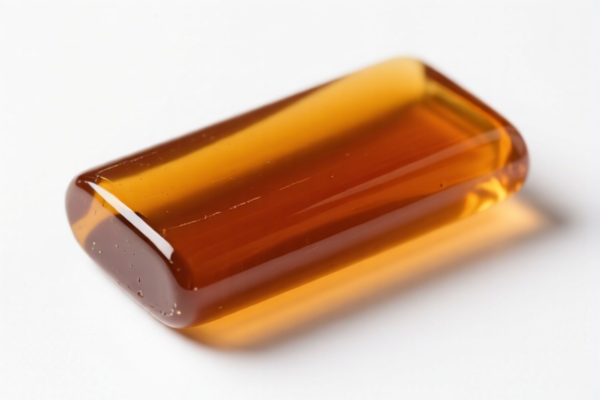

AI Analysis
🐜 Aromatic Insecticide Formulation
🌐 HS Code Reference & Customs Clearance Guide | 2026 Latest Tariff Analysis | Professional Clearance Strategy
📌 I. Product Definition & Classification: Do You Really Understand "Aromatic Insecticides"?
"Aromatic Insecticide Formulation" refers to pest control products containing aromatic compounds (such as essential oils, synthetic aromatics, or specific chemical classes like pyrethroids often categorized under aromatic/organic structures in trade contexts) formulated as powders, aerosols, or liquids for insect control. In international trade, these are primarily classified under Chapter 38 (Miscellaneous Chemical Products) or Chapter 33 (Essential Oils & Perfumery), depending on their primary function and composition.
Key Distinction Points: - Primary Function: If the main purpose is insecticide/pest control, it generally falls under HS 3808. - Primary Function: If the main purpose is perfumery, air freshening, or deodorizing, with incidental insecticidal properties, it may fall under HS 3307 or 3808.91 depending on specific ingredients and marketing. - Form Factor: Powder vs. Liquid/Spray can affect classification nuances within the codes.
⚠️ Critical Classification Rule:
- Products explicitly labeled and marketed as "Insecticides" containing aromatic ingredients are predominantly classified under HS 3808.
- The distinction between 3808.59 (other insecticides) and 3808.61 (insecticides in powder form) or 3808.91 (other preparations) depends on the physical state and specific chemical composition.
- Products marketed as "Air Fresheners" or "Room Fragrances" with insecticidal claims may be scrutinized and potentially reclassified if the insecticidal function is deemed primary.
📦 II. HS Code Classification Details (2026 Latest Tariff Authority Comparison)
Based on the provided data, here are the four relevant HS Codes for Aromatic Insecticide Formulations:
| HS Code | Product Description | Key Characteristics | Typical Form |
|---|---|---|---|
3808.61.10.00 |
Aromatic Insecticide Powder | Contains aromatic components; formulated as a powder for insect control | Powder |
3808.59.10.00 |
Aromatic Insecticide (Other) | Contains aromatic components; formulated for insect control; not powder (e.g., liquid, aerosol, dust) | Liquid/Aerosol/Dust* |
3307.49.00.00 |
Household Aromatic Insecticide (Fragrance) | Primarily for room fragrance/deodorizing; insecticidal effect is secondary or incidental | Liquid/Spray |
3808.91.25.01 |
Household Aromatic Insecticide (Other) | Contains aromatic components; for insect control; other preparations not elsewhere specified | Liquid/Ready-to-Use |
3808.91.15.00 |
Household Aromatic Insecticide (Other) | Contains aromatic components; for insect control; other preparations; potentially lower base tariff scenarios | Liquid/Ready-to-Use |
Note: "Dust" in pesticide contexts may sometimes fall under 3808.59 if not strictly a "powder" in the cosmetic sense, but 3808.61 is specific for powder forms. Always verify with local customs rulings.
🔍 重点提醒 (Key Reminder):
- 3808.61.10.00 is specifically for Powders. Do not misdeclare liquids or aerosols as powders.
- 3307.49.00.00 is for products where the primary function is fragrance/deodorizing. If the product is clearly an insecticide (e.g., mosquito killer, fly spray) marketed as such, it should not be declared under 3307 to avoid penalties for misclassification.
- 3808.91.xxxx codes cover "Other" insecticide preparations. The difference between25.01and15.00often lies in specific chemical sub-classifications or duty rates under the Harmonized Tariff Schedule.
💰 III. 2026 Latest Tariff Rate Breakdown (Including Surcharges & Policy Add-ons)
✅ Applicable Country: United States (US)
✅ Origin: China (CN)
✅ Effective Date: Post-2025 policies (Section 301 & IEEPA)
🎯 1. 3808.61.10.00 — Aromatic Insecticide Powder
| Item | Content |
|---|---|
| Base Tariff | 6.5% (ad valorem) |
| Section 301 Surcharge | +25.0% |
| IEEPA Surcharge (122 Clause) | +10.0% |
| Total Tariff Rate | 41.5% |
| Tax Calculation | CIF Value × 41.5% |
| De Minimis Exemption | ❌ Not Eligible (High tariff rates usually exclude de minimis benefits for Chinese origin goods under current policies) |
| Legal Basis Path | USITC:3808.61.10.00 → Section 301 Footnote 9903.88.01 → IEEPA:9903.01.25 |
📌 Explanation:
- Base Rate: 6.5% is the standard MFN rate for insecticides in powder form.
- Section 301: The 25% tariff is applied due to the product's classification under List 4B or similar affected categories for Chinese goods.
- IEEPA 122: The additional 10% is applied under the International Emergency Economic Powers Act for specific Chinese imports.
- Total Cost Impact: High. Importers must factor in a 41.5% tariff cost.
🎯 2. 3808.59.10.00 — Aromatic Insecticide (Other Forms)
| Item | Content |
|---|---|
| Base Tariff | 6.5% (ad valorem) |
| Section 301 Surcharge | +0.0% (Note: Data shows 0%, possibly due to specific exemption or classification nuance) |
| IEEPA Surcharge (122 Clause) | +10.0% |
| Total Tariff Rate | 16.5% |
| Tax Calculation | CIF Value × 16.5% |
| De Minimis Exemption | ❌ Not Eligible |
| Legal Basis Path | USITC:3808.59.10.00 → IEEPA:9903.01.24 |
📌 Important:
- This code offers a significantly lower total rate (16.5%) compared to the powder form (41.5%).
- Strategic Implication: If your product can be legally and functionally classified as a non-powder formulation (e.g., liquid, aerosol, or dust that is not strictly a "powder"), this may be a cost-saving opportunity. However, ensure the physical form matches the description.
🎯 3. 3307.49.00.00 — Household Aromatic Insecticide (Fragrance)
| Item | Content |
|---|---|
| Base Tariff | 6.0% (ad valorem) |
| Section 301 Surcharge | +25.0% |
| IEEPA Surcharge (122 Clause) | +10.0% |
| Total Tariff Rate | 41.0% |
| Tax Calculation | CIF Value × 41.0% |
| De Minimis Exemption | ❌ Not Eligible |
| Legal Basis Path | USITC:3307.49.00.00 → Section 301 → IEEPA |
📌 Warning:
- This classification is risky if the product is primarily an insecticide. Customs may reclassify it to 3808 if the insecticidal function is deemed primary, leading to back taxes and penalties.
- Use this only for products where the main purpose is indeed fragrance/deodorizing, and insect repellency is a minor secondary effect (e.g., citronella candles, room sprays with repellent claims).
🎯 4. 3808.91.25.01 & 3808.91.15.00 — Other Household Aromatic Insecticides
| HS Code | Total Tariff | Key Components | Notes |
|---|---|---|---|
3808.91.25.01 |
41.5% | Base 6.5% + Section 301 25% + IEEPA 10% | Standard "Other" insecticide preparation. High tax. |
3808.91.15.00 |
35.0% | Base 0.0% + Section 301 25% + IEEPA 10% | Potential Optimization: Lower base tariff (0%) suggests a specific sub-category or exemption eligibility. Verify if your product meets the specific criteria for this sub-code. |
📌 Optimization Insight:
-3808.91.15.00has a 35.0% total rate vs. 41.5% for3808.91.25.01.
- If your product is an "Other" insecticide preparation (liquid, aerosol, etc.), check with a customs broker if it qualifies for3808.91.15.00to save 6.5% on the base tariff.
🛠️ IV. Customs Clearance Practical Advice (Real-World Pitfall Avoidance)
✅ 1. Document Checklist (All Required)
| Document | Mandatory | Description |
|---|---|---|
| ✅ Product Label & Packaging | ✔️ | Clear indication of primary function (Insecticide vs. Fragrance). Must match HS Code justification. |
| ✅ Safety Data Sheet (SDS) | ✔️ | Essential for chemical products. Must list active ingredients (aromatic compounds). |
| ✅ EPA Registration (if US) | ✔️ | For products with insecticidal claims, EPA registration is often required by law, not just customs. |
| ✅ Certificate of Origin (CO) | ✔️ | To prove Chinese origin and apply correct tariffs. |
| ✅ Commercial Invoice | ✔️ | Detailed description: "Aromatic Insecticide Powder" vs. "Aromatic Insecticide Liquid". |
| ✅ Product Specification Sheet | ✔️ | Physical form (powder/liquid), active ingredient percentage, packaging size. |
✅ 2. Declaration Strategy (Key Mantras)
🔥 “Form Determines Code, Function Dictates Rate!”
| Scenario | Correct Declaration | Wrong Practice |
|---|---|---|
| Powder Insecticide | 3808.61.10.00 |
Misdeclare as liquid 3808.59.10.00 → 41.5% vs 16.5% Penalty! |
| Liquid/Aerosol Insecticide | 3808.59.10.00 or 3808.91.xxxx |
Misdeclare as fragrance 3307.49.00.00 → Reclassification & Penalties |
| Fragrance with Repellent | 3307.49.00.00 |
Overstate insecticidal power → Misclassification |
| "Other" Insecticide | 3808.91.15.00 (if eligible) |
Default to 3808.91.25.01 → Higher Tax |
✅ 3. Special Cases Handling
| Scenario | Handling Advice |
|---|---|
| EPA Compliance | Insecticides sold in the US must be registered with the EPA. Customs will cross-check with EPA data. No EPA number = Detention/Return. |
| Mixed Shipments | Do not mix powders and liquids in one HS Code declaration. Separate line items required. |
| Private Label (OEM) | Ensure the label clearly states the manufacturer and EPA registration number. |
| Essential Oil-Based | If the product is >50% essential oils and marketed as a fragrance, 3307 might be argued, but if it kills insects, 3808 is safer and more likely. |
🌍 V. Global Market Clearance Comparison (2026 Latest)
| Country/Region | Recommended HS Code | Tariff (China Origin) | Certification Required | Notes |
|---|---|---|---|---|
| 🇺🇸 USA | 3808.61.10.00 / 3808.59.10.00 |
16.5% - 41.5% | EPA Registration + SDS | High scrutiny on insecticidal claims. |
| 🇨🇳 China | 3808.61.10.00 / 3808.59.10.00 |
5-6% | Pesticide Registration Certificate | Domestic registration required. |
| 🇪🇺 EU | 3808.91 / 3808.59 |
0-6.5% (Most Favored) | Biocidal Products Regulation (BPR) | BPR approval is mandatory for insecticides. |
| 🇬🇧 UK | 3808.91 |
0-6.5% | Biocidal Products Regulation (BPR) | Post-Brexit, UK has its own BPR system. |
| 🇦🇺 Australia | 3808.91 |
5% | APVMA Registration | APVMA approval required for insecticides. |
📌 Conclusion:
- USA has the most complex and high-cost tariff structure due to Section 301 and IEEPA.
- EPA (US) and BPR (EU/UK) are non-negotiable for insecticides. Customs clearance will fail without these.
- Tariff Optimization: In the US, choosing3808.59.10.00(16.5%) over3808.61.10.00(41.5%) is a significant saving if the product form allows.
📌 VI. Common Mistakes & Pitfall Guide (Blood & Tears Lessons)
❌ Mistake 1: Declaring an insecticide powder as a "fragrance powder" to avoid Section 301 tariffs.
👉 Consequence: Customs audit finds EPA registration or insecticidal claims → Retrospective tax + 10% penalty + seizure.
❌ Mistake 2: Using 3307.49.00.00 for a product primarily marketed as a mosquito killer.
👉 Consequence: Rejected by CBP, forced to reclassify to 3808, delayed shipment, demurrage charges.
❌ Mistake 3: Ignoring EPA Registration for US imports.
👉 Consequence: Detention at border. Product cannot be legally sold or cleared. Return or destroy.
❌ Mistake 4: Confusing "Dust" (pesticide) with "Powder" (cosmetic/industrial).
👉 Consequence: Misclassification between 3808.59 and 3808.61. Ensure physical form and intended use match the code.
✅ Correct Approach:
"Aromatic Insecticide Powder, Active Ingredient: [Chemical Name], EPA Reg. No. 12345-67, Net Weight: 1kg"
🎯 VII. Conclusion: Professional Declaration, Time & Cost Saving!
🎯 Remember the Mantra:
🔹 "Powder is 41.5%, Liquid is 16.5%, Fragrance is Risky, EPA is King!"
🔹 "HS Code Determines Tax, EPA Determines Legality, Declaration Determines Clearance Speed!"
📌 Pro Tip:
- For US Imports, consider Advance Rulings from CBP to confirm the correct HS Code for your specific formulation.
- If your product can be legally classified as a fragrance/deodorizer (3307) due to low insecticidal content or dual-purpose marketing, document this thoroughly. However, do not force it if the primary function is pest control.
- Always consult with a licensed customs broker and ensure EPA registration is complete before shipping.
📣 Immediate Action:
📞 Contact a Customs Broker + Provide SDS & Label + Verify EPA Registration + Apply for HS Code Advance Ruling
🚀 Ensure Smooth Clearance, Legal Compliance, and Cost Efficiency!
✨ Professional Customs Clearance Starts with Accurate Classification!
💼 Every Percent of Tax Saved is Profit Gained!
Customer Reviews
About HS Code Classification
The Harmonized System (HS) is an internationally standardized nomenclature developed by the World Customs Organization (WCO) to classify traded products. Over 200 countries use the HS system as the basis for customs tariffs, trade statistics, and import/export regulations.
Each HS code follows a hierarchical structure:
- Chapter (2 digits) — Broad category of goods (e.g., Chapter 84: Machinery and Mechanical Appliances)
- Heading (4 digits) — More specific grouping within the chapter
- Subheading (6 digits) — Internationally standardized breakdown, used by all WCO member countries
- National subdivisions (8-10 digits) — Country-specific extensions for further classification, such as US HTSUS 10-digit codes
Correct HS code classification is essential for smooth customs clearance, accurate duty payment, and compliance with trade regulations. Misclassification can lead to customs delays, overpayment of duties, or penalties.
When importing from CN to US, the applicable tariff rates may include:
- Most-Favored-Nation (MFN) rate — The standard duty rate applied to WTO members
- General rate — Applied to countries without trade agreements
- Trade remedy duties — Additional tariffs such as Section 301 (anti-dumping), Section 232 (national security), or countervailing duties
The information provided on this page is for reference purposes only. For official classification, please consult with your local customs authority or a licensed customs broker.