Aromatic Insecticide Powder
CN → US| HS Code | Tariff Rate | Origin | Destination | Doc |
|---|---|---|---|---|
| 3808611000 | 41.5% | CN | US | Official Doc |
| 3808591000 | 16.5% | CN | US | Official Doc |
| 3808990800 | 41.5% | CN | US | Official Doc |
| 3808915001 | 40.0% | CN | US | Official Doc |
| 3307490000 | 41.0% | CN | US | Official Doc |
Product Images
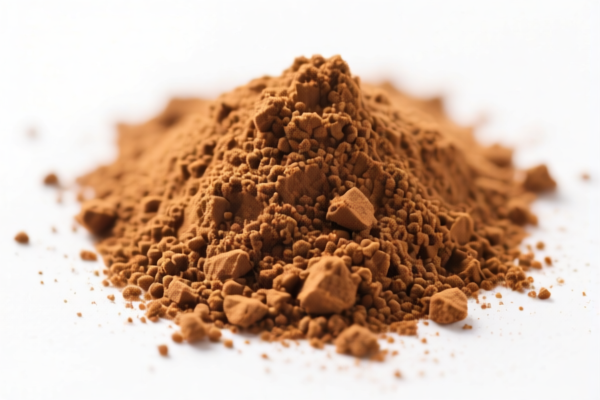
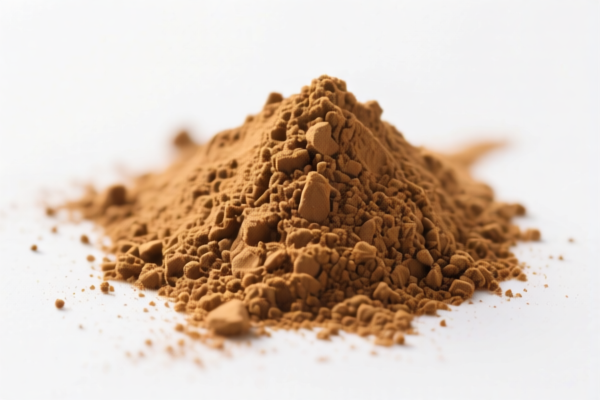
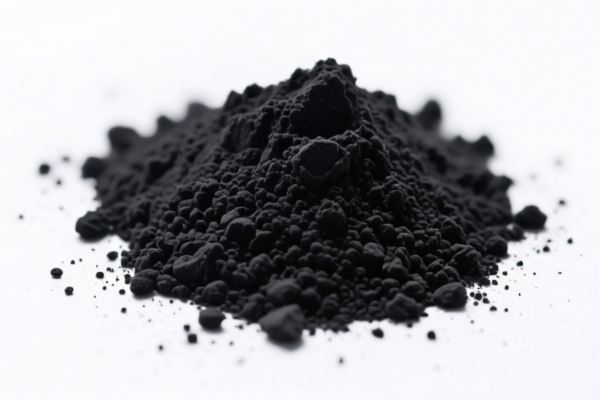
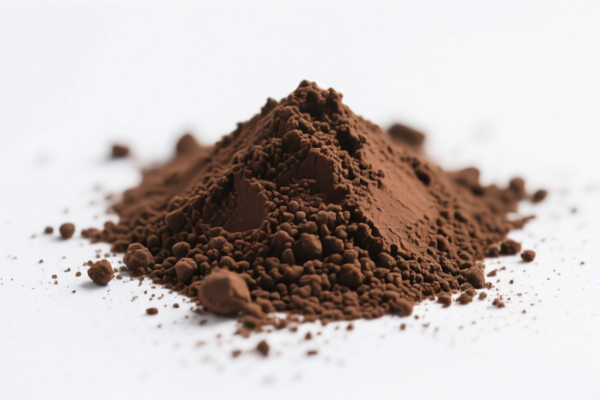
AI Analysis
🌿 Aromatic Insecticide Powder (Aromatic Insecticides)
🌐 HS Code Reference & Customs Clearance Guide | 2026 Latest Tariff Analysis | Professional Clearance Strategy for US Imports
📌 I. Product Definition & Classification: What Exactly is "Aromatic Insecticide Powder"?
Aromatic Insecticide Powder refers to pesticide formulations containing aromatic compounds (such as pyrethroids derived from natural flowers or synthetic aromatic bases) in powder form. These are primarily used for household pest control, agricultural pest management, or spatial repellency.
In international trade, the classification depends heavily on: 1. Formulation Type: Is it a standard "powder" (dust) or a "wettable powder" (WP)? 2. Usage Intent: Is it strictly for pest control (insecticide) or is it marketed as a home fragrance/deodorant with insect-repellent properties? 3. Composition: Does it contain specific aromatic chemical structures that trigger different HS codes?
⚠️ Key Distinction:
- If it is a pesticide formulation designed to kill/repel insects → It falls under Chapter 38 (Miscellaneous Chemical Products).
- If it is primarily a home fragrance/deodorant that also repels insects → It may fall under Chapter 33 (Essential Oils & Perfumery Preparations).
- Misclassification Risk: Declaring a functional pesticide as a "fragrance" can lead to heavy penalties. Conversely, declaring a simple air freshener as a "pesticide" may trigger unnecessary regulatory approvals.
📦 II. HS Code Classification Details (Based on Provided Data)
The following HS Codes are derived directly from the provided <DATA>. Note that 122 Clause Tariffs (Section 122 of the Trade Act, often related to specific enforcement or anti-dumping measures) and Section 301 Tariffs apply to Chinese-origin goods entering the US.
| HS Code | Product Description | Primary Application | Tariff Rate |
|---|---|---|---|
| 3808.61.10.00 | Aromatic insecticide powder, containing aromatic components, for insecticidal use (Powder formulation) | Standard aromatic insecticidal dusts | 41.5% |
| 3808.59.10.00 | Aromatic insecticide powder, containing aromatic components, for insecticidal use (Powder formulation) | Alternative aromatic powder classification | 16.5% |
| 3808.99.08.00 | Aromatic insecticide wettable powder, containing aromatic components, for insecticidal use (Wettable Powder - WP) | Water-dispersible aromatic insecticides | 41.5% |
| 3808.91.50.01 | Aromatic insecticide wettable powder, containing aromatic components, for insecticidal use (Wettable Powder - WP) | Specific WP classification with different base rate | 40.0% |
| 3307.49.00.00 | Household aromatic insecticide, for home environment use (Fragrance/Deodorant preparation) | Home fragrances with repellent properties | 41.0% |
🔍 Critical Note:
- 3808.xx codes are for pesticides (regulated by EPA).
- 3307.49.00.00 is for fragrances/deodorants (regulated by CPSC/FDA).
- The presence of "aromatic" in the description triggers specific scrutiny regarding chemical composition and intended use.
💰 III. 2026 Latest Tariff Rate Breakdown (Detailed Analysis)
✅ Applicable Country: United States (US)
✅ Origin: China (CN) (Assumed based on "122 Clause" and typical tariff structures in data)
✅ Effective Date: Current tariff regime applies
🎯 1. 3808.61.10.00 – Aromatic Insecticide Powder (Standard Powder)
| Item | Detail |
|---|---|
| Base Tariff | 6.5% (Standard MFN rate for pesticides) |
| Section 301 Additional Tariff | +25.0% (Trump-era/Biden-administration tariffs on Chinese goods) |
| 122 Clause Tariff | +10.0% (Specific enforcement/anti-dumping measure) |
| Total Tariff Rate | 41.5% |
| Tax Calculation | CIF Value × 41.5% |
| De Minimis Exemption | ❌ Not Eligible (Pesticides are generally excluded from Section 321 de minimis relief) |
| Legal Basis Path | HTSUS:3808.61.10 → USITC Footnote 301: 9903.88.01 → Section 122 Enforcement |
📌 Explanation:
- The 6.5% is the standard US duty for insecticides.
- The 25% is the Section 301 tariff applicable to most Chinese chemical products.
- The 10% is an additional levy under Section 122 provisions (often applied to specific chemical imports subject to trade remedies).
- Total: 41.5% is a high barrier. Accurate classification is vital to avoid overpayment or compliance issues.
🎯 2. 3808.59.10.00 – Aromatic Insecticide Powder (Alternative Classification)
| Item | Detail |
|---|---|
| Base Tariff | 6.5% |
| Section 301 Additional Tariff | 0.0% (Exempt or not applicable to this specific subheading under current rules) |
| 122 Clause Tariff | +10.0% |
| Total Tariff Rate | 16.5% |
| Tax Calculation | CIF Value × 16.5% |
| De Minimis Exemption | ❌ Not Eligible |
| Legal Basis Path | HTSUS:3808.59.10 → Section 122 Enforcement |
📌 Strategy Alert:
- If your product technically qualifies under 3808.59.10.00, you save 25% in tariffs compared to 3808.61.10.00.
- Why the difference? Subheading 3808.59 may cover "other" aromatic insecticides not specifically listed in 3808.61.
- Action: Consult a customs broker to determine if your product’s chemical composition fits 3808.59 instead of 3808.61. This is a major cost-saving opportunity.
🎯 3. 3808.99.08.00 – Aromatic Insecticide Wettable Powder (WP)
| Item | Detail |
|---|---|
| Base Tariff | 6.5% |
| Section 301 Additional Tariff | +25.0% |
| 122 Clause Tariff | +10.0% |
| Total Tariff Rate | 41.5% |
| Tax Calculation | CIF Value × 41.5% |
| De Minimis Exemption | ❌ Not Eligible |
| Legal Basis Path | HTSUS:3808.99.08 → USITC Footnote 301 → Section 122 |
📌 Note:
- Wettable Powders (WP) are often classified under 3808.99 (Other insecticides).
- The rate is identical to standard powder (41.5%).
- Ensure your product is truly a "wettable powder" (requires mixing with water) and not a "soluble powder" or "dust" which might fall elsewhere.
🎯 4. 3808.91.50.01 – Aromatic Insecticide Wettable Powder (Specific WP)
| Item | Detail |
|---|---|
| Base Tariff | 5.0% |
| Section 301 Additional Tariff | +25.0% |
| 122 Clause Tariff | +10.0% |
| Total Tariff Rate | 40.0% |
| Tax Calculation | CIF Value × 40.0% |
| De Minimis Exemption | ❌ Not Eligible |
| Legal Basis Path | HTSUS:3808.91.50.01 → USITC Footnote 301 → Section 122 |
📌 Comparison:
- Slightly lower total rate (40.0%) than3808.99.08.00 (41.5%)due to a lower base rate (5% vs 6.5%).
- If your product fits this specific subheading, it is the most favorable among the pesticide categories.
🎯 5. 3307.49.00.00 – Household Aromatic Insecticide (Fragrance/Deodorant)
| Item | Detail |
|---|---|
| Base Tariff | 6.0% |
| Section 301 Additional Tariff | +25.0% |
| 122 Clause Tariff | +10.0% |
| Total Tariff Rate | 41.0% |
| Tax Calculation | CIF Value × 41.0% |
| De Minimis Exemption | ❌ Not Eligible (If marketed as pesticide) |
| Legal Basis Path | HTSUS:3307.49.00 → USITC Footnote 301 → Section 122 |
📌 Critical Warning:
- This code is for fragrances/deodorants.
- If your product is marketed as an insecticide (claims to kill mosquitoes, ants, etc.), declaring it under 3307.49.00.00 is misclassification.
- Risk: EPA may seize goods for being an unregistered pesticide.
- Rate: 41.0% is slightly lower than pesticide codes, but the regulatory risk is extremely high.
🛠️ IV. Customs Clearance Practical Advice (Proven Pitfall Avoidance)
✅ 1. Required Documentation Checklist
| Document | Mandatory? | Description |
|---|---|---|
| ✅ EPA Registration Number | ✔️ Yes | If classified under 3808 (Pesticide), the product MUST be registered with the US EPA. Provide the EPA Registration # on the commercial invoice. |
| ✅ Product Specification Sheet | ✔️ Yes | Detail chemical composition, active ingredients (aromatic compounds), and formulation type (powder, wettable, etc.). |
| ✅ Safety Data Sheet (SDS) | ✔️ Yes | Required for all chemical imports under OSHA/Hazmat regulations. |
| ✅ Commercial Invoice | ✔️ Yes | Clearly state "Aromatic Insecticide Powder" and HS Code. Do not use vague terms like "Fragrance" if it is a pesticide. |
| ✅ Packing List | ✔️ Yes | Include net/gross weight and carton dimensions. |
| ✅ Bill of Lading/Air Waybill | ✔️ Yes | Standard shipping document. |
⚠️ EPA Compliance Alert:
- Pesticides (3808) require prior EPA notification and registration.
- Fragrances (3307) do not require EPA registration but may require FDA/CPSC compliance.
- Do not mix these claims. If your label says "Kills Mosquitoes," you are an EPA-regulated pesticide.
✅ 2. Classification Strategy (Key Tips)
🔥 "Classify by Function, Not Just Ingredient"
| Scenario | Recommended HS Code | Reason |
|---|---|---|
| Product kills insects, sold as pesticide | 3808.61.10.00 or 3808.59.10.00 |
Primary function is pest control. |
| Product is a water-mixable powder for spraying | 3808.99.08.00 or 3808.91.50.01 |
"Wettable Powder" is a specific formulation type. |
| Product is a home air freshener with mild repellent effect | 3307.49.00.00 |
Primary function is fragrance/deodorant. Avoid strong "kill" claims. |
| Best Cost-Saving Option | 3808.59.10.00 |
16.5% Total Tariff vs 41.5%. Check if your product qualifies. |
📌 Action:
- If your product is a standard aromatic insecticide powder, request a binding ruling from CBP to confirm if it fits 3808.59.10.00 (16.5%) or 3808.61.10.00 (41.5%).
- The difference is 25% of CIF value. On a $100,000 shipment, this is a $25,000 savings.
✅ 3. Special Considerations
| Issue | Advice |
|---|---|
| 122 Clause Tariff | This tariff is applied to specific Chinese imports. Ensure your product is not subject to additional anti-dumping duties that might stack on top. |
| EPA Notification | Even with correct HS Code, without EPA approval, goods will be detained at US ports. Start EPA registration process 3-6 months before shipment. |
| Labeling | Labels must comply with EPA standards (if 3808) or FTC/FDA standards (if 3307). Include EPA Reg. # prominently if applicable. |
| Sample Testing | Customs may request lab tests to verify chemical composition. Have third-party test reports ready. |
🌍 V. Global Market Comparison (2026 Latest)
| Country/Region | Recommended HS Code | Tariff (China Origin) | Certification Requirements | Notes |
|---|---|---|---|---|
| 🇺🇸 USA | 3808.61.10.00 / 3808.59.10.00 |
41.5% / 16.5% | EPA Registration + SDS | High regulatory barrier. 122 Clause applies. |
| 🇨🇳 China | 3808.61.10.00 |
5.0% | Pesticide License | No Section 301 tariffs. |
| 🇪🇺 EU | 3808.91 / 3808.94 |
0% - 6.5% | Biocidal Products Regulation (BPR) | Strict BPR authorization required. |
| 🇦🇺 Australia | 3808.94 |
5.0% | APVMA Registration | APVMA approval mandatory. |
| 🇯🇵 Japan | 3808.93 |
0% - 5.0% | Pest Control Device Law | FDA-like approval required. |
📌 Conclusion:
- The US market is the most complex due to the combination of high tariffs (Section 301 + 122) and strict EPA regulations.
- China origin goods face significant cost disadvantages. Consider third-country manufacturing (e.g., Vietnam, Thailand) for tariff exemption if possible.
📌 VI. Common Mistakes & Pitfalls (Blood Lessons)
❌ Mistake 1: Declaring a Pesticide (3808) as a Fragrance (3307)
👉 Consequence: EPA seizure, fines, and import ban. The goods will be destroyed.
👉 Solution: If it kills insects, declare as pesticide.
❌ Mistake 2: Misclassifying Wettable Powder (3808.99) as Regular Powder (3808.61)
👉 Consequence: Potential audit for duty underpayment if base rates differ, or delay for further classification review.
👉 Solution: Be precise about formulation (dust vs. wettable).
❌ Mistake 3: Ignoring the 122 Clause Tariff
👉 Consequence: Underpaying duties by 10%, leading to post-entry audits and penalties.
👉 Solution: Always include the 10% 122 Clause in cost calculations.
❌ Mistake 4: Missing EPA Registration Number on Invoice
👉 Consequence: Hold at Customs until EPA number is provided. If not registered, goods are refused entry.
👉 Solution: Ensure EPA Reg. # is on all commercial documents.
✅ Correct Practice:
"Aromatic Insecticide Powder, EPA Reg. No. 12345-67, For Outdoor Use, HS Code 3808.61.10.00, CIF $10,000"
🎯 VII. Conclusion: Professional Clearance, Save Time, Reduce Costs
🎯 Remember the Mantra:
🔹 "Function Dictates HS: Pesticide = 3808, Fragrance = 3307."
🔹 "EPA Registration is Non-Negotiable for Pesticides."
🔹 "Check 3808.59.10.00: Could Save 25% Tariff!"
🔹 "122 Clause Adds 10%: Don't Forget It!"
📌 Pro Tip:
If your product can be reformulated or marketed as a home fragrance (3307.49.00.00) with only mild repellent claims, you may reduce regulatory burden, but ensure compliance with FTC advertising standards.
For true pesticides, apply for an Advance Ruling from CBP to confirm the correct HS Code and tariff rate.
📣 Immediate Action:
📞 Contact a licensed customs broker and EPA regulatory consultant.
📄 Prepare EPA Registration Certificate and Product Specifications.
🚀 Ensure smooth US clearance and maximize profitability!
✨ Professional Clearance Starts with Accurate Classification!
💼 Every Dollar Saved in Tariffs is Pure Profit!
Customer Reviews
About HS Code Classification
The Harmonized System (HS) is an internationally standardized nomenclature developed by the World Customs Organization (WCO) to classify traded products. Over 200 countries use the HS system as the basis for customs tariffs, trade statistics, and import/export regulations.
Each HS code follows a hierarchical structure:
- Chapter (2 digits) — Broad category of goods (e.g., Chapter 84: Machinery and Mechanical Appliances)
- Heading (4 digits) — More specific grouping within the chapter
- Subheading (6 digits) — Internationally standardized breakdown, used by all WCO member countries
- National subdivisions (8-10 digits) — Country-specific extensions for further classification, such as US HTSUS 10-digit codes
Correct HS code classification is essential for smooth customs clearance, accurate duty payment, and compliance with trade regulations. Misclassification can lead to customs delays, overpayment of duties, or penalties.
When importing from CN to US, the applicable tariff rates may include:
- Most-Favored-Nation (MFN) rate — The standard duty rate applied to WTO members
- General rate — Applied to countries without trade agreements
- Trade remedy duties — Additional tariffs such as Section 301 (anti-dumping), Section 232 (national security), or countervailing duties
The information provided on this page is for reference purposes only. For official classification, please consult with your local customs authority or a licensed customs broker.