Aromatic Modified Thermosetting Petroleum Resin
CN → US| HS Code | Tariff Rate | Origin | Destination | Doc |
|---|---|---|---|---|
| 3911902500 | 41.1% | CN | US | Official Doc |
| 3911904500 | 40.8% | CN | US | Official Doc |
| 3806900000 | 39.2% | CN | US | Official Doc |
| 2707500000 | 35.0% | CN | US | Official Doc |
| 2707999090 | 35.0% | CN | US | Official Doc |
Product Images


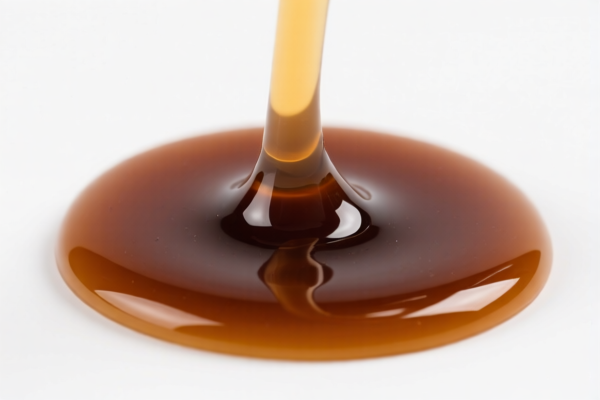
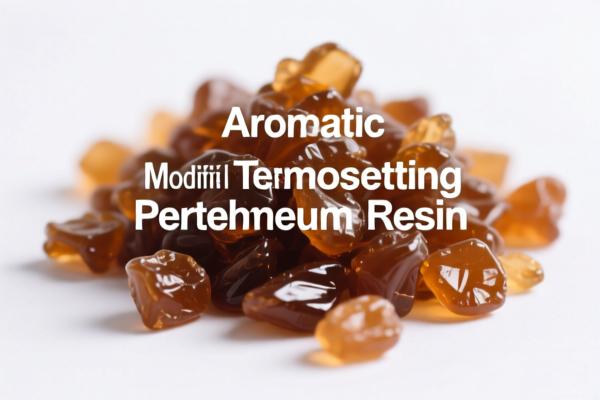
AI Analysis
🏭 Aromatic Modified Thermosetting Petroleum Resin (芳香族改性热固性石油树脂)
🌐 HS Code Reference & Customs Clearance Guide | 2026 Latest Tariff Full Analysis | Professional Clearance Strategy
📌 I. Product Definition & Classification: Do You Really Understand "Petroleum Resin"?
Aromatic Modified Thermosetting Petroleum Resin is a critical chemical intermediate used in adhesives, coatings, inks, and rubber compounding. It is derived from aromatic hydrocarbons (like C9 or C10 fractions) and undergoes polymerization to form a thermosetting solid.
In international trade, it is often misclassified due to its chemical ambiguity. It can be confused with: 1. Other Resins (Chapter 39): If it fits the specific description of "other primary forms of plastics." 2. Prepared Binders (Chapter 38): If it is considered a derivative of rosin or similar natural products. 3. Hydrocarbon Oils/Intermediates (Chapter 27): If it is viewed primarily as a processed aromatic hydrocarbon mixture rather than a polymerized resin.
⚠️ Key Distinction Point:
- If it is a polymerized solid with specific aromatic properties and used as a resinous binder → Likely 3911 or 3806.
- If it is primarily a mixture of aromatic hydrocarbons (weight of aromatics > non-aromatics) without significant polymerization → Likely 2707.
📦 II. HS Code Classification Details (2026 Latest Tariff Authority Comparison)
| HS Code | Product Description | Applicable Scenario | Tax Rate (Total) |
|---|---|---|---|
3911.90.25.00 |
Aromatic petroleum resins, matching material and component requirements | Standard aromatic petroleum resin, primary form, specific chemical match | 41.1% |
3911.90.45.00 |
Aromatic petroleum resins, conforming to the classification of chemicals in their primary form | General aromatic resin, primary form, broader chemical classification | 40.8% |
3806.90.00.00 |
Petroleum resins belonging to rosin and its derivatives, conforming to primary form chemicals | Misclassification or broad category as "rosin-like" derivative | 39.2% |
2707.50.00.00 |
Aromatic hydrocarbon products, conforming to chemical intermediate/raw material attributes | Viewed as processed aromatic oil/intermediate, not fully polymerized | 35.0% |
2707.99.90.90 |
Aromatic components exceeding non-aromatic components in similar products | Mixture where aromatics dominate, treated as hydrocarbon oil | 35.0% |
🔍 Key Reminder:
- 3911 codes are for polymerized resins.
- 2707 codes are for hydrocarbon mixtures/oils.
- 3806 is generally for rosin derivatives, but sometimes used broadly for "prepared binders" if the specific resin description isn't met.
- The choice depends heavily on the degree of polymerization and chemical analysis (aromatic content vs. polymer content).
💰 III. 2026 Latest Tariff Rate Details (Including Surcharges & Policy Additions)
✅ Applicable Country: United States (US)
✅ Origin: China (CN)
✅ Effective Date: November 10, 2025 onwards (including subsequent imports)
🎯 1. 3911.90.25.00 —— Aromatic Petroleum Resin (Specific Match)
| Item | Details |
|---|---|
| Base Duty | 6.1% (Ad Valorem) |
| Section 301 Surcharge | +25.0% (From USITC Footnote 9903.88.01) |
| IEEPA Surcharge | +10.0% (Targeting China/HK products, effective Nov 10, 2025) |
| Total Tax Rate | 41.1% |
| Tax Calculation | CIF Value × 41.1% |
| De Minimis Exemption | ❌ Not Eligible (deny_de_minimis) |
| Legal Basis Path | IEEPA:9903.01.25 → IEEPA:9903.01.24 → USITC:3911.90.25.00 → FOOTNOTE:9903.88.01 |
📌 Explanation:
- "Section 301 Surcharge 25%" comes from the Trade Act Section 301 under "Additional Duties";
- "IEEPA 10%" is the Additional Duty on China under the International Emergency Economic Powers Act;
- Total 41.1%, belonging to High Tariff category, must be anticipated in advance!
🎯 2. 3911.90.45.00 —— Aromatic Petroleum Resin (Primary Chemical Form)
| Item | Details |
|---|---|
| Base Duty | 5.8% |
| Section 301 Surcharge | +25.0% |
| IEEPA Surcharge | +10.0% |
| Total Tax Rate | 40.8% |
| Tax Calculation | CIF × 40.8% |
| De Minimis Exemption | ❌ Not Eligible |
| Legal Basis Path | IEEPA:9903.01.24 → USITC:3911.90.45.00 → FOOTNOTE:9903.88.01 |
📌 Note:
- Similar to the previous code, both fall under "Resin Class";
- Even if it is "C9 Resin," "C10 Resin," or "Hydrocarbon Resin," as long as it is aromatic and primary form, it applies.
🎯 3. 3806.90.00.00 —— Petroleum Resin (Rosin Derivative/Prepared Binder)
| Item | Details |
|---|---|
| Base Duty | 4.2% |
| Section 301 Surcharge | +25.0% |
| IEEPA Surcharge | +10.0% |
| Total Tax Rate | 39.2% |
| Tax Calculation | CIF × 39.2% |
| De Minimis Exemption | ❌ Not Eligible |
📌 Note:
- This code is often used if the resin is considered a "prepared binder" or derivative.
- However, if it clearly fits "Petroleum Resin," Customs may prefer 3911.
🎯 4. 2707.50.00.00 —— Aromatic Hydrocarbon Products (Intermediate)
| Item | Details |
|---|---|
| Base Duty | 0.0% |
| Section 301 Surcharge | +25.0% |
| IEEPA Surcharge | +10.0% |
| Total Tax Rate | 35.0% |
| Tax Calculation | CIF × 35.0% |
| De Minimis Exemption | ❌ Not Eligible |
📌 Note:
- If the product is deemed a hydrocarbon mixture rather than a polymerized resin, the base duty is 0%.
- This is 6.1% cheaper than3911.90.25.00.
- Risk: Customs may challenge this if the product is clearly a resin (polymer).
🎯 5. 2707.99.90.90 —— Aromatic Components Exceeding Non-Aromatics
| Item | Details |
|---|---|
| Base Duty | 0.0% |
| Section 301 Surcharge | +25.0% |
| IEEPA Surcharge | +10.0% |
| Total Tax Rate | 35.0% |
| Tax Calculation | CIF × 35.0% |
| De Minimis Exemption | ❌ Not Eligible |
📌 Note:
- Similar to2707.50, this applies if the aromatic content is high but it's classified as an oil/mixture.
- Again, 35.0% total, but high risk of reclassification if it's a solid resin.
🛠️ IV. Customs Clearance Practical Advice (Battle-Tested Pitfall Guide)
✅ 1. Required Document Checklist (Missing Any = Delay)
| Document | Mandatory | Notes |
|---|---|---|
| ✅ Product Specification Sheet | ✔️ | Must include chemical composition, aromatic content %, polymerization degree. |
| ✅ MSDS (Material Safety Data Sheet) | ✔️ | For hazardous material assessment. |
| ✅ Chemical Structure Analysis Report | ✔️ | To prove if it's a resin (3911/3806) or hydrocarbon (2707). |
| ✅ Commercial Invoice | ✔️ | Must clearly state "Aromatic Petroleum Resin" or "Hydrocarbon Mixture." |
| ✅ Certificate of Origin (CO) | ✔️ | If not Chinese, to check for tariff exemptions. |
| ✅ Packing List | ✔️ | Clear weight/volume details. |
✅ 2. Declaration Strategy (Key Mnemonic)
🔥 “Solid Resin goes to 3911, Hydrocarbon Oil goes to 2707. Don’t mix them up!”
| Scenario | Correct Declaration | Wrong Practice |
|---|---|---|
| Solid Aromatic Resin | 3911.90.25.00 or 3911.90.45.00 |
Misdeclare as 2707 → 35% (Savings but High Risk) |
| Hydrocarbon Mixture (Oil) | 2707.50.00.00 |
Misdeclare as 3911 → 41.1% (Overpaid) |
| Prepared Binder (Rosin-like) | 3806.90.00.00 |
Misdeclare as 2707 → 35% (Risk) |
| Mixed Packaging | Declare as Whole | Split declaration → Each item taxed separately, potential penalties |
✅ 3. Special Cases Handling
| Situation | Handling Advice |
|---|---|
| OEM Custom Resin | Provide customer order + chemical formula to avoid being labeled "unknown." |
| Resin with Additives | If additives > 10%, may need to reclassify as "Preparation" (3824), but check if 3911 still applies. |
| Partial Polymerization | If between oil and resin, provide chemical analysis to justify 2707 vs 3911. |
| Export to US from China | High Risk: Both 3911 and 2707 have 301/IEEPA surcharges. No exemption for China origin. |
🌍 V. Global Main Market Clearance Comparison (2026 Latest)
| Country/Region | Recommended HS Code | Tariff | Certification Requirements | Notes |
|---|---|---|---|---|
| 🇺🇸 USA | 3911.90.25.00 |
41.1% (CN Origin) | None specific | High tariff, strict classification |
| 🇨🇳 China | 3911.90.25.00 |
6.1% | None | No additional surcharges |
| 🇪🇺 EU | 3911.90.00 |
~6.5% | REACH Registration | No additional surcharges |
| 🇦🇺 Australia | 3911.90.00 |
5% | None | No surcharges |
| 🇯🇵 Japan | 3911.90.00 |
~5-7% | None | No surcharges |
📌 Conclusion:
- USA is the only market with high additional tariffs for this product from China;
- Cost for China-origin resin in US is extremely high, suggesting supply chain diversification or value-added processing abroad.
📌 VI. Common Mistakes & Pitfall Guide (Blood & Tears Lessons)
❌ Mistake 1: Declaring "Solid Resin" as "Hydrocarbon Oil" (2707) to save 6.1%
👉 Consequence: Customs audit → Penalty + Back Tax + Potential Fraud Investigation!
❌ Mistake 2: Not providing chemical analysis
👉 Consequence: Customs unable to classify → Delayed release or forced classification to highest duty.
❌ Mistake 3: Using vague terms like "Chemical Intermediate"
👉 Consequence: Customs will assign arbitrary HS Code → Likely 3911 with full surcharges.
❌ Mistake 4: Ignoring IEEPA 10% surcharge
👉 Consequence: Under-declared value → Audit and heavy fines.
✅ Correct Approach:
“Aromatic Petroleum Resin, Solid, Primary Form, CAS No. XXXXX, Aromatic Content >XX%, Model XYZ, For Adhesives Use.”
🎯 VII. Conclusion: Professional Declaration Saves Money!
🎯 Remember Mnemonic:
🔹 “Resin is 3911 (41%), Oil is 2707 (35%). Don’t cheat, or Customs will check!”
🔹 “HS Code determines destiny, 6% difference is huge, wrong declaration costs more!”
📌 Tips:
- If your resin is originating from Vietnam, Mexico, Thailand, Malaysia, you may apply for IEEPA Exemption, reducing tax to 35% or less (depending on base duty).
- Apply for Advance Ruling (Pre-classification) before shipment to avoid customs disputes.
📣 Take Action Now:
📞 Contact professional customs broker + Provide chemical analysis + Apply for HS Code Advance Ruling
🚀 Let your resin clear customs smoothly, efficiently, and profitably!
✨ Professional Clearance Starts with Accurate Classification!
💼 Every cent of your cost deserves precise calculation!
Customer Reviews
About HS Code Classification
The Harmonized System (HS) is an internationally standardized nomenclature developed by the World Customs Organization (WCO) to classify traded products. Over 200 countries use the HS system as the basis for customs tariffs, trade statistics, and import/export regulations.
Each HS code follows a hierarchical structure:
- Chapter (2 digits) — Broad category of goods (e.g., Chapter 84: Machinery and Mechanical Appliances)
- Heading (4 digits) — More specific grouping within the chapter
- Subheading (6 digits) — Internationally standardized breakdown, used by all WCO member countries
- National subdivisions (8-10 digits) — Country-specific extensions for further classification, such as US HTSUS 10-digit codes
Correct HS code classification is essential for smooth customs clearance, accurate duty payment, and compliance with trade regulations. Misclassification can lead to customs delays, overpayment of duties, or penalties.
When importing from CN to US, the applicable tariff rates may include:
- Most-Favored-Nation (MFN) rate — The standard duty rate applied to WTO members
- General rate — Applied to countries without trade agreements
- Trade remedy duties — Additional tariffs such as Section 301 (anti-dumping), Section 232 (national security), or countervailing duties
The information provided on this page is for reference purposes only. For official classification, please consult with your local customs authority or a licensed customs broker.