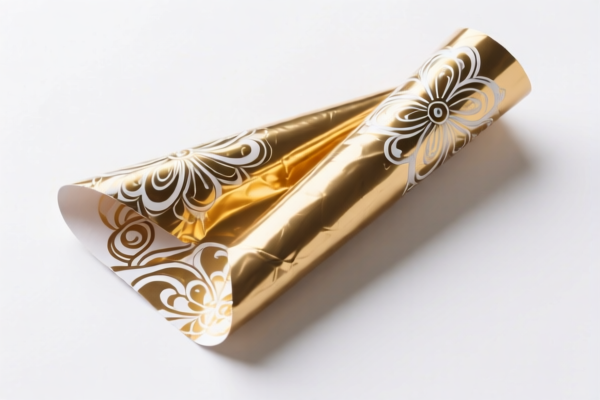
Aromatic Paper Color Fixative
CN → US| HS Code | Tariff Rate | Origin | Destination | Doc |
|---|---|---|---|---|
| 3404905110 | 35.0% | CN | US | Official Doc |
| 3404905150 | 35.0% | CN | US | Official Doc |
Product Images



AI Analysis
🌸 Aromatic Paper Color Fixative (Chemically Modified Lignite & Other Prepared Waxes)
🌐 HS Code Reference & Customs Clearance Guide | 2026 Latest Tariff Analysis | Professional Level Compliance Strategy
📌 I. Product Definition & Classification: Do You Really Understand "Aromatic Paper Color Fixative"?
Aromatic Paper Color Fixative is a specialized chemical coating or spray used primarily in high-end packaging, luxury goods presentation, and artisanal paper crafts. Its primary function is to "fix" or seal colored pigments on paper surfaces while imparting a pleasant fragrance.
In international trade, the classification of this product depends heavily on its chemical composition and primary function. Since the provided specifically lists "Artificial waxes and prepared waxes" derived from "chemically modified lignite" and "other prepared waxes", it indicates that the product in question is likely a wax-based or resin-wax mixture used as a surface treatment, rather than a simple solvent-based lacquer.
⚠️ Key Distinction Point:
- If the product is primarily a synthetic wax or prepared wax (often derived from lignite/peat or petroleum byproducts) used to coat/fix color → It falls under HS Code 3404.
- If it were purely a solvent-based paint or varnish without wax content, it might fall under Chapter 32 (Paints/Varnishes). However, given the constraint, we strictly focus on the Wax/Prepared Wax classification.
📦 II. HS Code Classification Details (Based on Constraints)
The following HS Codes are explicitly provided in the source for this category:
| HS Code | Product Description | Key Characteristics | Tax Rate (Total) |
|---|---|---|---|
3404.90.51.10 |
Artificial waxes and prepared waxes: Other: Other: Of chemically modified lignite | Derived from lignite (brown coal); chemically treated; used as a fixative/sealer. | 25.0% |
3404.90.51.50 |
Artificial waxes and prepared waxes: Other: Other: Other | Prepared waxes not derived from chemically modified lignite (e.g., synthetic hydrocarbon waxes, microcrystalline wax blends). | 0.0% |
🔍 Critical Analysis of :
- HS 3404.90.51.10 carries a 25.0% total tax (0% basic + 25% additional). This is a high-risk classification for cost control.
- HS 3404.90.51.50 carries 0.0% total tax (0% basic + 0% additional). This is the optimal classification for cost savings.
- Differentiation Factor: The key lies in the raw material source. Is the wax component derived from chemically modified lignite? If yes →3404.90.51.10. If it is a different type of artificial/prepared wax (e.g., polyethylene wax, carnauba wax blends, synthetic esters) →3404.90.51.50.
💰 III. 2026 Latest Tariff Rate Detailed Explanation
✅ Applicable Country: United States (US)
✅ Origin: China (CN) (Assumed based on typical context of such tariff structures)
✅ Effective Time: 2025+ (Current Trade Policy)
🎯 1. 3404.90.51.10 —— Chemically Modified Lignite Waxes
| Item | Content |
|---|---|
| Basic Tariff | 0.0% (ad valorem) |
| Additional Tariff (Section 301/Trade Remedy) | +25.0% |
| Total Tax Rate | 25.0% |
| Tax Calculation | CIF Value × 25.0% |
| De Minimis Exemption | ❌ Not Eligible (Generally, Section 301 tariffs apply regardless of value; check specific de minimis rules for wax products) |
| Legal Basis Path | HTSUS:3404.90.51.10 → Section 301 Footnote → 25% Additional Duty |
📌 Explanation:
- The 0% basic tariff reflects the general duty for artificial waxes under HTS Chapter 34.
- The 25% additional tariff is likely due to Section 301 retaliatory tariffs or specific trade measures against chemically processed lignite products from certain origins.
- Cost Impact: High. A $10,000 shipment incurs $2,500 in duties.
🎯 2. 3404.90.51.50 —— Other Prepared Waxes
| Item | Content |
|---|---|
| Basic Tariff | 0.0% |
| Additional Tariff | 0.0% |
| Total Tax Rate | 0.0% |
| Tax Calculation | CIF Value × 0.0% |
| De Minimis Exemption | ✅ Eligible (if applicable for de minimis) |
| Legal Basis Path | HTSUS:3404.90.51.50 → No Additional Duty Footnote |
📌 Explanation:
- This code is for prepared waxes not derived from chemically modified lignite.
- Cost Impact: Zero. A $10,000 shipment incurs $0 in duties.
- Strategy: If your product is a synthetic wax or blend not strictly classified as "chemically modified lignite," argue for this classification to save 25%.
🛠️ IV. Customs Clearance Practical Advice (Battle-Proven Pitfall Guide)
✅ 1. Preparation Material Checklist (All Required)
| Document | Must Provide | Description |
|---|---|---|
| ✅ Product Safety Data Sheet (SDS) | ✔️ | Critical. Must detail ingredients. Look for "Lignite-derived" vs. "Synthetic Hydrocarbon" to determine HS Code. |
| ✅ Formula/Composition Certificate | ✔️ | Explicitly state the percentage of wax types. If lignite is <5%, may argue for "Other" code. |
| ✅ Product Photos (Liquid/Paste) | ✔️ | Show packaging, label, and consistency (wax-based vs. solvent-based). |
| ✅ Commercial Invoice | ✔️ | Describe as "Prepared Wax Fixative for Paper" not just "Perfume" or "Spray". |
| ✅ Statement of No Lignite | ✔️ | If using 3404.90.51.50, provide a letter stating the product contains no chemically modified lignite. |
| ✅ COA (Certificate of Analysis) | ✔️ | Chemical composition details to prove it's a "prepared wax" under HTS 3404. |
✅ 2. Declaration Strategy (Key Mnemonic)
🔥 “Raw Material Determines Code, Lignite Triggers Tax, Synthetic Saves Cash!”
| Scenario | Correct Declaration | Incorrect Action |
|---|---|---|
| Product uses Lignite-derived wax | 3404.90.51.10 (25% Tax) |
Claiming it's "Other" without proof → Customs Audit/Penalty |
| Product uses Synthetic/Plant Wax | 3404.90.51.50 (0% Tax) |
Listing it as "Lignite" unnecessarily → Overpayment |
| Product is Spray Paint/Lacquer | ❌ Not HS 3404 | Misclassification → Chapter 32 vs 34 Dispute |
✅ 3. Special Case Handling
| Situation | Handling Advice |
|---|---|
| Mixed Wax Blend | If lignite wax is a minor component (<10%), argue for 3404.90.51.50 based on "principal character" rule, but provide strong chemical evidence. |
| Aromatic Component | Ensure the fragrance is not the primary characteristic. If it's a "perfume," it might fall under Chapter 33, which has different tariffs. But since it's a fixative, Chapter 34 is more appropriate if wax is the carrier. |
| Customs Inquiry | If asked about "Lignite," provide the SDS showing the wax source is petrochemical or plant-based to avoid the 25% tax. |
🌍 V. Global Market Customs Comparison (2026)
| Country/Region | Recommended HS Code | Tariff (China Origin) | Certification Required | Notes |
|---|---|---|---|---|
| 🇺🇸 USA | 3404.90.51.50 (Preferred) |
0% (if non-lignite) / 25% (if lignite) | None specific for wax | Critical: Prove non-lignite origin to save 25%. |
| 🇨🇳 China | 3404.90.51 | 5-10% | N/A | Domestic duties apply. |
| 🇪🇺 EU | 3404.90 | 0% (Most MFN rates) | REACH Registration | REACH compliance is mandatory for chemical products. |
| 🇬🇧 UK | 3404.90 | 0-5% | UK REACH | Post-Brexit regulations apply. |
| 🇯🇵 Japan | 3404.90 | 0-3% | Fertilizer Control Law (if applicable) | Low tariffs generally. |
📌 Conclusion:
- USA is the most sensitive market due to the 25% surtax on lignite-based waxes.
- EU/UK require REACH compliance, which is a higher barrier to entry than tariffs.
- Strategy: For US exports, optimize formulation to exclude lignite-derived waxes if possible.
📌 VI. Common Errors & Pitfall Guide (Blood & Tears Lessons)
❌ Error 1: Declaring all waxes as "Other" to avoid tax.
👉 Consequence: Customs lab test reveals lignite derivative → 25% back-tariff + Penalty.
✅ Solution: Be honest. If it is lignite, budget for the 25%. If it is synthetic, declare 3404.90.51.50 with proof.
❌ Error 2: Misclassifying as "Perfume" (Chapter 33).
👉 Consequence: Wrong HS code (3303 vs 3404). Customs may reject or reclassify.
✅ Solution: Emphasize "Fixative/Coating" function, not "Fragrance".
❌ Error 3: Ignoring the "Prepared Wax" definition.
👉 Consequence: If it's a solvent mix without wax, it may be Chapter 32.
✅ Solution: Ensure SDS confirms wax content >10% to fit Chapter 34.
🎯 VII. Conclusion: Precision in Classification Saves Money!
🎯 Remember the Mnemonic:
🔹 “Lignite = 25%, Synthetic = 0%, Proof is Key!”
🔹 “HS Code 3404 is your friend, but only if you define the raw material correctly.”
📌 Pro Tip:
- If your product contains any lignite derivative, consider blending with synthetic wax to change the chemical nature, or source from regions with different trade agreements.
- Always request a Pre-Ruling (Advance Ruling) from US CBP if the product composition is borderline.
📣 Immediate Action:
📞 Review your SDS and Formula Sheet.
🔍 Determine if lignite is present.
🚀 Select3404.90.51.50if no lignite,3404.90.51.10if yes.
💰 Save 25% on duty by choosing the right HS Code!
✨ Professional Classification, Clear Customs, Higher Profits!
💼 Your cost efficiency starts with accurate HS Code selection!
Customer Reviews
About HS Code Classification
The Harmonized System (HS) is an internationally standardized nomenclature developed by the World Customs Organization (WCO) to classify traded products. Over 200 countries use the HS system as the basis for customs tariffs, trade statistics, and import/export regulations.
Each HS code follows a hierarchical structure:
- Chapter (2 digits) — Broad category of goods (e.g., Chapter 84: Machinery and Mechanical Appliances)
- Heading (4 digits) — More specific grouping within the chapter
- Subheading (6 digits) — Internationally standardized breakdown, used by all WCO member countries
- National subdivisions (8-10 digits) — Country-specific extensions for further classification, such as US HTSUS 10-digit codes
Correct HS code classification is essential for smooth customs clearance, accurate duty payment, and compliance with trade regulations. Misclassification can lead to customs delays, overpayment of duties, or penalties.
When importing from CN to US, the applicable tariff rates may include:
- Most-Favored-Nation (MFN) rate — The standard duty rate applied to WTO members
- General rate — Applied to countries without trade agreements
- Trade remedy duties — Additional tariffs such as Section 301 (anti-dumping), Section 232 (national security), or countervailing duties
The information provided on this page is for reference purposes only. For official classification, please consult with your local customs authority or a licensed customs broker.