Aromatic Polyester Resin
CN → US| HS Code | Tariff Rate | Origin | Destination | Doc |
|---|---|---|---|---|
| 3907995050 | 41.5% | CN | US | Official Doc |
| 3911902500 | 41.1% | CN | US | Official Doc |
| 3909400000 | 41.5% | CN | US | Official Doc |
| 3907992000 | 35.0% | CN | US | Official Doc |
| 3911904500 | 40.8% | CN | US | Official Doc |
Product Images
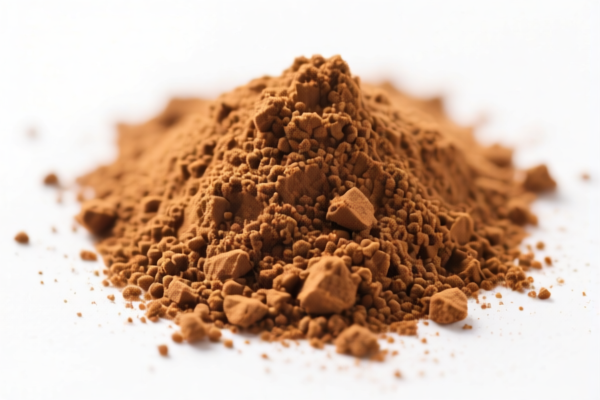
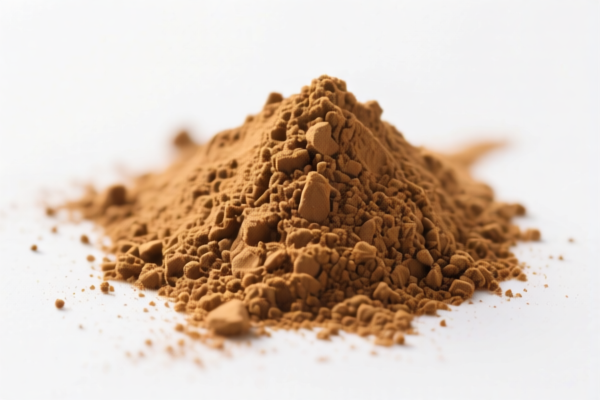
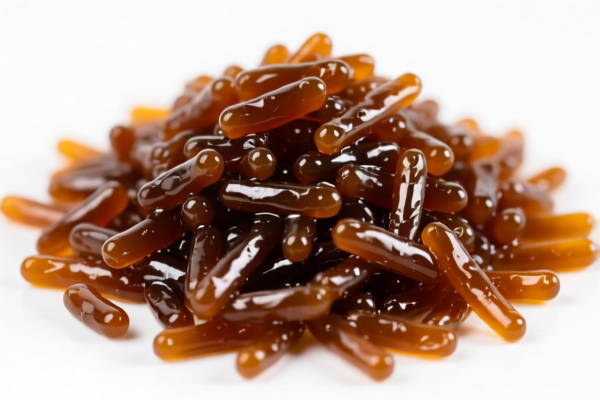
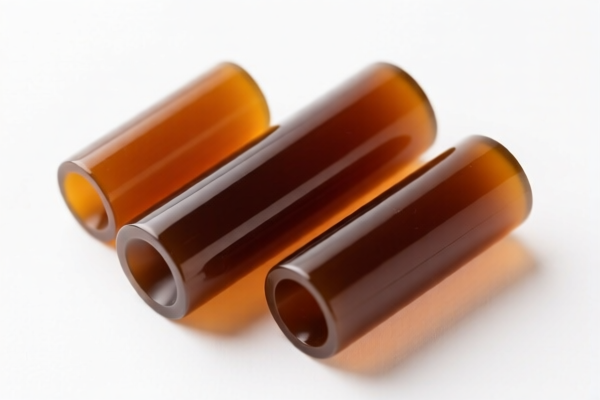
AI Analysis
🧪 Aromatic Polyester Resin (Polyaromatic Resin)
🌐 HS Code Reference & Customs Clearance Guide | 2026 Latest Tariff Analysis | Professional Grade Compliance Strategy 📌 I. Product Definition & Classification: Do You Really Understand "Polyaromatic Resin"?
Aromatic Polyester Resin, often referred to as Polyaromatic Resin, is a high-performance polymer characterized by the presence of aromatic rings in its polymer backbone. It is typically used in engineering plastics, high-temperature resistant applications, and specialty chemical intermediates.
In international trade, its classification depends on the chemical structure (whether it fits the specific definition of polyester vs. other resins) and its form (primary shape vs. processed).
⚠️ Key Classification Distinction:
- If the resin is chemically defined as a Polyester (containing repeating ester groups) with aromatic units → It falls under Heading 3907.
- If the resin contains aromatic monomer units but is classified under a different chemical family (e.g., polyethers, polyamides, or other unspecified resins) → It may fall under Heading 3911.
- If it is a general Resin that does not strictly fit the "Polyester" definition but contains aromatic structures → It may fall under Heading 3909.
📦 II. HS Code Classification Details (2026 Latest Tariff Authority Comparison)
Based on the provided data, here are the five potential HS Codes and their corresponding tax implications for imports into the US (assuming China origin based on tariff structure):
| HS Code | Product Description | Applicable Scenario | Chemical Logic | Total Tax Rate |
|---|---|---|---|---|
3907.99.50.50 |
Other Polymers of Carbonic Esters (Polyesters): Specifically categorized under "Other" polyesters. | Aromatic Polyester Resin classified strictly as a Polyester. | Matches "Polyester" category. | 41.5% |
3911.90.25.00 |
Prepared Binding Preparations: Contains aromatic monomer units, meeting material restrictions. | Resin containing aromatic monomers, classified under "Other" resins/binders. | Contains aromatic monomer units. | 41.1% |
3909.90.45.00 |
Amino-Resins & Phenolic Resins: Contains aromatic monomer units, meeting core material requirements. | Resin classified as an Amino/Phenolic resin or similar, containing aromatic structures. | Contains aromatic monomer units. | 40.8% |
3909.40.00.00 |
Amino-Resins: Polyaromatic resin as a resinous material, no conflict in form or use. | Resin classified as an Amino-Resin (a common alternative classification for certain aromatic resins). | Resinous material, no form/use conflict. | 41.5% |
3907.99.20.00 |
Other Polymers of Carbonic Esters (Polyesters): Aromatic Polyester, primary shape. | Aromatic Polyester Resin classified as a Polyester in primary shape (powder/granules). | Primary shape Polyester. | 35.0% |
🔍 Key Observation:
- The lowest tax rate is 35.0% (3907.99.20.00) if it is clearly classified as a Polyester in primary shape.
- Rates for other classifications range from 40.8% to 41.5%.
- The difference lies in whether customs accepts the product as a Polyester (3907) or other resin types (3909, 3911).
💰 III. 2026 Latest Tariff Rate Breakdown (Including Surtaxes, Policy Add-ons)
✅ Applicable Country: United States (US)
✅ Origin: China (CN)
✅ Effective Date: 2025/2026 (Post-2025 trade policy context)
🎯 1. 3907.99.20.00 —— Aromatic Polyester Resin (Primary Shape, Polyester Category)
🏆 LOWEST TAX RATE OPTION
| Item | Content |
|---|---|
| Base Tariff | 0.0% |
| Section 301 Surtax | +25.0% |
| Section 122 Tariff | +10.0% |
| Total Tariff Rate | 35.0% |
| Tax Calculation | CIF Value × 35.0% |
| De Minimis Exemption | ❌ Not Eligible (Section 301/122 usually override) |
| Legal Basis Path | Section 301: 9903.01.25 → Section 122: 9901.10.00 → USITC: 3907.99.20.00 |
📌 Explanation:
- If the product is scientifically proven to be a Polyester and is in primary shape (powder, granules, liquids), it qualifies for the 0% base tariff.
- The total 35% is driven by the 25% Section 301 and 10% Section 122 surtaxes.
- This is the most cost-effective classification if documentation supports "Polyester".
🎯 2. 3907.99.50.50 —— Other Polyester Resin
📊 STANDARD POLYESTER CLASSIFICATION
| Item | Content |
|---|---|
| Base Tariff | 6.5% |
| Section 301 Surtax | +25.0% |
| Section 122 Tariff | +10.0% |
| Total Tariff Rate | 41.5% |
| Tax Calculation | CIF Value × 41.5% |
| De Minimis Exemption | ❌ Not Eligible |
| Legal Basis Path | Section 301: 9903.01.25 → Section 122: 9901.10.00 → USITC: 3907.99.50.50 |
📌 Explanation:
- Same surtaxes as above, but a 6.5% base tariff applies because it’s not in the specific "primary shape" sub-category.
- Total cost is 6.5% higher than3907.99.20.00.
🎯 3. 3909.40.00.00 —— Amino-Resin Classification
🔄 ALTERNATIVE RESIN CLASSIFICATION
| Item | Content |
|---|---|
| Base Tariff | 6.5% |
| Section 301 Surtax | +25.0% |
| Section 122 Tariff | +10.0% |
| Total Tariff Rate | 41.5% |
| Tax Calculation | CIF Value × 41.5% |
| De Minimis Exemption | ❌ Not Eligible |
| Legal Basis Path | Section 301: 9903.01.25 → Section 122: 9901.10.00 → USITC: 3909.40.00.00 |
📌 Explanation:
- If the resin is classified as an Amino-Resin (common for certain aromatic resins), it incurs the same 41.5% total rate.
- Requires technical justification that it is not a polyester.
🎯 4. 3911.90.25.00 —— Resin with Aromatic Monomers
🧪 SPECIFIC MATERIAL CLASSIFICATION
| Item | Content |
|---|---|
| Base Tariff | 6.1% |
| Section 301 Surtax | +25.0% |
| Section 122 Tariff | +10.0% |
| Total Tariff Rate | 41.1% |
| Tax Calculation | CIF Value × 41.1% |
| De Minimis Exemption | ❌ Not Eligible |
| Legal Basis Path | Section 301: 9903.01.25 → Section 122: 9901.10.00 → USITC: 3911.90.25.00 |
📌 Explanation:
- Base tariff is 6.1%, slightly lower than other resin categories.
- Total rate is 41.1%, the second-lowest after the primary shape polyester.
🎯 5. 3909.90.45.00 —— Amino-Resin (Other)
🔄 OTHER AMINO RESIN CATEGORY
| Item | Content |
|---|---|
| Base Tariff | 5.8% |
| Section 301 Surtax | +25.0% |
| Section 122 Tariff | +10.0% |
| Total Tariff Rate | 40.8% |
| Tax Calculation | CIF Value × 40.8% |
| De Minimis Exemption | ❌ Not Eligible |
| Legal Basis Path | Section 301: 9903.01.25 → Section 122: 9901.10.00 → USITC: 3909.90.45.00 |
📌 Explanation:
- Base tariff is 5.8%, the lowest base rate among non-polyester categories.
- Total rate is 40.8%, making it the second-best option if "Polyester" classification is not possible.
🛠️ IV. Customs Clearance Practical Advice (Real-World Pitfall Avoidance)
✅ 1. Preparation Checklist (Mandatory)
| Document | Must Provide | Explanation |
|---|---|---|
| ✅ Chemical Structure Diagram | ✔️ | Must clearly show ester linkages (-COO-) for 3907 classification, or aromatic rings for others. |
| ✅ Material Safety Data Sheet (MSDS) | ✔️ | Confirms chemical composition and physical form (powder/liquid). |
| ✅ Technical Specification Sheet | ✔️ | Includes molecular weight, glass transition temperature, and monomer units. |
| ✅ Product Photos | ✔️ | Show form (granules, powder, liquid) to support "Primary Shape" claim. |
| ✅ Commercial Invoice | ✔️ | Must accurately describe product as "Aromatic Polyester Resin" or specific chemical name. |
| ✅ Certificate of Origin | ✔️ | Crucial for proving China origin and applying correct surtaxes. |
✅ 2. Declaration Tips (Key Mantra)
🔥 "Form Determines Shape, Chemistry Determines Class!"
| Scenario | Correct Declaration | Wrong Declaration |
|---|---|---|
| Primary Shape (Powder/Granules) + Polyester Structure | 3907.99.20.00 (35.0%) |
Misdeclare as "Other Polyester" → 41.5% |
| Liquid Resin or Non-Polyester Aromatic Resin | 3909.90.45.00 (40.8%) |
Misdeclare as Polyester → 41.5% |
| Resin with Aromatic Monomers but not Polyester | 3911.90.25.00 (41.1%) |
Misdeclare as Amino-Resin → 41.5% |
| General Resin with Aromatic Units | 3909.40.00.00 (41.5%) |
Vague description → Risk of reclassification + penalties |
✅ 3. Special Case Handling
| Situation | Handling Advice |
|---|---|
| OEM Custom Resin | Provide customer order + technical drawings. Avoid generic names. |
| Blended Resins | Declare based on principal material. If polyester is dominant, use 3907. |
| High-Temperature Resin | If used in aerospace/automotive, provide end-use documentation for potential duty drawbacks. |
| Sample Shipments | Even samples are subject to tariffs. Declare correctly to avoid delays. |
🌍 V. Global Market Customs Comparison (2026 Latest)
| Country/Region | Recommended HS Code | Tariff | Certification | Notes |
|---|---|---|---|---|
| 🇺🇸 USA | 3907.99.20.00 |
35.0% | No specific cert | Lowest US rate if polyester. |
| 🇨🇳 China | 3907.99.20.00 |
~5% | No specific cert | Export from China has low duty. |
| 🇪🇺 EU | 3907.99.20.00 |
~5% | REACH Registration | REACH compliance is mandatory. |
| 🇯🇵 Japan | 3907.99.20.00 |
~6% | JIS Standards | No additional surtaxes. |
📌 Conclusion:
- USA has the highest effective tariff due to Section 301 & 122.
- China, EU, and Japan have significantly lower tariffs.
- Strategy: If possible, source or assemble in non-US countries to avoid high tariffs. Or, invest in technical documentation to secure the 35.0% rate in the US.
📌 VI. Common Mistakes & Pitfalls (Lessons Learned)
❌ Mistake 1: Misclassifying "Aromatic Polyester" as "General Plastic"
👉 Consequence: Incorrect HS Code, leading to penalties and back taxes.
❌ Mistake 2: Failing to prove "Primary Shape" for 3907.99.20.00
👉 Consequence: Rate jumps from 35.0% to 41.5%.
❌ Mistake 3: Vague Description "Resin"
👉 Consequence: Customs may classify as 41.5% (highest base rate category) due to ambiguity.
❌ Mistake 4: Ignoring Section 122 Tariff
👉 Consequence: Underpaying by 10%, leading to audit risks.
✅ Correct Practice:
"Aromatic Polyester Resin, Primary Shape, Powder, CAS No. [Insert CAS], for Engineering Plastics, FCC/REACH Compliant"
🎯 VII. Conclusion: Professional Declaration, Save Costs, Ensure Compliance!
🎯 Remember the Mantra:
🔹 "Polyester + Primary Shape = 35% (Best!)"
🔹 "Other Resins = 40.8% - 41.5%"
🔹 "Vague Declaration = Risk of Penalty + Highest Rate!"
📌 Pro Tip:
If your resin originates from Vietnam, Mexico, or Thailand, you may be eligible for IEEPA Exemption, reducing tariffs to 0%~5%.
Recommendation:
1. Obtain Pre-Ruling: Apply for a US CBP Advance Ruling with chemical analysis.
2. Optimize Supply Chain: Consider sourcing from non-China origins if volume is high.
📣 Immediate Action:
📞 Contact a licensed Customs Broker
📄 Provide Chemical Structure Diagram + MSDS
🚀 Secure the 35.0% Tariff Rate!
✨ Professional Customs Clearance Starts with Accurate Classification!
💼 Every Percent Saved is Pure Profit!
Customer Reviews
About HS Code Classification
The Harmonized System (HS) is an internationally standardized nomenclature developed by the World Customs Organization (WCO) to classify traded products. Over 200 countries use the HS system as the basis for customs tariffs, trade statistics, and import/export regulations.
Each HS code follows a hierarchical structure:
- Chapter (2 digits) — Broad category of goods (e.g., Chapter 84: Machinery and Mechanical Appliances)
- Heading (4 digits) — More specific grouping within the chapter
- Subheading (6 digits) — Internationally standardized breakdown, used by all WCO member countries
- National subdivisions (8-10 digits) — Country-specific extensions for further classification, such as US HTSUS 10-digit codes
Correct HS code classification is essential for smooth customs clearance, accurate duty payment, and compliance with trade regulations. Misclassification can lead to customs delays, overpayment of duties, or penalties.
When importing from CN to US, the applicable tariff rates may include:
- Most-Favored-Nation (MFN) rate — The standard duty rate applied to WTO members
- General rate — Applied to countries without trade agreements
- Trade remedy duties — Additional tariffs such as Section 301 (anti-dumping), Section 232 (national security), or countervailing duties
The information provided on this page is for reference purposes only. For official classification, please consult with your local customs authority or a licensed customs broker.