Aromatic Polymer Mixture
CN → US| HS Code | Tariff Rate | Origin | Destination | Doc |
|---|---|---|---|---|
| 3506915000 | 37.1% | CN | US | Official Doc |
| 3506990000 | 37.1% | CN | US | Official Doc |
| 3909310000 | 41.5% | CN | US | Official Doc |
| 3909390000 | 41.5% | CN | US | Official Doc |
| 3914006000 | 38.9% | CN | US | Official Doc |
Product Images
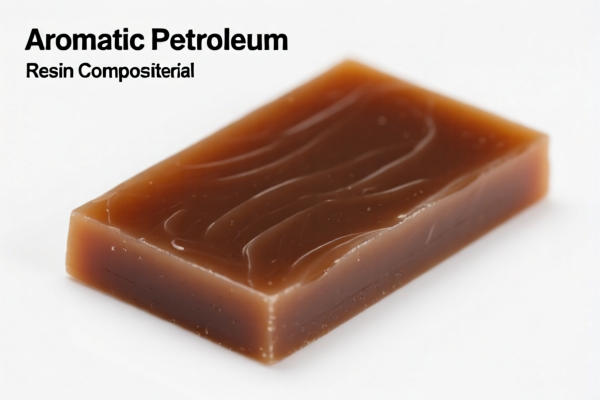
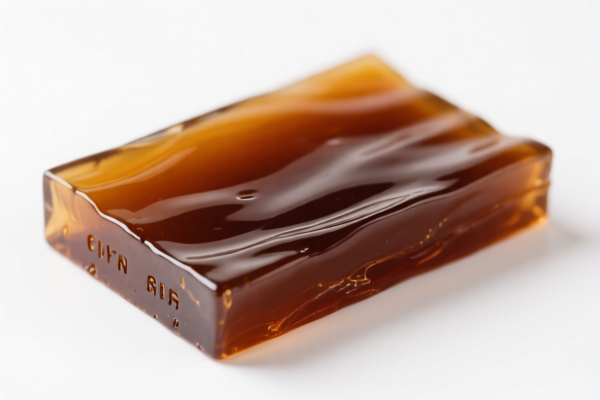
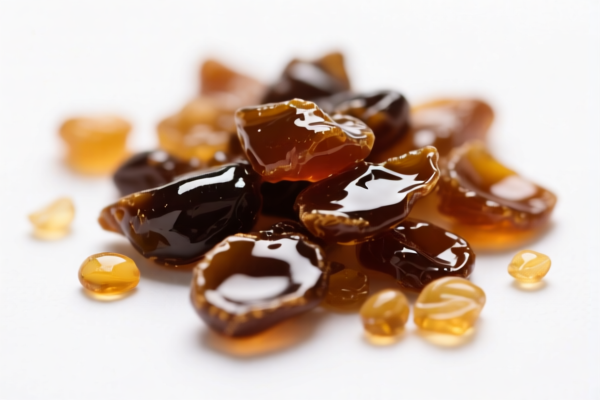
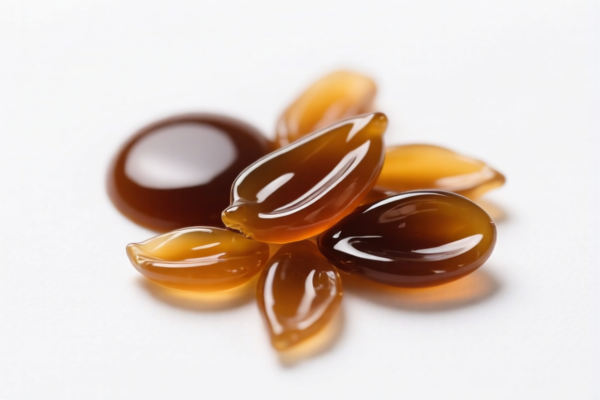
AI Analysis
🧪 Aromatic Polymer Mixture (Adhesives & Resins)
🌐 HS Code Reference & Customs Clearance Guide | 2026 Latest Tariff Analysis | Strategic Compliance Strategy
📌 I. Product Definition & Classification: Do You Understand "Aromatic Polymer Adhesives"?
An Aromatic Polymer Mixture typically refers to chemical substances used as binders, adhesives, or resins, derived from aromatic hydrocarbons. In international trade, these materials are often ambiguous, falling between Chapter 35 (Animal/Plant Materials) and Chapter 39 (Plastics/Polymer Resins). The correct classification depends heavily on the primary material character, chemical structure, and intended use.
⚠️ Critical Distinction Points:
- If the mixture acts primarily as a binder/adhesive (glue) with minimal resin structure → Look at Chapter 35 (3506).
- If the mixture is primarily a polymer/resin (e.g., Polyurethane, Isocyanate) used for adhesion → Look at Chapter 39 (3909/3914).
- Key Determinant: Is it a "pre-formed polymer" or a "prepared adhesive"?
📦 II. HS Code Classification Details (2026 Latest Tariff Authority Comparison)
| HS Code | Product Description | Applicable Scenario | Primary Material Characteristic |
|---|---|---|---|
3506.91.50.00 |
Aromatic polymer binder; adhesive purpose aligns with polymer use | General aromatic polymer adhesives where the binding agent is the key feature | ✅ Adhesive/Binder Focus |
3506.99.00.00 |
Aromatic polymer binder; glue usage consistent with polymer material | General prepared adhesives not specifically named in 3506.91 | ✅ General Adhesive Focus |
3909.31.00.00 |
Aromatic polymer binder; material attribute is Poly(methylene phenyl isocyanate) | Polyurethane-based adhesives/resins containing Isocyanates | ✅ Polyurethane/Isocyanate Focus |
3909.39.00.00 |
Aromatic polymer binder; consistent with other amino resins/polyurethane characteristics | Other aromatic polymers, amino resins, or complex polyurethane blends | ✅ Amino/Polyurethane Blend Focus |
3914.00.60.00 |
Aromatic polymer binder; primary chemical form application fits "other" categories | Primary form chemicals not elsewhere specified, used as binders | ✅ Chemical Raw Material Focus |
🔍 Key Reminder:
- If the product is 100% Poly(methylene phenyl isocyanate) or similar specific polyurethane precursors, it may lean towards 3909.31.00.00 despite being used as an adhesive.
- If it is a ready-to-use adhesive (mixed with solvents/fillers) where the adhesive property dominates, 3506.xxxx is more likely.
- Do not mix up "polymer resins" (Ch 39) with "prepared adhesives" (Ch 35). The chemical composition dictates the chapter.
💰 III. 2026 Latest Tariff Rate Breakdown (Including Surtaxes, Policy Add-ons)
✅ Applicable Country: United States (US)
✅ Country of Origin: China (CN)
✅ Effective Date: November 10, 2025 (and subsequent imports)
🎯 1. 3506.91.50.00 & 3506.99.00.00 —— Aromatic Polymer Binders (Adhesive Chapter)
| Item | Content |
|---|---|
| Base Duty Rate | 2.1% (Ad Valorem) |
| Section 301 Surtax | +25% (USITC Footnote for Chinese goods) |
| IEEPA Surtax | +10% (Targeting China/HK products, effective Nov 10, 2025) |
| Total Tax Rate | 37.1% |
| Tax Calculation | CIF Value × 37.1% |
| De Minimis Exemption | ❌ Not Applicable (deny_de_minimis) |
| Legal Basis Path | IEEPA:9903.01.25 → IEEPA:9903.01.24 → USITC:3506.xxxx → FOOTNOTE:3506.91.50.00/3506.99.00.00 |
📌 Explanation:
- The 2.1% base duty is standard for prepared adhesives.
- The 25% Section 301 tariff is the major cost driver for Chinese-origin adhesives.
- The 10% IEEPA tariff is a new/additional layer for specific chemical categories from China.
- Total 37.1% is a significant barrier to entry. Cost optimization must focus on origin management or product re-engineering.
🎯 2. 3909.31.00.00 & 3909.39.00.00 —— Polyurethane/Aromatic Resins (Plastics Chapter)
| Item | Content |
|---|---|
| Base Duty Rate | 6.5% (Ad Valorem) |
| Section 301 Surtax | +25% (USITC Footnote for Chinese goods) |
| IEEPA Surtax | +10% (Targeting China/HK products, effective Nov 10, 2025) |
| Total Tax Rate | 41.5% |
| Tax Calculation | CIF Value × 41.5% |
| De Minimis Exemption | ❌ Not Applicable (deny_de_minimis) |
| Legal Basis Path | IEEPA:9903.01.25 → IEEPA:9903.01.24 → USITC:3909.xxxx → FOOTNOTE:3909.31.00.00/3909.39.00.00 |
📌 Note:
- Although the base duty (6.5%) is higher than adhesives (2.1%), the total rate (41.5%) is even higher due to the same surtaxes.
- Misclassifying a Polyurethane-based adhesive as a simple "adhesive" (Ch 35) to get 37.1% is risky if the chemical composition is strictly defined under Ch 39.
- Strict chemical documentation is required to justify Ch 39 classification.
🎯 3. 3914.00.60.00 —— Other Polymer Resins (Primary Form)
| Item | Content |
|---|---|
| Base Duty Rate | 3.9% (Ad Valorem) |
| Section 301 Surtax | +25% (USITC Footnote for Chinese goods) |
| IEEPA Surtax | +10% (Targeting China/HK products, effective Nov 10, 2025) |
| Total Tax Rate | 38.9% |
| Tax Calculation | CIF Value × 38.9% |
| De Minimis Exemption | ❌ Not Applicable (deny_de_minimis) |
| Legal Basis Path | IEEPA:9903.01.25 → IEEPA:9903.01.24 → USITC:3914.00.60.00 → FOOTNOTE:3914.00.60.00 |
📌 Important:
- This code is for primary form chemicals used as binders, not necessarily pre-mixed adhesives.
- If your product is a powder or liquid resin intended to be mixed by the user, this code may apply.
- Total 38.9% sits between the adhesive and polyurethane rates.
- Do not use if the product is already a "prepared adhesive" (liquid/solid glue for immediate use) – that belongs in Ch 35.
🛠️ IV. Customs Clearance Practical Advice (Real-World Pitfall Avoidance)
✅ 1. Documentation Checklist (Non-negotiable)
| Document | Mandatory? | Description |
|---|---|---|
| ✅ Safety Data Sheet (SDS) | ✔️ | Must detail chemical composition, especially if claiming Ch 39 (Polyurethane) vs. Ch 35 (Adhesive). |
| ✅ Formula/Composition Report | ✔️ | Breakdown of aromatic polymers, solvents, and additives. Critical for distinguishing between 3506 and 3909. |
| ✅ Product Photos (Label/Packaging) | ✔️ | Must show "Aromatic Polymer Binder", "Polyurethane", or "Adhesive" clearly. |
| ✅ Bill of Lading & Commercial Invoice | ✔️ | HS Code must match the declared product exactly. |
| ✅ Certificate of Origin (CO) | ✔️ | To determine eligibility for any potential exemptions (though currently none for CN/US). |
| ✅ Usage Statement | ✔️ | Explain how the product is used (e.g., "mixed with catalyst for bonding wood" vs. "pre-applied adhesive"). |
✅ 2. Declaration Strategy (Key Mnemonics)
🔥 "Chemical Form Dictates Chapter, Usage Defines Subheading, Surtaxes Are Universal!"
| Scenario | Correct Declaration | Wrong Action |
|---|---|---|
| Pre-mixed Adhesive (ready to use) | 3506.91.50.00 or 3506.99.00.00 (Rate: 37.1%) |
Misclassifying as Resin (3909) → 41.5% |
| Pure Polyurethane Isocyanate (chemical raw material) | 3909.31.00.00 (Rate: 41.5%) |
Misclassifying as Adhesive → Potential penalty for false declaration |
| Mixed Aromatic Resin (not specific PU) | 3909.39.00.00 (Rate: 41.5%) |
Vague description → Customs delay/audit |
| Primary Form Polymer (powder/liquid, user mixes) | 3914.00.60.00 (Rate: 38.9%) |
Declaring as "Adhesive" if it's a raw chemical → Classification error |
✅ 3. Special Circumstances Handling
| Situation | Handling Advice |
|---|---|
| OEM Private Label | Provide client’s design specs + SDS. Avoid generic names like "Glue" if specific polymer type is known. |
| Mixed Shipments (Adhesive + Tools) | Declare Separately. Adhesives (HS 35/39) cannot be bundled with hardware (HS 82/84) to hide tax. |
| Small Sample Imports | ❌ No De Minimis. Even small parcels are subject to 37.1%-41.5% duties. Do not use courier services claiming <$800 exemption. |
| Chemical Hazard Class | Ensure SDS correctly classifies hazardous materials. Misclassification leads to rejection or fines. |
🌍 V. Global Market Customs Comparison (2026 Latest)
| Country/Region | Recommended HS Code | Tariff (China Origin) | Certification Requirements | Notes |
|---|---|---|---|---|
| 🇺🇸 USA | 3506.91.50.00 / 3909.31.00.00 |
37.1% - 41.5% | SDS, TSCA Compliance | High tariffs due to Section 301 + IEEPA. |
| 🇨🇳 China | 3506.91.50.00 / 3909.31.00.00 |
0% - 6.5% | CCC (if applicable), REACH-like standards | No surtaxes. Base rates apply. |
| 🇪🇺 EU | 3506.91 / 3909.31 |
0% - 3% | REACH Registration, CLP Labeling | No trade war tariffs. REACH compliance is critical. |
| 🇬🇧 UK | 3506.91 / 3909.31 |
0% - 3% | UK REACH | Post-Brexit rules mirror EU but with UK-specific registration. |
| 🇯🇵 Japan | 3506.91 / 3909.31 |
0% - 2.4% | Prasei Law (Industrial Safety) | Low tariffs. Focus on safety standards. |
📌 Conclusion:
- USA is the most expensive market for these products due to layered tariffs (Base + 301 + IEEPA).
- EU/UK/Japan offer much lower duty rates but strict chemical regulatory compliance (REACH, Prasei Law).
- China origin is heavily penalized in the US market. Consider supply chain diversification if volume is high.
📌 VI. Common Mistakes & Pitfall Guide (Lessons Learned)
❌ Mistake 1: Declaring "Aromatic Polymer Mixture" as "General Chemicals" (HS 38) to avoid scrutiny.
👉 Consequence: Customs audit finds it’s an adhesive/resin → Back taxes + fines + 2-year ban on preferential treatment.
❌ Mistake 2: Using "Adhesive" for Polyurethane Isocyanates.
👉 Consequence: Wrong HS Code → 41.5% tax avoided incorrectly → Customs reassesses at 41.5% + penalties.
❌ Mistake 3: Ignoring IEEPA 10% surtax.
👉 Consequence: Clearance delay because the declared rate (e.g., 2.1% + 25%) is lower than the actual required 37.1% → Goods held at port.
❌ Mistake 4: Not providing SDS for chemical imports.
👉 Consequence: Refusal of entry until safety documentation is provided → Demurrage charges accrue daily.
✅ Correct Approach:
"Aromatic Polymer Adhesive, Polyurethane-Based, 200L Drum, SDS Attached, TSCA Compliant, Model XYZ"
🎯 VII. Conclusion: Professional Declaration, Risk Mitigation, Cost Control!
🎯 Remember the Mnemonic:
🔹 "Adhesive Ch35 (37.1%), Resin Ch39 (41.5%), Raw Form Ch39.14 (38.9%), All Surtaxes Apply!"
🔹 "SDS is King, Formula is Queen, Misclassification is Death!"
📌 Pro Tip:
If your product is manufactured in Vietnam, Mexico, or Thailand, you MAY be eligible to avoid the China-specific surtaxes.
Recommendation: Apply for Advance Ruling from US Customs and Border Protection (CBP) before shipping large volumes to lock in the correct HS Code and tax rate.
📣 Immediate Action:
📞 Contact a licensed Customs Broker + Provide Chemical Formula & SDS + Apply for CBP Advance Ruling.
🚀 Ensure your Aromatic Polymer Mixture clears customs smoothly, legally, and profitably!
✨ Professional Clearance Starts with Accurate Classification!
💼 Every Percent of Tax Saved is Pure Profit!
Customer Reviews
About HS Code Classification
The Harmonized System (HS) is an internationally standardized nomenclature developed by the World Customs Organization (WCO) to classify traded products. Over 200 countries use the HS system as the basis for customs tariffs, trade statistics, and import/export regulations.
Each HS code follows a hierarchical structure:
- Chapter (2 digits) — Broad category of goods (e.g., Chapter 84: Machinery and Mechanical Appliances)
- Heading (4 digits) — More specific grouping within the chapter
- Subheading (6 digits) — Internationally standardized breakdown, used by all WCO member countries
- National subdivisions (8-10 digits) — Country-specific extensions for further classification, such as US HTSUS 10-digit codes
Correct HS code classification is essential for smooth customs clearance, accurate duty payment, and compliance with trade regulations. Misclassification can lead to customs delays, overpayment of duties, or penalties.
When importing from CN to US, the applicable tariff rates may include:
- Most-Favored-Nation (MFN) rate — The standard duty rate applied to WTO members
- General rate — Applied to countries without trade agreements
- Trade remedy duties — Additional tariffs such as Section 301 (anti-dumping), Section 232 (national security), or countervailing duties
The information provided on this page is for reference purposes only. For official classification, please consult with your local customs authority or a licensed customs broker.