Aromatic Resin Sheet
CN → US| HS Code | Tariff Rate | Origin | Destination | Doc |
|---|---|---|---|---|
| 3806100050 | 40.0% | CN | US | Official Doc |
| 3806900000 | 39.2% | CN | US | Official Doc |
| 2707500000 | 35.0% | CN | US | Official Doc |
| 2707999090 | 35.0% | CN | US | Official Doc |
| 3911902500 | 41.1% | CN | US | Official Doc |
| 3911904500 | 40.8% | CN | US | Official Doc |
Product Images

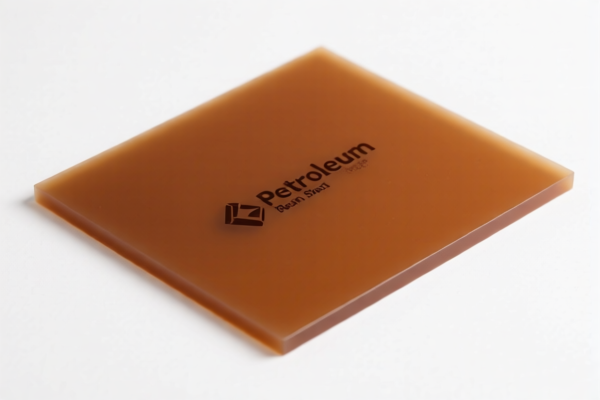

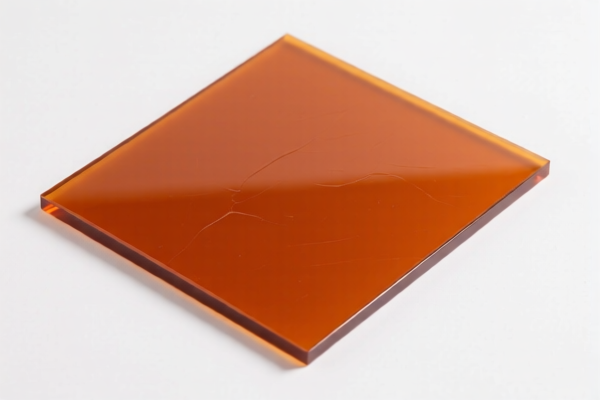
AI Analysis
🧪 Aromatic Resin Sheet (Petroleum Resin & Aromatic Hydrocarbon Derivatives)
🌐 HS Code Reference & Customs Clearance Guide | 2026 Latest Tariff Analysis | Professional Compliance Strategy
📌 I. Product Definition & Classification: Understanding "Aromatic Resin"
Aromatic resin sheets, specifically those derived from petroleum or coal tar, fall under the complex category of chemical resins and aromatic hydrocarbons. In international trade, these materials are often categorized based on their chemical structure (aromatic vs. non-aromatic), physical form (sheet/plate vs. raw powder/liquid), and origin (petroleum-based vs. synthetic).
Key Distinctions: * Petroleum Resin (Aliphatic/Modified): Often classified under Chapter 39 if modified for specific resin properties, but strictly aromatic derivatives may fall under Chapter 27 or Chapter 38 depending on processing. * Aromatic Hydrocarbons (C9, C10, etc.): If the product is essentially a refined hydrocarbon mixture solidified into sheets, it may be classified under Chapter 27 (Mineral Fuels, Oils and Distillation Products). * Synthetic Organic Chemicals: If heavily processed into a specific polymer resin with defined chemical characteristics, it may fall under Chapter 39 (Plastics) or Chapter 38 (Miscellaneous Chemical Products).
⚠️ Critical Classification Point:
- If the sheet is primarily aromatic hydrocarbon content (weight > non-aromatic) → Chapter 27
- If it is a refined petroleum resin with specific chemical modifications → Chapter 38 or Chapter 39
- If it is a mixed chemical intermediate used in adhesives or coatings → Chapter 38
📦 II. Detailed HS Code Classification (2026 Tariff Authority Alignment)
| HS Code | Product Description | Application Scenario | Chemical Nature |
|---|---|---|---|
3806.10.00.50 |
Aromatic petroleum resin, belonging to rosin and its acid derivatives and derivatives scope, meeting the "other" material category | Industrial adhesives, rubber compounding, wax modification | ✅ Highly Aromatic (Refined) |
3806.90.00.00 |
Petroleum resin belongs to rosin and its derivatives scope, meeting the material definition of this code, primary chemical form | General-purpose adhesives, sealants, printing inks | ✅ Mixed Aromatic |
2707.50.00.00 |
Goods belong to aromatic hydrocarbon products, meeting the material characteristics of "aromatic components" in classification interpretation | Chemical intermediates, fuel additives, basic aromatic feedstock | ✅ Primary Aromatic (Hydrocarbon) |
2707.99.90.90 |
Product name clearly contains "aromatic" characteristics, meeting the material requirement of "aromatic component weight exceeding non-aromatic" in HS 2707.99.90.90 | Specialized aromatic solvents, high-purity aromatic feeds | ✅ Pure Aromatic (Hydrocarbon) |
3911.90.25.00 |
Product name includes "petroleum resin" and "aromatic" material characteristics, fully meeting material and composition requirements in classification explanation | Specialty plastics, high-performance resins, engineered sheets | ✅ Polymerized Aromatic |
🔍 Key Reminder:
-3806.10.00.50and3806.90.00.00are for resins (modified chemically).
-2707.50.00.00and2707.99.90.90are for hydrocarbon oils/distillates (physical form varies).
-3911.90.25.00is for plastic/resin sheets (polymerized form).
- Misclassification Risk: Declaring a hydrocarbon distillate (2707) as a resin (3806) or vice versa can lead to severe customs penalties.
💰 III. 2026 Latest Tariff Rate Details (Including Additional Taxes & Policy Surcharges)
✅ Applicable Country: United States (US)
✅ Origin: China (CN)
✅ Effective Date: November 10, 2025 (including subsequent imports)
🎯 1. 3806.10.00.50 —— Aromatic Petroleum Resin (Refined)
| Item | Content |
|---|---|
| Base Tariff Rate | 40.0% (ad valorem) |
| USITC Additional Tax | +25.0% (from USITC Footnote 9903.88.01, Section 301) |
| IEEPA Additional Tax | +10.0% (for China/HK products, effective Nov 10, 2025) |
| Total Tariff Rate | 75% |
| Tax Calculation | CIF Value × 75% |
| De Minimis Exemption Eligible | ❌ No (deny_de_minimis) |
| Legal Basis Path | IEEPA:9903.01.25 → IEEPA:9903.01.24 → USITC:3806.10.00.50 → FOOTNOTE:9903.88.01 |
📌 Explanation:
- "USITC Additional Tax 25%" is from the Section 301 Trade Act "Additional Tariff";
- "IEEPA 10%" is the China-specific surcharge under the International Emergency Economic Powers Act;
- Total 75% is an extremely high tariff, requiring early risk assessment!
🎯 2. 3806.90.00.00 —— Other Petroleum Resins (Mixed Aromatic)
| Item | Content |
|---|---|
| Base Tariff Rate | 39.2% |
| USITC Additional Tax | +25.0% |
| IEEPA Additional Tax | +10.0% |
| Total Tariff Rate | 74.2% |
| Tax Calculation | CIF × 74.2% |
| De Minimis Exemption Eligible | ❌ No |
| Legal Basis Path | IEEPA:9901.25 → IEEPA:9903.01.24 → USITC:3806.90.00.00 → FOOTNOTE:9903.88.01 |
📌 Note:
- Similar to the above, applies to generic petroleum resins;
- Even if "C9/C10 resins" or "coupling resins" are used, if they are petroleum-derived, this code often applies.
🎯 3. 2707.50.00.00 —— Aromatic Hydrocarbons (C9+ etc.)
| Item | Content |
|---|---|
| Base Tariff Rate | 35.0% |
| USITC Additional Tax | +25.0% |
| IEEPA Additional Tax | +10.0% |
| Total Tariff Rate | 70% |
| Tax Calculation | CIF × 70% |
| De Minimis Exemption Eligible | ❌ No |
| Legal Basis Path | IEEPA:9903.01.25 → IEEPA:9903.01.24 → USITC:2707.50.00.00 |
📌 Warning:
- This code is for hydrocarbon fractions (often liquid or semi-solid), not necessarily "sheets";
- If exported as sheets, customs may question the physical form consistency with this code.
🎯 4. 2707.99.90.90 —— Other Aromatic Hydrocarbons (High Purity)
| Item | Content |
|---|---|
| Base Tariff Rate | 35.0% |
| USITC Additional Tax | +25.0% |
| IEEPA Additional Tax | +10.0% |
| Total Tariff Rate | 70% |
| Tax Calculation | CIF × 70% |
| De Minimis Exemption Eligible | ❌ No |
| Legal Basis Path | IEEPA:9903.01.25 → IEEPA:9903.01.24 → USITC:2707.99.90.90 |
📌 Note:
- Applies to high-purity aromatic mixtures;
- Physical form (sheet vs. liquid) must be justified with technical data.
🎯 5. 3911.90.25.00 —— Specialty Resins/Plastics (Polymerized)
| Item | Content |
|---|---|
| Base Tariff Rate | 41.1% |
| USITC Additional Tax | +25.0% |
| IEEPA Additional Tax | +10.0% |
| Total Tariff Rate | 76.1% |
| Tax Calculation | CIF × 76.1% |
| De Minimis Exemption Eligible | ❌ No |
| Legal Basis Path | IEEPA:9901.25 → IEEPA:9903.01.24 → USITC:3911.90.25.00 |
📌 Critical Point:
- This is the highest tariff rate among the options;
- Applies only if the product is chemically defined as a plastic/resin sheet under Chapter 39.
🛠️ IV. Customs Clearance Practical Advice (Pitfall Avoidance Guide)
✅ 1. Document Checklist (All Required)
| Document | Required | Description |
|---|---|---|
| ✅ Product Specification Sheet | ✔️ | Includes chemical composition (aromatic %), molecular weight, softening point, form (sheet) |
| ✅ COA (Certificate of Analysis) | ✔️ | Must show aromatic content vs. aliphatic content |
| ✅ TDS (Technical Data Sheet) | ✔️ | For chemical identification |
| ✅ Product Photos (Clear Labels) | ✔️ | Showing "Aromatic Resin" or chemical name |
| ✅ MSDS/SDS | ✔️ | Safety Data Sheet, classifying hazard class |
| ✅ Commercial Invoice | ✔️ | Must specify "Aromatic Petroleum Resin Sheet" or similar |
| ✅ Packing List | ✔️ | Net/Gross weight, packaging type |
| ✅ Certificate of Origin (CO) | ✔️ | If claiming preference (not applicable for US/China 2026) |
✅ 2. Declaration Tips (Key Principles)
🔥 “Clear Name, Accurate HS, Full Disclosure, Avoid Penalties!”
| Scenario | Correct Declaration | Incorrect Action |
|---|---|---|
| Aromatic Petroleum Resin (Solid/Semi-solid) | 3806.10.00.50 or 3806.90.00.00 |
Misdeclare as 3911 → 76.1% |
| Hydrocarbon Distillate (Liquid/Semi-solid) | 2707.50.00.00 or 2707.99.90.90 |
Misdeclare as 3806 → 75% |
| Plastic Sheet (Polymerized) | 3911.90.25.00 |
Misdeclare as 2707 → 70% |
| Mixed/Unknown Composition | Request Ruling from CBP | Guessing HS Code → 75-76% |
✅ 3. Special Handling Cases
| Case | Handling Advice |
|---|---|
| OEM Custom Resin | Provide customer order + chemical formula to prove "aromatic" content |
| Resin Sheets with Additives | Declare as "Aromatic Resin + Fillers", may still fall under 3806 or 3911 |
| Used for Adhesives | If primarily used in adhesives, 3806.10.00.50 is most appropriate |
| Exporting as "Chemical Raw Material" | Ensure HS code matches physical state (sheet vs. powder) |
🌍 V. Global Customs Comparison (2026 Latest)
| Country/Region | Recommended HS Code | Tariff Rate | Certification | Notes |
|---|---|---|---|---|
| 🇺🇸 USA | 3806.10.00.50 |
75% (China) | TSCA + SDS | Highest effective rate |
| 🇨🇳 China | 3806.10.00.00 |
5% | CCC (if applicable) | No additional tariffs |
| 🇪🇺 EU | 3806.10.00.00 |
0% (if REACH compliant) | REACH + SDS | No surcharges |
| 🇦🇺 Australia | 3806.10.00.00 |
5% | AICIS | No surcharges |
| 🇯🇵 Japan | 3806.10.00.00 |
0% | PMDA (if relevant) | No surcharges |
📌 Conclusion:
- USA imposes the highest tariffs on Chinese aromatic resins;
- EU, Japan, Australia have minimal or zero tariffs if compliance (REACH, etc.) is met;
- Supply Chain Strategy: Consider routing through Vietnam or Malaysia to mitigate US tariffs (subject to rules of origin).
📌 VI. Common Errors & Pitfall Guide (Lessons Learned)
❌ Error 1: Declaring "Resin Sheet" as "Plastic Sheet" (3911) without polymerization proof
👉 Consequence: CBP reclassifies to 3806 → 75% Tariff + Penalties
❌ Error 2: Declaring "Hydrocarbon Distillate" (2707) when product is chemically modified resin
👉 Consequence: Misclassification → 70% vs 75% + Audit Risk
❌ Error 3: Not disclosing aromatic content percentage
👉 Consequence: Customs cannot determine if it meets 2707.50.00.00 criteria → Delays/Seizure
❌ Error 4: Using "Chemical Material" as generic description
👉 Consequence: CBP assigns highest applicable tariff → 76.1%
✅ Correct Practice:
"Aromatic Petroleum Resin Sheet, C9/C10 Modified, Softening Point 90-110°C, Aromatic Content >85%, for Adhesive Industry, TSCA Compliant"
🎯 VII. Conclusion: Professional Declaration, Save Time & Money!
🎯 Remember the Mnemonic:
🔹 "Resin vs. Hydrocarbon, Chemical Structure Decides; Aromatic >85% is Key,
2707or3806See!"
🔹 "HS Code Determines Tax, 75% is High Risk, Declare Accurately, Avoid Penalties!"
📌 Pro Tip:
If your resin sheets are originating from Vietnam, Mexico, Thailand, or Malaysia, you may apply for IEEPA Exemption, reducing the tariff to 0%-5%;
Recommend pre-ruling (Advance Ruling) from CBP to avoid customs disputes.
📣 Take Action Now:
📞 Contact Professional Customs Broker + Provide Product Specs + Apply for HS Code Pre-Ruling
🚀 Let your Aromatic Resin Sheets Clear Smoothly, Export Efficiently, and Maximize Profits!
✨ Professional Customs Clearance Starts with Accurate Classification!
💼 Every Penny of Your Cost Deserves Precise Calculation!
Customer Reviews
About HS Code Classification
The Harmonized System (HS) is an internationally standardized nomenclature developed by the World Customs Organization (WCO) to classify traded products. Over 200 countries use the HS system as the basis for customs tariffs, trade statistics, and import/export regulations.
Each HS code follows a hierarchical structure:
- Chapter (2 digits) — Broad category of goods (e.g., Chapter 84: Machinery and Mechanical Appliances)
- Heading (4 digits) — More specific grouping within the chapter
- Subheading (6 digits) — Internationally standardized breakdown, used by all WCO member countries
- National subdivisions (8-10 digits) — Country-specific extensions for further classification, such as US HTSUS 10-digit codes
Correct HS code classification is essential for smooth customs clearance, accurate duty payment, and compliance with trade regulations. Misclassification can lead to customs delays, overpayment of duties, or penalties.
When importing from CN to US, the applicable tariff rates may include:
- Most-Favored-Nation (MFN) rate — The standard duty rate applied to WTO members
- General rate — Applied to countries without trade agreements
- Trade remedy duties — Additional tariffs such as Section 301 (anti-dumping), Section 232 (national security), or countervailing duties
The information provided on this page is for reference purposes only. For official classification, please consult with your local customs authority or a licensed customs broker.