Aromatic Steam Disinfectant
CN → US| HS Code | Tariff Rate | Origin | Destination | Doc |
|---|---|---|---|---|
| 3808941000 | 41.5% | CN | US | Official Doc |
| 3808990800 | 41.5% | CN | US | Official Doc |
Product Images
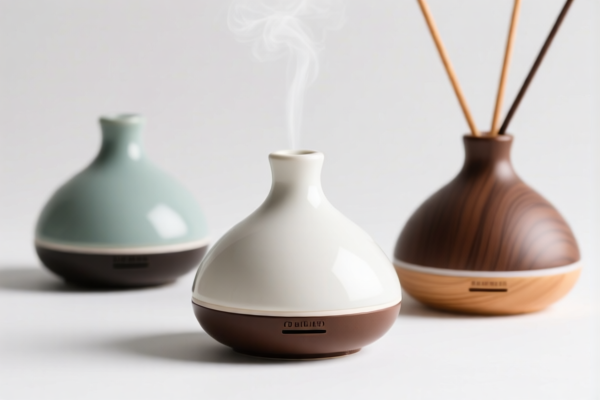
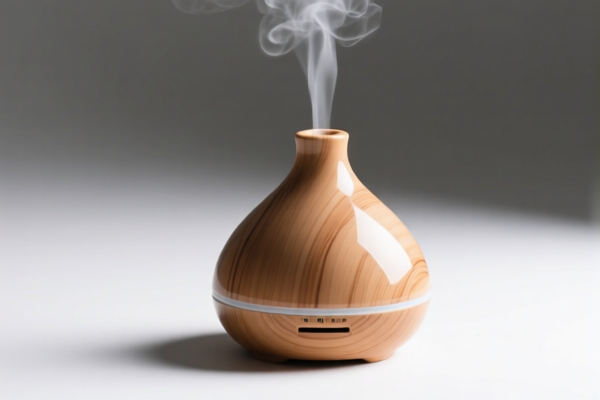
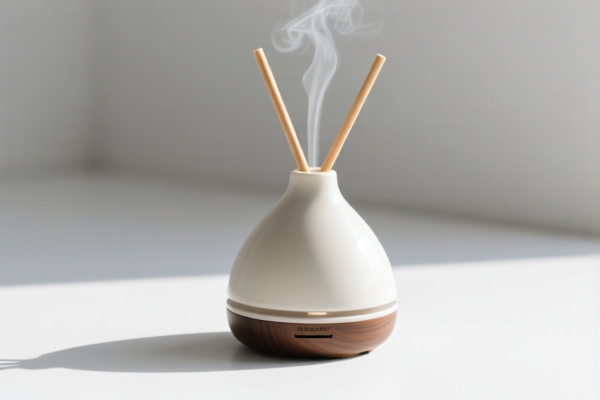
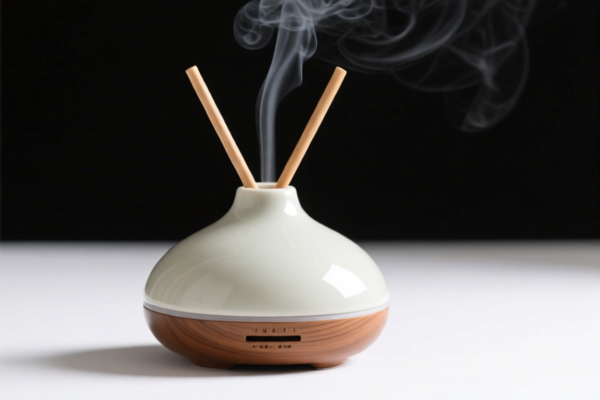
AI Analysis
🧴 Aromatic Steam Disinfectant (Steam Disinfectants)
🌐 HS Code Reference & Customs Clearance Guide | 2026 Latest Tariff Analysis | Professional Compliance Strategy
📌 I. Product Definition & Classification: What is an "Aromatic Steam Disinfectant"?
Aromatic Steam Disinfectants are chemical preparations designed to disinfect surfaces, instruments, or environments using steam or vaporized agents. The key identifier here is "Aromatic", which refers to the chemical structure of the active ingredients (typically containing benzene rings or modified aromatic compounds, such as phenols, cresols, or specific quaternary ammonium salts with aromatic groups).
In international trade, these products fall under Chapter 38 (Miscellaneous Chemical Products), specifically within the section covering insecticides, fungicides, herbicides, and disinfectants.
⚠️ Key Classification Criteria:
- Form: Must be put up in forms or packings for retail sale OR as preparations/articles (e.g., strips, wicks, candles, sprays, liquids for steamers).
- Active Ingredient: Must contain any aromatic or modified aromatic disinfectant.
- Exclusion: If it does NOT contain aromatic components, it falls under different subheadings (e.g., 3808.94.90 or 3808.99.09).
📦 II. HS Code Classification Details (2026 Latest Tariff Concordance)
Based on the provided <DATA>, there are two relevant HS codes depending on the specific type of preparation and the nature of the "aromatic" component. However, for Disinfectants containing aromatic agents, the primary code is 3808.94.10.00.
| HS Code | Product Description | Application Scenario | Key Identifier |
|---|---|---|---|
3808.94.10.00 |
Disinfectants: Containing any aromatic or modified aromatic disinfectant | Retail-packaged steam disinfectants, phenol-based vaporizers, aromatic liquid disinfectants for steamers | ✅ Contains aromatic disinfectant |
3808.99.08.00 |
Other: Containing any aromatic or modified aromatic pesticide: Other | Aromatic pesticides (insecticides/rodenticides) put up for retail sale | ⚠️ Note: This is for Pesticides, NOT Disinfectants |
🔍 Critical Distinction:
- If the product is strictly a Disinfectant (kills bacteria/viruses), use3808.94.10.00.
- If the product is a Pesticide (kills insects/rodents) and is aromatic, use3808.99.08.00.
- For "Aromatic Steam Disinfectant", the correct code is3808.94.10.00.
💰 III. 2026 Latest Tariff Rate Details (Including Surcharges)
✅ Applicable Country: United States (US)
✅ Origin: China (CN)
✅ Effective Time: Current Rates (Note: Base rates for these chemical preparations are typically 0% or low, but verify specific HTSUS footnotes for potential Section 301 or IEEPA impacts if applicable to chemical precursors, though pure disinfectants often enjoy 0% base duty).
🎯 1. 3808.94.10.00 —— Disinfectants (Aromatic)
| Item | Content |
|---|---|
| Base Duty Rate | 0.0% (Ad Valorem) |
| Additional Duty (Section 301 / IEEPA) | 0.0% (No additional surcharge listed in provided <DATA>) |
| Total Tax Rate | 0.0% |
| Tax Calculation | CIF Value × 0% = $0.00 |
| De Minimis Eligibility | ✅ Yes (Generally, if value < $800, no duty applies regardless of code, but this code itself has 0% duty) |
| Legal Basis Path | HTSUS:3808.94.10.00 → USITC:3808.94.10.00 |
📌 Explanation:
- The base tariff for aromatic disinfectants is 0%.
- The provided<DATA>explicitly states:基础关税: 0.0%, 加征关税: 0.0%.
- Total Tax: 0.0%. This makes it a highly competitive product for export to the US from a tariff perspective, assuming no anti-dumping duties apply (which is rare for general disinfectants unless specific chemical precursors are involved).
🎯 2. 3808.99.08.00 —— Aromatic Pesticides (For Reference Only)
| Item | Content |
|---|---|
| Base Duty Rate | 0.0% |
| Additional Duty | 0.0% |
| Total Tax Rate | 0.0% |
| Legal Basis Path | HTSUS:3808.99.08.00 |
📌 Note: While the tax rate is also 0%, this code is incorrect for disinfectants. Misclassification can lead to penalties.
🛠️ IV. Customs Clearance Practical Advice (Real-World Pitfall Guide)
✅ 1. Required Documentation Checklist (Non-negotiable)
| Document | Must Provide | Description |
|---|---|---|
| ✅ Product Specification Sheet | ✔️ | Must explicitly state "Aromatic Disinfectant" and list chemical components (e.g., Cresol, Phenol, etc.) |
| ✅ SDS (Safety Data Sheet) | ✔️ | Section 15 must confirm regulatory status; Section 2 must highlight aromatic content |
| ✅ FDA Registration (If applicable) | ✔️ | If used in food-processing facilities, EPA/FDA registration numbers may be required |
| ✅ EPA Registration Number | ✔️ | For disinfectants claiming antimicrobial efficacy in the US, EPA approval is mandatory |
| ✅ Commercial Invoice | ✔️ | Clear description: "Steam Disinfectant, Retail Pack, Aromatic Based, HS 3808.94.10.00" |
| ✅ Certificate of Origin | ✔️ | To prove origin for potential FTZ or anti-dumping checks |
✅ 2. Declaration Tips (Key Mantras)
🔥 "Name Specific, Component Clear, EPA Valid, Zero Duty!"
| Scenario | Correct Declaration | Wrong Practice |
|---|---|---|
| General Aromatic Disinfectant | 3808.94.10.00 |
Misdeclaring as 3808.94.90 (non-aromatic) → May trigger audit |
| Steam Disinfectant Liquid | 3808.94.10.00 |
Declaring as 3402.10.00 (Surface Active Agents) → Wrong Chapter |
| Pesticide Strip (Aromatic) | 3808.99.08.00 |
Declaring as 3808.94.10.00 → Wrong Function |
| Non-Aromatic Disinfectant | 3808.94.90.00 |
Declaring as 3808.94.10.00 → Over-declaration (though rate is same, consistency matters) |
✅ 3. Special Handling Cases
| Scenario | Handling Advice |
|---|---|
| EPA Registration Missing | ❌ Cannot Clear. The US EPA strictly regulates disinfectants. Without an EPA Registration Number on the label/invoice, goods will be detained or destroyed. |
| "Aromatic" Ambiguity | Provide a chemical analysis report if the term "aromatic" is vague. Customs may request proof of benzene ring structures in active ingredients. |
| Retail vs. Industrial Pack | The code 3808.94.10.00 applies to both retail packings and preparations. Ensure the description matches the physical form (e.g., "Liquid in 1L Bottle" vs. "Wick in Box"). |
| Anti-Dumping Checks | While current data shows 0%, always verify if the specific aromatic compound (e.g., Phenol) is under anti-dumping orders. If so, additional duties may apply despite the 0% base rate for the finished product. |
🌍 V. Global Market Comparison (2026 Latest)
| Country/Region | Recommended HS Code | Tariff | Certification | Notes |
|---|---|---|---|---|
| 🇺🇸 USA | 3808.94.10.00 |
0.0% | EPA Reg. + FDA (if food-grade) | Strict EPA enforcement |
| 🇪🇺 EU | 3808.94.10 |
~0-2% | CLP Labeling + BPR | Biocidal Products Regulation (BPR) |
| 🇨🇳 China | 3808.94.10 |
~5-10% | MSDS + Safety Label | Import license may be needed for chemicals |
| 🇯🇵 Japan | 3808.94.10 |
~0-5% | JIS Standards | Ministry of Health, Labour and Welfare |
📌 Conclusion:
- The USA offers 0% duty for aromatic disinfectants, making it a favorable market from a tariff perspective.
- However, the regulatory barrier (EPA) is the highest. Ensure compliance before shipping.
📌 VI. Common Errors & Pitfall Guide (Lessons Learned)
❌ Error 1: Declaring "Chemical Disinfectant" without specifying "Aromatic"
👉 Consequence: Customs may classify it under 3808.94.90 (other disinfectants). While the tax rate might be similar, it creates inconsistency and potential audit flags.
❌ Error 2: Confusing Disinfectants with Pesticides
👉 Consequence: Using 3808.99.08.00 for a disinfectant. This is a misclassification. If the product does not claim to kill insects/rodents, it should not use this code.
❌ Error 3: Missing EPA Number on Label
👉 Consequence: Detention and Return/ Destruction. No tax calculation matters if the product cannot enter the country.
❌ Error 4: Assuming "Aromatic" means "Smelly"
👉 Consequence: In chemistry, "aromatic" refers to ring structures (e.g., benzene derivatives), not just odor. Provide chemical structure proofs if challenged.
✅ Correct Practice:
"Steam Disinfectant Solution, Retail Pack, 500ml, Contains Cresol (Aromatic), EPA Reg. No. XXXXX-XXXX, HS Code 3808.94.10.00"
🎯 VII. Conclusion: Professional Declaration, Save Time & Money!
🎯 Remember the Mantra:
🔹 "Aromatic Disinfectant? HS 3808.94.10.00!"
🔹 "EPA Number on Label, Zero Duty in USA!"
🔹 "Pesticide vs. Disinfectant? Know the Difference!"
📌 Pro Tip:
If your product is non-aromatic (e.g., alcohol-based, quaternary ammonium without aromatic rings), do NOT use 3808.94.10.00. Check for 3808.94.90 or other subheadings. Mislabeling aromatic content can lead to false declarations.
📣 Immediate Action:
📞 Verify EPA Registration → ✅ Prepare SDS → 📦 Declare HS
3808.94.10.00→ 🚀 Smooth Clearance with 0% Duty!
✨ Professional Customs Clearance Starts with Accurate Classification!
💼 Your Cost Efficiency Depends on Precision!
Customer Reviews
About HS Code Classification
The Harmonized System (HS) is an internationally standardized nomenclature developed by the World Customs Organization (WCO) to classify traded products. Over 200 countries use the HS system as the basis for customs tariffs, trade statistics, and import/export regulations.
Each HS code follows a hierarchical structure:
- Chapter (2 digits) — Broad category of goods (e.g., Chapter 84: Machinery and Mechanical Appliances)
- Heading (4 digits) — More specific grouping within the chapter
- Subheading (6 digits) — Internationally standardized breakdown, used by all WCO member countries
- National subdivisions (8-10 digits) — Country-specific extensions for further classification, such as US HTSUS 10-digit codes
Correct HS code classification is essential for smooth customs clearance, accurate duty payment, and compliance with trade regulations. Misclassification can lead to customs delays, overpayment of duties, or penalties.
When importing from CN to US, the applicable tariff rates may include:
- Most-Favored-Nation (MFN) rate — The standard duty rate applied to WTO members
- General rate — Applied to countries without trade agreements
- Trade remedy duties — Additional tariffs such as Section 301 (anti-dumping), Section 232 (national security), or countervailing duties
The information provided on this page is for reference purposes only. For official classification, please consult with your local customs authority or a licensed customs broker.