Art Book
CN → US| HS Code | Tariff Rate | Origin | Destination | Doc |
|---|---|---|---|---|
| 4911998000 | 17.5% | CN | US | Official Doc |
| 4901990060 | 17.5% | CN | US | Official Doc |
| 4911914040 | 17.5% | CN | US | Official Doc |
| 4901990065 | 17.5% | CN | US | Official Doc |
Product Images
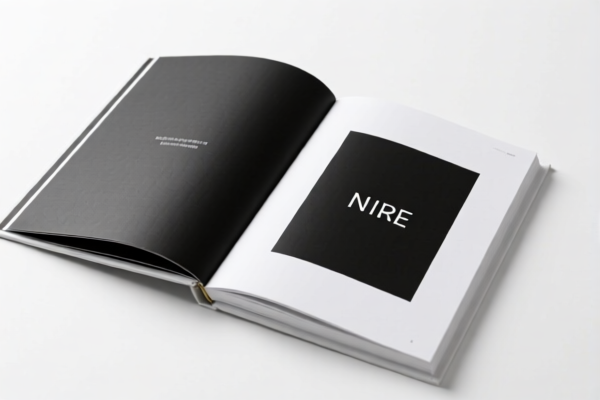

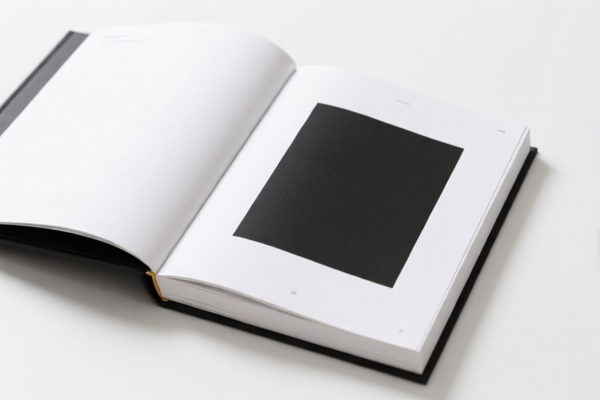

AI Analysis
🎨 Art Books (Illustrated Art Volumes)
🌐 HS Code Reference & Customs Clearance Guide | 2026 Latest Tariff Analysis | Professional Strategy for US Import
📌 I. Product Definition & Classification: Do You Truly Understand "Art Books"?
Art Books are not merely printed materials; they are high-value cultural commodities that bridge the gap between literature and visual art. In international trade, their classification hinges on content specificity, binding type, and primary purpose. Are they comprehensive catalogs? Coffee table books? Or specialized technical guides for artists?
Key Distinction:
- General Illustrated Books: Broad art history or biography content → Often falls under 4901 (Other printed books).
- Technical/Specialized Printouts: Reproductions of designs, photos, or generic "other" prints → Often falls under 4911 (Other printed matter).
⚠️ Critical Classification Point:
- If the book primarily serves as an illustrated volume (text + images where text is dominant or balanced) → Look at 4901.99.
- If the book is primarily a collection of prints, pictures, or designs without significant textual narrative → Look at 4911.99 or 4911.91.
📦 II. HS Code Classification Details (2026 Latest Authorized Comparison)
Based on the provided data, here are the four most relevant HS Codes for Art Books, along with their specific justifications:
| HS Code | Summary Justification | Primary Use Case | Content Nature |
|---|---|---|---|
4911.99.80.00 |
Art books belong to printed matter, fitting the "Other Printed Matter" category | General art publications, catalogs not specifically indexed elsewhere | General Printed Matter |
4901.99.00.60 |
Art books meet the description of use for "Art Picture Books" | Illustrated art books, children’s art books, picture-heavy volumes | Illustrated Books |
4911.91.40.40 |
Art books belong to printed matter, fitting the "Other Image Design & Photo" fallback category | High-end photo books, design portfolios, architectural prints | Printed Pictures/Designs |
4901.99.00.65 |
Art books meet requirements for "Art & Picture Book" usage and book format | Coffee table books, bound art volumes with artistic content | Bound Art Books |
🔍 Key Insight:
- 4901.99 series generally applies to books (bound volumes with text and/or images).
- 4911.99/91 series generally applies to printed matter (including loose prints, or books classified primarily by their visual nature rather than textual content).
- Note: The specific 8-digit subheadings (e.g., .60, .65, .40, .80) are often country-specific or system-specific variations used to capture detailed statistical data or specific duty treatments.
💰 III. 2026 Latest Tariff Rate Breakdown (Including Surcharges & Policy Add-ons)
✅ Applicable Country: United States (US)
✅ Origin: China (CN)
✅ Effective Time: 2025/2026 (Current Trade War Era)
✅ Total Tax Rate for All Listed Codes: 17.5%
All four HS codes listed in the source data share the same tax structure:
| Component | Rate | Description |
|---|---|---|
| Base Tariff | 0.0% | Standard Most Favored Nation (MFN) rate for these specific subheadings is often low or zero. |
| Section 301 / "Add-on" Tariff | 7.5% | Additional tariff imposed on Chinese imports under Section 301 of the Trade Act. |
| Section 122 Tariff | 10.0% | Additional tariff under specific trade policy provisions (often referred to as Section 122 or similar emergency/strategic tariffs depending on the specific administrative ruling). |
| TOTAL TAX RATE | 17.5% | 0% + 7.5% + 10% = 17.5% |
📌 Explanation of Tax Details:
- Base Tax (0.0%): The US Harmonized Tariff Schedule (HTSUS) often lists low base rates for certain printed materials to promote cultural exchange.
- Add-on Tax (7.5%): This is part of the broader Section 301 list targeting Chinese goods.
- Section 122 Tariff (10%): This specific 10% levy is highlighted in the data. It may refer to specific emergency tariffs or retaliatory measures applied to Chinese cultural/printed goods.
- Conclusion: Regardless of whether you classify the book as4901.99.00.60or4911.99.80.00, the landed cost will include an additional 17.5% tariff on top of the CIF value.
🛠️ IV. Customs Clearance Practical Advice (Real-World Pitfall Avoidance)
✅ 1. Documentation Checklist (Non-negotiable)
| Document | Required | Purpose |
|---|---|---|
| Commercial Invoice | ✔️ | Must clearly state "Art Book" and describe content (e.g., "Illustrated Volume on Modern Sculpture"). |
| Product Description | ✔️ | Detailed description: Number of pages, binding type (hardcover/paperback), ISBN, dimensions, weight. |
| Contents List/Table of Contents | ✔️ | Crucial for proving it is a "Book" (4901) vs. "Printed Matter" (4911). Show balance of text vs. images. |
| Photos of Book | ✔️ | Cover, spine, inside pages (to show quality and binding). |
| Copyright/Permission Proof | ✔️ | If reproducing copyrighted artwork, ensure legal rights are documented to avoid IP seizures. |
| Value Declaration | ✔️ | Justify CIF value. Art books can be high-value; low declarations raise red flags. |
✅ 2. Classification Strategy (Key Mnemonic)
🔥 "Text Dominates = 4901; Images Dominates = 4911; Both Pay 17.5%!"
| Scenario | Recommended HS Code | Rationale |
|---|---|---|
| Coffee Table Book (High-quality prints, minimal text) | 4911.99.80.00 or 4911.91.40.40 |
Primarily visual; falls under "printed matter" of pictures/designs. |
| Art History Book (Text-heavy with illustrations) | 4901.99.00.60 or 4901.99.00.65 |
Primarily a book; falls under "other printed books." |
| Children’s Art Book | 4901.99.00.60 |
Clearly fits "Art Picture Book" usage. |
| Photography Portfolio | 4911.91.40.40 |
Fits "Other image design and photo" category. |
⚠️ Warning:
- Do not try to avoid the 17.5% tariff by misclassifying as "Educational Material" (which may have different rates) without solid evidence. CBP (Customs and Border Protection) is strict on "Art Books."
- Consistency is Key: Ensure the description on the invoice matches the HS Code justification. If you claim4901(Book), provide a TOC. If4911(Print), emphasize the visual nature.
✅ 3. Special Considerations
| Issue | Handling Advice |
|---|---|
| High-Value Art Books | If the book contains original artwork (not just prints), it may be classified under Chapter 97 (Works of Art), which has different tariffs. Ensure it is a reproduction/print to stay in Chapter 49. |
| Digital/Audio Elements | If the book includes a QR code linking to digital content, it is still classified as a physical book/print. Do not include digital subscription fees in the customs value unless separately billed. |
| Gifts vs. Commercial | Even if marketed as "gifts," commercial imports are subject to tariffs. De minimis ($800) may apply if shipped directly to consumers via carriers like DHL/FedEx, but bulk commercial shipments do not qualify. |
🌍 V. Global Market Comparison (2026 Context)
| Market | HS Code Tendency | Tariff Impact | Notes |
|---|---|---|---|
| 🇺🇸 USA | 4901.99 / 4911.99 |
17.5% (China Origin) | High tariffs due to Section 301 & Section 122. Must prepare for cost impact. |
| 🇨🇳 China | 4901 / 4911 |
Low/Moderate | Standard MFN rates apply. No aggressive retaliatory tariffs on books. |
| 🇪🇺 EU | 4901 / 4911 |
0% - 6.5% | VAT applies (19-27%). No additional trade war tariffs on books. |
| 🇬🇧 UK | 4901 / 4911 |
0% - 6.5% | Post-Brexit standards apply. VAT and Duty apply. |
📌 Conclusion:
The US market is the most challenging for importing Art Books from China due to the 17.5% total tariff.
- Strategy: Factor this 17.5% into your pricing model.
- Opportunity: Consider sourcing from non-China origins (e.g., Vietnam, India) if possible to avoid Section 301/122 tariffs, though base rates may vary.
📌 VI. Common Mistakes & Pitfalls (Lessons Learned)
❌ Mistake 1: Classifying as "Educational Material" without proof
👉 Result: CBP rejects classification, back taxes + penalties.
👉 Fix: Only use if the book is explicitly for classroom use with curriculum guides.
❌ Mistake 2: Ignoring the "Section 122" tariff
👉 Result: Underpayment of duties. CBP audits reveal the missing 10%.
👉 Fix: Always check the latest HTSUS footnotes for "122" or emergency surcharges.
❌ Mistake 3: Misdeclaring "Book" vs. "Printed Matter"
👉 Result: If you claim 4901 but the item is loose prints, it’s fraud. If you claim 4911 for a bound book, it may be rejected.
👉 Fix: Ensure physical form (bound vs. loose) matches the HS Code.
✅ Correct Practice:
"Hardcover Art Book, 'Impressionism: A Biography', 300 pages, 50 color plates, ISBN 978-XXX-XXXX, Value $50.00"
→ Supports4901.99.00.60or4901.99.00.65.
🎯 VII. Conclusion: Professional Clearance, Cost Control, Efficiency!
🎯 Remember the Golden Rule:
🔹 "17.5% is the Cost of Entry for Chinese Art Books in the US."
🔹 "Book = 4901; Print = 4911. Both pay the same tariff."
🔹 "Describe accurately, document thoroughly, avoid penalties."
📌 Pro Tip:
If your Art Books are original works (hand-printed, signed, limited edition prints), consider Chapter 97 classification, which may have different duty implications (often lower or higher depending on origin). For mass-produced reproduction art books, Chapter 49 with 17.5% tariff is the standard path.
📣 Immediate Action:
📞 Engage a licensed customs broker to confirm the exact 8-digit HS Code based on your book’s physical attributes.
📊 Calculate landed cost:CIF Value × 1.175+ Brokerage + Port Fees.
🚀 Plan for the 17.5% tariff in your pricing strategy.
✨ Professional customs clearance starts with precise classification!
💼 Every dollar saved in correct classification is a dollar added to your margin!
Customer Reviews
About HS Code Classification
The Harmonized System (HS) is an internationally standardized nomenclature developed by the World Customs Organization (WCO) to classify traded products. Over 200 countries use the HS system as the basis for customs tariffs, trade statistics, and import/export regulations.
Each HS code follows a hierarchical structure:
- Chapter (2 digits) — Broad category of goods (e.g., Chapter 84: Machinery and Mechanical Appliances)
- Heading (4 digits) — More specific grouping within the chapter
- Subheading (6 digits) — Internationally standardized breakdown, used by all WCO member countries
- National subdivisions (8-10 digits) — Country-specific extensions for further classification, such as US HTSUS 10-digit codes
Correct HS code classification is essential for smooth customs clearance, accurate duty payment, and compliance with trade regulations. Misclassification can lead to customs delays, overpayment of duties, or penalties.
When importing from CN to US, the applicable tariff rates may include:
- Most-Favored-Nation (MFN) rate — The standard duty rate applied to WTO members
- General rate — Applied to countries without trade agreements
- Trade remedy duties — Additional tariffs such as Section 301 (anti-dumping), Section 232 (national security), or countervailing duties
The information provided on this page is for reference purposes only. For official classification, please consult with your local customs authority or a licensed customs broker.