Art Drawing Paper
CN → US| HS Code | Tariff Rate | Origin | Destination | Doc |
|---|---|---|---|---|
| 4805911090 | 35.0% | CN | US | Official Doc |
| 4805911010 | 35.0% | CN | US | Official Doc |
| 4811906010 | 35.0% | CN | US | Official Doc |
| 4811904090 | 35.0% | CN | US | Official Doc |
Product Images
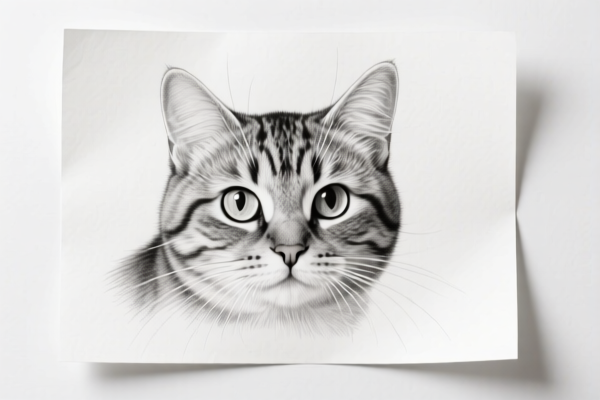

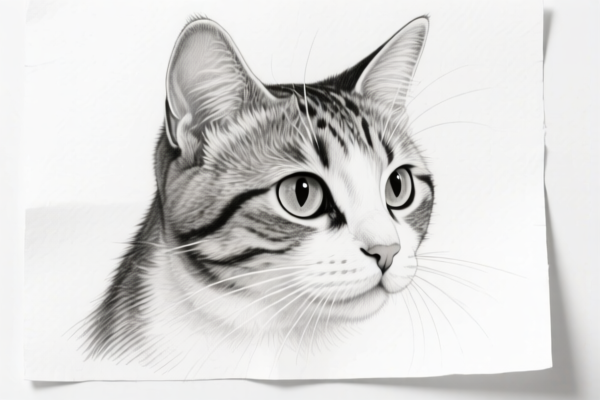

AI Analysis
🎨 Art Drawing Paper (Premium Artistic Papers)
🌐 HS Code Reference & Customs Clearance Guide | 2026 Latest Tariff Analysis | Professional Strategy
📌 I. Product Definition & Classification: What Exactly is "Art Drawing Paper"?
Art drawing paper is a specialized material used for creative expression, fine art printing, and professional drafting. Unlike standard office paper, it often features specific textures, weights, or surface treatments designed for pencils, charcoal, pastels, or ink.
In international trade, these papers are classified based on their material composition and surface treatment. The core debate usually lies between: 1. Uncoated/Plain Papers: Raw or lightly textured paper intended for dry media (pencil, charcoal). 2. Coated/Decorated Papers: Papers with surface treatments (clay coating, sizing, decorative finishes) to enhance ink holdout or provide specific artistic effects.
⚠️ Key Distinction Point:
- If the paper is uncoated and used for basic artistic sketching without complex chemical surface treatments → It often falls under Heading 4805 (Uncoated Paper).
- If the paper has been coated, printed, or decorated to achieve specific artistic effects (e.g., watercolor bloom control, glossy finish, embossed texture) → It falls under Heading 4811 (Coated/Decorated Paper).
📦 II. HS Code Classification Details (2026 Latest Tariff Authority Comparison)
| HS Code | Product Description | Applicable Scenario | Tax Summary |
|---|---|---|---|
4805.91.10.90 |
Other uncoated paper/board, of a kind used for artistic purposes | Raw art papers, sketch pads, uncoated watercolor blocks | 35.0% |
4805.91.10.10 |
Other paper/board, suitable for artistic use | High-quality uncoated drawing paper, heavy-weight sketch paper | 35.0% |
4811.90.60.10 |
Paper coated, printed, or decorated for artistic use | Coated watercolor paper, glossy art prints, textured decorative paper | 35.0% |
4811.90.40.90 |
Other coated/printed paper products for artistic purposes | Specialty coated art papers, composite artistic sheets | 35.0% |
🔍 Critical Reminder:
- Even though the tax rates are identical in this dataset, the HS Code determines the legal classification of the goods.
- Misclassifying a coated art paper as uncoated (or vice versa) can lead to customs audits, delays, or penalties due to inconsistent product descriptions.
- All four codes listed above apply to Art Paper, but they reflect different physical states (coated vs. uncoated).
💰 III. 2026 Latest Tariff Rate Breakdown (Including Surtaxes & Policy Add-ons)
✅ Applicable Country: United States (US)
✅ Origin: China (CN)
✅ Effective Date: 2025-11-10 onwards (including subsequent imports)
🎯 1. 4805.91.10.90 & 4805.91.10.10 — Uncoated Art Paper
| Item | Content |
|---|---|
| Base Tariff | 0.0% (ad valorem) |
| Section 301 Surtax | +25.0% (Added duty for Chinese origin under USITC provisions) |
| Section 122 Tariff | +10.0% (Specific "122 Clause" tariff for certain Chinese goods) |
| Total Effective Rate | 35.0% |
| Tax Calculation | CIF Value × 35% |
| De Minimis Exemption | ❌ Not Applicable (High risk of detention) |
| Legal Basis Path | Base: 4805.91.10.10/90 → Section 301: 25% → Section 122: 10% |
📌 Explanation:
- Although the base tariff is 0%, the cumulative impact of the 25% Section 301 duty and the 10% Section 122 tariff results in a 35% total cost increase.
- This applies to all uncoated artistic papers originating from China.
🎯 2. 4811.90.60.10 & 4811.90.40.90 — Coated/Decorated Art Paper
| Item | Content |
|---|---|
| Base Tariff | 0.0% (ad valorem) |
| Section 301 Surtax | +25.0% (Added duty for Chinese origin) |
| Section 122 Tariff | +10.0% (Specific "122 Clause" tariff) |
| Total Effective Rate | 35.0% |
| Tax Calculation | CIF Value × 35% |
| De Minimis Exemption | ❌ Not Applicable |
| Legal Basis Path | Base: 4811.90.60.10/40.90 → Section 301: 25% → Section 122: 10% |
📌 Note:
- Coated and uncoated art papers face the same effective tariff rate (35%) from China to the US.
- However, coated papers often have higher declared values due to processing, making the absolute tax amount significantly higher.
- Ensure your customs broker clearly specifies "Coated" or "Uncoated" on the commercial invoice to avoid classification disputes.
🛠️ IV. Customs Clearance Practical Advice (实战避坑指南)
✅ 1. Required Documentation Checklist
| Document | Must Provide | Explanation |
|---|---|---|
| ✅ Product Specification Sheet | ✔️ | Must detail weight (GSM), texture, coating type (if any), and intended artistic use. |
| ✅ Composition Analysis | ✔️ | Proof of fiber content (e.g., 100% Cotton vs. Wood Pulp) to confirm Heading 4805 vs. 4811. |
| ✅ Product Photos | ✔️ | Show surface texture, packaging, and any branding/labels. |
| ✅ Commercial Invoice | ✔️ | Must state "Art Drawing Paper" and specify "Coated" or "Uncoated" clearly. |
| ✅ Certificate of Origin | ✔️ | To prove Chinese origin and apply correct Section 301/122 duties. |
| ✅ Packing List | ✔️ | Detailing gross/net weight and number of rolls/sheets. |
✅ 2. Declaration Tips (Key Mantras)
🔥 "Specify Coating, Define Use, Avoid Ambiguity, Save Time!"
| Scenario | Correct Declaration | Wrong Practice |
|---|---|---|
| Uncoated Sketch Paper | 4805.91.10.90 - "Uncoated Art Paper, Pencil/Charcoal Use" |
Just writing "Paper" → Ambiguous, may trigger inspection. |
| Coated Watercolor Paper | 4811.90.60.10 - "Coated Art Paper, Watercolor Use" |
Writing "Office Paper" → Severe misclassification. |
| Decorative/Textured Paper | 4811.90.40.90 - "Decorated Art Paper" |
Writing "Cardboard" → Wrong heading, wrong tax implication. |
| Bulk Rolls vs. Cut Sheets | Specify format | Mixing formats without clarification → Calculation errors. |
✅ 3. Special Situation Handling
| Situation | Handling Advice |
|---|---|
| Mixed Art Supplies | If art paper is shipped with paints/brushes, declare Art Paper separately. Do not lump into "Art Kits" unless specifically declared as such. |
| Cotton vs. Wood Pulp | Cotton-based paper may have different regulatory requirements. Ensure "100% Cotton" is stated if applicable, as it affects customs valuation. |
| Samples | Even for samples, the 35% duty applies. However, you may claim exemption if value is below de minimis threshold for personal use, but for commercial imports, duties are mandatory. |
| Re-export | If re-exporting, ensure proper bond entries are filed to avoid double taxation. |
🌍 V. Global Market Comparison (2026 Latest)
| Country/Region | Recommended HS Code | Tariff (China Origin) | Certification Requirements | Remarks |
|---|---|---|---|---|
| 🇺🇸 USA | 4805.91.10.90 / 4811.90.60.10 |
35% (Base 0% + 25% + 10%) | None specific for paper | High tariff barrier. |
| 🇨🇳 China | 4805.91.10 / 4811.90 |
Varies (Export duties may apply) | FSC Certification (Optional) | Major producer/exporter. |
| 🇪🇺 EU | 4805.91 / 4811.90 |
0% - 6.5% | CE Marking (if coated with chemicals) | No Section 301/122 equivalents. |
| 🇬🇧 UK | 4805.91 / 4811.90 |
0% - 6.5% | UKCA Marking (if applicable) | Post-Brexit rules apply. |
| 🇯🇵 Japan | 4805.91 / 4811.90 |
0% - 3.1% | FSC Certification (Preferred) | Low tariff, high quality standards. |
📌 Conclusion:
- The USA imposes the highest effective tariff (35%) on Chinese art paper due to Section 301 and Section 122 add-ons.
- EU, UK, Japan, and other major markets have significantly lower tariffs (0%-6.5%).
- Consider supply chain diversification if shipping to the US is cost-prohibitive.
📌 VI. Common Mistakes & Pitfalls (Lessons Learned)
❌ Mistake 1: Declaring "Art Paper" without specifying "Coated" or "Uncoated".
👉 Consequence: Customs may classify as the highest duty category or hold shipment for inspection.
❌ Mistake 2: Using generic terms like "Paper" or "Cardboard".
👉 Consequence: Misclassification leads to back-taxes and potential penalties.
❌ Mistake 3: Ignoring the Section 122 Tariff.
👉 Consequence: Unexpected 10% charge at customs, disrupting cash flow.
❌ Mistake 4: Assuming all art paper is exempt from duties.
👉 Consequence: 35% duty is mandatory for Chinese-origin art paper entering the US.
✅ Correct Approach:
"Coated Art Paper, 300 GSM, 100% Cotton, for Watercolor, Model XYZ, HS Code 4811.90.60.10"
🎯 VII. Conclusion: Professional Declaration, Cost Control, Smooth Clearance
🎯 Remember the Mantra:
🔹 "Specify Coating, Avoid Ambiguity, Prepare Docs, Pay 35%."
🔹 "HS Code Dictates Duty, 35% is the US Cost, Declaration Clarity Saves Time."
📌 Pro Tip:
If your art paper is originally produced in Vietnam, Indonesia, or Thailand, it may be exempt from Section 301/122 tariffs, reducing the total duty to 0%.
Recommend Advance Ruling or Pre-classification with your customs broker to ensure accurate HS code assignment and avoid clearance delays.
📣 Immediate Action:
📞 Contact a licensed customs broker + Provide product specs + Apply for HS Code Pre-ruling
🚀 Ensure your art paper clears smoothly, minimizes costs, and maximizes profit!
✨ Professional Customs Clearance Starts with Accurate Classification!
💼 Every dollar of duty paid should be precisely calculated!
Customer Reviews
About HS Code Classification
The Harmonized System (HS) is an internationally standardized nomenclature developed by the World Customs Organization (WCO) to classify traded products. Over 200 countries use the HS system as the basis for customs tariffs, trade statistics, and import/export regulations.
Each HS code follows a hierarchical structure:
- Chapter (2 digits) — Broad category of goods (e.g., Chapter 84: Machinery and Mechanical Appliances)
- Heading (4 digits) — More specific grouping within the chapter
- Subheading (6 digits) — Internationally standardized breakdown, used by all WCO member countries
- National subdivisions (8-10 digits) — Country-specific extensions for further classification, such as US HTSUS 10-digit codes
Correct HS code classification is essential for smooth customs clearance, accurate duty payment, and compliance with trade regulations. Misclassification can lead to customs delays, overpayment of duties, or penalties.
When importing from CN to US, the applicable tariff rates may include:
- Most-Favored-Nation (MFN) rate — The standard duty rate applied to WTO members
- General rate — Applied to countries without trade agreements
- Trade remedy duties — Additional tariffs such as Section 301 (anti-dumping), Section 232 (national security), or countervailing duties
The information provided on this page is for reference purposes only. For official classification, please consult with your local customs authority or a licensed customs broker.