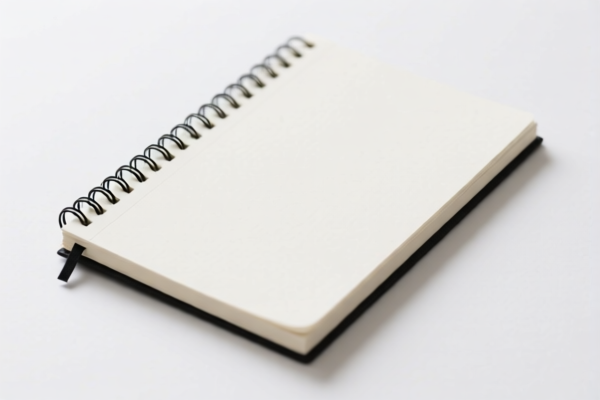
Art Graffiti Notebook
CN → US| HS Code | Tariff Rate | Origin | Destination | Doc |
|---|---|---|---|---|
| 4820102010 | 35.0% | CN | US | Official Doc |
| 4820102060 | 35.0% | CN | US | Official Doc |
| 4820104000 | 35.0% | CN | US | Official Doc |
Product Images



AI Analysis
🎨 Art Graffiti Notebook (Paper Stationery)
🌐 HS Code Reference & Customs Clearance Guide | 2026 Latest Tariff Analysis | Professional Clearance Strategy
📌 1. Product Definition & Classification: What is an "Art Graffiti Notebook"?
An Art Graffiti Notebook is a stationery item primarily composed of paper, designed for sketching, doodling, or artistic writing. In international trade, its classification depends on its specific form (e.g., spiral-bound, stapled, loose-leaf) and paper weight/type.
Key Classification Criteria: * Material: Paper (Chapter 48). * Function: Notebook, diary, or writing pad (Heading 4820). * Specific Subcategories: * Notebooks with spiral binding, stapling, or adhesive binding generally fall under 4820.10. * The exact 10-digit HS Code varies slightly based on whether it is classified as a "notebook," "diary," or other paper stationery items.
⚠️ Critical Distinction:
- If the product is 100% paper with no electronic components, it cannot be classified under electronics (Chapter 85).
- It must be classified under Chapter 48 (Paper and Paperboard).
- Specific subheadings (4820.10.20.xx) differentiate between types of notebooks/pads.
📦 2. HS Code Classification Details (2026 Latest Tariff Authority)
Based on the provided data, the Art Graffiti Notebook is classified under three specific subheadings within 4820.10. All three share the same tariff structure.
| HS Code | Product Description | Application Scenario | Paper Characteristics |
|---|---|---|---|
4820.10.20.10 |
Art Graffiti Notebook | General purpose graffiti/sketching | Paper-based, specific format |
4820.10.20.60 |
Art Graffiti Notebook | Stationery category | Paper-based, paper goods attribute |
4820.10.40.00 |
Art Graffiti Notebook | Core category for notebooks | Paper-based, core classification |
🔍 Key Takeaway:
- All three codes fall under Heading 4820 (Notebooks, letter pads, moulinettes, blotting books, and similar articles of paper).
- The distinction between.10,.60, and.40is primarily administrative or based on specific packaging/formatting nuances not detailed in the summary.
- Crucially, the tax rate is IDENTICAL for all three codes.
💰 3. 2026 Latest Tariff Rate Breakdown (Including Surtaxes & Policy Additions)
✅ Applicable Country: United States (US)
✅ Origin: China (CN)
✅ Effective Date: Current (Includes Section 301 and IEEPA surtaxes)
🎯 1. 4820.10.20.10 – Art Graffiti Notebook (Paper Stationery)
| Item | Content |
|---|---|
| Base Tariff Rate | 0.0% |
| Section 301 Surtax | +25.0% (Added Tariff) |
| Section 122 Tariff | +10.0% (122 Clause Tariff) |
| Total Tax Rate | 35.0% |
| Tax Calculation | CIF Value × 35% |
| De Minimis Eligibility | ❌ Not Eligible (Standard for China-origin goods under these surtaxes) |
| Legal Basis Path | Section 301: 9903.88.01 → Section 122: 122 Clause → USITC: 4820.10.20.10 |
📌 Explanation:
- "Base Tariff 0%": Paper products generally have low base MFN tariffs.
- "+25% Surtax": Applies to most Chinese goods under US Trade Act Section 301.
- "+10% Section 122": Applies to specific Chinese imports; note that the prompt explicitly lists this.
- Total: 35%. This is a high tariff for stationery, significantly impacting profit margins.
🎯 2. 4820.10.20.60 – Art Graffiti Notebook
| Item | Content |
|---|---|
| Base Tariff Rate | 0.0% |
| Section 301 Surtax | +25.0% |
| Section 122 Tariff | +10.0% |
| Total Tax Rate | 35.0% |
| Tax Calculation | CIF Value × 35% |
| Legal Basis Path | Section 301: 9903.88.01 → Section 122: 122 Clause → USITC: 4820.10.20.60 |
📌 Note:
- Identical tax treatment to4820.10.20.10.
- Classification nuances (e.g., specific binding or paper type) do not alter the surtax application.
🎯 3. 4820.10.40.00 – Art Graffiti Notebook
| Item | Content |
|---|---|
| Base Tariff Rate | 0.0% |
| Section 301 Surtax | +25.0% |
| Section 122 Tariff | +10.0% |
| Total Tax Rate | 35.0% |
| Tax Calculation | CIF Value × 35% |
| Legal Basis Path | Section 301: 9903.88.01 → Section 122: 122 Clause → USITC: 4820.10.40.00 |
📌 Note:
- This code is described as the "core category" for notebooks.
- Even if the product is a standard sketchbook, the 35% total tax applies.
🛠️ 4. Customs Clearance Practical Advice (Pitfall Avoidance Guide)
✅ 1. Documentation Checklist (Essential)
| Document | Required | Description |
|---|---|---|
| ✅ Product Spec Sheet | ✔️ | Material composition (e.g., "100% Paper, 120gsm"), dimensions, binding type. |
| ✅ Commercial Invoice | ✔️ | Must clearly state: "Art Graffiti Notebook," "Paper Material," Country of Origin (China). |
| ✅ Packing List | ✔️ | Accurate weight and count. |
| ✅ Photos | ✔️ | Clear images of the notebook, binding, and any branding to prove it is stationery, not electronics. |
| ✅ Material Test Report | ✔️ | Optional but helpful: Confirm paper composition to avoid misclassification under plastic or composite goods. |
✅ 2. Declaration Strategy (Key Tips)
🔥 “Declare as Paper, Not Plastic; Bindings Matter!”
| Scenario | Correct Declaration | Incorrect Practice |
|---|---|---|
| Standard Notebook | 4820.10.20.10 or 4820.10.40.00 |
Misclassifying as "Plastic Book" → 25%+ |
| Notebook with Plastic Cover | Still 4820.10 if paper is primary content |
Claiming as "Plastic Product" → Complex classification |
| Loose Leaf Paper | 4820.10.40.00 |
Declaring as "Printing Paper" (4802) → Wrong heading |
| Electronic Notebook | Not Applicable (Different HS Code) | Attempting to force into 4820 → Smuggling/Duty Evasion |
✅ 3. Special Considerations
| Situation | Handling Advice |
|---|---|
| OEM/White Label | Provide manufacturer’s label; origin remains China → 35% tax applies. |
| Gift Sets | If packed with pens/art supplies, may be classified as "Set." Ensure paper content dominates (>50% by value/weight) to stay in Chapter 48. |
| Small Quantity (De Minimis) | ⚠️ Warning: While $800 de minimis exists, China-origin goods under Section 301/122 are often excluded or heavily scrutinized. Do not rely on de minimis without confirming current CBP enforcement. |
| Origin Marking | Clearly mark "Made in China" on the notebook or packaging to avoid seizure for missing country-of-origin marking. |
🌍 5. Global Market Comparison (2026)
| Country/Region | Recommended HS Code | Tariff (China Origin) | Notes |
|---|---|---|---|
| 🇺🇸 USA | 4820.10.20.10 etc. |
35% (0% Base + 25% + 10%) | High duty due to Section 301 & 122. |
| 🇨🇳 China | 4820.10.20.10 |
~6-10% | Import duty for domestic sales? (Usually 0% for domestic production). |
| 🇪🇺 EU | 4820.10.20.10 |
~0-6% | No Section 301 equivalent; lower duties. |
| 🇬🇧 UK | 4820.10.20.10 |
~0-6% | Post-Brexit tariff; no US-style surtaxes. |
| 🇯🇵 Japan | 4820.10.20.10 |
~0-5% | Low duties for paper products. |
📌 Conclusion:
- The US is the highest-cost market for Chinese-made art graffiti notebooks due to 35% total tariffs.
- For other markets, the cost is significantly lower.
- Strategy: Consider sourcing from non-China origins (e.g., Vietnam, India) for US-bound goods to mitigate 35% tax.
📌 6. Common Mistakes & Pitfalls (Lessons Learned)
❌ Mistake 1: Classifying as "Printing Paper" (4802)
👉 Consequence: Incorrect heading; may be accepted but risks audit if not a notebook.
👉 Correction: Use 4820.10 for bound/loose-leaf notebooks.
❌ Mistake 2: Ignoring Section 122 Tariff
👉 Consequence: Underpaying 10%.
👉 Correction: Always calculate Base + 301 + 122 for China-origin goods.
❌ Mistake 3: Assuming De Minimis Applies Automatically
👉 Consequence: Package seized at border.
👉 Correction: Verify if the shipment is subject to enforcement exclusions for Section 301/122 goods.
❌ Mistake 4: Vague Description "Stationery"
👉 Consequence: Customs may reclassify to highest duty rate.
👉 Correction: Specify "Art Graffiti Notebook, Paper, Bound" in the invoice.
✅ Correct Declaration Example:
"Art Graffiti Notebook, 100% Paper, Spiral Bound, A5 Size, Origin: China, HS Code: 4820.10.20.10"
🎯 7. Conclusion: Professional Clearance, Cost Efficiency
🎯 Remember the Formula:
🔹 HS Code 4820.10 = Paper Notebook
🔹 Total US Duty = 35% (0% + 25% + 10%)
🔹 Key Action: Verify origin and binding type to ensure correct subheading.
📌 Pro Tip:
If you are selling in the US, calculate the 35% landed cost into your pricing.
If selling in EU/UK/Asia, the tariff is much lower, making it more competitive.
📣 Immediate Action:
📞 Consult with a licensed customs broker for Pre-Ruling on your specific notebook design.
🚀 Optimize supply chain: Consider China+1 strategy (Vietnam/India) for US exports to reduce duty burden.
✨ Precise Classification, Predictable Costs!
💼 Your notebook’s journey starts with the right HS Code!
Customer Reviews
About HS Code Classification
The Harmonized System (HS) is an internationally standardized nomenclature developed by the World Customs Organization (WCO) to classify traded products. Over 200 countries use the HS system as the basis for customs tariffs, trade statistics, and import/export regulations.
Each HS code follows a hierarchical structure:
- Chapter (2 digits) — Broad category of goods (e.g., Chapter 84: Machinery and Mechanical Appliances)
- Heading (4 digits) — More specific grouping within the chapter
- Subheading (6 digits) — Internationally standardized breakdown, used by all WCO member countries
- National subdivisions (8-10 digits) — Country-specific extensions for further classification, such as US HTSUS 10-digit codes
Correct HS code classification is essential for smooth customs clearance, accurate duty payment, and compliance with trade regulations. Misclassification can lead to customs delays, overpayment of duties, or penalties.
When importing from CN to US, the applicable tariff rates may include:
- Most-Favored-Nation (MFN) rate — The standard duty rate applied to WTO members
- General rate — Applied to countries without trade agreements
- Trade remedy duties — Additional tariffs such as Section 301 (anti-dumping), Section 232 (national security), or countervailing duties
The information provided on this page is for reference purposes only. For official classification, please consult with your local customs authority or a licensed customs broker.