Artificial Fiber Backed PVC Hotel Wall Cloth
CN → US| HS Code | Tariff Rate | Origin | Destination | Doc |
|---|---|---|---|---|
| 3921121100 | 39.2% | CN | US | Official Doc |
| 3921121500 | 41.5% | CN | US | Official Doc |
| 5905009000 | 35.0% | CN | US | Official Doc |
| 5905001000 | 35.0% | CN | US | Official Doc |
| 3918103150 | 39.2% | CN | US | Official Doc |
Product Images
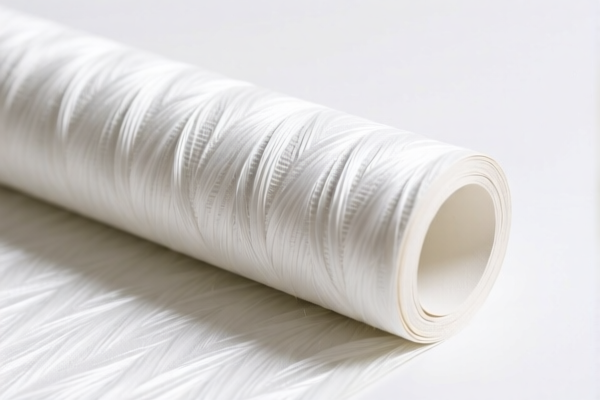
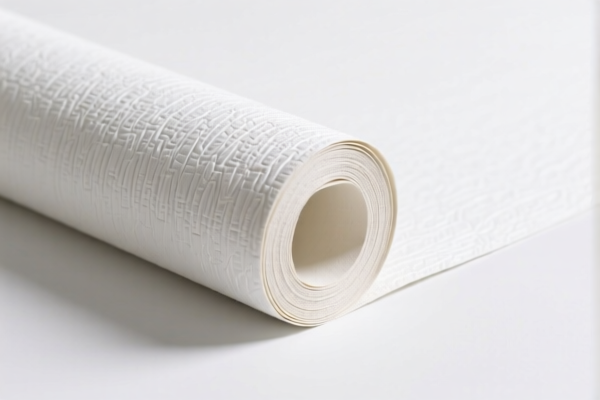
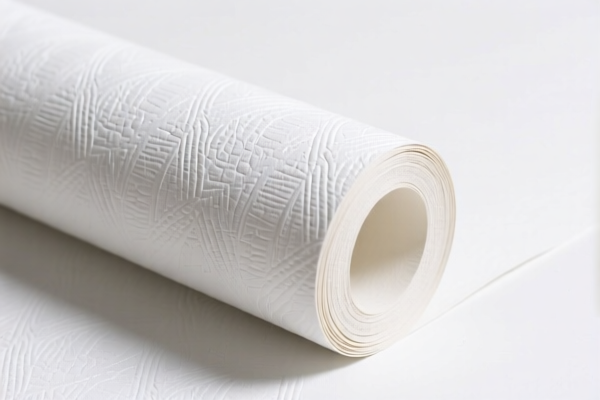
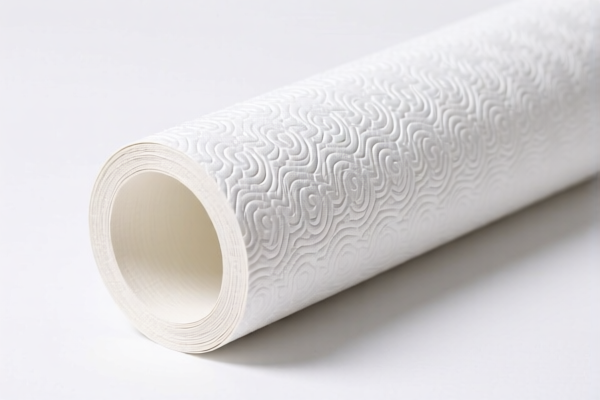
AI Analysis
🏨 Wall Cloth: Artificial Fiber Backed PVC (PVC-Backed Textile Wall Coverings)
🌐 HS Code Reference & Clearance Guide | 2026 Latest Tariff Analysis | Professional Customs Strategy
📌 I. Product Definition & Classification: Do You Really Understand "PVC Wall Cloth"?
Wall cloth, specifically Artificial Fiber Backed PVC Wall Cloth, is a composite material widely used in hotel lobbies, residential interiors, and commercial spaces for aesthetic wall covering. In international trade, its classification hinges on two critical factors:
- Material Composition: Is it primarily plastic (PVC) or primarily textile (artificial fiber)?
- Structure: Is the PVC merely a coating on a fabric base, or is it a plastic sheet with a thin fabric backing for reinforcement?
⚠️ Key Distinction Point:
- If the fabric backing is merely for reinforcement and the PVC constitutes the main character of the product (weight/identity), it leans towards Chapter 39 (Plastics).
- If the fabric is the primary structure and PVC is a surface coating/lamination for decoration/waterproofing, it leans towards Chapter 59 (Textiles Impregnated with Plastic) or Chapter 57/46 (Wall Coverings).
📦 II. HS Code Classification Details (2026 Latest Tariff Authority对照)
Based on the specific characteristics of "Artificial Fiber Backed PVC Hotel Wall Cloth," the following HS Codes are the most relevant candidates. The choice depends on the precise manufacturing process and weight ratios.
| HS Code | Product Description | Applicability | Classification Logic |
|---|---|---|---|
3921.12.11.00 |
PVC Sheets/Strips with Artificial Fiber Backing | Reinforced PVC Composite | ✅ Plastic Primary: PVC is the main material; artificial fiber is a backing layer. Weight of artificial fiber > other fibers. |
3921.12.15.00 |
PVC Wall Coverings (Textile-Bound) | Decorative Wall Panels | ✅ Plastic Primary: Specifically defined as PVC wall coverings combined with textile materials where artificial fiber weight exceeds other single fibers. |
5905.00.90.00 |
Textile Wall Coverings (PVC + Artificial Fiber) | General Textile Wall Cloth | ✅ Textile Primary: Fits the definition of "Textile Wall Coverings" where PVC and artificial fiber are present without conflicting classification rules. |
5905.00.10.00 |
Textile Wall Coverings with Backing | Standard Textile Wall Cloth | ✅ Textile Primary: Explicitly covers wall cloth with a backing (the PVC layer acts as the backing/coating). |
3918.10.31.50 |
PVC Wall Coverings with Artificial Fiber Backing | High-End PVC Wall Panels | ✅ Plastic Primary: Perfect match for PVC wall coverings that have an artificial fiber backing for structural integrity. |
🔍 Critical Reminder:
- Chapter 39 (Plastics): If the PVC layer is thick and provides the primary function (water resistance, durability) with the fabric only for stability, choose 3921 or 3918.
- Chapter 59 (Textiles): If the fabric is the base and PVC is just a surface coating for decoration, choose 5905.
- Do Not Split Declaration: The product is a single composite good. Do not declare PVC and fabric separately.
💰 III. 2026 Latest Tariff Rate Breakdown (Including Surtaxes & Policy Additions)
✅ Applicable Country: United States (US)
✅ Country of Origin: China (CN)
✅ Effective Date: From November 10, 2025 (and subsequent imports)
🎯 1. 3921.12.11.00 — PVC Sheets/Strips with Artificial Fiber Backing
| Item | Content |
|---|---|
| Base Tariff | 4.2% |
| Section 301 Surtax | +25% (USITC Footnote 9903.39.21) |
| IEEPA Surtax | +10% (Against Chinese/HK products, effective Nov 2025) |
| Total Tax Rate | 39.2% |
| Tax Calculation | CIF Value × 39.2% |
| De Minimis Exemption | ❌ Not Eligible (deny_de_minimis) |
| Legal Basis Path | IEEPA:9903.01.25 → USITC:3921.12.11.00 → FOOTNOTE:9903.39.21 |
📌 Explanation:
- This classification views the product as a plastic composite.
- The 4.2% is the standard MFN rate.
- The 25% is the Section 301 tariff on plastic articles.
- The 10% is the new IEEPA surcharge on Chinese goods.
🎯 2. 3921.12.15.00 — PVC Wall Coverings (Textile-Bound)
| Item | Content |
|---|---|
| Base Tariff | 6.5% |
| Section 301 Surtax | +25% |
| IEEPA Surtax | +10% |
| Total Tax Rate | 41.5% |
| Tax Calculation | CIF Value × 41.5% |
| De Minimis Exemption | ❌ Not Eligible (deny_de_minimis) |
| Legal Basis Path | IEEPA:9903.01.24 → USITC:3921.12.15.00 → FOOTNOTE:9903.39.21 |
📌 Note:
- Slightly higher base rate due to specific "Wall Covering" sub-heading.
- Same high total burden due to Section 301 and IEEPA.
🎯 3. 5905.00.90.00 — Textile Wall Coverings (PVC + Artificial Fiber)
| Item | Content |
|---|---|
| Base Tariff | 0.0% |
| Section 301 Surtax | +25% |
| IEEPA Surtax | +10% |
| Total Tax Rate | 35.0% |
| Tax Calculation | CIF Value × 35.0% |
| De Minimis Exemption | ❌ Not Eligible (deny_de_minimis) |
| Legal Basis Path | IEEPA:9903.01.25 → USITC:5905.00.90.00 → FOOTNOTE:9903.88.01 |
📌 Optimization Tip:
- This is the lowest total tariff (35%) among the candidates.
- Justification: Must prove the textile nature is dominant. The PVC is a coating, not the primary structural material.
🎯 4. 5905.00.10.00 — Textile Wall Coverings with Backing
| Item | Content |
|---|---|
| Base Tariff | 0.0% |
| Section 301 Surtax | +25% |
| IEEPA Surtax | +10% |
| Total Tax Rate | 35.0% |
| Tax Calculation | CIF Value × 35.0% |
| De Minimis Exemption | ❌ Not Eligible (deny_de_minimis) |
| Legal Basis Path | IEEPA:9903.01.24 → USITC:5905.00.10.00 → FOOTNOTE:9903.88.01 |
📌 Note:
- Identical tax burden to5905.00.90.00.
- Suitable if the product has a distinct "backing" layer (the PVC) applied to a textile base.
🎯 5. 3918.10.31.50 — PVC Wall Coverings with Artificial Fiber Backing
| Item | Content |
|---|---|
| Base Tariff | 4.2% |
| Section 301 Surtax | +25% |
| IEEPA Surtax | +10% |
| Total Tax Rate | 39.2% |
| Tax Calculation | CIF Value × 39.2% |
| De Minimis Exemption | ❌ Not Eligible (deny_de_minimis) |
| Legal Basis Path | IEEPA:9903.01.25 → USITC:3918.10.31.50 → FOOTNOTE:9903.39.18 |
📌 Comparison:
- Same rate as3921.12.11.00.
- Use this if the product is explicitly marketed and manufactured as a "Wall Covering" under Chapter 39.
🛠️ IV. Clearance Practical Advice (Field Pitfall Avoidance Guide)
✅ 1. Required Documentation Checklist (Non-Negotiable)
| Document | Must Provide | Explanation |
|---|---|---|
| ✅ Product Specification Sheet | ✔️ | Must detail: Layer structure (PVC thickness, backing type), material percentages, and dimensions. |
| ✅ Material Composition Statement | ✔️ | Explicitly state: "Primary material: PVC/Artificial Fiber. Ratio: X% PVC, Y% Fiber." |
| ✅ Product Photos (Clear) | ✔️ | Show cross-section if possible, to prove which layer is primary. Show final product in hotel setting. |
| ✅ Commercial Invoice | ✔️ | Description must be precise: "PVC Wall Cloth with Artificial Fiber Backing for Hotel Interior Decoration." |
| ✅ Packing List | ✔️ | Confirm no mixed shipments with other HS codes. |
| ✅ Origin Certificate (CO) | ✔️ | Essential for verifying Chinese origin to apply correct surtaxes. |
✅ 2. Declaration Strategy (Key Mantra)
🔥 “Textile Base, PVC Coat → 35%! Plastic Base, Fiber Back → 39-41%! Name it Right, Avoid Re-class!”
| Scenario | Correct Declaration | Wrong Approach |
|---|---|---|
| Fabric is the base, PVC is a coating | 5905.00.10.00 or 5905.00.90.00 |
Declare as "Plastic Sheet" → 39-41% |
| PVC is the main sheet, fabric is backing | 3918.10.31.50 or 3921.12.11.00 |
Declare as "Textile Wall Cloth" → Risk of audit |
| Mixed Materials, Unclear Primary | Apply for Advance Ruling | Guessing → Delays & Penalties |
✅ 3. Special Handling Cases
| Case | Handling Advice |
|---|---|
| OEM Hotel Branding | Provide brand authorization and design specs. Do not declare as "Generic" if branded. |
| Sample Shipment | Even samples are subject to full tariff rates if declared as commercial value. Mark as "Sample" but declare value accurately. |
| Rolled vs. Cut | Ensure dimensions are consistent. Irregular cuts may raise questions about intended use (custom fit vs. stock). |
| Chemical Treatment | If flame-retardant, provide UL/ASTM Fire Test Reports. Failure to declare may lead to rejection. |
🌍 V. Global Market Clearance Comparison (2026 Latest)
| Country/Region | Recommended HS Code | Tariff Rate | Certification Required | Remarks |
|---|---|---|---|---|
| 🇺🇸 United States | 5905.00.10.00 |
35.0% | No specific cert, but fire safety recommended | Highest barrier due to surtaxes. |
| 🇨🇳 China | 5905.00.10.00 |
~10% | CCC (if applicable) | Low tariff, easy clearance. |
| 🇪🇺 EU | 5905.00.10.00 |
0-6% | CE, REACH, Fire Safety | Lower tariffs than US. |
| 🇦🇺 Australia | 5905.00.10.00 |
5% | RCM | Moderate tariff. |
| 🇯🇵 Japan | 5905.00.10.00 |
0-5% | PSE (if electrical components) | Generally low tariff. |
📌 Conclusion:
- The US market is the most costly due to the 35-41% total tariff rate.
- EU and Asia offer significantly better tariff advantages.
- If targeting the US, consider supply chain diversification or Advance Rulings to ensure the5905classification is accepted.
📌 VI. Common Mistakes & Pitfalls (Lessons Learned)
❌ Mistake 1: Declaring as "Plastic Sheets" (3921) when it is clearly a "Wall Cloth" (5905)
👉 Consequence: Overpayment of ~4-6.5% base tariff + potential audit for misclassification.
❌ Mistake 2: Ignoring the "Artificial Fiber" content
👉 Consequence: If declared as "Pure PVC," customs may reject it or reclassify, leading to penalties.
❌ Mistake 3: Not providing Fire Safety Data
👉 Consequence: Hotel projects require fire-rated materials. Lack of proof can cause shipment rejection or storage fees.
❌ Mistake 4: Assuming De Minimis Exemption applies
👉 Consequence: NO! All these codes are subject to Section 301 and IEEPA surtaxes. Small shipments still pay full tax.
✅ Correct Practice:
"Hotel Wall Cloth, PVC Surface Coated on Artificial Fiber Backing, Flame Retardant, Roll 10m x 1.06m, Model XYZ, US Origin (if applicable), CN Origin (if applicable)"
🎯 VII. Conclusion: Professional Declaration, Cost Efficiency & Compliance!
🎯 Remember the Mantra:
🔹 "Textile Base, PVC Coat → 35%! Plastic Base, Fiber Back → 39-41%! Name it Right, Avoid Re-class!"
🔹 "HS Code Determines Destiny, Tax Rate Differs by 6%, One Mistake Costs Thousands!"
📌 Pro Tip:
- If your wall cloth is originally from Vietnam, Mexico, or Thailand, you may apply for IEEPA Exemption, reducing the rate to 0-5%.
- It is highly recommended to apply for an Advance Ruling (ISF) before shipment to the US to confirm the 5905 classification.
📣 Immediate Action:
📞 Contact a licensed customs broker + Provide Product Specs + Request HS Code Advance Ruling
🚀 Ensure your wall cloth clears customs smoothly, exits efficiently, and maximizes profit!
✨ Professional Clearance Starts with Accurate Classification!
💼 Every Cent of Your Cost is Worth Being Calculated Precisely!
Customer Reviews
About HS Code Classification
The Harmonized System (HS) is an internationally standardized nomenclature developed by the World Customs Organization (WCO) to classify traded products. Over 200 countries use the HS system as the basis for customs tariffs, trade statistics, and import/export regulations.
Each HS code follows a hierarchical structure:
- Chapter (2 digits) — Broad category of goods (e.g., Chapter 84: Machinery and Mechanical Appliances)
- Heading (4 digits) — More specific grouping within the chapter
- Subheading (6 digits) — Internationally standardized breakdown, used by all WCO member countries
- National subdivisions (8-10 digits) — Country-specific extensions for further classification, such as US HTSUS 10-digit codes
Correct HS code classification is essential for smooth customs clearance, accurate duty payment, and compliance with trade regulations. Misclassification can lead to customs delays, overpayment of duties, or penalties.
When importing from CN to US, the applicable tariff rates may include:
- Most-Favored-Nation (MFN) rate — The standard duty rate applied to WTO members
- General rate — Applied to countries without trade agreements
- Trade remedy duties — Additional tariffs such as Section 301 (anti-dumping), Section 232 (national security), or countervailing duties
The information provided on this page is for reference purposes only. For official classification, please consult with your local customs authority or a licensed customs broker.