Artificial Fiber Camera Bag
CN → US| HS Code | Tariff Rate | Origin | Destination | Doc |
|---|---|---|---|---|
| 4202923120 | 52.6% | CN | US | Official Doc |
| 6305390000 | 25.9% | CN | US | Official Doc |
| 6305900000 | 23.7% | CN | US | Official Doc |
| 4202923131 | 52.6% | CN | US | Official Doc |
Product Images
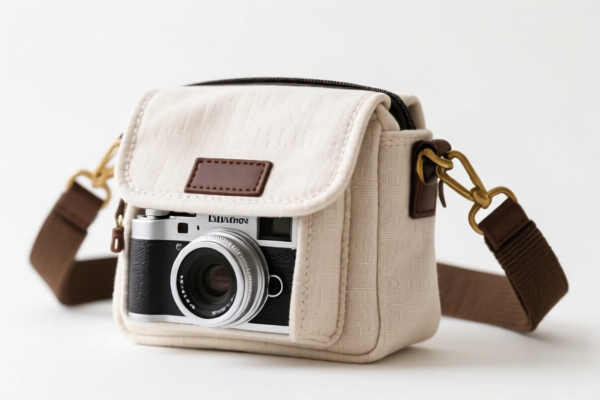
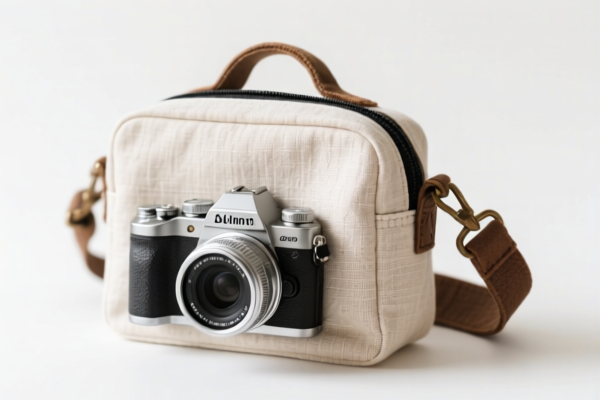
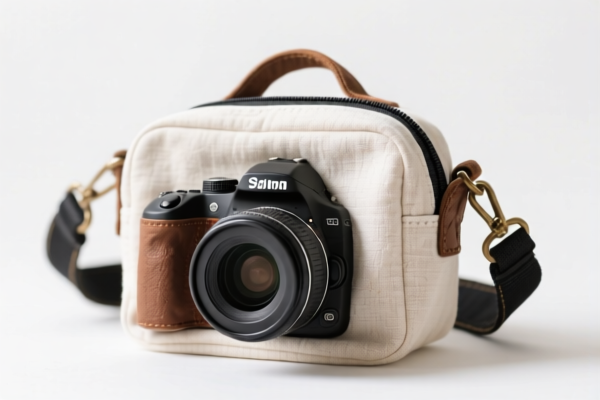
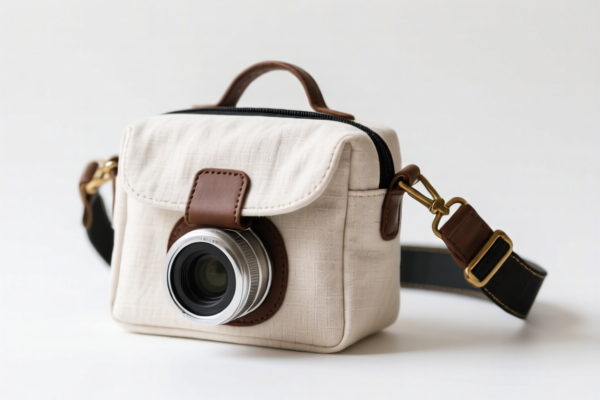
AI Analysis
📸 Artificial Fiber Camera Bag (AF Camera Bag)
🌐 HS Code Reference & Customs Clearance Guide | 2026 Updated Tariff Analysis | Strategic Compliance for Textile Goods
📌 Part I: Product Definition & Classification: Is Your "Camera Bag" Actually a Travel Bag?
The term "Artificial Fiber Camera Bag" is a commercial description that often leads to misclassification in international trade. While the end-use is for carrying camera equipment, the customs classification depends heavily on the material composition and the specific shape/structure of the bag.
In the current 2026 tariff schedule (specifically targeting imports from China to the US), there is a critical divergence between bags classified under Chapter 42 (Articles of Leather/Travel Goods) and Chapter 63 (Other Made-Up Textile Articles). This distinction directly impacts the total tax burden, which can swing by nearly 30 percentage points.
⚠️ Critical Distinction Point:
- If the bag is considered a "Travel Bag" or "Satchel" made of artificial fibers (e.g., polyester, nylon, rayon), it often falls under HS 4202.92 due to its structure resembling traditional travel luggage, incurring High Tariffs.
- If the bag is classified as a generic "Sack/Bag" made of textile materials without the specific "travel goods" structure, it may fall under HS 6305, incurring Moderate Tariffs.
📦 Part II: Detailed HS Code Breakdown (2026 Latest Tariff Schedule)
| HS Code | Product Description | Key Characteristics | Total Tax Rate |
|---|---|---|---|
4202.92.31.20 |
Artificial Fiber Travel Bag Material: Artificial Fiber Use: Travel Bag |
Structured satchel/travel-style; rigid shape; often with handles/shoulder straps typical of travel gear | 52.6% |
6305.39.00.00 |
Artificial Fiber Travel Bag Material: Artificial Textile Material Form: Bag Type |
Generic textile bag; less structured than "travel bags"; flexible form factor | 25.9% |
6305.90.00.00 |
Artificial Fiber Bag Form: Bag Material: Other Textile Materials |
Broad category for bags not specifically listed elsewhere; often used for loose, non-travel specific textile bags | 23.7% |
4202.92.31.31 |
Artificial Fiber Travel Bag Material: Artificial Fiber Use: Travel-Class Bagged Items |
Similar to 4202.92.31.20 but categorized under "Travel-Class Bagged Items" (broader interpretation of travel utility) | 52.6% |
🔍 Classification Insight:
- HS 4202 vs. HS 6305: The US Customs and Border Protection (CBP) often classifies bags with zippers, padded compartments, and shoulder straps as "Travel Bags" (Ch. 42) even if made of fabric. This triggers the higher tariff.
- "Artificial Fiber": This includes synthetic fibers like polyester, nylon, and acrylic. Natural fibers (cotton, wool) would fall under different subheadings not listed here.
💰 Part III: 2026 Tariff Rate Breakdown (Including Section 301 & IEEPA)
✅ Applicable Country: United States (US)
✅ Origin: China (CN)
✅ Effective Date: Current rates apply as of 2025–2026 import cycles
🎯 1. High-Tariff Category: HS Code 4202.92.31.20 & 4202.92.31.31
Total Tax: 52.6%
| Component | Rate | Legal Basis |
|---|---|---|
| Base Duty | 17.6% | USITC General Rate |
| Section 301 Tariff | 25.0% | US Trade Act Section 301 (China-specific) |
| Section 122 Tariff | 10.0% | Executive Order/IEEPA Related Surcharge |
| Total Effective Rate | 52.6% | Sum of all applicable duties |
📌 Explanation:
- These bags are deemed "Travel Goods" under Chapter 42.
- The 25% Section 301 tariff is the most significant penalty for Chinese-origin goods.
- The 10% Section 122 tariff (or similar IEEPA provision) adds an additional layer of cost.
- Result: For a $1,000 shipment, you pay $526 in taxes. This is a high-risk classification for cost-sensitive goods.
🎯 2. Moderate-Tariff Category: HS Code 6305.39.00.00
Total Tax: 25.9%
| Component | Rate | Legal Basis |
|---|---|---|
| Base Duty | 8.4% | USITC General Rate for Textile Bags |
| Section 301 Tariff | 7.5% | Reduced Section 301 rate for specific textile categories |
| Section 122 Tariff | 10.0% | IEEPA Related Surcharge |
| Total Effective Rate | 25.9% | Sum of all applicable duties |
📌 Explanation:
- This classification assumes the bag is a generic "sack" or "bag" under Chapter 63.
- The Section 301 rate is significantly lower (7.5%) compared to the 25% for travel goods.
- Result: For a $1,000 shipment, you pay $259 in taxes. This is a more favorable classification.
🎯 3. Lowest-Tariff Category: HS Code 6305.90.00.00
Total Tax: 23.7%
| Component | Rate | Legal Basis |
|---|---|---|
| Base Duty | 6.2% | USITC General Rate for Other Textile Bags |
| Section 301 Tariff | 7.5% | Reduced Section 301 rate |
| Section 122 Tariff | 10.0% | IEEPA Related Surcharge |
| Total Effective Rate | 23.7% | Sum of all applicable duties |
📌 Explanation:
- This is a residual category for bags not fitting other specific descriptions.
- If you can argue the bag is not a "travel bag" (no rigid structure, no specific travel branding), this may apply.
- Result: For a $1,000 shipment, you pay $237 in taxes. This is the optimal classification if legally justifiable.
🛠️ Part IV: Customs Clearance Practical Advice (Avoiding Pitfalls)
✅ 1. Documentation Checklist (Non-Negotiable)
| Document | Requirement | Purpose |
|---|---|---|
| Product Specification Sheet | ✔️ Must State: Material (e.g., 100% Polyester), Dimensions, Weight | Proves material composition and form factor |
| Product Photos | ✔️ Clear images of interior, exterior, zippers, straps | Helps CBP determine if it's a "Travel Bag" (structured) or "Textile Bag" (flexible) |
| Commercial Invoice | ✔️ Description: "Camera Bag, Artificial Fiber, Textile" | Avoid using "Travel Bag" in the commercial name if possible |
| Bill of Lading/Air Waybill | ✔️ Accurate weight and dimensions | Prevents scrutiny due to weight discrepancies |
| Certificate of Origin | ✔️ Form A or General CO | Confirms Chinese origin (triggers Section 301) |
✅ 2. Declaration Strategy (Key Tactics)
🔥 "De-emphasize 'Travel', Emphasize 'Textile Bag'"
| Scenario | Recommended Declaration | Risk Level |
|---|---|---|
| Structured Camera Satchel | "Artificial Fiber Bag, for Camera Storage" → HS 6305.39.00.00 | 🟡 Medium (CBP may challenge as Travel Bag) |
| Soft, Flexible Pouch/Bag | "Textile Camera Pouch, Polyester" → HS 6305.90.00.00 | 🟢 Low (Clearly not a travel good) |
| Hard-Shell or Rigid Frame Bag | "Artificial Fiber Travel Bag" → HS 4202.92.31.20 | 🔴 High (Inevitable 52.6% tax) |
📌 Pro Tip:
- Avoid using the word "Travel" in your commercial invoice description if the bag is primarily for cameras.
- Use terms like "Camera Case," "Photography Bag," or "Textile Sack."
- Highlight that the bag lacks rigid structure typical of travel luggage.
✅ 3. Special Cases & Mitigation
| Case | Strategy |
|---|---|
| OEM/Private Label | Provide a manufacturing contract proving the design is a generic textile bag, not a branded travel good. |
| Mixed Shipments | Ensure camera bags are not mixed with actual travel luggage to avoid "bundling" scrutiny. |
| Section 301 Exclusion | Check if HS 6305.39.00.00 or 6305.90.00.00 is eligible for any temporary exclusions (rare for China). |
🌍 Part V: Global Market Comparison (2026)
| Market | Preferred HS Code | Estimated Total Tax | Notes |
|---|---|---|---|
| 🇺🇸 USA | 6305.39.00.00 |
25.9% | Avoid 4202 if possible to save ~27% |
| 🇨🇳 China | 4202.92.31.20 |
~5-10% | Low base duty, no Section 301 |
| 🇪🇺 EU | 4202.92 |
~12% | No Section 301, but higher base duty than US textile bag |
| 🇬🇧 UK | 6305.39 |
~10-15% | Post-Brexit tariffs vary; check UK GI list |
📌 Conclusion for US Importers:
- The $100 difference in tax between4202(52.6%) and6305(25.9%) is significant.
- Defend the "Textile Bag" classification by providing technical specs that show flexibility and lack of travel-specific features.
📌 Part VI: Common Mistakes & Pitfalls (Lessons Learned)
❌ Mistake 1: Describing the item as "Travel Bag" on the Invoice
👉 Consequence: CBP auto-classifies as 4202.92.31.20 → 52.6% Tax.
✅ Fix: Use "Camera Bag" or "Textile Bag."
❌ Mistake 2: Ignoring Material Composition
👉 Consequence: If declared as "Nylon" but found to be "Artificial Fiber" (polyester), CBP may reassess.
✅ Fix: Be precise. "100% Polyester Artificial Fiber" is clear.
❌ Mistake 3: Assuming All Bags are Equal
👉 Consequence: Missing the Section 301 rate difference (25% vs 7.5%).
✅ Fix: Analyze structure. Flexible = Chapter 63. Structured = Chapter 42.
🎯 Part VII: Conclusion: Strategic Classification for Cost Savings
🎯 Key Takeaway:
🔹 "Camera Bag" is a functional term, not a customs term.
🔹 Chapter 63 (Textile Bags) is your friend. Aim for6305.39.00.00(25.9%) or6305.90.00.00(23.7%).
🔹 Chapter 42 (Travel Goods) is your enemy. Avoid4202.92.31.20(52.6%) unless the bag is rigid and clearly a travel satchel.
📌 Action Plan:
1. Redesign Packaging/Invoices to use "Textile Camera Bag."
2. Submit Technical Data highlighting flexible material and lack of rigid travel features.
3. Pre-Rule Request: File a binding ruling with CBP for high-value shipments to lock in the lower tariff rate.
📣 Final Advice:
Don't let the word "Travel" cost you 30%.
Classify smart, declare accurately, and protect your margin!
✨ Professional Customs Clearance, Starting with Accurate Classification!
💼 Every Percent of Tariff Saved is Pure Profit!
Customer Reviews
About HS Code Classification
The Harmonized System (HS) is an internationally standardized nomenclature developed by the World Customs Organization (WCO) to classify traded products. Over 200 countries use the HS system as the basis for customs tariffs, trade statistics, and import/export regulations.
Each HS code follows a hierarchical structure:
- Chapter (2 digits) — Broad category of goods (e.g., Chapter 84: Machinery and Mechanical Appliances)
- Heading (4 digits) — More specific grouping within the chapter
- Subheading (6 digits) — Internationally standardized breakdown, used by all WCO member countries
- National subdivisions (8-10 digits) — Country-specific extensions for further classification, such as US HTSUS 10-digit codes
Correct HS code classification is essential for smooth customs clearance, accurate duty payment, and compliance with trade regulations. Misclassification can lead to customs delays, overpayment of duties, or penalties.
When importing from CN to US, the applicable tariff rates may include:
- Most-Favored-Nation (MFN) rate — The standard duty rate applied to WTO members
- General rate — Applied to countries without trade agreements
- Trade remedy duties — Additional tariffs such as Section 301 (anti-dumping), Section 232 (national security), or countervailing duties
The information provided on this page is for reference purposes only. For official classification, please consult with your local customs authority or a licensed customs broker.