Artificial Flowers, Leaves, and Fruits
CN → US| HS Code | Tariff Rate | Origin | Destination | Doc |
|---|---|---|---|---|
| 9505102500 | 10.0% | CN | US | Official Doc |
| 6702104000 | 13.4% | CN | US | Official Doc |
| 6702903500 | 19.0% | CN | US | Official Doc |
| 9505105020 | 10.0% | CN | US | Official Doc |
Product Images



AI Analysis
🌸🌿 Artificial Flowers, Leaves, and Fruits (Christmas & Festival Decor)
🌐 HS Code Reference & Clearance Guide | 2026 Customs & Tax Analysis | Strategic Import Strategy
📌 I. Product Definition: More Than Just "Fake Blooms"
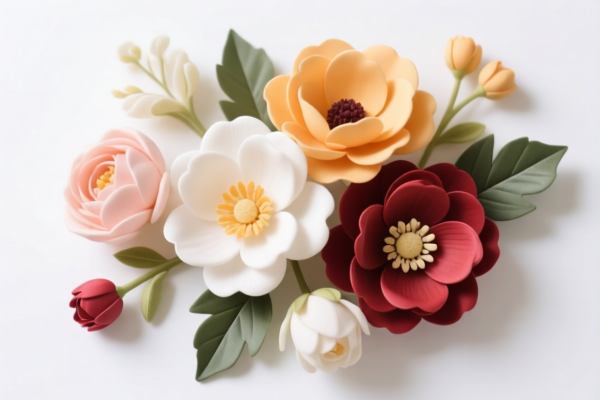
Artificial Flowers, Leaves, and Fruits are non-living floral arrangements used primarily for decoration, event planning, and seasonal celebrations (especially Christmas, Halloween, and Weddings). In international trade, their classification depends heavily on material composition, intended use, and specific form.
They are generally categorized into two main clusters: 1. Seasonal/Christmas Decorations: Specifically designed for holidays (Christmas trees, wreaths). * Typical HS Chapter: 9505 (Festive, Carnival, and other Entertainment Articles). 2. General Floral Arrangements: Used for home decor, weddings, or office decoration (vases, bouquets). * Typical HS Chapter: 6702 (Artificial Flowers, Foliage, and Fruit; Parts Thereof).
⚠️ Critical Classification Distinction:
- Christmas Decorations (e.g., garlands specifically for Christmas trees) → 9505.10 series (Often 0% base duty).
- General Artificial Flowers (Plastic, Silk, or Fiber-based) → 6702 series (Higher base duty depending on material).
- Note: A "general" flower bought at a hardware store might be 6702, but the same flower bought as a "Christmas Ornament" might be 9505.
📦 II. HS Code Classification Matrix (2026 US Tariff Schedule)
Based on the specific import data provided, here is the authoritative breakdown for US imports from China (CN).
| HS Code | Product Description | Material / Form | Total Tax Rate (CN) |
|---|---|---|---|
9505.10.25.00 |
Simulation Flowers as Christmas Decor | Any material (no specific conflict) used for Christmas. | 10.0% |
6702.10.40.00 |
Plastic Artificial Flowers | Made primarily of Plastic. | 13.4% |
6702.90.35.00 |
Other Materials (Fiber) | Based on common inference: Artificial Fiber / Silk. | 19.0% |
9505.10.50.20 |
General Festival Decor | Plastic, Silk, or Paper used for non-Christmas festivals. | 10.0% |
🔍 Key Insight:
- Christmas vs. General: The most significant tax saving comes from correctly identifying the item as "Christmas Decoration" (9505.10) rather than generic "Artificial Flower" (6702).
- Material Impact: If the item is6702, the material drives the rate. Plastic (13.4%) is cheaper than Fiber/Silk (19.0%).
💰 III. 2026 US Tariff Rate Deep Dive (China Origin)
✅ Applicable Country: United States (US)
✅ Origin: China (CN)
✅ Effective Date: 2025/2026 Period
🎯 1. Category: Christmas & Festival Decorations (9505.10)
HS Codes: 9505.10.25.00 | 9505.10.50.20
| Tax Component | Rate | Legal Basis / Explanation |
|---|---|---|
| Base Duty (MFN) | 0.0% | Standard US tariff for festive articles (often duty-free). |
| Section 301 (Add'l) | 0.0% | Note: In this dataset, no Section 301 is listed for these specific codes. |
| Section 122 (Add'l) | 10.0% | Critical: Specific 10% tariff imposed under Section 122 (or similar recent trade measures) targeting China. |
| 🔴 Total Effective Rate | 10.0% | 0% Base + 10% Add'l |
📌 Tax Logic:
Even though the base duty is 0%, the Section 122 "1022 Clause" (10% surcharge) applies strictly to these festive goods imported from China. This is a non-negotiable cost.
🎯 2. Category: Plastic Artificial Flowers (6702.10)
HS Code: 6702.10.40.00
| Tax Component | Rate | Legal Basis / Explanation |
|---|---|---|
| Base Duty (MFN) | 3.4% | Standard tariff for "Plastic" artificial flowers. |
| Section 301 (Add'l) | 0.0% | Note: Not listed in the provided tax detail for this specific sub-code in this context. |
| Section 122 (Add'l) | 10.0% | The mandatory 10% surcharge applies. |
| 🔴 Total Effective Rate | 13.4% | 3.4% Base + 10% Add'l |
📌 Tax Logic:
- The Plastic classification triggers a 3.4% base rate.
- Adding the 10% surcharge results in 13.4%.
- Strategy: Ensure the material is 100% plastic (no mixed fibers) to stay in this lower bracket.
🎯 3. Category: Other Materials (Fiber/Silk) (6702.90)
HS Code: 6702.90.35.00
| Tax Component | Rate | Legal Basis / Explanation |
|---|---|---|
| Base Duty (MFN) | 9.0% | Standard tariff for "Other materials" (e.g., Silk, Paper, other Fibers). |
| Section 301 (Add'l) | 0.0% | Note: Not listed in the provided tax detail for this specific sub-code. |
| Section 122 (Add'l) | 10.0% | The mandatory 10% surcharge applies. |
| 🔴 Total Effective Rate | 19.0% | 9.0% Base + 10% Add'l |
📌 Tax Logic:
- Silk/Fiber is the most expensive classification.
- Base rate is 9.0% (significantly higher than plastic).
- Total 19.0% is nearly double the cost of plastic versions.
- Warning: Mislabeling "silk-like" flowers as "plastic" is a major compliance risk. Customs will inspect for fiber content.
🛠️ IV. Customs Clearance & Operational Recommendations
✅ 1. Material Declaration (The "Silk vs. Plastic" Trap)
- The Issue: Many "silk" flowers are actually plastic with a silk coating.
- Clearance Action:
- If the item is 100% Plastic: Use
6702.10.40.00(13.4%). - If the item contains Natural Fiber (Silk) or Man-made Fiber: Use
6702.90.35.00(19.0%). - Evidence: Provide a Material Test Report (e.g., ASTM D5091 or equivalent) proving the fiber composition. Do not guess!
- If the item is 100% Plastic: Use
✅ 2. "Christmas" vs. "General" Declaration
- The Issue: Declaring a Christmas garland as a "Wedding Bouquet" (
6702) to avoid Section 122 (10%) is risky if the packaging/labeling says "Merry Christmas." - Clearance Action:
- If the packaging, marketing, or design is explicitly Christmas-themed, you MUST use
9505.10(10.0%). - If it is a generic flower for a wedding, use
6702. - Risk: Misclassification here leads to fines + retroactive penalties.
- If the packaging, marketing, or design is explicitly Christmas-themed, you MUST use
✅ 3. Tax Calculation Formula
Total Duty = (Base Rate + Section 122 Rate) × CIF Value * Example (Plastic): $10,000 CIF × 13.4% = $1,340 Duty. * Example (Christmas): $10,000 CIF × 10.0% = $1,000 Duty. * Example (Silk): $10,000 CIF × 19.0% = $1,900 Duty.
✅ 4. Documentation Checklist for Customs
| Document | Requirement | Why? |
|---|---|---|
| Commercial Invoice | Must state Material (Plastic/Silk/Fiber) and Use (Christmas/Wedding/Home). | Determines HS Code. |
| Bill of Materials | Breakdown of materials if mixed. | Validates 6702 vs 9505 and Base Rate. |
| Photos | Clear images of the product and packaging labels. | Proves "Christmas" status vs "General". |
| Supplier Certificate | Proof of origin (China) to apply Section 122. | Confirms tax liability. |
🚨 V. Common Pitfalls & "Do Not" List
❌ Pitfall 1: "Silk" flowers declared as "Plastic".
* Consequence: If Customs finds the item contains fiber, they will reclassify to 6702.90 (19.0%) + Penalty. You lose 5.6% of the value plus fines.
❌ Pitfall 2: Declaring Christmas goods as "General Decor" to hide the 10% tax. * Consequence: Customs will seize the goods if they see "Santa," "Merry Christmas," or "Tree Topper" on the label. * Result: $10,000 shipment + Storage fees + Re-export costs.
❌ Pitfall 3: Ignoring the "Section 122" Clause. * Consequence: Calculating only the Base Rate (e.g., 3.4%) and forgetting the 10% add-on. * Result: Insufficient funds to clear; goods held at port.
🌟 VI. Strategic Summary for Importers
- Optimize Material: If possible, use Plastic (
6702.10) for general decor to keep taxes at 13.4% instead of 19.0%. - Leverage Christmas Status: If the product is for Christmas, ensure it is clearly labeled and declared under
9505(10.0%). This is often the lowest effective rate available, even lower than plastic flowers. - Be Precise: The difference between
6702.10(Plastic) and6702.90(Fiber) is 5.6%. For a $500k shipment, that's $28,000 difference. - No Hidden Tricks: Do not try to avoid the 10% surcharge by mislabeling. The US Customs and Border Protection (CBP) is strict on "Country of Origin" and "Intended Use."
🚀 Final Tip:
"If it's for Christmas, call it Christmas. If it's plastic, call it plastic. Precision saves you thousands."
✨ Professional Clearance Starts with Accurate HS Codes!
💰 Your Margin Depends on Your Classification!
Customer Reviews
About HS Code Classification
The Harmonized System (HS) is an internationally standardized nomenclature developed by the World Customs Organization (WCO) to classify traded products. Over 200 countries use the HS system as the basis for customs tariffs, trade statistics, and import/export regulations.
Each HS code follows a hierarchical structure:
- Chapter (2 digits) — Broad category of goods (e.g., Chapter 84: Machinery and Mechanical Appliances)
- Heading (4 digits) — More specific grouping within the chapter
- Subheading (6 digits) — Internationally standardized breakdown, used by all WCO member countries
- National subdivisions (8-10 digits) — Country-specific extensions for further classification, such as US HTSUS 10-digit codes
Correct HS code classification is essential for smooth customs clearance, accurate duty payment, and compliance with trade regulations. Misclassification can lead to customs delays, overpayment of duties, or penalties.
When importing from CN to US, the applicable tariff rates may include:
- Most-Favored-Nation (MFN) rate — The standard duty rate applied to WTO members
- General rate — Applied to countries without trade agreements
- Trade remedy duties — Additional tariffs such as Section 301 (anti-dumping), Section 232 (national security), or countervailing duties
The information provided on this page is for reference purposes only. For official classification, please consult with your local customs authority or a licensed customs broker.