Artificial Graphite Plate for Commutator
CN → US| HS Code | Tariff Rate | Origin | Destination | Doc |
|---|---|---|---|---|
| 6815190000 | 35.0% | CN | US | Official Doc |
| 8545200000 | 35.0% | CN | US | Official Doc |
| 8545192000 | 35.0% | CN | US | Official Doc |
Product Images
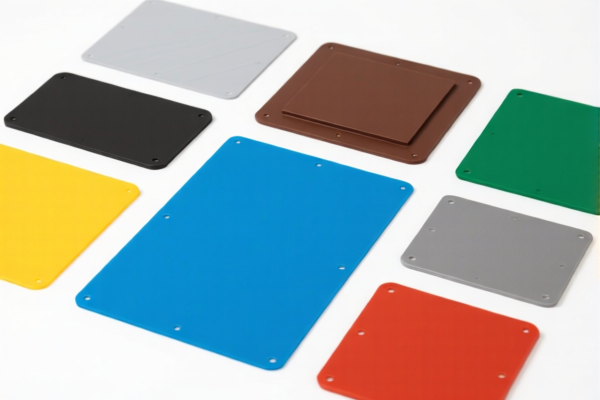
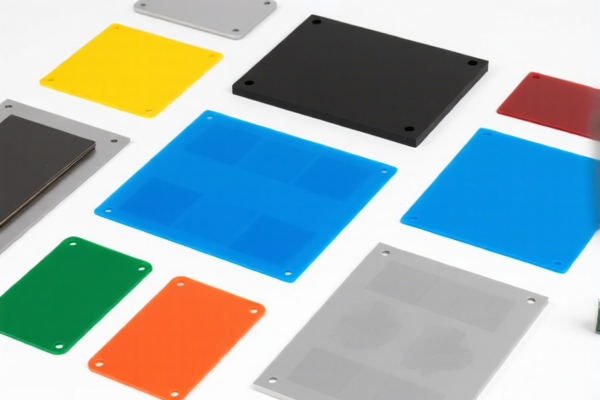
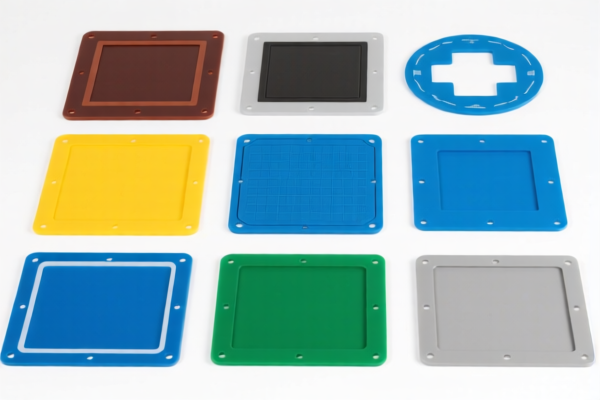
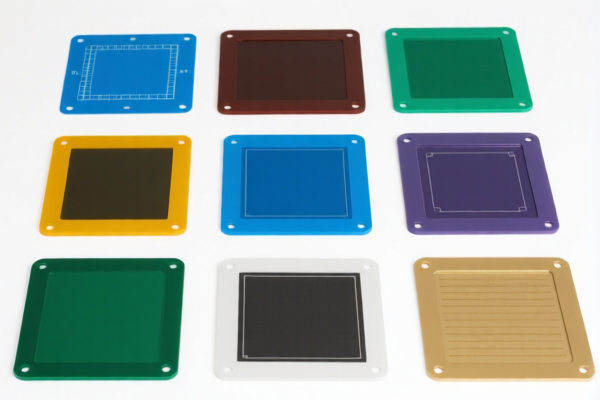
AI Analysis
🔋 Artificial Graphite Plate for Commutator (Brushes)
🌐 HS Code Reference & Customs Clearance Guide | 2026 Latest Tariff Analysis | Professional Clearance Strategy
📌 I. Product Definition & Classification: Do You Understand "Artificial Graphite Plates"?
Artificial Graphite Plates for Commutator are specialized carbon-based components used primarily in electric motors and generators. They serve as commutator brushes, ensuring electrical connection between the stationary and rotating parts of a motor.
In international trade, these products are strictly regulated under Chapter 85 (Electrical Machinery) or Chapter 68 (Articles of Stone or Similar), depending on their specific form, function, and perceived use.
Key Classification Dilemma: 1. Carbon/Graphite Articles (Chapter 68): If viewed primarily as a raw material or generic carbon product. 2. Electrical Carbon Goods (Chapter 85): If viewed specifically as components for electrical machinery (brushes/contacts).
⚠️ Critical Distinction Point:
- If the item is explicitly identified as a brush or component for electrical apparatus, it leans towards HS 8545.
- If the item is a generic plate/sheet without clear electrical application details, it may default to HS 6815 (Articles of Stone/Carbon).
📦 II. HS Code Classification Details (2026 Latest Tariff Authority Comparison)
Based on the provided data, here are the three potential HS Codes and their matching logic:
| HS Code | Product Description | Matching Logic Summary | Total Tax Rate |
|---|---|---|---|
6815.19.00.00 |
Articles of stone or other non-metallic materials; Carbon articles | Material Match: Artificial graphite falls under "stone/carbon materials." Form Match: "Plate" is a manufactured article. Usage: No explicit conflict, but lacks specific electrical component designation. |
35.0% |
8545.20.00.00 |
Graphite or other carbon and articles thereof; Carbon brushes for electrical purposes | Match Success: Material is "Artificial Graphite" (Carbon). Form Match: "Plate" is a valid carbon article form. Usage Match: "For Commutator" directly implies "Electrical Purposes" (Brushes). |
35.0% |
8545.19.20.00 |
Other electrodes, carbon brushes, and similar carbon goods | Match Success: "Artificial Graphite" meets the "Carbon/Graphite" material requirement. Form Match: "Plate" falls under the category of electrode/brush forms. Usage Match: "For Commutator" confirms electrical/electrolytic use with no material conflicts. |
35.0% |
🔍 Key Insight:
- All three codes result in the same total tax rate (35%) for US-bound goods from China.
- However,8545is the technically more accurate classification because it explicitly covers "Carbon Brushes" for electrical equipment, which is the primary function of the product.
-6815is a "fallback" classification for generic carbon plates that do not clearly demonstrate their end-use in electrical machinery.
💰 III. 2026 Latest Tariff Rate Breakdown (Including Surcharges & Policy Add-ons)
✅ Applicable Country: United States (US)
✅ Origin: China (CN)
✅ Effective Date: November 10, 2025 (and onwards)
🎯 1. All Recommended HS Codes (6815.19.00.00, 8545.20.00.00, 8545.19.20.00)
| Item | Content |
|---|---|
| Basic Tariff | 0.0% (Ad Valorem) |
| USITC Additional Tariff (Section 301) | +25.0% |
| IEEPA Additional Tariff (Section 122) | +10.0% |
| Total Effective Tariff Rate | 35.0% |
| Tax Calculation | CIF Value × 35% |
| De Minimis Exemption Available? | ❌ No (deny_de_minimis) |
| Legal Basis Path | USITC:6815.19.00.00 / USITC:8545.20.00.00 / USITC:8545.19.20.00 → FOOTNOTE:9903.88.01 (25%) → IEEPA:9903.01.25 (10%) |
📌 Explanation:
- "USITC Additional Tariff 25%": Comes from Section 301 of the Trade Act, targeting specific Chinese imports.
- "IEEPA 10%": Refers to the additional tariffs imposed under the International Emergency Economic Powers Act, specifically targeting Chinese products.
- Total 35%: This is a high tariff burden. Even though the basic rate is 0%, the surcharges make it expensive.
- No De Minimis: Small packages cannot bypass this tariff via the $800 de minimis rule.
🛠️ IV. Customs Clearance Practical Advice (Battle-Tested Pitfall Avoidance)
✅ 1. Required Documentation Checklist (Non-Negotiable)
| Document | Must Provide | Purpose |
|---|---|---|
| ✅ Product Specification Sheet | ✔️ | Must state: Material = Artificial Graphite; Shape = Plate; Application = Commutator Brushes. |
| ✅ Technical Data Sheet | ✔️ | Confirm carbon content, density, and resistivity. |
| ✅ Product Photos (Labeled) | ✔️ | Show the plate clearly, any packaging, and labeling indicating "Electrical Brush Material." |
| ✅ Commercial Invoice | ✔️ | Description must match HS Code logic (e.g., "Artificial Graphite Plate for Electrical Commutator"). |
| ✅ Packing List | ✔️ | Net/Gross weight, dimensions. |
| ✅ Certificate of Origin (CO) | ✔️ | If claiming any potential exemptions (though unlikely for this HS under current rules). |
✅ 2. Declaration Tips (Key Mnemonic)
🔥 "Material First, Use Second, Name Specific, Avoid 'Generic'!"
| Scenario | Correct Declaration | Error to Avoid |
|---|---|---|
| Clear Electrical Use | Declare as 8545.20.00.00 (Carbon Brushes/Parts) |
Do NOT declare as "Graphite Sheet" (generic) → Risk of 6815 if intent is unclear, though tax is same, audit risk is higher. |
| Ambiguous Use | Declare as 6815.19.00.00 (Articles of Carbon) |
Do NOT declare as "Electrical Component" without proof → Misclassification penalty. |
| Mixed Shipment | Separate HS Codes in one invoice | Do NOT bundle with other carbon goods of different types → Confusion in valuation. |
✅ 3. Special Case Handling
| Situation | Recommendation |
|---|---|
| OEM Custom Plates | Provide customer PO specifying "For Commutator Brush" to support 8545 classification. |
| Sample Shipments | Even samples are subject to the 35% tariff. No duty-free entry. |
| Packaging | Ensure packaging is sturdy; graphite plates can chip, causing weight discrepancies. |
🌍 V. Global Market Clearance Comparison (2026 Latest)
| Country/Region | Recommended HS Code | Tariff | Certification | Notes |
|---|---|---|---|---|
| 🇺🇸 USA | 8545.20.00.00 |
35% | None specific | High surcharges. 8545 is preferred for technical accuracy. |
| 🇨🇳 China | 8545.20.00.00 |
~5-7% | RoHS (if export back) | Lower domestic duty, but focus is on export clearance. |
| 🇪🇺 EU | 6815.19.00 |
0% | CE (if embedded) | Generally lower duties, but carbon brush classification may vary. |
| 🇯🇵 Japan | 8545.20 |
0-5% | PSE | Check for specific carbon brush standards. |
📌 Conclusion:
- USA is the most expensive market due to the 25% + 10% surcharges.
- Accuracy of Declaration is key to avoiding audits, even if the tax rate is similar across the three HS codes.
-8545is the strongest classification because it reflects the functional use (commutator brush).
📌 VI. Common Errors & Pitfall Guide (Blood & Tears Lessons)
❌ Error 1: Declaring as "Graphite Powder" or "Raw Material"
👉 Consequence: Wrong HS Code (3824 or 6815), potential fines for misdeclaration.
❌ Error 2: Using Generic Name "Carbon Plate" without specifying "Electrical Use"
👉 Consequence: Customs may assign 6815 (generic carbon article) instead of 8545 (electrical carbon). While tax is same here, 8545 is more precise for audit trails.
❌ Error 3: Ignoring the 122 IEEPA Surcharge
👉 Consequence: Unexpected 10% additional cost at customs. Total becomes 35%, not 25%.
❌ Error 4: Assuming De Minimis Exemption Applies
👉 Consequence: Small shipments are NOT exempt. Tax is due on every unit.
✅ Correct Approach:
"Artificial Graphite Plates, Cut to Size, for Use as Commutator Brushes in Electric Motors, Model XYZ, Carbon Content >95%, Density 1.8 g/cm³"
🎯 VII. Conclusion: Precision Classification, Cost Control, Efficiency!
🎯 Remember the Key Points:
🔹 "Graphite Plate for Commutator" = Electrical Carbon Good (
8545)
🔹 "Tax Rate = 35%" (0% Base + 25% Section 301 + 10% IEEPA 122)
🔹 "No De Minimis Exemption"
🔹 "Accurate Description Saves Audit Time"
📌 Pro Tip:
If you are shipping to the US, consider Pre-Immigration Classification (PIC) or Advance Ruling from CBP if you are importing in large volumes. This locks in the HS Code (8545.20.00.00) and prevents disputes during customs examination.
📣 Immediate Action:
📞 Confirm with your freight forwarder: "Apply Section 301 (25%) + IEEPA 122 (10%) to HS 8545.20.00.00"
🚀 Ensure your invoice clearly states "For Commutator Brush" to justify8545classification.
✨ Professional clearance starts with precise classification!
💼 Every dollar of tax is calculated with precision!
Customer Reviews
About HS Code Classification
The Harmonized System (HS) is an internationally standardized nomenclature developed by the World Customs Organization (WCO) to classify traded products. Over 200 countries use the HS system as the basis for customs tariffs, trade statistics, and import/export regulations.
Each HS code follows a hierarchical structure:
- Chapter (2 digits) — Broad category of goods (e.g., Chapter 84: Machinery and Mechanical Appliances)
- Heading (4 digits) — More specific grouping within the chapter
- Subheading (6 digits) — Internationally standardized breakdown, used by all WCO member countries
- National subdivisions (8-10 digits) — Country-specific extensions for further classification, such as US HTSUS 10-digit codes
Correct HS code classification is essential for smooth customs clearance, accurate duty payment, and compliance with trade regulations. Misclassification can lead to customs delays, overpayment of duties, or penalties.
When importing from CN to US, the applicable tariff rates may include:
- Most-Favored-Nation (MFN) rate — The standard duty rate applied to WTO members
- General rate — Applied to countries without trade agreements
- Trade remedy duties — Additional tariffs such as Section 301 (anti-dumping), Section 232 (national security), or countervailing duties
The information provided on this page is for reference purposes only. For official classification, please consult with your local customs authority or a licensed customs broker.