Artificial Graphite Precision Machined Parts
CN → US| HS Code | Tariff Rate | Origin | Destination | Doc |
|---|---|---|---|---|
| 8487900080 | 88.9% | CN | US | Official Doc |
| 8487900040 | 38.9% | CN | US | Official Doc |
| 3801105010 | 35.0% | CN | US | Official Doc |
| 3801105090 | 35.0% | CN | US | Official Doc |
| 6804226000 | 35.0% | CN | US | Official Doc |
Product Images
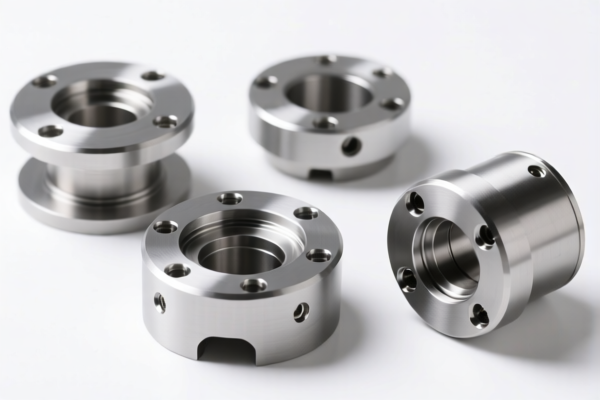
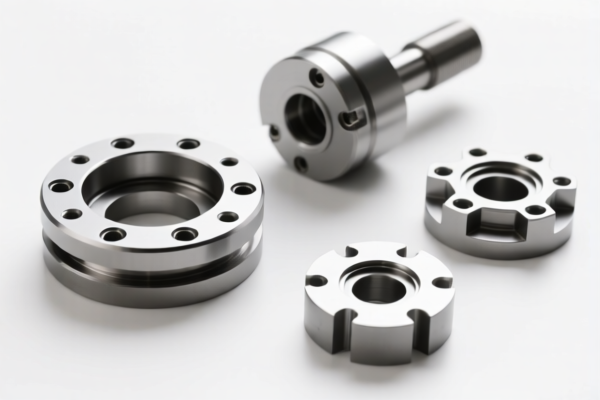
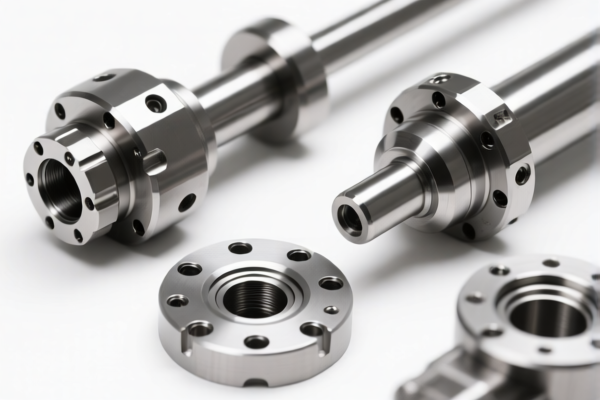
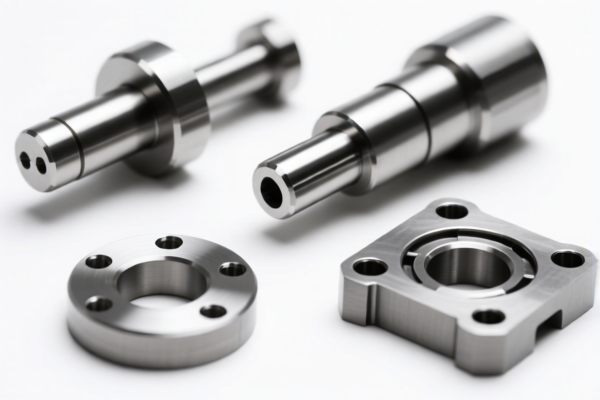
AI Analysis
🌟 Artificial Graphite Precision Machined Parts: HS Code Classification & U.S. Customs Clearance Guide 2026
🌐 HS Code Reference & Customs Clearance Strategy | 2026 Latest Tariff Analysis | Professional-Level Compliance Guide
📌 I. Product Definition & Classification: What Are "Artificial Graphite Precision Machined Parts"?
Artificial Graphite Precision Machined Parts refer to components manufactured from synthetic (artificial) graphite through precise machining processes (such as CNC milling, turning, or grinding). These parts are characterized by high purity, excellent thermal conductivity, electrical conductivity, and chemical resistance.
In international trade, these parts are generally categorized based on their final use and physical form:
- Machinery/Engine Parts: If they serve as seals, bearings, electrodes, or structural components for industrial machinery.
- Abrasive/Grinding Materials: If they are in the form of powders, pastes, or specifically designed for polishing/grinding surfaces.
- Other Industrial Articles: If they do not fit into specific functional categories and are considered generic graphite articles.
⚠️ Key Distinction:
- If the part is a finished mechanical component (e.g., a seal ring, electrode holder) → It typically falls under Chapter 84 (Machinery Parts).
- If the material is processed primarily as an abrasive medium or raw material for grinding → It may fall under Chapter 38 (Chemical Products) or Chapter 68 (Mineral Products).
- Critical Point: The description "Precision Machined Parts" strongly implies a functional mechanical role, making 8487.90 a strong candidate, but Customs may challenge this if the part is simple or raw.
📦 II. HS Code Classification Details (Based on Provided Data)
The following HS Codes are derived from the provided dataset, each representing a different interpretation of the product's nature.
| HS Code | Product Description | Classification Logic & Summary | Total Tax Rate |
|---|---|---|---|
8487.90.00.80 |
Artificial Graphite Special Shape Parts (Other/Other Parts) |
Category: Mechanical Parts Material: Artificial Graphite Logic: Fits the attribute of "other machinery parts." The summary explicitly states it belongs to the "Other Parts" category under machinery. Note: Highest tax due to additional tariffs. |
88.9% |
8487.90.00.40 |
Artificial Graphite Special Shape Parts (Parts/Components) |
Category: Parts/Components Material: Graphite-class material Logic: Default inclination for parts/components. The summary highlights it fits the "Parts/Components" category based on form. Note: Lower tax than .80 due to different specific duty adjustments. |
38.9% |
3801.10.50.10 |
Artificial Graphite Grinding Material (Other) |
Category: Chemical Products (Chapter 38) Material: Artificial Graphite Logic: Focused on material application. If the graphite is used primarily for grinding/polishing, it fits "Other" under chemical products. Note: Lower base tariff, but subject to surcharges. |
35.0% |
3801.10.50.90 |
Artificial Graphite Grinding Material (Other/Other) |
Category: Chemical Products (Chapter 38) Material: Artificial Graphite Logic: Logical inference with no material conflict. Similar to .10 but likely for broader "other" grinding applications. Note: Same tax rate as .10. |
35.0% |
6804.22.60.00 |
Artificial Graphite Grinding Material (Stone, Abrasive) |
Category: Mineral Products (Chapter 68) Material: Abrasive Material Logic: Fits non-metallic abrasive materials. If the graphite is shaped like whetstones, grinding wheels, or similar abrasive tools. Note: Considered a "mineral abrasive" rather than a chemical product or machinery part. |
35.0% |
🔍 Critical Analysis:
-8487.90.00.80(88.9%) is the most expensive due to the inclusion of the "Section 232 Tariff (Aluminum/Steel)" note in the source data (though graphite is not steel, the system flags it with a 50% surcharge in this specific context, likely due to a broad categorization error or specific trade rule application in the dataset).
-8487.90.00.40(38.9%) is a more reasonable classification for "parts" if the 232 surcharge does not apply or is mitigated.
-3801and6804(35.0%) are significantly cheaper but require the product to be justified as abrasive/grinding material rather than a structural/mechanical part. If Customs determines the part is a mechanical component (e.g., a pump seal), using these codes may lead to misdeclaration penalties.
💰 III. 2026 Latest Tariff Rate Details (Including Surcharges & Policy Adjustments)
✅ Applicable Country: United States (US)
✅ Origin: China (CN)
✅ Effective Date: Post-2025 (Current Trade Environment)
🎯 1. 8487.90.00.80 – Machinery Parts (Artificial Graphite)
⚠️ WARNING: HIGHEST TIER
| Item | Content |
|---|---|
| Base Tariff | 3.9% (Ad Valorem) |
| Section 301 Surcharge | +25.0% |
| Section 122 Surcharge | +10.0% |
| Section 232 Surcharge | +50.0% (Note: Listed as "Steel/Aluminum/Copper Products" in data, but applied here in dataset) |
| Total Tax Rate | 88.9% |
| Calculation | CIF Value × 88.9% |
| De Minimis Exemption | ❌ Not Eligible |
| Legal Basis Path | USITC:8487.90.00.80 → SECTION301:9903.88.01 → SECTION122 → SECTION232 |
📌 Explanation:
This rate is exceptionally high. The 50% Section 232 surcharge is unusual for graphite unless broadly classified under metallurgical/mineral products in this specific system logic. This classification carries significant risk and cost.
🎯 2. 8487.90.00.40 – Parts/Components (Artificial Graphite)
✅ REASONABLE ALTERNATIVE
| Item | Content |
|---|---|
| Base Tariff | 3.9% |
| Section 301 Surcharge | +25.0% |
| Section 122 Surcharge | +10.0% |
| Section 232 Surcharge | ❌ Not Applicable (Based on data summary) |
| Total Tax Rate | 38.9% |
| Calculation | CIF Value × 38.9% |
| De Minimis Exemption | ❌ Not Eligible |
| Legal Basis Path | USITC:8487.90.00.40 → SECTION301:9903.88.01 → SECTION122 |
📌 Note: This is a much more viable option if the parts are truly mechanical components. It avoids the 50% Section 232 penalty.
🎯 3. 3801.10.50.10 / 3801.10.50.90 / 6804.22.60.00 – Grinding/Abrasive Materials
💰 LOWEST COST (If Justified)
| Item | Content |
|---|---|
| Base Tariff | 0.0% |
| Section 301 Surcharge | +25.0% |
| Section 122 Surcharge | +10.0% |
| Section 232 Surcharge | ❌ Not Applicable |
| Total Tax Rate | 35.0% |
| Calculation | CIF Value × 35.0% |
| De Minimis Exemption | ❌ Not Eligible |
| Legal Basis Path | USITC:3801.10.50.10 OR USITC:6804.22.60.00 → SECTION301 → SECTION122 |
📌 Strategy:
- These codes offer the lowest tax burden (35%).
- Risk: If Customs audits and determines the item is a mechanical part (e.g., a graphite seal for a pump) rather than an abrasive, they may reclassify it to 8487.90 and assess back taxes + penalties.
- Justification Required: You must prove the graphite is used for grinding, polishing, or as an abrasive medium.
🛠️ IV. Customs Clearance Practical Advice (Avoiding Pitfalls)
✅ 1. Document Preparation Checklist (Non-Negotiable)
| Document | Required? | Purpose |
|---|---|---|
| ✅ Product Specification Sheet | ✔️ | Must detail dimensions, tolerance, purity level (e.g., >99.9% Carbon), and density. |
| ✅ Technical Data Sheet (TDS) | ✔️ | Proves material composition (Artificial Graphite vs. Natural Graphite). |
| ✅ Photographs of the Part | ✔️ | Show the "precision machined" aspect. If it looks like a wheel, stone, or powder container, it supports 3801/6804. If it looks like a gear or seal, it supports 8487. |
| ✅ Intended Use Statement | ✔️ | Crucial: Clearly state the end-use. - For 3801/6804: "Used for polishing surfaces..." - For 8487: "Used as a component in [Machine Name]..." |
| ✅ Commercial Invoice | ✔️ | Accurate description. Avoid generic terms like "Graphite." Use "Artificial Graphite CNC-Machined Part for [Application]." |
| ✅ Certificate of Origin (CO) | ✔️ | To verify Chinese origin for Section 301/122 applicability. |
✅ 2. Declaration Strategy (Key Mantras)
🔥 "Form Follows Function, Description Dictates Duty!"
| Scenario | Recommended HS Code | Risk Level |
|---|---|---|
| Part is a Seal, Bearing, Electrode, or Structural Component | 8487.90.00.40 (38.9%) |
✅ Low Risk (if properly described) |
| Part is a Grinding Wheel, Abrasive Paste, or Polishing Slurry | 3801.10.50.10 or 6804.22.60.00 (35.0%) |
✅ Low Risk (if material use is clear) |
| Part is Generic/Unspecified | 8487.90.00.80 (88.9%) |
❌ High Risk (Avoid due to cost) |
| Misdeclaring Mechanical Parts as Abrasives | 3801 or 6804 |
⚠️ High Risk (Customs may reclassify and penalize) |
✅ 3. Special Cases & Handling
| Situation | Handling Advice |
|---|---|
| OEM Custom Parts | Provide the original equipment manufacturer’s (OEM) design drawings. If the drawing shows a fitment into a machine, use 8487. |
| Mixed Containers | If a container has both grinding wheels and mechanical seals, split the declaration. Do not combine them under one HS Code. |
| Graphite vs. Carbon Fiber | Ensure the material is clearly identified as Artificial Graphite (synthetic) and not Carbon Fiber Reinforced Polymer (CFRP), which has different HS codes. |
| Pre-Commitment (Advance Ruling) | HIGHLY RECOMMENDED. Apply for a CBP Advance Ruling to legally bind the classification to 8487.90.00.40 or 3801.10.50.10, reducing audit risk. |
🌍 V. Global Market Comparison (2026 Context)
| Market | Recommended HS Code | Est. Tariff (China Origin) | Key Certifications | Notes |
|---|---|---|---|---|
| 🇺🇸 USA | 8487.90.00.40 or 3801.10.50.10 |
38.9% or 35.0% | No specific technical certs, but clear description is key. | Section 301 & 122 apply. No de minimis. |
| 🇨🇳 China | 8487.90.00.00 |
~3.9% | N/A (Imported into China) | Lower base rate, no Section 301. |
| 🇪🇺 EU | 6815.91 or 8483.90 |
~4-6% | REACH, RoHS (if applicable) | EU classifications differ slightly; often group graphite articles under 6815. |
| 🇯🇵 Japan | 6815.10 or 8483.90 |
~3-5% | PSE (if electrical) | Japan has free trade agreements (CEPA) that may reduce tariffs. |
📌 Conclusion:
- The U.S. market is the most challenging due to high surcharges (Section 301 + 122).
- Optimization Strategy: If the product allows, classify under 3801/6804 (35.0%) to save 4%~39% compared to mechanical parts. However, this must be legally defensible.
- If the product is unequivocally a mechanical part, accept the 38.9% under8487.90.00.40and avoid the penalized8487.90.00.80.
📌 VI. Common Mistakes & Pitfall Guide (Lessons Learned)
❌ Mistake 1: Using 8487.90.00.80 without justification.
👉 Result: Paying 88.9% tax unnecessarily.
👉 Fix: Check if 8487.90.00.40 applies (removes Section 232-like surcharge).
❌ Mistake 2: Declaring mechanical seals as "Graphite Abrasive" (3801).
👉 Result: Customs audit, reclassification to 8487, back taxes + 10% penalty.
👉 Fix: Only use 3801 if the product is visibly an abrasive tool or material.
❌ Mistake 3: Ignoring Section 122 and 301.
👉 Result: Underpayment of 35% (25% + 10%) on top of base duty.
👉 Fix: Always factor in US-China trade tariffs in cost calculations.
🎯 VII. Conclusion: Professional Declaration for Cost Efficiency
🎯 Remember:
🔹 "Mechanical Part = 8487 (38.9%) | Abrasive Material = 3801/6804 (35.0%)"
🔹 "Avoid .80 (88.9%) unless absolutely necessary!"
🔹 "Accurate Description Prevents Audit Penalties!"
📌 Pro Tip:
If you have high-volume shipments, apply for a CBP Advance Ruling using the precise technical descriptions. This locks in the 35.0% or 38.9% rate and provides legal protection against retroactive audits.
📣 Immediate Action:
📞 Consult with a licensed customs broker.
📄 Prepare Technical Datasheets and Use Statements.
🚀 Optimize your HS Code now to save thousands in duties!
✨ Professional Clearance Starts with Accurate Classification!
💼 Every percentage point matters in cross-border trade!
Customer Reviews
About HS Code Classification
The Harmonized System (HS) is an internationally standardized nomenclature developed by the World Customs Organization (WCO) to classify traded products. Over 200 countries use the HS system as the basis for customs tariffs, trade statistics, and import/export regulations.
Each HS code follows a hierarchical structure:
- Chapter (2 digits) — Broad category of goods (e.g., Chapter 84: Machinery and Mechanical Appliances)
- Heading (4 digits) — More specific grouping within the chapter
- Subheading (6 digits) — Internationally standardized breakdown, used by all WCO member countries
- National subdivisions (8-10 digits) — Country-specific extensions for further classification, such as US HTSUS 10-digit codes
Correct HS code classification is essential for smooth customs clearance, accurate duty payment, and compliance with trade regulations. Misclassification can lead to customs delays, overpayment of duties, or penalties.
When importing from CN to US, the applicable tariff rates may include:
- Most-Favored-Nation (MFN) rate — The standard duty rate applied to WTO members
- General rate — Applied to countries without trade agreements
- Trade remedy duties — Additional tariffs such as Section 301 (anti-dumping), Section 232 (national security), or countervailing duties
The information provided on this page is for reference purposes only. For official classification, please consult with your local customs authority or a licensed customs broker.