Artificial Lawn
CN → US| HS Code | Tariff Rate | Origin | Destination | Doc |
|---|---|---|---|---|
| 5703310030 | 41.0% | CN | US | Official Doc |
| 5703210090 | 41.7% | CN | US | Official Doc |
| 5603949070 | 35.0% | CN | US | Official Doc |
| 3921901950 | 40.3% | CN | US | Official Doc |
Product Images
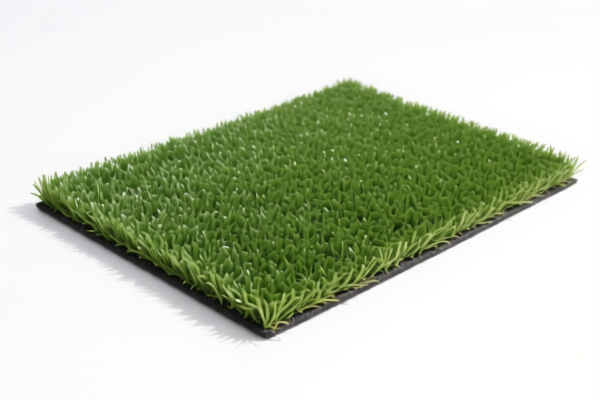
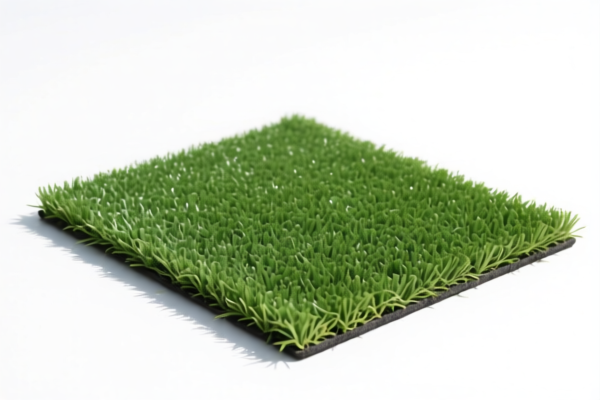
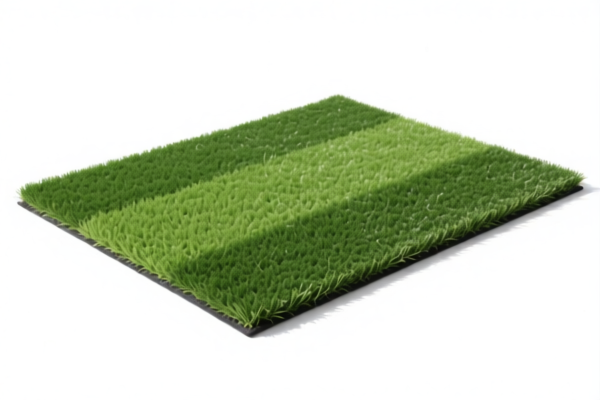

AI Analysis
🌿 Artificial Lawn (Synthetic Turgrass)
🌐 HS Code Reference & Customs Clearance Guide | 2026 Latest Tariff Analysis | Professional Clearance Strategy
📌 One, Product Definition & Classification: Do You Really Understand "Artificial Lawn"?
Artificial lawn, also known as synthetic turf, is a surface of synthetic fibers used as a substitute for natural grass. In international trade, its classification depends heavily on its material composition and structural form. The data provided analyzes four potential HS codes based on different material and structural interpretations.
⚠️ Key Distinction Points:
- If it is a finished carpet-like product made of synthetic fibers → Chapter 57 ( Carpets)
- If it is a non-woven fabric made of filament plastics → Chapter 56 (Non-wovens)
- If it is considered a plastic sheet/strip/fiber form → Chapter 39 (Plastics)
📦 Two, HS Code Classification Details (2026 Latest Tariff Authority Comparison)
| HS Code | Product Description | Summary/Logic | Total Tax Rate |
|---|---|---|---|
5703.31.00.30 |
Carpets and other textile floor coverings, tufted, of synthetic fibers, containing 50% or more by weight of nylon or other polyamides | Direct Match: Material and use match "artificial lawn" directly, with no conflict. | 41.0% |
5703.21.00.90 |
Carpets and other textile floor coverings, non-tufted, of synthetic fibers, of other textile materials | Inference: Product name matches "artificial lawn" purpose exactly; infers material is Nylon or Polyamide. | 41.7% |
5603.94.90.70 |
Non-woven fabrics, whether or not impregnated, coated, covered or laminated, of synthetic filaments, weighing >300g/m², other | Inference: Infers lawn is made of polymer filaments in non-woven or fabric structure, fitting "filament non-woven" characteristics. | 35.0% |
3921.90.19.50 |
Other plates, sheets, film, foil and strip, of plastics, other | Inference: Infers artificial lawn is made of plastic, conforming to plastic strip/fiber attributes, classified under "Others". | 40.3% |
🔍 Key Reminder:
- Most Common:5703.31.00.30and5703.21.00.90are the standard classifications for finished synthetic turf carpets.
- Alternative:5603.94.90.70applies if the structure is specifically identified as a heavy non-woven fabric.
- Less Common:3921.90.19.50is used if the product is considered a plastic sheet/strip rather than a textile carpet.
💰 Three, 2026 Latest Tariff Rate Details (Including Surtaxes & Policy Add-ons)
✅ Applicable Country: United States (US)
✅ Origin: China (CN)
✅ Effective Time: From November 10, 2025 (including subsequent imports)
🎯 1. 5703.31.00.30 — Tufted Carpets of Synthetic Fibers
| Item | Content |
|---|---|
| Base Rate | 6.0% |
| Section 301 Surtax | +25.0% |
| Section 122 Tariff | +10.0% |
| Total Tax Rate | 41.0% |
| Tax Calculation | CIF Value × 41.0% |
| De Minimis Exemption | ❌ Not Applicable (High duty rates exclude de minimis benefits) |
📌 Explanation:
- "Section 301 Surtax 25%" comes from the "Additional Tariffs" under US Trade Law Section 301;
- "Section 122 Tariff 10%" is an additional surcharge on certain Chinese goods;
- Combined 41%, which is a very high tariff, must be anticipated in advance!
🎯 2. 5703.21.00.90 — Non-Tufted Carpets of Synthetic Fibers
| Item | Content |
|---|---|
| Base Rate | 6.7% |
| Section 301 Surtax | +25.0% |
| Section 122 Tariff | +10.0% |
| Total Tax Rate | 41.7% |
| Tax Calculation | CIF Value × 41.7% |
| De Minimis Exemption | ❌ Not Applicable |
📌 Note:
- Higher base rate than tufted version;
- Still subject to the same high surtaxes;
- Critical for non-tufted synthetic turf products.
🎯 3. 5603.94.90.70 — Non-Woven Fabrics of Synthetic Filaments
| Item | Content |
|---|---|
| Base Rate | 0.0% |
| Section 301 Surtax | +25.0% |
| Section 122 Tariff | +10.0% |
| Total Tax Rate | 35.0% |
| Tax Calculation | CIF Value × 35.0% |
| De Minimis Exemption | ❌ Not Applicable |
📌 Advantage:
- Lowest Total Rate (35%) among the options due to 0% base duty;
- However, requires strong evidence that the product is a "non-woven fabric" rather than a "carpet";
- Suitable if the backing structure is clearly non-woven.
🎯 4. 3921.90.19.50 — Other Plastic Plates, Sheets, Film, etc.
| Item | Content |
|---|---|
| Base Rate | 5.3% |
| Section 301 Surtax | +25.0% |
| Section 122 Tariff | +10.0% |
| Total Tax Rate | 40.3% |
| Tax Calculation | CIF Value × 40.3% |
| De Minimis Exemption | ❌ Not Applicable |
📌 Caution:
- Classified under Plastics (Chapter 39);
- May be challenged if customs views it as a textile carpet (Chapter 57);
- Rate is high due to 5.3% base + surtaxes.
🛠️ Four, Customs Clearance Practical Advice (Practical Pitfall Avoidance Guide)
✅ 1. Document Preparation Checklist (None Missing)
| Document | Mandatory? | Description |
|---|---|---|
| ✅ Product Specification Sheet | ✔️ | Includes material type (nylon/polyester/polypropylene), pile height, density, backing type. |
| ✅ Structure Diagram | ✔️ | To distinguish between tufted, woven, non-woven, or plastic sheet form. |
| ✅ Product Photos (Clear) | ✔️ | Show texture, backing, and edge finish. |
| ✅ Commercial Invoice | ✔️ | Clearly state "Artificial Grass" or "Synthetic Turf" with material composition. |
| ✅ Packing List | ✔️ | Detail rolls/bales, weight, and dimensions. |
| ✅ Material Test Report | ✔️ | Prove fiber composition (e.g., 100% Polypropylene) to support HS classification. |
✅ 2. Declaration Tips (Key Mantras)
🔥 "Material Defines Code, Structure Determines Path, Name Precise, Tax Clear!"
| Scenario | Correct Declaration | Wrong Practice |
|---|---|---|
| Standard Tufted Turf | 5703.31.00.30 |
Misdeclare as plastic sheet → 3921.90.19.50 (Risk of penalty) |
| Non-Tufted Synthetic Grass | 5703.21.00.90 |
Misdeclare as non-woven → 5603.94.90.70 (May be rejected if not non-woven) |
| Non-Woven Backed Grass | 5603.94.90.70 |
Misdeclare as carpet → Higher base duty risk |
| Plastic Sheet-like Turf | 3921.90.19.50 |
Misdeclare as carpet → Classification dispute |
✅ 3. Special Situation Handling
| Situation | Handling Advice |
|---|---|
| Mixed Material Backing | If backing is not textile, consider 5603 or 3921; provide detailed material breakdown. |
| Sample Submission | Submit physical samples to CBP for Advance Ruling to confirm HS Code. |
| High Value Shipments | Given the ~40% tax, calculate landed cost precisely before shipment. |
| De Minimis Threshold | ❌ Do NOT use de minimis for artificial lawn from China; risks are high due to high duty rates. |
🌍 Five, Global Market Customs Clearance Comparison (2026 Latest)
| Country/Region | Recommended HS Code | Tariff (China Origin) | Certification | Note |
|---|---|---|---|---|
| 🇺🇸 USA | 5703.31.00.30 / 5703.21.00.90 |
41.0% - 41.7% | No specific CE/FCC | Highest burden due to Section 301 & 122 |
| 🇨🇳 China | 5703.31.00.30 |
6.0% | No extra surtax | Base rate only |
| 🇪🇺 EU | 5703.31.00.00 |
5.0% - 12% | REACH/RoHS | Lower tariffs, no US-style surtaxes |
| 🇦🇺 Australia | 5703.31.00.00 |
5.0% | None | Competitive market |
| 🇯🇵 Japan | 5703.31.00.00 |
6.0% | PSE (if electrical) | Standard tariffs apply |
📌 Conclusion:
- USA is the most expensive market for artificial lawn from China due to 41%+ total duties;
- EU/Australia/Japan offer more favorable tariff environments;
- Consider supply chain diversification if targeting the US market extensively.
📌 Six, Common Errors & Pitfall Avoidance Guide (Blood and Tears Lessons)
❌ Error 1: Declaring as "Plastic Sheet" when it is a Textile Carpet
👉 Consequence: Customs may reclassify to Chapter 57, leading to back taxes and penalties for incorrect declaration.
❌ Error 2: Misidentifying Material Composition
👉 Consequence: If declared as Polypropylene but is Nylon, tax rate may differ; leads to audit flags.
❌ Error 3: Ignoring Section 122 and 301 Surtaxes
👉 Consequence: Unexpected 40%+ landed cost erodes profit margins drastically.
❌ Error 4: Using De Minimis for High-Value Bulk Shipments
👉 Consequence: Seizure or return of goods; de minimis does not apply to goods subject to high surtaxes from China.
✅ Correct Practice:
"Artificial Turf, Tufted, Synthetic Fibers (Polypropylene), Green Color, Roll of 2m Width, for Sports Field Use, Made in China."
🎯 Seven, Conclusion: Professional Declaration, Save Time, Reduce Costs!
🎯 Remember the Mantra:
🔹 "Carpet vs. Fabric, Check the Structure; Base + 25% + 10% = High Cost!"
🔹 "HS Code Decides Destiny, 41% Tax is Heavy, Declare Accurately, Avoid Penalties!"
📌 Tips:
- If your artificial lawn is originating from Vietnam, Mexico, Thailand, or Malaysia, you may apply for IEEPA Exemptions or avoid Section 301 tariffs, reducing rates to 0%-5%;
- Recommend applying for an Advance Ruling with US CBP to confirm the correct HS Code and duty liability before bulk shipment.
📣 Immediate Action:
📞 Contact professional customs brokers + Provide Product Specs + Apply for HS Code Advance Ruling
🚀 Let your Artificial Lawn clear customs smoothly, export efficiently, and maximize profits!
✨ Professional Clearance, Starting with Accurate Classification!
💼 Every Cent of Your Cost Deserves Precise Calculation!
Customer Reviews
About HS Code Classification
The Harmonized System (HS) is an internationally standardized nomenclature developed by the World Customs Organization (WCO) to classify traded products. Over 200 countries use the HS system as the basis for customs tariffs, trade statistics, and import/export regulations.
Each HS code follows a hierarchical structure:
- Chapter (2 digits) — Broad category of goods (e.g., Chapter 84: Machinery and Mechanical Appliances)
- Heading (4 digits) — More specific grouping within the chapter
- Subheading (6 digits) — Internationally standardized breakdown, used by all WCO member countries
- National subdivisions (8-10 digits) — Country-specific extensions for further classification, such as US HTSUS 10-digit codes
Correct HS code classification is essential for smooth customs clearance, accurate duty payment, and compliance with trade regulations. Misclassification can lead to customs delays, overpayment of duties, or penalties.
When importing from CN to US, the applicable tariff rates may include:
- Most-Favored-Nation (MFN) rate — The standard duty rate applied to WTO members
- General rate — Applied to countries without trade agreements
- Trade remedy duties — Additional tariffs such as Section 301 (anti-dumping), Section 232 (national security), or countervailing duties
The information provided on this page is for reference purposes only. For official classification, please consult with your local customs authority or a licensed customs broker.