Artificial Leather Conveyor Belt
CN → US| HS Code | Tariff Rate | Origin | Destination | Doc |
|---|---|---|---|---|
| 8431390010 | 35.0% | CN | US | Official Doc |
| 3926906090 | 39.2% | CN | US | Official Doc |
| 5910009000 | 37.6% | CN | US | Official Doc |
| 5910001090 | 39.0% | CN | US | Official Doc |
| 3926905900 | 37.4% | CN | US | Official Doc |
Product Images
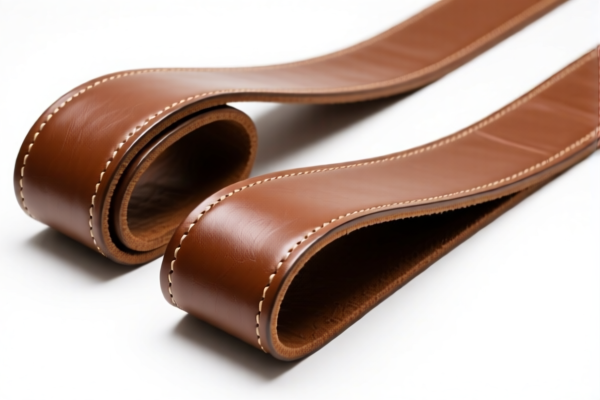
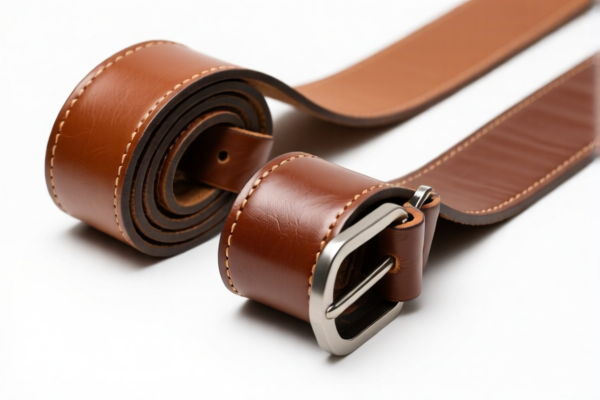
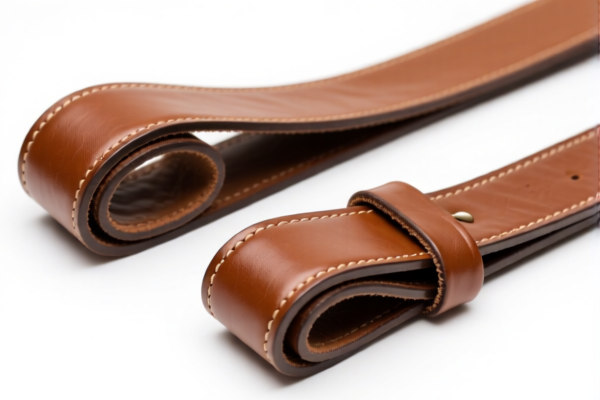

AI Analysis
🏭 Artificial Leather Conveyor Belt (Synthetic Leather Transmission Belts)
🌐 HS Code Reference & Customs Clearance Guide | 2026 Latest Tariff Analysis | Professional Clearance Strategy 📌 I. Product Definition & Classification: What Exactly is an "Artificial Leather" Conveyor Belt?
Artificial leather conveyor belts, technically known in trade as synthetic leather transmission belts, are flexible power transmission or material handling components. The key challenge in classification lies in the material composition of the cover and the structure of the belt.
In international trade, these belts are generally categorized into two main groups:
1. Textile/Textile-Reinforced Belts (Class 59): - Belts where the backbone or cover is made from textile materials (e.g., cotton, nylon, polyester) treated or coated with synthetic leather-like surfaces. - Commonly used in industrial machinery for power transmission.
2. Plastic/Synthetic Material Products (Class 39): - Belts made primarily of plastic or synthetic rubbers that mimic the appearance and feel of leather but lack a textile backbone. - Often used in lightweight automation, packaging, and food-grade applications.
⚠️ Critical Distinction Point:
- If the belt has a textile carcass (backbone) → It falls under Chapter 59 (Articles of textile material).
- If the belt is solid plastic/synthetic without textile reinforcement → It falls under Chapter 39 (Plastics and articles thereof).
- Misclassification here leads to significant tariff differences due to the "Section 301" and "122 Clause" surcharges.
📦 II. HS Code Classification Details (2026 Latest Tariff Authority Comparison)
Based on the provided data, here are the specific HS Codes for "Artificial Leather Conveyor Belts," categorized by their material nature:
| HS Code | Product Description | Classification Logic | Material Basis |
|---|---|---|---|
8431.39.00.10 |
Conveyor Belt Parts | Classified as parts of machinery (Conveyors) rather than the belt itself as a finished good. | Metal/Composite parts for conveyors |
5910.00.90.00 |
Synthetic Leather Conveyor Belt | Classified as textile material-made conveyor belts. | Textile backbone with synthetic cover |
5910.00.10.90 |
Synthetic Leather Conveyor Belt | Classified as artificial fiber-made conveyor belts. | Artificial fibers (e.g., Nylon/Polyester) |
3926.90.60.90 |
Synthetic Leather Conveyor Belt | Classified as Plastic/Synthetic Material Products. | Solid plastic/synthetic composition |
3926.90.59.00 |
Synthetic Leather Conveyor Belt | Classified as Plastic/Synthetic Material Transmission Belts. | Plastic drive belts |
🔍 Key Reminder:
- Chapter 84 (8431) is for PARTS: Only use this if the item is clearly a replaceable part of a larger conveyor system and not a standalone drive belt.
- Chapter 59 (5910) is for TEXTILES: Use this if the belt has a woven or knitted fabric core.
- Chapter 39 (3926) is for PLASTICS: Use this if the belt is made entirely of synthetic polymers without textile reinforcement.
💰 III. 2026 Latest Tariff Rate Breakdown (Including Surcharges & Policy Add-ons)
✅ Applicable Country: United States (US)
✅ Origin: China (CN)
✅ Effective Time: Current rates apply for imports post-2025 policies.
🎯 1. 8431.39.00.10 —— Conveyor Belt Parts (Machinery Parts)
| Item | Content |
|---|---|
| Base Duty Rate | 0.0% |
| USITC Surcharge (Sec 301) | +25.0% |
| 122-Clause Surcharge | +10.0% |
| Total Effective Rate | 35.0% |
| Tax Calculation | CIF Value × 35.0% |
| De Minimis Exemption? | ❌ No (High-value industrial parts) |
| Legal Basis | USITC:8431.39.00.10 → FOOTNOTE:301 → IEEPA:122-Clause |
📌 Explanation:
- Although the base duty is 0%, the 35% total rate is driven by the 25% Section 301 tariff and the 10% "122 Clause" surcharge (often related to specific trade enforcement actions).
- Note: This classification is only valid if the product is deemed a "part" of a conveyor system, not a general drive belt.
🎯 2. 5910.00.90.00 —— Synthetic Leather Conveyor Belt (Textile Material)
| Item | Content |
|---|---|
| Base Duty Rate | 2.6% |
| USITC Surcharge (Sec 301) | +25.0% |
| 122-Clause Surcharge | +10.0% |
| Total Effective Rate | 37.6% |
| Tax Calculation | CIF Value × 37.6% |
| De Minimis Exemption? | ❌ No |
| Legal Basis | USITC:5910.00.90.00 → FOOTNOTE:301 → IEEPA:122-Clause |
📌 Explanation:
- Textile-based conveyor belts have a low base duty (2.6%), but the 37.6% total rate remains high due to surcharges.
- Ensure the belt’s backbone is indeed textile to qualify for this code.
🎯 3. 5910.00.10.90 —— Synthetic Leather Conveyor Belt (Artificial Fiber)
| Item | Content |
|---|---|
| Base Duty Rate | 4.0% |
| USITC Surcharge (Sec 301) | +25.0% |
| 122-Clause Surcharge | +10.0% |
| Total Effective Rate | 39.0% |
| Tax Calculation | CIF Value × 39.0% |
| De Minimis Exemption? | ❌ No |
| Legal Basis | USITC:5910.00.10.90 → FOOTNOTE:301 → IEEPA:122-Clause |
📌 Explanation:
- Specifically for belts made of artificial fibers (like nylon or polyester webbing).
- 39.0% is the highest in the textile category.
- Tip: If your belt is nylon-based, this is your code. If it's cotton/polyester blend, check5910.00.90.00(37.6%) as it might be cheaper.
🎯 4. 3926.90.59.00 —— Plastic/Synthetic Material Transmission Belts
| Item | Content |
|---|---|
| Base Duty Rate | 2.4% |
| USITC Surcharge (Sec 301) | +25.0% |
| 122-Clause Surcharge | +10.0% |
| Total Effective Rate | 37.4% |
| Tax Calculation | CIF Value × 37.4% |
| De Minimis Exemption? | ❌ No |
| Legal Basis | USITC:3926.90.59.00 → FOOTNOTE:301 → IEEPA:122-Clause |
📌 Explanation:
- For solid plastic drive belts (no textile).
- 37.4% is slightly lower than the textile fiber category (3926.90.60.90at 39.2%).
🎯 5. 3926.90.60.90 —— Plastic/Synthetic Material Products (Other)
| Item | Content |
|---|---|
| Base Duty Rate | 4.2% |
| USITC Surcharge (Sec 301) | +25.0% |
| 122-Clause Surcharge | +10.0% |
| Total Effective Rate | 39.2% |
| Tax Calculation | CIF Value × 39.2% |
| De Minimis Exemption? | ❌ No |
| Legal Basis | USITC:3926.90.60.90 → FOOTNOTE:301 → IEEPA:122-Clause |
📌 Explanation:
- The "catch-all" for plastic products.
- 39.2% is the highest total rate in the dataset. Avoid this code if a more specific plastic code (3926.90.59.00) applies, as it saves 1.8%.
🛠️ IV. Customs Clearance Practical Advice (Real-World Pitfall Guide)
✅ 1. Required Documentation Checklist (Non-Negotiable)
| Document | Must Provide? | Description |
|---|---|---|
| ✅ Product Specification Sheet | ✔️ | Must detail: Material composition (Textile vs. Plastic), Width, Length, Thickness, Tensile Strength. |
| ✅ Material Composition Proof | ✔️ | Certificate of Analysis (COA) or Lab Report proving if the backbone is textile or plastic. |
| ✅ Product Photos | ✔️ | Clear photos of the belt surface, cross-section (to show layers/backbone), and markings. |
| ✅ Commercial Invoice | ✔️ | Must describe the item as "Synthetic Leather Conveyor Belt" with specific HS Code. |
| ✅ Packing List | ✔️ | Weight and dimensions per roll/box. |
| ✅ Origin Certificate | ✔️ | If not Chinese origin, to avoid surcharges. |
✅ 2. Declaration Tips (Key Mnemonics)
🔥 "Material Determines Code, Textile is 59, Plastic is 39, Parts are 84!"
| Scenario | Correct Declaration | Wrong Practice | Consequence |
|---|---|---|---|
| Belt has fabric/nylon core | 5910.00.90.00 or 5910.00.10.90 |
Declared as Plastic (3926) |
Over-declaration Risk, Customs Audit |
| Belt is solid plastic/rubber | 3926.90.59.00 |
Declared as Textile (5910) |
Under-declaration Risk, Penalty |
| Belt is a replaceable part of a machine | 8431.39.00.10 |
Declared as General Belt (5910/3926) |
Under-tariff Risk (35% vs 37-39%), Potential Fraud |
| OEM Custom Belt | Provide Client Design Specs | Generic "Conveyor Belt" | Delay, Customs requests classification ruling |
✅ 3. Special Situation Handling
| Situation | Handling Advice |
|---|---|
| Mixed Materials (e.g., Plastic cover on Textile core) | Classify as Textile (5910). The core material usually dictates the chapter. Provide cross-section photos. |
| V-Belt vs. Flat Belt | Both fall under 5910 or 3926 depending on material. Specify "Flat Transmission Belt" or "V-Belt" in description. |
| High-Value Custom Belt | Apply for Advance Ruling (Pre-classification) from US CBP before shipment. Saves time and avoids penalties. |
| Small Sample Shipments | Even samples are subject to duties. Do not use "Gift" or "Sample" to evade 35%+ taxes if value is high. |
🌍 V. Global Market Comparison (2026 Latest)
| Country/Region | Recommended HS Code | Base Duty | Surcharge (China) | Total Effective Rate | Remarks |
|---|---|---|---|---|---|
| 🇺🇸 USA | 5910.00.90.00 |
2.6% | +35% (301+122) | 37.6% | Highest complexity due to Section 301 & 122 |
| 🇨🇳 China (Export) | 5910.00.90.00 |
0% (Export Rebate) | N/A | 0% | China offers export rebates for machinery parts |
| 🇪🇺 EU | 5910.00.00 |
0-4% | None | ~2-4% | No Section 301; simpler classification |
| 🇬🇧 UK | 5910.00.00 |
0-4% | None | ~2-4% | Post-Brexit, aligns with EU for many goods |
| 🇦🇺 Australia | 5910.00.00 |
5% | None | 5% | No additional surcharges for China origin |
📌 Conclusion:
- USA is the most expensive market due to additive tariffs (301 + 122 Clause).
- EU/UK/AU are more cost-effective, with no political surcharges.
- Strategic Advice: For US-bound goods, consider supply chain diversification (e.g., assembly in Vietnam/Mexico) to potentially avoid surcharges, or negotiate cost-sharing with US buyers.
📌 VI. Common Errors & Pitfall Guide (Lessons from the Field)
❌ Error 1: Declaring a textile-core belt as plastic (3926) to seek lower base duties.
👉 Result: Customs inspection reveals textile core → Back taxes + 5% penalty + seizure risk.
❌ Error 2: Declaring a solid plastic belt as machinery parts (8431) to get 0% base duty.
👉 Result: Customs rejects "part" status → Underpayment of 2.4-4.2% base + surcharges.
❌ Error 3: Ignoring the 122-Clause Surcharge.
👉 Result: Budgeting only for 25% Sec 301 → Unexpected 10% additional cost on every shipment.
❌ Error 4: Using vague descriptions like "Leather Belt".
👉 Result: "Leather" triggers Chapter 41 (Hides/Skins), which has different rules. "Artificial/Synthetic Leather" must be explicitly stated.
✅ Correct Approach:
"Synthetic Leather Flat Transmission Belt, 10mm x 50m, Polyester Core, PVC Cover, Model XYZ, Made in China"
🎯 VII. Conclusion: Precision Classification Saves Costs!
🎯 Remember the Mnemonic:
🔹 "Core determines Chapter: Textile=59, Plastic=39, Part=84."
🔹 "Total Rate = Base + 25% (301) + 10% (122). Always Add 35-39%!"
🔹 "Check the Cross-Section! Don't Guess the Material!"
📌 Pro Tip:
If your belt uses alternative materials (e.g., PU-coated fabric) or has a unique structure, consult a licensed customs broker for a Pre-Submission Classification Opinion. The 1.8% difference between 3926.90.59.00 (37.4%) and 3926.90.60.90 (39.2%) can save thousands on large shipments.
📣 Immediate Action:
📞 Contact a Customs Broker + Provide Cross-Section Photos + Verify Material Composition
🚀 Ensure Accurate HS Code, Avoid Delays, and Optimize Tax Burden!
✨ Professional Clearance Starts with Accurate Classification!
💼 Every Percent Counts in Global Trade!
Customer Reviews
About HS Code Classification
The Harmonized System (HS) is an internationally standardized nomenclature developed by the World Customs Organization (WCO) to classify traded products. Over 200 countries use the HS system as the basis for customs tariffs, trade statistics, and import/export regulations.
Each HS code follows a hierarchical structure:
- Chapter (2 digits) — Broad category of goods (e.g., Chapter 84: Machinery and Mechanical Appliances)
- Heading (4 digits) — More specific grouping within the chapter
- Subheading (6 digits) — Internationally standardized breakdown, used by all WCO member countries
- National subdivisions (8-10 digits) — Country-specific extensions for further classification, such as US HTSUS 10-digit codes
Correct HS code classification is essential for smooth customs clearance, accurate duty payment, and compliance with trade regulations. Misclassification can lead to customs delays, overpayment of duties, or penalties.
When importing from CN to US, the applicable tariff rates may include:
- Most-Favored-Nation (MFN) rate — The standard duty rate applied to WTO members
- General rate — Applied to countries without trade agreements
- Trade remedy duties — Additional tariffs such as Section 301 (anti-dumping), Section 232 (national security), or countervailing duties
The information provided on this page is for reference purposes only. For official classification, please consult with your local customs authority or a licensed customs broker.