Artificial Leather File Box
CN → US| HS Code | Tariff Rate | Origin | Destination | Doc |
|---|---|---|---|---|
| 4205008000 | 35.0% | CN | US | Official Doc |
| 4202316000 | 43.0% | CN | US | Official Doc |
| 4205001000 | 35.0% | CN | US | Official Doc |
| 4202399000 | 55.0% | CN | US | Official Doc |
| 4205008000 | 35.0% | CN | US | Official Doc |
Product Images
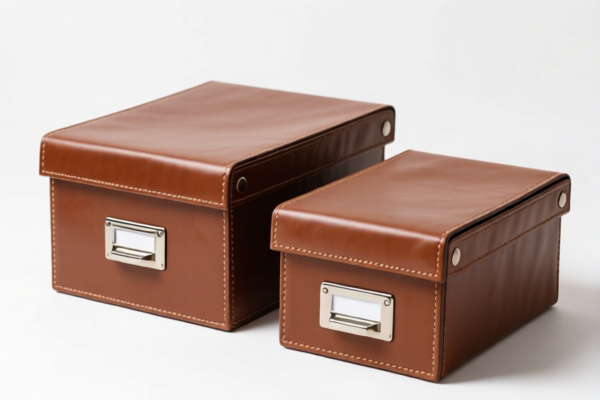
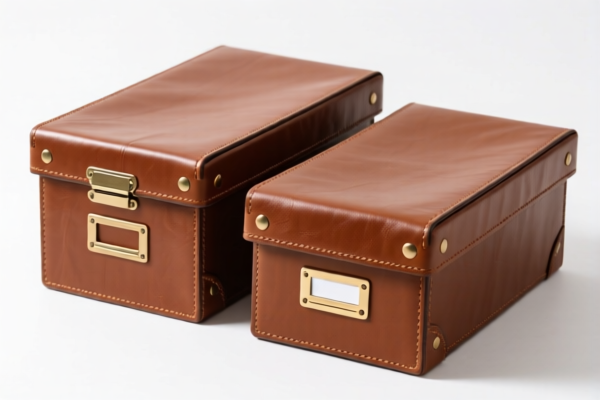
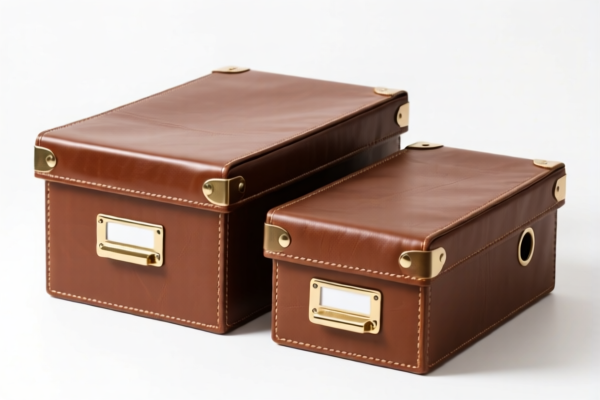

AI Analysis
📂 Artificial Leather File Box (Classification & Duty Guide)
🌐 HS Code Reference & Customs Clearance Strategy | 2024-2025 Latest Tariff Analysis | Professional-Level Clearance Tactics
📌 I. Product Definition & Classification: Do You Really Know "Artificial Leather File Box"?
Artificial leather file boxes are organizational tools used for storing documents, contracts, or stationery. In international trade, despite the material being "artificial leather" (often PVC, PU, or microfiber), they are primarily classified under Chapter 42 (Articles of Leather; Saddlery and Harness) due to their function and construction, rather than Chapter 39 (Plastics).
The classification hinges on whether the item is viewed as a "general article of leather" (broad category) or a "specific container" (specific use case). This distinction significantly impacts the tax burden due to the layered tariffs applied to Chinese-origin goods.
⚠️ Key Distinction Point:
- If the item is treated as a general accessory or miscellaneous leather good → Classified under 4205.00
- If the item is treated as a specific container/case for documents → Classified under 4202
- Note: Despite being "artificial," these goods fall under Chapter 42 because Chapter 46 (Plastic materials) excludes articles of a kind usually made of leather, even if synthetic.
📦 2. HS Code Classification Details (Latest Tariff Concordance)
| HS Code | Product Description | Application Scenario | Classification Logic |
|--------|--------------------------|--------------------------|
| 4205.00.80.00 | Leather articles, including artificial leather file boxes, classified under other leather articles. | General organizational files, generic document holders, broad-category leather goods. | Broad Category: Treated as "Other" leather articles. |
| 4202.31.60.00 | Similar containers of leather, suitable for storage purposes of artificial leather file boxes. | Specific storage containers, document cases,收纳 (storage-focused) design. | Specific Container: Treated as a "pouch/case" for specific utility. |
| 4205.00.10.00 | Leather articles, including artificial leather file boxes, conforming to other leather article classifications. | General file boxes, generic storage solutions, non-specialized leather goods. | Broad Category: Similar to 4205.80 but potentially different sub-heading interpretation. |
| 4202.39.90.00 | Leather containers, suitable for carrying or storing artificial leather file boxes. | Portable document carriers, carrying cases, high-end storage boxes. | High-End Container: Treated as a specialized carrying case with higher base duty. |
🔍 Critical Reminder:
- "Artificial Leather" is Key: Even if made of PVC/PU, if the texture, use, and appearance resemble leather, it stays in Chapter 42.
- 4202 vs. 4205: Items falling under 4202 are seen as "containers" (cases/pouches), while 4205 items are seen as "accessories" or "miscellaneous articles." The 4202 codes often carry higher base duties.
💰 3. 2024-2025 Latest Tariff Rate Breakdown (Including Additional Duties & Policy Surcharges)
✅ Applicable Country: United States (US)
✅ Origin: China (CN)
✅ Effective Date: Ongoing (Post-Section 301 & 122 Measures)
🎯 1. 4205.00.80.00 & 4205.00.10.00 —— General Leather Articles
| Item | Content |
|---|---|
| Base Tariff Rate | 0.0% (ad valorem) |
| Section 301 Surcharge | +25.0% (Added Tariff) |
| Section 122 Surcharge | +10.0% (Trade Facilitation and Enforcement Tariff) |
| Total Tariff Rate | 35.0% |
| Tax Calculation | CIF Value × 35% |
| De Minimis Eligibility | ❌ No (Deny De Minimis) |
| Legal Basis Path | USITC:4205.00 → Section 301: Footnote 9903.88.01 → Section 122: 19 U.S.C. 2433 |
📌 Explanation:
- "Base 0%": Standard Most Favored Nation (MFN) duty is 0% for these broad leather categories.
- "Section 301 (+25%)": Applied to all Chinese-made leather articles under this heading.
- "Section 122 (+10%)": A separate statutory duty on goods from China, effectively adding another 10% on the CIF value.
- Total Impact: 35% is the mandatory landed cost increase. Do not underestimate this; it eats directly into margins.
🎯 2. 4202.31.60.00 —— Specific Storage Containers
| Item | Content |
|---|---|
| Base Tariff Rate | 8.0% (ad valorem) |
| Section 301 Surcharge | +25.0% |
| Section 122 Surcharge | +10.0% |
| Total Tariff Rate | 43.0% |
| Tax Calculation | CIF Value × 43% |
| De Minimis Eligibility | ❌ No (Deny De Minimis) |
| Legal Basis Path | USITC:4202.31.60.00 → Section 301 → Section 122 |
📌 Note:
- Higher Base Duty (8%) shifts the total rate up.
- This classification is used when the file box is explicitly described as a "container" or "case" for specific storage, not just a general leather item.
🎯 3. 4202.39.90.00 —— High-End Carrying/Storage Containers
| Item | Content |
|---|---|
| Base Tariff Rate | 20.0% (ad valorem) |
| Section 301 Surcharge | +25.0% |
| Section 122 Surcharge | +10.0% |
| Total Tariff Rate | 55.0% |
| Tax Calculation | CIF Value × 55% |
| De Minimis Eligibility | ❌ No (Deny De Minimis) |
| Legal Basis Path | USITC:4202.39.90.00 → Section 301 → Section 122 |
📌 Warning:
- This is the highest risk category.
- If customs views your file box as a "specialized carrying case" (e.g., briefcase-style, hard-shell, or high-value storage), they may apply this code.
- 55% Total Duty is extremely high and may render the product uncompetitive without strategic sourcing adjustments.
🛠️ 4. Customs Clearance Operational Advice (Practical Pitfall Avoidance Guide)
✅ 1. Required Documentation Checklist (Non-negotiable)
| Document | Must Provide | Explanation |
|---|---|---|
| ✅ Product Specification Sheet | ✔️ | Detailed description of material (e.g., "PVC Artificial Leather"), dimensions, and interior structure. |
| ✅ Product Photos | ✔️ | Clear images of the exterior, interior, zippers/buttons, and any branding. |
| ✅ Commercial Invoice | ✔️ | Must explicitly state "Artificial Leather File Box" or "Document Organizer". Avoid vague terms like "Leather Bag." |
| ✅ Packing List | ✔️ | Clearly define quantities and weights. |
| ✅ Proof of Composition | ✔️ | If challenged, a lab test report confirming "Synthetic Leather" (not genuine) helps avoid misclassification under higher genuine leather duties, though Chapter 42 applies to both. |
| ✅ Origin Certificate | ✔️ | Required to prove Chinese origin for Section 122/301 application. |
✅ 2. Declaration Strategy (Key Mantra)
🔥 "Define Function, Clarify Material, Avoid 'Container' Trap if Possible!"
| Scenario | Correct Declaration Approach | Incorrect Approach |
|---|---|---|
| General File Box (Soft, foldable, generic) | Declare under 4205.00 (Base 0%) | Declare as "Bag" or "Pouch" → Risk 4202 (Base 8%+) |
| Rigid Document Case (Box-like, structured) | Declare under 4202.39 (Base 20%) | Declare as "File" → Risk of reclassification and penalties |
| OEM Custom File Box | Provide design drawings + sample photo | Vague description "Leather accessory" → Customs delay |
| Multi-pocket Organizer | Describe as "File Organizer with pockets" | Describe as "Wallet" or "Case" → Misclassification risk |
✅ 3. Special Circumstances Handling
| Situation | Handling Advice |
|---|---|
| Mixed Shipments (Files + Accessories) | Declare the file box as the primary good. Attachments (e.g., pens, clips) should be listed separately if their value is significant, but keep the file box as the main HS Code. |
| High-Value "Luxury" File Boxes | If the item has metal hardware, branded logos, or premium packaging, customs may scrutinize it more heavily. Ensure the description is accurate to avoid being deemed "luxury goods" with different reporting requirements. |
| Section 301 Exclusions | ❌ Note: Most leather articles from China are NOT eligible for Section 301 exclusions. Assume 35%-55% duty is permanent. |
| De Minimis (800 USD) | ❌ Not Applicable. Even small shipments of Chinese-origin artificial leather file boxes are subject to duty. Do not rely on de minimis exemption. |
🌍 5. Global Market Clearance Comparison (2024-2025)
| Country/Region | Recommended HS Code | Estimated Duty | Certification Requirements | Notes |
|---|---|---|---|---|
| 🇺🇸 United States | 4205.00.80.00 |
35.0% | None specific, but accurate description is key | High duty due to Sec 301 + Sec 122. |
| 🇨🇳 China (Import) | 4205.00.80.00 |
~8-10% | CE/RoHS (if applicable) | Lower base duty, but check latest FTAs. |
| 🇪🇺 European Union | 4205.00.00 |
6.5% - 12% | REACH (Chemical compliance) | No Section 301 equivalent, but REACH is strict for PVC/PU. |
| 🇬🇧 United Kingdom | 4205.00.00 |
6.5% - 12% | UKCA Mark (if applicable) | Post-Brexit rules apply. |
| 🇨🇦 Canada | 4205.00.00 |
15% - 20% | CBSA Declaration | No major surcharges like US, but standard tariff is higher. |
📌 Conclusion:
- The US market is the most expensive for these goods due to the叠加 (stacking) of Section 301 (25%) and Section 122 (10%) on top of base duties.
- EU/UK have standard duties but strict chemical regulations (REACH) for artificial leather (PVC/PU).
- China has moderate duties.
📌 6. Common Errors & Pitfall Guide (Lessons from Experience)
❌ Error 1: Classifying as "Plastic Articles" (Chapter 39)
👉 Consequence: Wrong HS Code. Even if made of PVC, if it's a "leather-like" article, it goes to Chapter 42. Misclassification leads to penalties and back-taxes.
❌ Error 2: Using "Leather Bag" as the description
👉 Consequence: Customs may classify it under 4202.31 (Pouch/Case) instead of 4205 (Other), increasing base duty from 0% to 8%.
👉 Fix: Use "File Box" or "Document Organizer" to align with 4205 if structurally appropriate.
❌ Error 3: Ignoring Section 122 (10%)
👉 Consequence: Underestimating landed cost. Many importers calculate only Section 301 (25%) + Base, forgetting the extra 10% statutory duty.
👉 Fix: Always budget for Base + 35% (if 4205) or Base + 35% (if 4202 has base, add 35% on top? No, Sec 301 and 122 are usually additive on the dutiable value). Correction: Sec 301 and 122 are both applied to the dutiable value. So Base + 25% + 10% = Base + 35%.
❌ Error 4: Assuming "Artificial" means "Plastic" tariff
👉 Consequence: Applying Chapter 39 duties (which may be lower or higher, but wrong).
👉 Fix: Remember: Chapter 42 covers Artificial Leather if the article is of a kind usually made of leather.
✅ Correct Declaration Example:
"Artificial Leather File Box, PVC Material, Foldable, with Internal Pockets, Model XYZ, Made in China"
🎯 7. Conclusion: Professional Declaration, Cost Control, Efficiency!
🎯 Remember the Mantra:
🔹 "Chapter 42 for Leather-Like Goods, Not Plastic!"
🔹 "Base 0% + 25% Sec301 + 10% Sec122 = 35% Minimum for General Files!"
🔹 "Don't declare as 'Case' if you can declare as 'Article' to save Base Duty!"
📌 Pro Tip:
If you are importing to the US, pre-classify your goods with a licensed customs broker. Request a Pre-Ruling if the item is borderline between 4205 and 4202. A few hundred dollars in legal fees can save thousands in unexpected duties.
📣 Immediate Action:
📞 Contact your customs broker + Provide Product Photos + Verify HS Code
4205.00.80.00vs4202.39.90.00
🚀 Ensure your commercial invoice is precise to avoid customs scrutiny!
✨ Professional Clearance Starts with Accurate Classification!
💼 Every percent of duty saved is pure profit!
Customer Reviews
About HS Code Classification
The Harmonized System (HS) is an internationally standardized nomenclature developed by the World Customs Organization (WCO) to classify traded products. Over 200 countries use the HS system as the basis for customs tariffs, trade statistics, and import/export regulations.
Each HS code follows a hierarchical structure:
- Chapter (2 digits) — Broad category of goods (e.g., Chapter 84: Machinery and Mechanical Appliances)
- Heading (4 digits) — More specific grouping within the chapter
- Subheading (6 digits) — Internationally standardized breakdown, used by all WCO member countries
- National subdivisions (8-10 digits) — Country-specific extensions for further classification, such as US HTSUS 10-digit codes
Correct HS code classification is essential for smooth customs clearance, accurate duty payment, and compliance with trade regulations. Misclassification can lead to customs delays, overpayment of duties, or penalties.
When importing from CN to US, the applicable tariff rates may include:
- Most-Favored-Nation (MFN) rate — The standard duty rate applied to WTO members
- General rate — Applied to countries without trade agreements
- Trade remedy duties — Additional tariffs such as Section 301 (anti-dumping), Section 232 (national security), or countervailing duties
The information provided on this page is for reference purposes only. For official classification, please consult with your local customs authority or a licensed customs broker.