Artificial Leather Medical Accessories
CN → US| HS Code | Tariff Rate | Origin | Destination | Doc |
|---|---|---|---|---|
| 9402900010 | 10.0% | CN | US | Official Doc |
| 9402900020 | 10.0% | CN | US | Official Doc |
| 3926201010 | 10.0% | CN | US | Official Doc |
| 3926204010 | 16.5% | CN | US | Official Doc |
Product Images


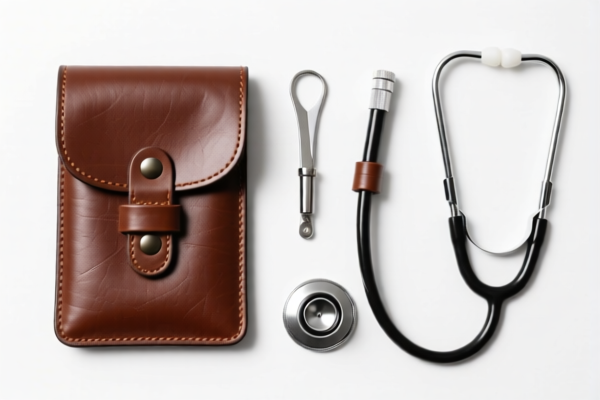
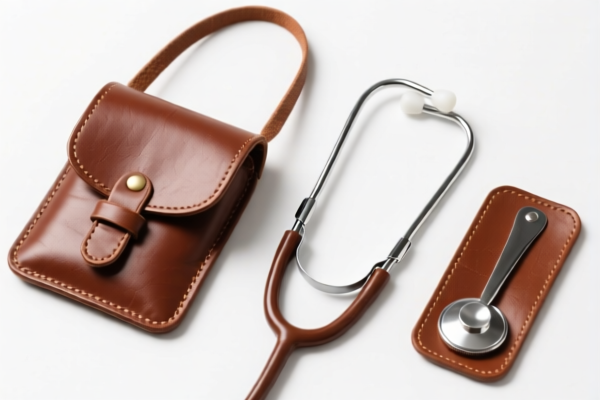
AI Analysis
🏥 Artificial Leather Medical Accessories (Medical Supplies)
🌐 HS Code Reference & Customs Clearance Guide | 2024 Latest Tariff Analysis | Professional Clearance Strategy
📌 I. Product Definition & Classification: What Exactly is "Artificial Leather Medical Accessories"?
Artificial Leather (Synthetic Leather) is a plastic-based material, primarily composed of synthetic resins (such as PVC, PU, or polyurethane). In international trade, when this material is processed into accessories or components for medical devices, it falls into specific categories depending on its structural integration and primary function.
The classification logic hinges on two factors: 1. Material Composition: Is it primarily a plastic product (Chapter 39) or a textile/plastic composite (Chapter 59)? 2. Form Factor: Is it a standalone plastic item, a specialized coated fabric, or a part of a larger assembly?
⚠️ Key Distinction:
- If the item is a pure plastic component (e.g., molded straps, clips, covers) → Chapter 39
- If the item is a fabric/coated material used as a lining or cover → Chapter 59
- If the item is considered a part of a specific medical apparatus (not listed elsewhere) → Chapter 42 (Note: Chapter 42 is less common for pure medical parts but appears in data for "other accessories")
📦 II. HS Code Classification Details (Based on Provided Data)
| HS Code | Product Description | Logic/Summary | Material/Form |
|---|---|---|---|
3926.90.35.00 |
Other articles of plastics, including accessories | "Artificial leather belongs to plastic/synthetic resin materials. As accessories, it falls under 'other articles' category." | Plastic/Synthetic Resin + Accessory |
4202.12.89.80 |
Articles of apparel or clothing accessories, of sheeting of plastics | "Item form is an accessory, fitting the characteristics of parts/components in 'other categories'. Artificial leather belongs to synthetic materials." | Synthetic Material + Accessory |
5903.10.20.10 |
Textiles impregnated, coated, covered or laminated with plastics: PVC | "Inferred material is PVC-related based on artificial leather. Product category is accessory/component." | PVC Plastic Coated + Accessory |
5903.10.20.90 |
Other textiles impregnated, coated, covered or laminated with plastics (PVC) | "Matches material (plastic/synthetic) and form (accessory/component), fitting the 'catch-all' category inference logic." | PVC Plastic Coated + Accessory |
3926.90.33.00 |
Other articles of plastics, including accessories | "Artificial leather belongs to plastic/synthetic resin materials. Accessories fit the definition of 'other articles' and spare parts." | Plastic/Synthetic Resin + Accessory |
🔍 Critical Insight:
- Chapter 39 (3926.xxxx): Focuses on the material nature (Plastic/Synthetic Resin). This is often the most direct classification for rigid or semi-rigid artificial leather components. - Chapter 59 (5903.xxxx): Focuses on the manufacturing process (Coated/Impregnated Textiles). If the "artificial leather" is technically a fabric base coated with PVC, this code applies. - Chapter 42 (4202.xxxx): Focuses on the end-use form (Accessories). This is a broader, sometimes riskier classification if not strictly defined as "articles of apparel" or similar.
💰 III. 2024 Latest Tariff Rate Breakdown (Including Additional Duties & Policy Surcharges)
✅ Applicable Country: United States (US)
✅ Origin: China (CN)
✅ Effective Time: Current Trade Policy (Including Section 301 & IEEPA)
🎯 1. 3926.90.35.00 —— Plastics: Other Articles (High Risk)
| Item | Content |
|---|---|
| Basic Duty | 6.5% |
| Section 301 Surcharge | 7.5% |
| Section 122 (IEEPA) Surcharge | 10% |
| Total Tax Rate | 24.0% |
| Calculation | CIF Value × 24% |
| De Minimis Exemption | ❌ Not Available |
| Legal Basis Path | USITC:3926.90.35.00 → Section 301: 7.5% → IEEPA 122: 10% |
📌 Explanation:
- This code attracts all three layers of tariffs: Basic, Section 301, and the specific 122 Clause (often associated with specific trade remedies or emergency powers). - Total 24% is moderately high but lower than the 52.6% option below.
🎯 2. 4202.12.89.80 —— Accessories: Synthetic Materials (Highest Risk)
| Item | Content |
|---|---|
| Basic Duty | 17.6% |
| Section 301 Surcharge | 25.0% |
| Section 122 (IEEPA) Surcharge | 10% |
| Total Tax Rate | 52.6% |
| Calculation | CIF Value × 52.6% |
| De Minimis Exemption | ❌ Not Available |
| Legal Basis Path | USITC:4202.12.89.80 → Section 301: 25% → IEEPA 122: 10% |
📌 Warning:
- This is the most expensive classification. - The Section 301 surcharge is 25% (maximum tier), plus basic duty and IEEPA. - Avoid this code unless the product is strictly defined as "apparel accessories" or similar, as it significantly impacts profit margins.
🎯 3. 5903.10.20.10 & 5903.10.20.90 —— PVC-Coated Textiles (Optimal Choice?)
| Item | Content |
|---|---|
| Basic Duty | 0.0% |
| Section 301 Surcharge | 25.0% |
| Section 122 (IEEPA) Surcharge | 10% |
| Total Tax Rate | 35.0% |
| Calculation | CIF Value × 35.0% |
| De Minimis Exemption | ❌ Not Available |
| Legal Basis Path | USITC:5903.10.20.xx → Section 301: 25% → IEEPA 122: 10% |
📌 Strategic Note:
- While the Section 301 surcharge is 25% (higher than the 7.5% in code 3926.90.35.00), the Basic Duty is 0%. - Total 35% vs 24%: Wait, 24% is lower. Let's re-evaluate. -3926.90.35.00: 6.5 + 7.5 + 10 = 24% -5903.10.20.xx: 0 + 25 + 10 = 35% - Conclusion:3926.90.35.00is actually the lowest cost option among the high-surtax codes. - However, if3926.90.33.00is applicable, it is even lower (see below).
🎯 4. 3926.90.33.00 —— Plastics: Other Articles (Lowest Cost Option)
| Item | Content |
|---|---|
| Basic Duty | 6.5% |
| Section 301 Surcharge | 0.0% |
| Section 122 (IEEPA) Surcharge | 10% |
| Total Tax Rate | 16.5% |
| Calculation | CIF Value × 16.5% |
| De Minimis Exemption | ❌ Not Available |
| Legal Basis Path | USITC:3926.90.33.00 → Section 301: 0% → IEEPA 122: 10% |
📌 Major Advantage:
- Total Tax: 16.5% (The lowest in the dataset). - Section 301 Surcharge is 0%! This is a critical difference from the other 3926 code (35.00). - Why? Subheading.33may fall under a different exemption list or trade remedy exclusion compared to.35. - Recommendation: Prioritize3926.90.33.00if the product definition allows.
🛠️ IV. Customs Clearance Practical Advice (Pitfall Avoidance Guide)
✅ 1. Document Preparation Checklist (Non-negotiable)
| Document | Required? | Description |
|---|---|---|
| ✅ Product Specification Sheet | ✔️ | Must detail: Material composition (e.g., "PVC-Coated Polyester"), Dimensions, Intended Medical Use. |
| ✅ Material Safety Data Sheet (MSDS) | ✔️ | Critical for medical accessories. Confirms chemical composition (PVC/PU content). |
| ✅ FDA Establishment Registration | ✔️ | If the accessory is a medical device part, US FDA registration may be required. |
| ✅ Commercial Invoice | ✔️ | Clearly state: "Artificial Leather Medical Accessory, Not for Apparel" (to avoid Chapter 42 if possible). |
| ✅ Certificate of Origin | ✔️ | Proof of China origin for duty calculation. |
| ✅ Packing List | ✔️ | Ensure quantities match invoice exactly. |
✅ 2. Classification Strategy & Tips
🔥 “Material First, Form Second, Tax Last!”
| Scenario | Recommended HS Code | Reason |
|---|---|---|
| Rigid/Semi-rigid Plastic Parts (e.g., straps, clips, covers) | 3926.90.33.00 |
Lowest Tax (16.5%). Fits "Plastic Articles" perfectly. Avoids 25% Section 301. |
| Flexible Coated Fabric/Sheets (e.g., roll goods, thin sheets) | 5903.10.20.xx |
If it’s truly a textile coated with PVC. Higher tax (35%) but may be technically more accurate. |
| Complex Assembled Accessories (e.g., with metal hardware, buttons) | 3926.90.35.00 |
If the item is a composite accessory. Tax is 24%. |
| Apparel-like Accessories (e.g., medical belts, bags) | 4202.12.89.80 |
AVOID. Tax is 52.6%. Only use if legally required by definition. |
📌 Key Tip:
- Argue for Chapter 39: Emphasize that "Artificial Leather" is a plastic product (Chapter 39 heading note) rather than a textile or apparel accessory. This opens the door for the 0% Section 301 rate under3926.90.33.00.
✅ 3. Special Case Handling
| Scenario | Handling Advice |
|---|---|
| Medical Device Certification | Ensure the accessory is declared as a "Part of" or "Accessory to" an FDA-registered medical device if applicable. This doesn't change HS code but affects regulatory clearance. |
| Composite Materials | If the artificial leather has a fabric backing, provide the percentage composition. If plastic weight > textile weight, Chapter 39 is stronger. |
| Customs Audit | Keep samples and photos. Customs may classify "artificial leather" as "plastic sheeting" if it’s not sewn into a final product. |
🌍 V. Global Market Comparison (2024/2025 Context)
| Country/Region | Recommended HS Code | Est. Duty (China Origin) | Notes |
|---|---|---|---|
| 🇺🇸 USA | 3926.90.33.00 |
16.5% | Best option. Avoids 25% Section 301. |
| 🇺🇸 USA | 4202.12.89.80 |
52.6% | Worst option. High penalty. |
| 🇪🇺 EU | 3926.90.59 (Est.) |
~6.5% | EU does not have Section 301. Tariffs are lower. |
| 🇨🇳 China | 3926.90.33.00 |
6.5% | Import duty only. No surcharges. |
📌 Conclusion:
- US Market is the most critical: Tariff structure varies wildly (16.5% vs 52.6%). - Precision in Declaration: Using3926.90.33.00can save 36.1% in total taxes compared to4202.12.89.80.
📌 VI. Common Errors & Pitfall Guide (Blood & Tears Lessons)
❌ Error 1: Classifying as Chapter 42 (4202)
👉 Consequence: Tax jumps from 16.5% to 52.6%.
👉 Reason: "Accessory" is too vague. Customs assumes apparel/accessories unless proven otherwise.
❌ Error 2: Misidentifying Material
👉 Consequence: If declared as "Textile" but is "Plastic", customs may reclassify and assess Section 301.
👉 Fix: Provide MSDS proving PVC/PU content.
❌ Error 3: Ignoring Section 122
👉 Consequence: All codes in the dataset have a 10% IEEPA surcharge.
👉 Fix: Budget for this 10% in all scenarios. It is unavoidable for China-origin goods under current policy.
✅ Correct Declaration Example:
"Artificial Leather Accessory for Medical Devices, Material: PVC-Coated Polyester, Not for Apparel, HS Code: 3926.90.33.00"
🎯 VII. Conclusion: Professional Clearance, Cost Optimization!
🎯 Remember the Golden Rule:
🔹 "Plastic First, Textile Second, Apparel Last!"
🔹 "Chapter 39 saves you 25% (Section 301) if you pick .33!"
🔹 "Always declare material composition clearly to avoid 52.6% trap!"
📌 Pro Tip:
- If your product is rigid or semi-rigid, strongly advocate for 3926.90.33.00.
- If it is flexible sheets, consider 5903.10.20.xx but be prepared for 35% tax.
- NEVER use 4202.12.89.80 unless legally mandated.
📣 Immediate Action:
📞 Consult with a licensed customs broker.
📄 Submit an Advance Ruling Request if the product is high-value.
🚀 Optimize your HS Code today to save thousands in duties!
✨ Precise Classification Starts Here!
💼 Every Dollar Saved in Duty is Pure Profit!
Customer Reviews
About HS Code Classification
The Harmonized System (HS) is an internationally standardized nomenclature developed by the World Customs Organization (WCO) to classify traded products. Over 200 countries use the HS system as the basis for customs tariffs, trade statistics, and import/export regulations.
Each HS code follows a hierarchical structure:
- Chapter (2 digits) — Broad category of goods (e.g., Chapter 84: Machinery and Mechanical Appliances)
- Heading (4 digits) — More specific grouping within the chapter
- Subheading (6 digits) — Internationally standardized breakdown, used by all WCO member countries
- National subdivisions (8-10 digits) — Country-specific extensions for further classification, such as US HTSUS 10-digit codes
Correct HS code classification is essential for smooth customs clearance, accurate duty payment, and compliance with trade regulations. Misclassification can lead to customs delays, overpayment of duties, or penalties.
When importing from CN to US, the applicable tariff rates may include:
- Most-Favored-Nation (MFN) rate — The standard duty rate applied to WTO members
- General rate — Applied to countries without trade agreements
- Trade remedy duties — Additional tariffs such as Section 301 (anti-dumping), Section 232 (national security), or countervailing duties
The information provided on this page is for reference purposes only. For official classification, please consult with your local customs authority or a licensed customs broker.