Artificial Leather Outdoor Accessories
CN → US| HS Code | Tariff Rate | Origin | Destination | Doc |
|---|---|---|---|---|
| 5903102010 | 35.0% | CN | US | Official Doc |
| 5903102090 | 35.0% | CN | US | Official Doc |
| 3926903300 | 16.5% | CN | US | Official Doc |
| 4202228980 | 52.6% | CN | US | Official Doc |
| 3926903500 | 24.0% | CN | US | Official Doc |
Product Images
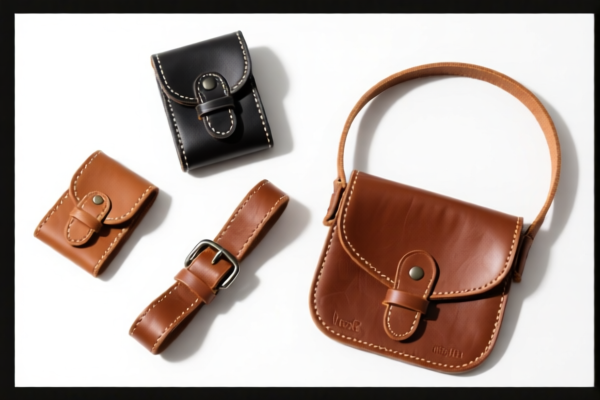
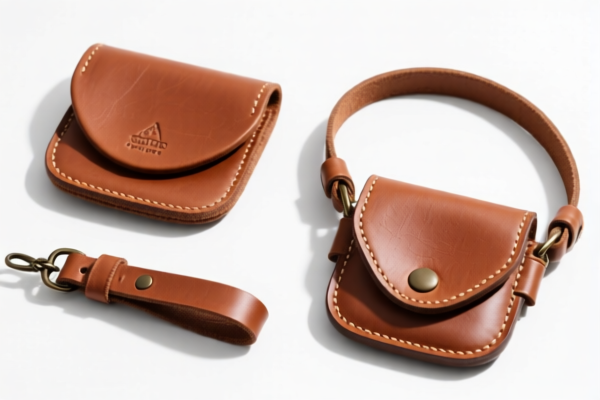
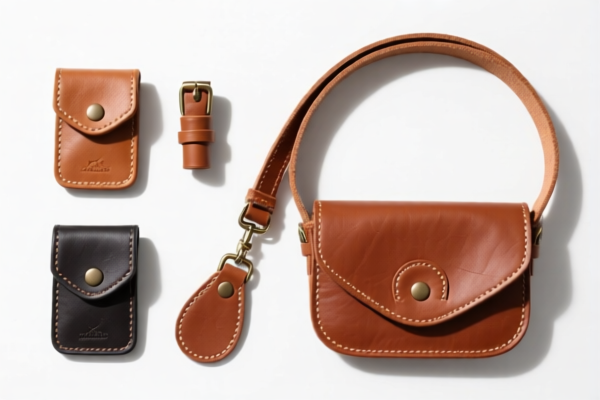
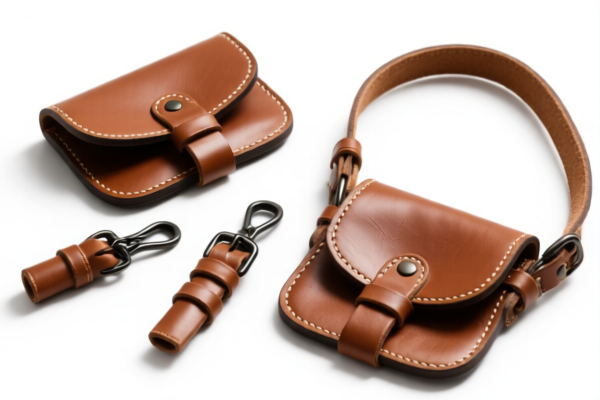
AI Analysis
🌿 Artificial Leather Outdoor Accessories (Outdoor Gear & Components)
🌐 HS Code Reference & Clearance Guide | 2026 Latest Tariff Analysis | Professional Customs Strategy
📌 I. Product Definition & Classification: What Exactly Is "Artificial Leather Outdoor Accessories"?
Artificial Leather Outdoor Accessories refer to non-woven or coated fabric products (primarily PVC, PU, or TPU) designed for outdoor use. In international trade, these items are often categorized ambiguously because they blend characteristics of plastics, textiles, and bag parts.
Key Classification Logic: - Plastic-Based (PVC/PU): If the backing is heavily coated or impregnated with plastic, it often falls under Chapter 39 or Chapter 59. - Textile-Based: If the base is fabric with a light plastic coating, it may fall under Chapter 42 (Articles of leather). - Accessory Nature: Since these are "accessories" (not final consumer bags or furniture), they are often classified as "Other" or "Parts" in their respective chapters.
⚠️ Critical Distinction:
- If the item is a finished bag case → Likely 4202.
- If the item is a raw material sheet or component part (e.g., straps, covers, patches) → Likely 3926 or 5903.
- Misclassification Risk: Declaring a plastic-covered fabric as "textile" or vice versa can lead to massive tariff differences (from 0% to 52.6%).
📦 II. HS Code Classification Details (2026 Latest Tariff Authority Comparison)
Based on the provided data, here are the 5 most likely HS Codes for Artificial Leather Outdoor Accessories, ranked by tax efficiency and logical fit.
| HS Code | Product Description | Application Scenario | Tax Efficiency |
|---|---|---|---|
3926.90.33.00 |
Other articles of plastic / Synthetic Resins | Plastic-coated outdoor gear parts, PVC straps, plastic leather components | ⭐⭐⭐⭐⭐ (Lowest Tax) |
3926.90.35.00 |
Other articles of plastic / Synthetic Resins | General plastic accessories, non-specific plastic outdoor parts | ⭐⭐⭐⭐ (Moderate Tax) |
5903.10.20.10 |
Textile fabrics impregnated with PVC | PVC-coated fabric accessories, outdoor tent parts, tarpaulin components | ⭐ (Highest Tax) |
5903.10.20.90 |
Textile fabrics impregnated with PVC (Other) | Fallback category for PVC textile accessories | ⭐ (Highest Tax) |
4202.22.89.80 |
Articles of leather / Synthetic Materials | Finished accessory cases, bags, or components made of synthetic leather | ⭐⭐⭐ (High Tax) |
🔍 Key Insight:
- Chapter 39 (3926...) offers the lowest base tariff (6.5%), making it the most cost-effective for plastic-based accessories.
- Chapter 59 (5903...) has a 0% base tariff but is hit hard by additional duties, resulting in 35% total.
- Chapter 42 (4202...) is for "articles of leather" but carries the highest base tariff (17.6%), leading to a 52.6% total tax rate.
💰 III. 2026 Latest Tariff Rate Breakdown (Including Surcharges & Policies)
✅ Applicable Country: United States (US)
✅ Origin: China (CN)
✅ Effective Date: November 10, 2025 (and subsequent imports)
🎯 1. 3926.90.33.00 —— Best Value: Plastic Accessories
| Item | Detail |
|---|---|
| Base Tariff | 6.5% |
| USITC Surcharge (Section 301) | 0.0% |
| IEEPA Surcharge (122 Clause) | +10% |
| Total Tax Rate | 16.5% |
| Calculation | CIF Value × 16.5% |
| De Minimis Eligibility | ❌ No (Denied due to IEEPA) |
| Legal Basis Path | USITC:3926.90.33.00 → IEEPA:9903.01.24 |
📌 Why it’s great: This is the lowest tax option. If your accessory can be defined as "an article of plastic" (e.g., a hard plastic cover, PVC strap, or synthetic resin component), this is your best choice.
🎯 2. 3926.90.35.00 —— Moderate: General Plastic Parts
| Item | Detail |
|---|---|
| Base Tariff | 6.5% |
| USITC Surcharge (Section 301) | +7.5% |
| IEEPA Surcharge (122 Clause) | +10% |
| Total Tax Rate | 24.0% |
| Calculation | CIF Value × 24.0% |
| De Minimis Eligibility | ❌ No |
| Legal Basis Path | USITC:3926.90.35.00 → IEEPA:9903.01.24 |
📌 Why it’s moderate: Slightly higher due to a 7.5% Section 301 surcharge. Use this if the product doesn't fit
33.00but is still clearly plastic-based.
🎯 3. 5903.10.20.10 & 5903.10.20.90 —— PVC Textile Accessories
| Item | Detail |
|---|---|
| Base Tariff | 0.0% |
| USITC Surcharge (Section 301) | +25.0% |
| IEEPA Surcharge (122 Clause) | +10% |
| Total Tax Rate | 35.0% |
| Calculation | CIF Value × 35.0% |
| De Minimis Eligibility | ❌ No |
| Legal Basis Path | USITC:5903.10.20.10/90 → USITC:9903.88.01 → IEEPA:9903.01.24 |
📌 Why it’s expensive: Although the base tariff is 0%, the 25% Section 301 tariff kicks in hard. This is common for PVC-coated fabrics (e.g., outdoor covers, tent parts). Avoid if possible.
🎯 4. 4202.22.89.80 —— Synthetic Leather Bags/Accessories
| Item | Detail |
|---|---|
| Base Tariff | 17.6% |
| USITC Surcharge (Section 301) | +25.0% |
| IEEPA Surcharge (122 Clause) | +10% |
| Total Tax Rate | 52.6% |
| Calculation | CIF Value × 52.6% |
| De Minimis Eligibility | ❌ No |
| Legal Basis Path | USITC:4202.22.89.80 → USITC:9903.88.01 → IEEPA:9903.01.24 |
📌 Why it’s the worst: This is for finished articles (like bags) made of synthetic leather. The high base tariff (17.6%) plus 25% Section 301 makes it the most expensive option. Only use if the item is a complete bag/case, not a raw accessory.
🛠️ IV. Clearance Practical Advice (Real-World Pitfall Guide)
✅ 1. Document Checklist (Must-Haves)
| Document | Required | Notes |
|---|---|---|
| ✅ Product Spec Sheet | ✔️ | Must specify material composition (e.g., "60% PVC, 40% Polyester") |
| ✅ Material Certificate | ✔️ | Proves if it's "Plastic" (Ch 39) or "Textile" (Ch 59/60) |
| ✅ Product Photos | ✔️ | Show the item’s function (e.g., is it a strap, a cover, or a bag?) |
| ✅ Commercial Invoice | ✔️ | Clearly state "Artificial Leather Accessory" or "PVC Coated Fabric Part" |
| ✅ Customs Declaration | ✔️ | Accurate HS Code selection based on material |
✅ 2. Classification Strategy (Key Tips)
🔥 "Plastic First, Fabric Second, Bag Last!"
| Scenario | Recommended HS Code | Why? |
|---|---|---|
| Hard plastic parts or PVC straps | 3926.90.33.00 |
Lowest tax (16.5%), defined as plastic articles |
| PVC-coated fabric sheets or covers | 5903.10.20.10 |
Defined as textile impregnated with plastic (35% tax) |
| Finished synthetic leather bags | 4202.22.89.80 |
Defined as article of leather (52.6% tax - Avoid if possible) |
| Mixed material accessories | 3926.90.35.00 |
Fallback for plastic-heavy items (24% tax) |
📌 Pro Tip:
- If the product is more than 50% plastic by weight, argue for Chapter 39.
- If the product is fabric with a light coating, it may be Chapter 60 (not in data, but check if available).
- Never declare a "plastic accessory" as "bag" (4202) unless it is a finished bag.
✅ 3. Special Cases
| Case | Advice |
|---|---|
| PU Leather (Polyurethane) | Often treated as Plastic (Ch 39) if dense, or Textile (Ch 59) if fabric-backed. Test density! |
| Outdoor Tent Parts | If it’s a PVC sheet, use 5903.10.20.10. If it’s a plastic buckle/clip, use 3926.90.33.00. |
| OEM Custom Parts | Provide design drawings to prove it’s an accessory/part, not a final consumer good. |
| Small Sample Shipments | Still subject to 122 Clause (10%) if over de minimis threshold. |
🌍 V. Global Market Comparison (2026)
| Country/Region | Recommended HS Code | Total Tax (CN Origin) | Notes |
|---|---|---|---|
| 🇺🇸 USA | 3926.90.33.00 |
16.5% | Best option for plastic parts |
| 🇺🇸 USA | 5903.10.20.10 |
35.0% | High tax for PVC textiles |
| 🇪🇺 EU | 3926.90.33.00 |
~6-9% | Lower base tariffs, no Section 301 |
| 🇨🇳 China | 3926.90.33.00 |
6.5% | Import tariff only |
| 🇬🇧 UK | 3926.90.33.00 |
~6-9% | Post-Brexit tariff structure |
📌 Conclusion:
- USA is the toughest market due to Section 301 and IEEPA tariffs.
- EU and UK offer significantly lower tariffs for the same products.
- Strategic Shift: If shipping to the US, try to classify under Chapter 39 (3926) to save ~20-35% in taxes compared to Chapter 59 or 42.
📌 VI. Common Mistakes & Pitfalls (Lessons Learned)
❌ Mistake 1: Declaring a PVC-coated fabric strap as a Bag Part (4202)
👉 Result: Tax jumps from 16.5% to 52.6%. Loss: 36%!
❌ Mistake 2: Declaring a plastic buckle as Textile Accessory (5903)
👉 Result: Tax jumps from 16.5% to 35.0%. Loss: 18.5%!
❌ Mistake 3: Using "Artificial Leather" as the only description
👉 Result: Customs may reject or reclassify. Fix: Specify "PVC Coated Polyester" or "Polyurethane Synthetic Leather."
❌ Mistake 4: Ignoring the 122 Clause (10%)
👉 Result: Under-declaring tax liability. Fix: Always include the 10% IEEPA surcharge in cost calculations.
✅ Correct Approach:
"PVC-Coated Polyester Strap, Outdoor Equipment Accessory, Plastic-Based Component"
→ Use3926.90.33.00(16.5%)
🎯 VII. Conclusion: Smart Classification Saves Money!
🎯 Remember the Rule:
🔹 "Plastic is cheap, Fabric is medium, Leather is dear!"
🔹3926= 16.5% |5903= 35.0% |4202= 52.6%
📌 Pro Tip:
If your product is outdoor gear, consider if it can be defined as a plastic article (3926) rather than a textile or leather article. This can save you thousands of dollars per container.
📣 Immediate Action:
📞 Consult a customs broker to verify material composition.
📄 Submit Pre-Ruling if possible.
🚀 Optimize your supply chain for 16.5% tax efficiency!
✨ Smart Customs, Smarter Profits!
💼 Every percentage point counts!
Customer Reviews
About HS Code Classification
The Harmonized System (HS) is an internationally standardized nomenclature developed by the World Customs Organization (WCO) to classify traded products. Over 200 countries use the HS system as the basis for customs tariffs, trade statistics, and import/export regulations.
Each HS code follows a hierarchical structure:
- Chapter (2 digits) — Broad category of goods (e.g., Chapter 84: Machinery and Mechanical Appliances)
- Heading (4 digits) — More specific grouping within the chapter
- Subheading (6 digits) — Internationally standardized breakdown, used by all WCO member countries
- National subdivisions (8-10 digits) — Country-specific extensions for further classification, such as US HTSUS 10-digit codes
Correct HS code classification is essential for smooth customs clearance, accurate duty payment, and compliance with trade regulations. Misclassification can lead to customs delays, overpayment of duties, or penalties.
When importing from CN to US, the applicable tariff rates may include:
- Most-Favored-Nation (MFN) rate — The standard duty rate applied to WTO members
- General rate — Applied to countries without trade agreements
- Trade remedy duties — Additional tariffs such as Section 301 (anti-dumping), Section 232 (national security), or countervailing duties
The information provided on this page is for reference purposes only. For official classification, please consult with your local customs authority or a licensed customs broker.