Artificial Leather Placemat
CN → US| HS Code | Tariff Rate | Origin | Destination | Doc |
|---|---|---|---|---|
| 3924901050 | 13.3% | CN | US | Official Doc |
| 3924104000 | 13.4% | CN | US | Official Doc |
| 6302530030 | 28.8% | CN | US | Official Doc |
| 6302593020 | 26.3% | CN | US | Official Doc |
| 3926909989 | 22.8% | CN | US | Official Doc |
Product Images
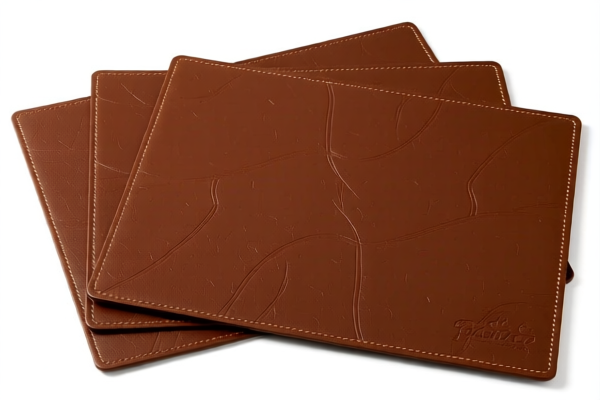
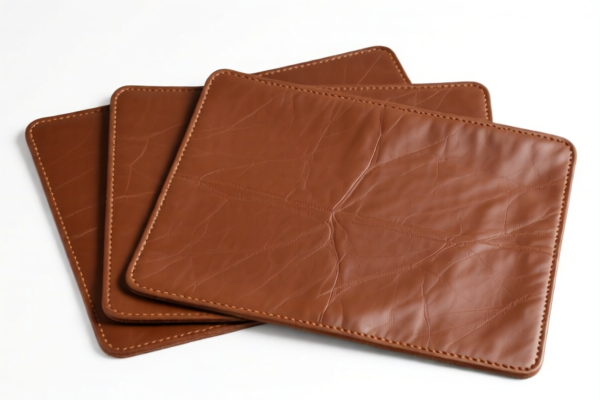


AI Analysis
🍽️ Artificial Leather Placemat: The Ultimate HS Code & Customs Clearance Guide (2026 Edition)
🌐 HS Code Reference & Customs Strategy | 2026 Tariff Deep Dive | Professional Import Solutions
📌 I. Product Definition: What Exactly is an "Artificial Leather Placemat"?
The Artificial Leather Placemat is a decorative table accessory used to protect dining surfaces, define place settings, and add aesthetic value to dining experiences. In international trade, the classification of this product is highly contentious and depends entirely on its material composition and intended use as defined by the Harmonized System (HS).
It falls into two primary categories of classification logic: 1. Plastic/Resin Category (PVC/Vinyl/PU): If the base material is synthetic polymer (plastic), it falls under Chapter 39. 2. Textile Category (Synthetic Fibers): If the base is woven or non-woven synthetic fabric (even if coated with "leather" finish), it falls under Chapter 63.
⚠️ Critical Distinction:
- "Plastic" Logic: The surface is a continuous sheet of PVC, PU, or Vinyl acting as the primary material → HS Code 39xx.xx.
- "Textile" Logic: The product is a fabric with a coating, or the classification follows the "textile rule" for table linens → HS Code 63xx.xx.
Misclassification here can lead to a 15% tariff difference or even trade compliance penalties!
📦 II. HS Code Classification Breakdown (2026 Latest Tariff Reference)
Based on current import regulations (specifically targeting US/China trade dynamics), here is the authoritative breakdown for Artificial Leather Placemats:
| HS Code | Product Description (As per Data) | Material Logic | Primary Category | Total Tax Rate |
|---|---|---|---|---|
3924.90.10.50 |
Plastic tableware; placemats made of synthetic material. | Plastic (Synthetic polymer) | Plastics Tableware | 13.3% |
3924.10.40.00 |
Placemats as "Tableware"; high polymer attribute. | Plastic (High polymer) | Plastics Tableware | 13.4% |
6302.53.00.30 |
Artificial fiber tableware; synthetic material logic. | Textile (Synthetic Fiber) | Textile Table Linens | 28.8% |
6302.59.30.20 |
Other textile materials; kitchen textile category. | Textile (Other Fabric) | Textile Table Linens | 26.3% |
3926.90.99.89 |
Unspecified plastic products; plastic/synthetic description. | Plastic (General) | Other Plastic Articles | 22.8% |
🔍 Key Insight:
- Plastic Codes (39xx): Generally lower base tax (3.3% - 5.3%), but NOT subject to the high textile base rates. - Textile Codes (63xx): Higher base tax (8.8% - 11.3%) and often subject to higher Section 122/Section 301 duties. - The "Unspecified" Trap:3926.90.99.89is a "basket" code with a moderate rate (22.8%) but carries a high risk of audit if the material isn't clearly defined as plastic.
💰 III. 2026 Tariff Rate Breakdown (Detailed Tax Clauses)
✅ Scenario: Importing from China (CN) to United States (US).
✅ Effective Date: Current 2026 Trade Rules (Section 122 & Section 301).
🎯 1. Plastic Category: 3924.90.10.50 & 3924.10.40.00
Best Case Scenario: Lowest Tax Burden
| Tax Component | Rate | Description |
|---|---|---|
| Base Duty (MFN) | 3.3% / 3.4% | Standard Most-Favored-Nation rate for plastic tableware. |
| Section 301 (Additional) | 0.0% | No Section 301 surcharge applied to specific plastic tableware sub-codes in this dataset. |
| Section 122 (Special) | 10.0% | Critical! A specific "122 Clause" tariff applies to these items. |
| TOTAL DUTY | 13.3% / 13.4% | Lowest Risk / Lowest Cost |
📌 Why this matters:
- If your product is clearly a PVC or Vinyl sheet (no fabric backing), use these codes.
- Strategy: The "122 Clause" is the only major tax here. If you can prove it's purely plastic (Chapter 39), you avoid the heavy textile surcharges.
🎯 2. Textile Category: 6302.53.00.30 & 6302.59.30.20
High Cost Scenario: Avoid if possible
| Tax Component | Rate | Description |
|---|---|---|
| Base Duty (MFN) | 8.8% / 11.3% | Higher base rate for textile table linens. |
| Section 301 (Additional) | 7.5% | Heavy Surcharge! Applied due to Section 301 list for textiles. |
| Section 122 (Special) | 10.0% | Also applies to textile tableware. |
| TOTAL DUTY | 26.3% / 28.8% | High Cost! Significant margin erosion. |
📌 Why this happens:
- If the customs officer deems the "leather" coating as secondary to a fabric backing (e.g., polyester felt), the product is treated as a Textile Tablecloth/Placemat.
- Warning: The 7.5% Section 301 tax is the main driver of this high rate.
🎯 3. General Plastic Category: 3926.90.99.89
The "Unspecified" Trap
| Tax Component | Rate | Description |
|---|---|---|
| Base Duty (MFN) | 5.3% | General plastic article rate. |
| Section 301 (Additional) | 7.5% | Applies here as well. |
| Section 122 (Special) | 10.0% | Applies here as well. |
| TOTAL DUTY | 22.8% | Medium-High Cost. Risky for audits. |
📌 Risk: Using "Other plastics" (
99.89) suggests you don't know exactly what your product is. Customs may reject this if a more specific code (like3924) exists.
🛠️ IV. Customs Clearance Action Plan (Practical Tips)
✅ 1. Documentation Checklist (Must Have)
| Document | Requirement | Why It's Critical |
|---|---|---|
| Product Material Spec | ✔️ Mandatory | Must explicitly state: "100% PVC/Vinyl/PU" OR "Polyester Fabric with PVC Coating". |
| Cross-Section Photo | ✔️ Mandatory | Show the layer structure. Is there fabric underneath the "leather"? |
| Declaration of Use | ✔️ Mandatory | State "Dining Table Protection" to justify Chapter 39 (Tableware) vs 63 (Textiles). |
| Commercial Invoice | ✔️ Mandatory | Must match HS Code. If declaring 3924, invoice must say "Plastic Placemat". |
✅ 2. Declaring Strategy: The "Plastic vs. Textile" Battle
🔥 The Golden Rule:
"If it feels like plastic, declare as Plastic (3924). If it has fabric, you pay Textile Tax (6302)."
| Scenario | Recommended HS Code | Tax Impact | Strategy |
|---|---|---|---|
| Solid PVC/Vinyl Sheet | 3924.90.10.50 |
13.3% (Best) | Prove material is monolithic plastic. |
| Fabric Backing + Leather Coat | 6302.53.00.30 |
28.8% (High) | Declare as Textile. No choice if fabric is present. |
| Unclear Material | 3926.90.99.89 |
22.8% | Avoid! Risk of audit. Ask manufacturer for material test. |
✅ 3. Special Notes on "122 Clause"
⚠️ All the HS Codes listed in your data include a "Section 122 Tariff: 10%".
- This is a mandatory surcharge for this specific product category in the 2026 trade environment. - Action: You cannot avoid this 10%. Factor it into your landed cost calculation immediately. - Calculation:Landed Cost = (Product Cost + Duty Base) * 1.10 (122 Clause) + Other Taxes.
🌍 V. Global Market Comparison (US Focus)
| Region | Best HS Code | Estimated Total Duty | Comment |
|---|---|---|---|
| 🇺🇸 USA | 3924.90.10.50 |
13.3% | Only market with the "122 Clause" 10% surcharge. |
| 🇪🇺 EU | 3924.90.10 |
~3-5% | Usually no Section 122 surcharge; lower base rates. |
| 🇨🇦 Canada | 3924.90.10 |
~5-8% | Standard MFN rates, no special 122 clause. |
📌 Conclusion: The US market is the most expensive for Artificial Leather Placemats due to the 10% Section 122 surcharge + Section 301 (for textiles).
📌 VI. Common Pitfalls & How to Avoid Them
❌ Pitfall 1: Calling it "Textile" when it's Plastic
👉 Result: Paying 28.8% instead of 13.3%.
✅ Fix: Provide a material test report proving it is 100% synthetic polymer, not fabric.
❌ Pitfall 2: Using 3926.90.99.89 (General)
👉 Result: 22.8% tax + High Audit Risk.
✅ Fix: Use the specific 3924.xx codes if possible. They are more precise and lower risk.
❌ Pitfall 3: Ignoring the 10% "122 Clause"
👉 Result: Profit margin wiped out.
✅ Fix: Always calculate 10% on top of the base duty + Section 301 (if applicable).
🎯 VII. Final Recommendation: The Pro Strategy
🚀 Action Step 1: Material Audit.
Contact your factory. Is the placemat PVC/Vinyl (Plastic) or Polyester with Coating (Textile)?
- If Plastic → Use3924.90.10.50(Save 15%+ vs Textile).
- If Textile → Prepare for6302.53.00.30(28.8% total).🚀 Action Step 2: Pricing Adjustment.
Include the 10% Section 122 surcharge in your cost sheet. Do not hope for exemptions; this is a fixed 2026 policy.🚀 Action Step 3: Documentation.
Label your invoice clearly: "Artificial Leather Placemat, 100% Synthetic Polymer (PVC), HS Code 3924.90.10.50".
📣 Call to Action:
Don't let a 15% tax difference eat your profit!
Verify your material composition TODAY and choose the correct HS Code.
Customs Clearance Success = Right Code + Accurate Docs + 10% Clause Awareness.
✨ Precision is Profit. Classify Smart, Ship Safe! 💼
🔒 Your Cost is Calculated. Your Risk is Managed.
Customer Reviews
About HS Code Classification
The Harmonized System (HS) is an internationally standardized nomenclature developed by the World Customs Organization (WCO) to classify traded products. Over 200 countries use the HS system as the basis for customs tariffs, trade statistics, and import/export regulations.
Each HS code follows a hierarchical structure:
- Chapter (2 digits) — Broad category of goods (e.g., Chapter 84: Machinery and Mechanical Appliances)
- Heading (4 digits) — More specific grouping within the chapter
- Subheading (6 digits) — Internationally standardized breakdown, used by all WCO member countries
- National subdivisions (8-10 digits) — Country-specific extensions for further classification, such as US HTSUS 10-digit codes
Correct HS code classification is essential for smooth customs clearance, accurate duty payment, and compliance with trade regulations. Misclassification can lead to customs delays, overpayment of duties, or penalties.
When importing from CN to US, the applicable tariff rates may include:
- Most-Favored-Nation (MFN) rate — The standard duty rate applied to WTO members
- General rate — Applied to countries without trade agreements
- Trade remedy duties — Additional tariffs such as Section 301 (anti-dumping), Section 232 (national security), or countervailing duties
The information provided on this page is for reference purposes only. For official classification, please consult with your local customs authority or a licensed customs broker.