Artificial Leather Suitcase
CN → US| HS Code | Tariff Rate | Origin | Destination | Doc |
|---|---|---|---|---|
| 6305390000 | 25.9% | CN | US | Official Doc |
| 6305900000 | 23.7% | CN | US | Official Doc |
| 4202923131 | 52.6% | CN | US | Official Doc |
| 4202923120 | 52.6% | CN | US | Official Doc |
Product Images
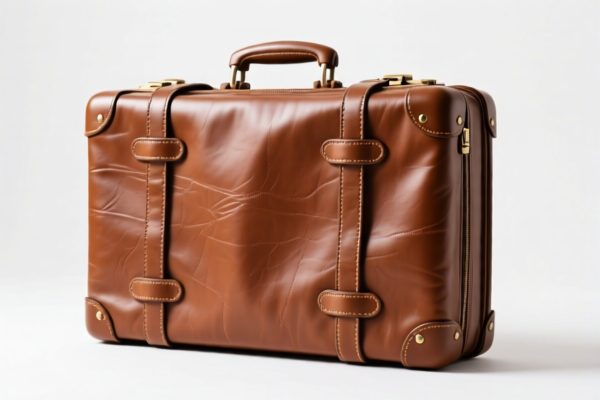
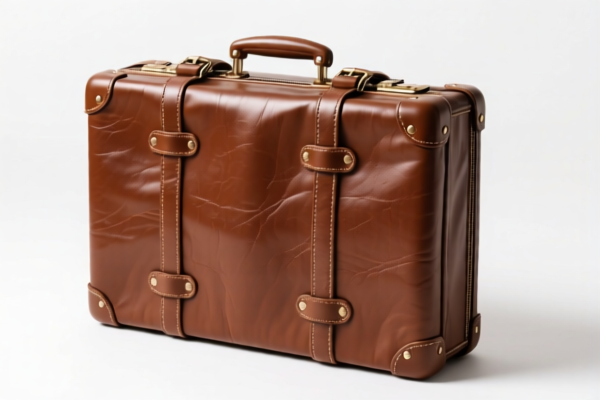
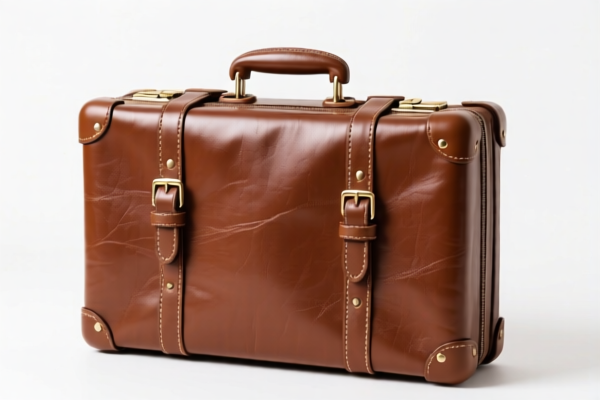
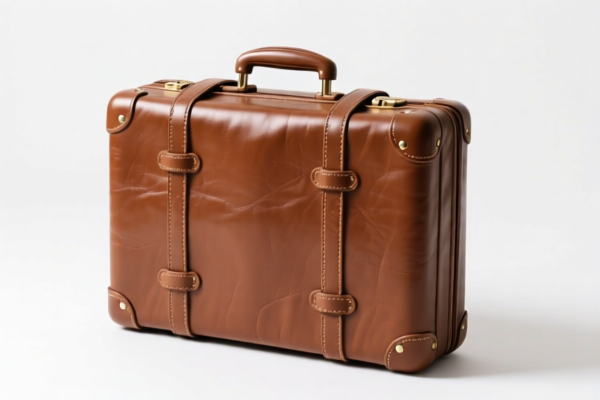
AI Analysis
🧳 Artificial Leather Suitcase (Synthetic Travel Bags)
🌐 HS Code Reference & Customs Clearance Guide | 2024-2025 Latest Tariff Analysis | Professional Compliance Strategy
📌 I. Product Definition: What Exactly is "Artificial Leather Suitcase"?
In international trade, "Artificial Leather" is technically classified under Chapter 39 (Plastics) or Chapter 54/55 (Man-made Filaments/Yarns), not as genuine animal hide. When these materials are constructed into suitcases or travel bags, they fall primarily under Chapter 42 (Articles of Leather; Related Articles).
The critical distinction lies in the material composition and specific use: * Substantial Construction: If the item has a defined shape, handles, and is designed primarily for travel, it is a Travel Bag (HS 4202). * General Purpose: If it is a simple sack, pouch, or lacks structured travel features, it may fall under Sacks and Bags (HS 6305).
⚠️ Key Distinction Point:
- If the bag is made of man-made textile materials (e.g., nylon, polyester, PU-coated fabric) and is a sack/bag for packaging (not a structured suitcase) → HS 6305.
- If the bag is a structured travel bag/suitcase made of man-made textile materials → HS 4202.
- If the bag has rubber/plastic coating that makes up the essential character → It might still be HS 4202 if it is a "travel bag," but the tax calculation differs significantly due to USITC/IEEPA classifications.
📦 II. HS Code Classification Details (Based on Provided Data)
| HS Code | Product Description | Material/Use | Total Tax Rate | Tax Breakdown |
|---|---|---|---|---|
| 4202.92.31.31 | Artificial Fiber Travel Bag | Material: Artificial Fiber Use: Travel Bag |
52.6% | Base: 17.6% + 301 Tariff: 25.0% + Section 122: 10% |
| 4202.92.31.20 | Artificial Fiber Travel Bag | Material: Artificial Fiber Use: Travel Bag |
52.6% | Base: 17.6% + 301 Tariff: 25.0% + Section 122: 10% |
| 6305.39.00.00 | Artificial Fiber Bag | Material: Artificial Textile Use: Bag (General) |
25.9% | Base: 8.4% + 301 Tariff: 7.5% + Section 122: 10% |
| 6305.90.00.00 | Other Textile Bag | Material: Other Textile Use: Bag (General) |
23.7% | Base: 6.2% + 301 Tariff: 7.5% + Section 122: 10% |
🔍 Critical Note:
- HS 4202.92.31.31/20 are for structured travel bags made of artificial fibers. These attract the highest tariff (52.6%).
- HS 6305.39.00.00 / 6305.90.00.00 are for general-purpose sacks/bags made of artificial textiles. These attract a lower tariff (25.9% / 23.7%).
- Misclassification Risk: Declaring a structured suitcase as a "bag" (6305) to save tax is high-risk. Customs will examine the item’s construction, handles, and intended use.
💰 III. 2024-2025 Tariff Rate Detailed Explanation (US Market)
✅ Applicable Country: United States (US)
✅ Origin: China (CN)
✅ Effective Time: Current (Based on Section 301 & Section 122 provisions)
🎯 1. 4202.92.31.31 & 4202.92.31.20 — Artificial Fiber Travel Bags
| Item | Content |
|---|---|
| Base Duty Rate | 17.6% (Ad Valorem) |
| Section 301 Tariff | +25.0% (Retaliatory Tariff on Chinese Goods) |
| Section 122 Tariff | +10.0% (Under 19 U.S.C. § 1304, for specific textile/apparel categories) |
| Total Effective Rate | 52.6% |
| Tax Calculation | CIF Value × 52.6% |
| De Minimis Exemption | ❌ Not Eligible (Section 301 and Section 122 tariffs usually override de minimis for shipments from China under $800, depending on current CBP enforcement) |
| Legal Basis Path | USITC:4202.92.31.31 → Section301:8524.11.10.00 (via classification) → Section122:10% |
📌 Explanation:
- "Base Duty 17.6%": Standard MFN (Most Favored Nation) rate for artificial fiber travel bags.
- "Section 301 Tariff 25%": The primary punitive tariff imposed on Chinese goods. This is the largest component.
- "Section 122 Tariff 10%": Additional duty applied to certain textile and apparel products.
- Combined Effect: The total cost impact is over 50%, significantly affecting profitability.
🎯 2. 6305.39.00.00 — Artificial Textile Bags (General)
| Item | Content |
|---|---|
| Base Duty Rate | 8.4% (Ad Valorem) |
| Section 301 Tariff | +7.5% (Note: Some textile bag categories have lower 301 rates than apparel) |
| Section 122 Tariff | +10.0% |
| Total Effective Rate | 25.9% |
| Tax Calculation | CIF Value × 25.9% |
| De Minimis Exemption | ❌ Check CBP Guidance (Often exempted if below $800, but Section 301 application varies) |
| Legal Basis Path | USITC:6305.39.00.00 → Section122:10% |
📌 Note:
- If the product is deemed a "sack" (e.g., laundry bag, produce bag, packaging sack) rather than a travel suitcase, the tax drops to 25.9%.
- 7.5% Section 301 rate applies here, which is lower than the 25% for travel bags.
🎯 3. 6305.90.00.00 — Other Textile Bags
| Item | Content |
|---|---|
| Base Duty Rate | 6.2% (Ad Valorem) |
| Section 301 Tariff | +7.5% |
| Section 122 Tariff | +10.0% |
| Total Effective Rate | 23.7% |
| Tax Calculation | CIF Value × 23.7% |
| De Minimis Exemption | ❌ Check CBP Guidance |
| Legal Basis Path | USITC:6305.90.00.00 → Section122:10% |
📌 Note:
- "Other textile materials" may include blends not specifically listed as "artificial fiber" in the primary category.
- This is the lowest tax bracket among the provided codes.
🛠️ IV. Customs Clearance Operational Advice (Practical Pitfall Guide)
✅ 1. Preparation Checklist (Non-negotiable)
| Document | Must Provide | Description |
|---|---|---|
| ✅ Product Specifications | ✔️ | Detailed list of materials (e.g., "100% Polyester Lining, PU Coated Exterior") |
| ✅ Photos (Clear) | ✔️ | Show handles, zippers, wheels (if any), and interior structure. |
| ✅ Commercial Invoice | ✔️ | Must explicitly state "Artificial Fiber Travel Bag" or "Textile Sack" — Never use "Leather" if it is synthetic. |
| ✅ Material Declaration | ✔️ | Specify the type of artificial fiber (e.g., Nylon, Polyester, PVC-coated fabric). |
| ✅ Packing List | ✔️ | Ensure quantities match the invoice. |
✅ 2. Declaration Strategy (Key Mnemonics)
🔥 "Structure Defines HS, Material Defines Tax, Avoid 'Leather' Trap!"
| Scenario | Correct HS Code | Risk if Incorrect |
|---|---|---|
| Structured Suitcase with handles, wheels, zippers | 4202.92.31.31 | Misclassifying as 6305 leads to Seizure & Penalties. |
| Simple Sack/Bag (e.g., laundry bag, tote) without structure | 6305.39.00.00 | Misclassifying as 4202 leads to Overpayment of Tax. |
| "Artificial Leather" Terminology | Use "Synthetic Fiber" or "Man-made Textile" | Using "Leather" implies Chapter 41 (Genuine Leather) → Wrong Chapter, Delay, Rejection. |
✅ 3. Special Cases
| Situation | Handling Advice |
|---|---|
| PU-Coated Fabric | If the coating is substantial, it may still be 4202 if it's a travel bag. Ensure description says "Artificial Fiber." |
| Mixed Materials | If the bag has plastic handles/textile body, classify based on essential character (usually the textile body for bags). |
| OEM Custom Bags | Provide customer design sheets to prove intended use (Travel vs. Packaging). |
🌍 V. Global Market Comparison (2024-2025)
| Country/Region | Recommended HS Code | Tariff (Approx.) | Certification | Notes |
|---|---|---|---|---|
| 🇺🇸 USA | 4202.92.31.31 |
52.6% (if travel bag) | None required for basic entry | High Tax Risk. Consider 6305 if structure allows. |
| 🇪🇺 EU | 4202.92.30 |
4.0% + VAT (20%) | CE (if electronics involved) | Lower base duty, but VAT is high. |
| 🇨🇳 China | 4202.92.31 |
10% (Import) | CCC (if applicable) | No 301 tariffs in reverse. |
| 🇬🇧 UK | 4202.92.30 |
4.0% + VAT (20%) | UKCA | Post-Brexit rules apply. |
| 🇨🇦 Canada | 4202.92.90 |
18% (MFN) | None | No Section 301 equivalent. |
📌 Conclusion:
- USA is the most expensive market due to Section 301 (25%) and Section 122 (10%) tariffs.
- EU/UK/Canada have significantly lower base duties, but VAT/GST applies.
- Structuring the product as a "Travel Bag" (4202) vs. a "Sack" (6305) is the most critical decision for US imports.
📌 VI. Common Errors & Pitfalls (Lessons Learned)
❌ Error 1: Calling the product "Leather Suitcase" when it is Synthetic
👉 Consequence: Customs may classify under Chapter 41 (Genuine Leather) or reject for misdescription → Fines.
❌ Error 2: Declaring a Structured Suitcase as "Bag" (6305) to save tax
👉 Consequence: CBP examiners will inspect. If wheels/handles are found, they will reclassify to 4202 + Back Taxes + Penalties.
❌ Error 3: Ignoring Section 122 Tariff
👉 Consequence: Underpayment by 10% → Audit Risk.
❌ Error 4: Using "Plastic" instead of "Artificial Fiber"
👉 Consequence: May lead to classification under Chapter 39 (Plastics articles) → Different duty rate, potential misclassification.
✅ Correct Practice:
"Synthetic Fiber Travel Bag, Model XYZ, Made of 100% Polyester with PU Coating, No Leather Content, Designed for Travel."
🎯 VII. Conclusion: Professional Declaration for Cost Efficiency
🎯 Remember the Mantra:
🔹 "Structure = 4202 (High Tax), Sack = 6305 (Lower Tax), No Leather = No Lie."
🔹 "52.6% vs 23.7% – One word can save 30%!"
🔹 "Always declare 'Artificial Fiber,' never 'Leather.'"
📌 Pro Tip:
If your product can reasonably be described as a "general-purpose sack" (e.g., collapsible, no hard structure, used for storage/laundry), HS 6305.39.00.00 is the optimal choice for US import, saving you ~27% in duties. However, ensure the product design supports this classification.
📣 Immediate Action:
📞 Consult a Customs Broker: Provide product photos and material composition.
🚀 Pre-classification Ruling: Consider filing a Pre-Category Ruling with CBP for high-value shipments to ensure the 6305 classification is accepted.
✨ Professional Customs Compliance, Start with Accurate Classification!
💼 Every Dollar Saved is a Dollar Earned!
Customer Reviews
About HS Code Classification
The Harmonized System (HS) is an internationally standardized nomenclature developed by the World Customs Organization (WCO) to classify traded products. Over 200 countries use the HS system as the basis for customs tariffs, trade statistics, and import/export regulations.
Each HS code follows a hierarchical structure:
- Chapter (2 digits) — Broad category of goods (e.g., Chapter 84: Machinery and Mechanical Appliances)
- Heading (4 digits) — More specific grouping within the chapter
- Subheading (6 digits) — Internationally standardized breakdown, used by all WCO member countries
- National subdivisions (8-10 digits) — Country-specific extensions for further classification, such as US HTSUS 10-digit codes
Correct HS code classification is essential for smooth customs clearance, accurate duty payment, and compliance with trade regulations. Misclassification can lead to customs delays, overpayment of duties, or penalties.
When importing from CN to US, the applicable tariff rates may include:
- Most-Favored-Nation (MFN) rate — The standard duty rate applied to WTO members
- General rate — Applied to countries without trade agreements
- Trade remedy duties — Additional tariffs such as Section 301 (anti-dumping), Section 232 (national security), or countervailing duties
The information provided on this page is for reference purposes only. For official classification, please consult with your local customs authority or a licensed customs broker.