Ash Wood
CN → US| HS Code | Tariff Rate | Origin | Destination | Doc |
|---|---|---|---|---|
| 4403990140 | 35.0% | CN | US | Official Doc |
| 4407950000 | 35.0% | CN | US | Official Doc |
| 4408900156 | 35.0% | CN | US | Official Doc |
Product Images
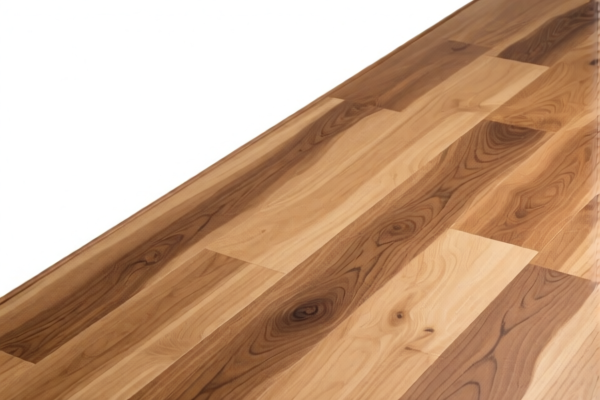
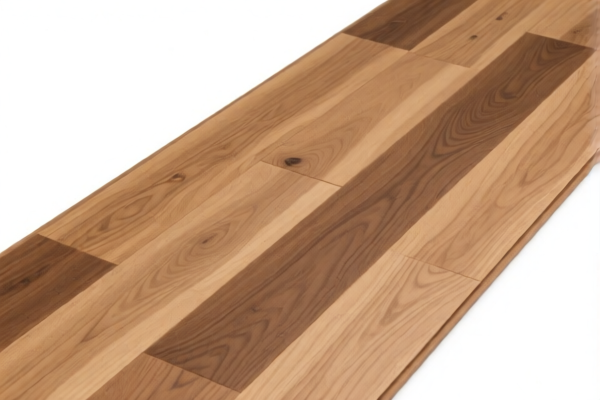
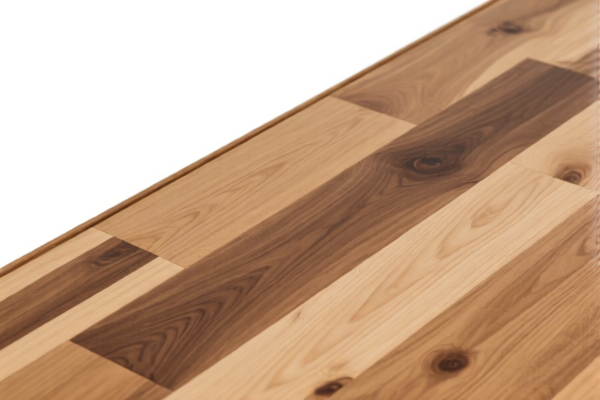
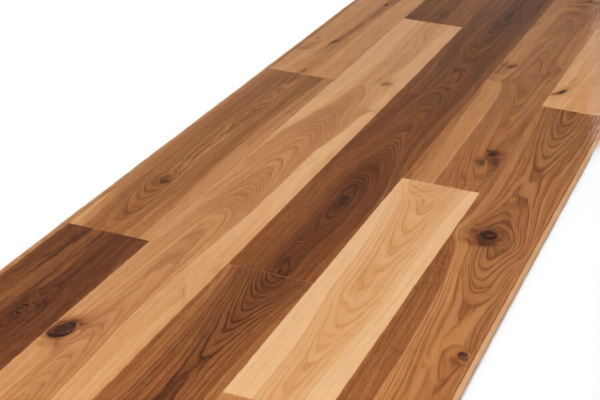
AI Analysis
🪵 Ash Wood (Fraxinus spp.) – Raw Timber Import Guide to the USA
🌐 HS Code Reference & Customs Clearance Guide | 2026 Latest Tariff Analysis | Professional Clearance Strategy
📌 Part 1: Product Definition & Classification: What exactly is "Ash Wood"?
Ash Wood (Latin: Fraxinus spp.) is a high-quality hardwood widely used in furniture making, flooring, tool handles, and sports equipment due to its strength, flexibility, and attractive grain. In international trade, specifically when imported into the United States in its primary, unprocessed forms (such as logs, roundwood, or rough-sawn lumber), it falls under Chapter 44 of the Harmonized Tariff Schedule (HTS).
⚠️ Key Classification Point:
- If the wood is raw logs, roundwood, or rough-sawn (even if squared) → Classified under 4403 or 4407.
- If the wood is processed further (e.g., planed, dried to specific moisture, turned into veneer sheets) → Different codes apply (not covered in this specific dataset).
- Crucial: The datasets provided specify "Raw/Rough" or "Primary Form," meaning no complex machining.
📦 Part 2: HS Code Breakdown (2026 Latest Tariff Data)
Based on the provided <DATA>, all three codes refer to Ash Wood (Fraxinus spp.) in its raw or primary state. The distinction lies in the specific sub-category of the tariff schedule.
| HS Code | Product Description (from Data) | Key Characteristics |
|---|---|---|
4403.99.01.40 |
Raw Ash Wood, matched Oak (Fraxinus spp.), in rough sawn primary form. | Logs/Rough lumber; specifically noted as "matched with Oak" or generic rough form. |
4407.95.00.00 |
Raw Ash Wood, material matches Fraxinus genus, in unprocessed primary form. | Logs/Planks; "Unprocessed" emphasizes minimal treatment beyond sawing. |
4408.90.01.56 |
Raw Ash Wood, material is Fraxinus, falls under "Other/Other" catch-all category. | Likely thinner sheets, veneer blanks, or specific rough-cut dimensions not fitting 4403/4407 exactly. |
🔍 Important Note:
- All three codes share the same total tax rate of 35.0%.
- The difference is primarily administrative/categorical within US Customs.
- "Raw/Unprocessed" means the wood has not been chemically treated (e.g., pressure-treated), nor is it fully machined (e.g., finger-jointed, laminated).
💰 Part 3: 2026 Latest Tariff Rate Breakdown (Detailed Analysis)
✅ Applicable Country: United States (US)
✅ Origin: Likely China (CN) or other subject countries (due to 122 Clause + Section 301)
✅ Effective Date: Current as of latest data provided
✅ Total Tax Rate: 35.0%
🎯 1. 4403.99.01.40 — Raw Ash Wood (Rough Sawn)
| Item | Detail |
|---|---|
| Base Tariff | 0.0% (Ad valorem) |
| Section 301 Tariff | +25.0% (Additional Tariff) |
| 122 Clause Tariff | +10.0% (Specific Section 122/Trade Act Tariff) |
| Total Tax Rate | 35.0% |
| Tax Calculation | CIF Value × 35% |
| Legal Basis | HTSUS 4403.99.01.40 → Section 301 Footnote → Section 122 |
📌 Explanation:
- Base Rate (0%): Standard US MFN rate for many rough timbers is often low or zero, but...
- Section 301 (+25%): Imposed by US Trade Representative (USTR) on Chinese goods.
- Section 122 (+10%): Likely refers to specific trade enforcement measures (e.g., under Section 232 or other executive actions depending on exact year enforcement).
- Combined Impact: A 35% tariff significantly impacts cost. This is a high-duty category.
🎯 2. 4407.95.00.00 — Raw Ash Wood (Unprocessed)
| Item | Detail |
|---|---|
| Base Tariff | 0.0% |
| Section 301 Tariff | +25.0% |
| 122 Clause Tariff | +10.0% |
| Total Tax Rate | 35.0% |
| Tax Calculation | CIF Value × 35% |
| Legal Basis | HTSUS 4407.95.00.00 → Section 301 → Section 122 |
📌 Note:
- Identical tax structure to4403.99.01.40.
-4407typically covers wood sawn or chipped lengthwise, whereas4403covers wood in the rough (logs, roundwood). The slight difference in HS code reflects physical form, but the punitive tariffs remain the same.
🎯 3. 4408.90.01.56 — Raw Ash Wood (Other/Other)
| Item | Detail |
|---|---|
| Base Tariff | 0.0% |
| Section 301 Tariff | +25.0% |
| 122 Clause Tariff | +10.0% |
| Total Tax Rate | 35.0% |
| Tax Calculation | CIF Value × 35% |
| Legal Basis | HTSUS 4408.90.01.56 → Section 301 → Section 122 |
📌 Note:
-4408covers veneer sheets, wood for plywood, and other sawn wood not elsewhere specified.
- This "Other/Other" catch-all is often used for non-standard dimensions or processing levels between rough lumber (4403) and standard sawn timber (4407).
- Same 35% duty applies.
🛠️ Part 4: Customs Clearance Operational Advice (Practical Pitfall Guide)
✅ 1. Required Documentation Checklist
| Document | Mandatory? | Purpose |
|---|---|---|
| ✅ Commercial Invoice | ✔️ | Must clearly state "Ash Wood (Fraxinus spp.)" and HS Code. |
| ✅ Packing List | ✔️ | Detail weight, volume, and number of packages. |
| ✅ Phytosanitary Certificate | ✔️ | CRITICAL. Issued by export country's plant agency to prove freedom from pests/diseases. |
| ✅ Fumigation Certificate | ✔️ | Proof of treatment (e.g., ISPM 15 compliant for packaging). |
| ✅ Bill of Lading (B/L) | ✔️ | Transport document. |
| ✅ Certificate of Origin (CO) | ✔️ | To confirm country of origin for tariff calculation. |
✅ 2. Declaration Tips (Key Mnemonic)
🔥 "Name Specific, Form Clear, Phyto Must Be There!"
| Scenario | Correct Declaration | Common Mistake |
|---|---|---|
| Logs/Roundwood | 4403.99.01.40 |
Mislabeling as "lumber" → Delays for re-inspection. |
| Rough Sawn Planks | 4407.95.00.00 or 4403.99.01.40 depending on exact cut. |
Not specifying "Rough" or "Unprocessed" → Risk of higher scrutiny. |
| Chemically Treated | NOT COVERED HERE. Must use different HS. | Listing as "Raw" when treated → Smuggling suspicion, fines. |
| Species Misidentification | Must state "Fraxinus spp." | Saying "Hardwood" or "Maple" → Seizure, penalties. |
✅ 3. Special Considerations
| Issue | Advice |
|---|---|
| ISPM 15 Compliance | Wooden packaging (pallets, crates) MUST be heat-treated or fumigated and marked. |
| Pest Inspection | US Customs and Border Protection (CBP) and USDA may inspect for borers, ants, or mold. |
| Tariff Engineering | Consider if processing the wood slightly (e.g., drying, planing) changes HS code. However, in this dataset, all raw/primary forms face 35%. Check if processed forms have lower duties. |
| Section 301 Exclusions | Check if your specific product type was excluded from Section 301 in any given year. (Unlikely for standard ash wood, but worth verifying). |
🌍 Part 5: Global Market Comparison (2026 Outlook)
| Market | Recommended HS Code (Raw Ash) | Base Duty | Section 301/Extra | Total Est. Duty |
|---|---|---|---|---|
| 🇺🇸 USA | 4403.99.01.40 / 4407.95.00.00 |
0% | +35% (25%+10%) | 35% |
| 🇨🇳 China | 4407.99 series |
~5-8% | None (if imported into China) | ~5-8% |
| 🇪🇺 EU | 4403.94 / 4407.94 |
0% | None | 0% |
| 🇬🇧 UK | 4403.94 |
0% | None | 0% |
| 🇨🇦 Canada | 4403.99 |
0% | None | 0% |
📌 Conclusion:
- The US market is significantly more expensive for Ash Wood imports due to the 35% combined tariff.
- EU, UK, Canada, and China have much lower or zero duties for raw timber.
- Strategy: If targeting the US market, ensure your pricing includes the 35% duty, or explore alternative sources (e.g., European Ash) if available.
📌 Part 6: Common Errors & Pitfalls (Lessons Learned)
❌ Error 1: Misidentifying Species
👉 Result: "Ash" vs. "Oak" vs. "Maple". Ash is Fraxinus. Wrong species can lead to different duty rates or phytosanitary issues.
✅ Fix: Use scientific name Fraxinus spp. on invoices.
❌ Error 2: Ignoring Phytosanitary Requirements
👉 Result: Cargo held at port, fumigated at owner's expense, or returned.
✅ Fix: Secure Phytosanitary Certificate before shipment.
❌ Error 3: Confusing "Rough Sawn" with "Planed"
👉 Result: HS Code mismatch. Rough sawn (4403/4407) vs. Planed (4409).
✅ Fix: Clearly describe the physical state. Is it rough? Square-edged? Plugged?
❌ Error 4: Underestimating Total Landed Cost
👉 Result: Margin erosion due to 35% duty.
✅ Fix: Include 35% duty + insurance + freight + handling in landed cost calculations.
🎯 Part 7: Final Advice: Smart Sourcing, Smooth Clearance!
🎯 Key Takeaways:
🔹 "35% is the number": All raw/primary Ash Wood HS codes in this dataset carry a 35% total duty.
🔹 "Phyto is King": Without a valid Phytosanitary Certificate, your cargo will not clear US Customs.
🔹 "Be Specific": Use Fraxinus spp. and describe the physical form (logs, rough-sawn) accurately.
📌 Pro Tip:
If you are importing processed Ash Wood (e.g., flooring, furniture parts), the HS Code and duty rate will change. Check Chapter 44 further for processed wood items, which may have different tariff structures. For raw timber, however, the 35% burden is significant.
📣 Immediate Action:
📞 Engage a licensed Customs Broker.
📄 Ensure Phytosanitary Certificate is in hand.
📊 Calculate Landed Cost including 35% duty.
🚀 Avoid delays by declaring "Ash Wood (Fraxinus spp.) – Raw/Rough" clearly.
✨ Professional Customs Clearance Starts with Accurate Classification!
💼 Your Profit Margin Depends on Precise Tariff Management!
Customer Reviews
About HS Code Classification
The Harmonized System (HS) is an internationally standardized nomenclature developed by the World Customs Organization (WCO) to classify traded products. Over 200 countries use the HS system as the basis for customs tariffs, trade statistics, and import/export regulations.
Each HS code follows a hierarchical structure:
- Chapter (2 digits) — Broad category of goods (e.g., Chapter 84: Machinery and Mechanical Appliances)
- Heading (4 digits) — More specific grouping within the chapter
- Subheading (6 digits) — Internationally standardized breakdown, used by all WCO member countries
- National subdivisions (8-10 digits) — Country-specific extensions for further classification, such as US HTSUS 10-digit codes
Correct HS code classification is essential for smooth customs clearance, accurate duty payment, and compliance with trade regulations. Misclassification can lead to customs delays, overpayment of duties, or penalties.
When importing from CN to US, the applicable tariff rates may include:
- Most-Favored-Nation (MFN) rate — The standard duty rate applied to WTO members
- General rate — Applied to countries without trade agreements
- Trade remedy duties — Additional tariffs such as Section 301 (anti-dumping), Section 232 (national security), or countervailing duties
The information provided on this page is for reference purposes only. For official classification, please consult with your local customs authority or a licensed customs broker.