Ash wood for craft
CN → US| HS Code | Tariff Rate | Origin | Destination | Doc |
|---|---|---|---|---|
| 4403990140 | 35.0% | CN | US | Official Doc |
| 4407950000 | 35.0% | CN | US | Official Doc |
| 4408900156 | 35.0% | CN | US | Official Doc |
Product Images
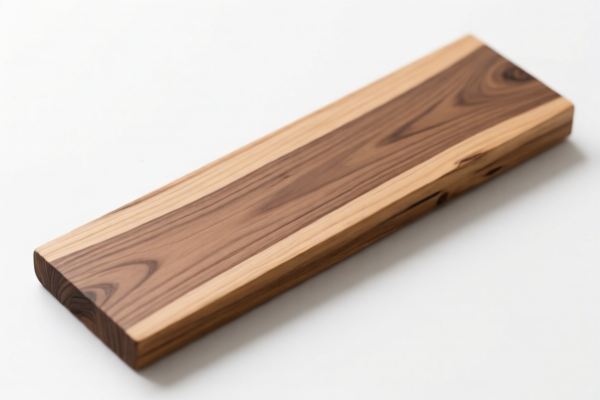
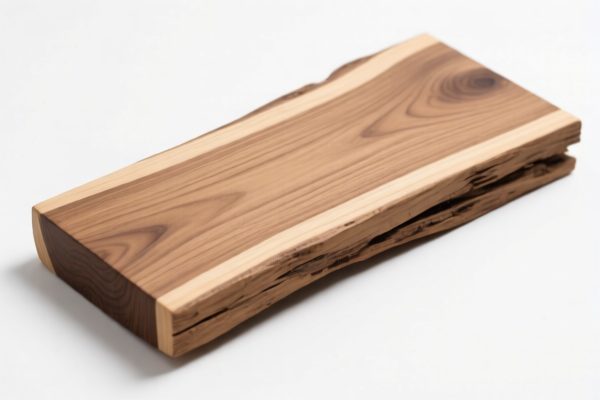
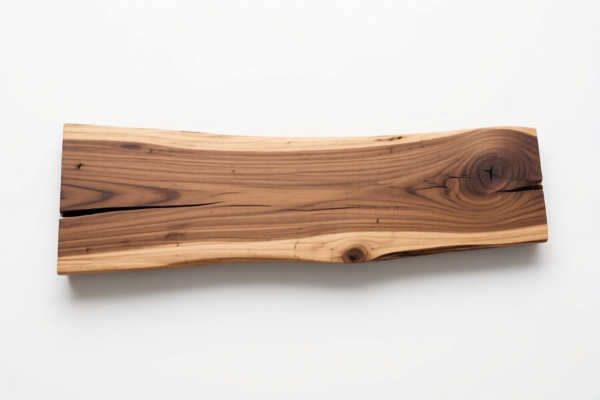
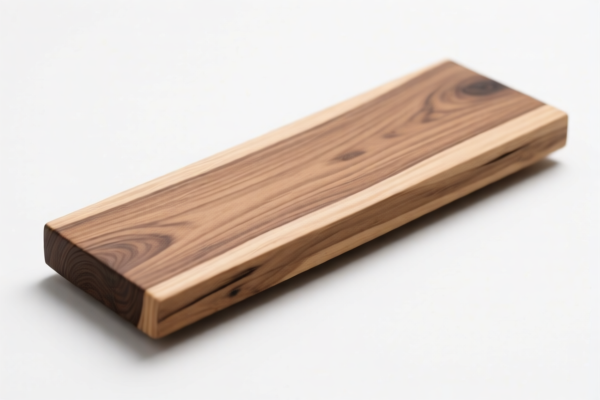
AI Analysis
🌳 Ash Wood for Craft (White Ash Logs/Planks)
🌐 HS Code Reference & Customs Clearance Guide | 2026 Latest Tariff Analysis | Professional Entry Strategy
📌 I. Product Definition & Classification: What is "Ash Wood"?
Ash wood (specifically White Ash, belonging to the genus Fraxinus) is a dense, strong, and flexible hardwood widely used in furniture making, musical instruments, tool handles, and high-end craftsmanship. In international trade, its classification depends heavily on its processing state (raw logs vs. sawn lumber) and scientific genus classification.
⚠️ Key Distinction:
- Raw Logs (Unprocessed): Treated as basic timber, falling under Chapter 44, Heading 4403 or 4407 depending on specific processing level.
- Sawn/Lathed Lumber: Classified under Heading 4408 (Veneer sheets and sawn wood).
- Genus Matter: Must be explicitly declared as Fraxinus (Ash/梣木) or Fraxinus nigra (Black Ash/白蜡木). Misclassification (e.g., labeling as Oak or Maple) leads to severe penalties.
📦 II. HS Code Classification Details (2026 Latest Tariff Authority Cross-Reference)
Based on the provided data for Ash Wood, there are three primary HS Code categories depending on the physical form.
| HS Code | Product Description | Application Scenario | Processing State |
|---|---|---|---|
4403.99.01.40 |
White Ash Logs, classified as Fraxinus (Ash genus), in primary form as rough-sawn timber | Raw logs, debarked/roughly hewed, ready for further processing | ✅ Primary Form (Logs/Rough) |
4407.95.00.00 |
Ash Logs, classified as Fraxinus genus, in unprocessed primary form | Unprocessed timber, not yet sawn to specific dimensions | ✅ Unprocessed (Logs) |
4408.90.01.56 |
Ash Wood, classified as Fraxinus genus, under "Other/Other" catch-all logic | Sawn wood, veneer sheets, or other processed forms not specifically listed | ✅ Processed (Sawn/Other) |
🔍 Critical Note:
- All three codes fall under Chapter 44 (Wood and articles of wood).
- The distinction between4403(treated wood/logs) and4407(sawn wood, not further worked) can be subtle.4403often applies to wood with a higher moisture content or specific log treatments, while4407is for sawn lumber.
-4408applies when the wood is further processed (e.g., planed, tongue-and-groove, or veneer).
💰 III. 2026 Latest Tariff Rate Breakdown (Including Surcharge & Policy Additions)
✅ Applicable Country: United States (US)
✅ Country of Origin: China (CN)
✅ Effective Time: 2025/2026 (Post-Trade War Policies)
🎯 1. 4403.99.01.40 —— White Ash Logs (Primary Form)
| Item | Content |
|---|---|
| Basic Tariff | 0.0% (ad valorem) |
| Section 301 Surcharge | +25.0% |
| Section 122 Tariff | +10.0% |
| Total Tariff Rate | 35.0% |
| Tax Calculation | CIF Value × 35% |
| De Minimis Eligibility | ❌ Not Eligible (Deny De Minimis) |
| Legal Basis Path | USITC:4403.99.01.40 → Section 301: Footnote 9903.88.01 → Section 122: IEEPA |
📌 Explanation:
- "Basic Tariff 0%": Wood products generally have low base duties.
- "Section 301 Surcharge 25%": Imposed under the Trade Promotion Authority Act of 2015, targeting Chinese imports.
- "Section 122 Tariff 10%": Additional duty under Section 232/122 related to national security or specific trade actions.
- Total 35%: This is a high-cost entry. Importers must budget for this significantly.
🎯 2. 4407.95.00.00 —— Ash Logs (Unprocessed Primary Form)
| Item | Content |
|---|---|
| Basic Tariff | 0.0% |
| Section 301 Surcharge | +25.0% |
| Section 122 Tariff | +10.0% |
| Total Tariff Rate | 35.0% |
| Tax Calculation | CIF Value × 35% |
| De Minimis Eligibility | ❌ Not Eligible |
| Legal Basis Path | USITC:4407.95.00.00 → Section 301 → Section 122 |
📌 Note:
- Same tariff structure as4403.
- Applies to unprocessed ash wood. If the wood is dried, planed, or cut to standard lengths, it may shift to4408.
🎯 3. 4408.90.01.56 —— Ash Wood (Other/Catch-all)
| Item | Content |
|---|---|
| Basic Tariff | 0.0% |
| Section 301 Surcharge | +25.0% |
| Section 122 Tariff | +10.0% |
| Total Tariff Rate | 35.0% |
| Tax Calculation | CIF Value × 35% |
| De Minimis Eligibility | ❌ Not Eligible |
| Legal Basis Path | USITC:4408.90.01.56 → Section 301 → Section 122 |
📌 Note:
- This is the "catch-all" for processed ash wood not specifically listed in other subheadings.
- Even though it is "processed," the base rate remains low, but the 35% total duty makes it expensive for Chinese-origin ash wood.
🛠️ IV. Customs Clearance Practical Advice (Real-World Pitfall Guide)
✅ 1. Preparation Checklist (Non-Negotiable)
| Document | Required? | Description |
|---|---|---|
| ✅ Scientific Name Declaration | ✔️ | Must specify Fraxinus (Ash). Generic "Ash" is risky. |
| ✅ Species Certificate | ✔️ | Proof of genus (e.g., from FAO or national forestry authority). |
| ✅ Phytosanitary Certificate | ✔️ | Mandatory for wood. Proves no pests/diseases (e.g., Emerald Ash Borer). |
| ✅ Packing List | ✔️ | Clearly state whether logs, rough-sawn, or finished lumber. |
| ✅ Commercial Invoice | ✔️ | Value must be accurate; CIF value used for duty calculation. |
| ✅ ISPM 15 Marking | ✔️ | If wood is not processed to >0.5cm thickness, it must have heat treatment/fumigation marks. |
✅ 2. Declaration Tips (Key Mnemonic)
🔥 "Genus Precise, State Clear, Certs Ready, Tax Saved!"
| Scenario | Correct Declaration | Wrong Practice |
|---|---|---|
| Raw Logs | 4403.99.01.40 or 4407.95.00.00 |
Declaring as "Furniture" → Complex inspection |
| Sawn Planks | 4408.90.01.56 |
Declaring as "Logs" → Mismatch with physical form |
| No Species Info | Reject/Ask for Proof | Writing "Wood" → High risk of seizure |
| Unmarked Wood | Hold for Inspection | No ISPM 15 mark → Potential quarantine |
✅ 3. Special Situations
| Situation | Handling Advice |
|---|---|
| Emerald Ash Borer (EAB) Risk | High scrutiny. Ensure phytosanitary certificate explicitly states EAB-free status. |
| Mixed Shipments | If ash is mixed with oak, declare each separately. Mixed HS codes complicate duty calculation. |
| Small Craft Kits | If ash is cut into tiny parts for crafts, still classify as wood (4408), not "parts of furniture" (9403), unless fully assembled. |
| Re-export | If imported into Mexico/Vietnam and re-exported to US, check USMCA rules. Ash from China does not qualify for USMCA benefits. |
🌍 V. Global Market Clearance Comparison (2026 Latest)
| Country/Region | Recommended HS Code | Tariff (China Origin) | Certification | Notes |
|---|---|---|---|---|
| 🇺🇸 USA | 4403/4407/4408 |
35% (25% Sec 301 + 10% Sec 122) | Phytosanitary + ISPM 15 | Highest Cost. No exemption for wood. |
| 🇨🇳 China | 4403/4407/4408 |
0% - 5% (Import Duty) | None specific | Low duty, but check import restrictions. |
| 🇪🇺 EU | 4403/4407 |
0% (Most Favored Nation) | FLEGT License (if applicable) | No Section 301 equivalent. |
| 🇬🇧 UK | 4403/4407 |
0% | None specific | Post-Brexit, similar to EU. |
📌 Conclusion:
- USA is the most expensive market for Chinese Ash Wood due to 35% total tariff.
- EU/UK are more favorable with 0-5% base rates.
- Consider supply chain diversification (e.g., sourcing Ash from Russia, Canada, or Europe) to avoid US tariffs if targeting the American market.
📌 VI. Common Errors & Pitfalls (Lessons Learned)
❌ Error 1: Declaring Ash Wood as "Furniture" to lower duty
👉 Consequence: If declared as furniture (9403), but customs inspect and find raw wood → Misclassification penalty + Back Taxes.
❌ Error 2: Missing ISPM 15 Marking
👉 Consequence: Quarantine/Incineration. The shipment may be destroyed at the importer's expense.
❌ Error 3: Vague Species Description ("Ash")
👉 Consequence: Customs may assign a higher default duty or delay clearance for species verification.
❌ Error 4: Ignoring "122 Section" Tariff
👉 Consequence: Underestimating cost. Many importers only account for 301 (25%) and forget the 122 (10%), leading to cash flow issues.
✅ Correct Approach:
"White Ash Logs, Genus: Fraxinus, Treated: Heat Treated (ISPM 15), For Furniture Manufacturing, HS Code: 4403.99.01.40"
🎯 VII. Conclusion: Professional Declaration, Cost Control, Smooth Customs!
🎯 Remember the Mnemonic:
🔹 "Genus Clear, State Correct, ISPM Ready, Tariff Managed!"
🔹 "35% Total Duty is High, Plan Ahead or Look Elsewhere!"
🔹 "Wood without Certs = Wood in Incinerator!"
📌 Pro Tip:
- If you are importing into the US, consider bonded warehouses to defer duty payment until the wood is sold or processed.
- For small samples (under $800), check if de minimis applies, but wood products are often excluded. Assume 35% duty for safety.
- Pre-ruling: Apply for a Binding Ruling from US Customs (CBP) to confirm the HS Code before shipment. This reduces audit risk.
📣 Immediate Action:
📞 Contact Your Broker: Confirm HS Code
4403.99.01.40vs4407.95.00.00based on your physical inventory.
📄 Prepare Documents: Get Phytosanitary Certificate + ISPM 15 Marking.
🚀 Budget for 35%: Ensure your pricing model includes the 35% US Import Duty.
✨ Professional Customs Clearance Starts with Accurate Classification!
💼 Every Dollar Saved in Tariffs is Profit Kept!
Customer Reviews
About HS Code Classification
The Harmonized System (HS) is an internationally standardized nomenclature developed by the World Customs Organization (WCO) to classify traded products. Over 200 countries use the HS system as the basis for customs tariffs, trade statistics, and import/export regulations.
Each HS code follows a hierarchical structure:
- Chapter (2 digits) — Broad category of goods (e.g., Chapter 84: Machinery and Mechanical Appliances)
- Heading (4 digits) — More specific grouping within the chapter
- Subheading (6 digits) — Internationally standardized breakdown, used by all WCO member countries
- National subdivisions (8-10 digits) — Country-specific extensions for further classification, such as US HTSUS 10-digit codes
Correct HS code classification is essential for smooth customs clearance, accurate duty payment, and compliance with trade regulations. Misclassification can lead to customs delays, overpayment of duties, or penalties.
When importing from CN to US, the applicable tariff rates may include:
- Most-Favored-Nation (MFN) rate — The standard duty rate applied to WTO members
- General rate — Applied to countries without trade agreements
- Trade remedy duties — Additional tariffs such as Section 301 (anti-dumping), Section 232 (national security), or countervailing duties
The information provided on this page is for reference purposes only. For official classification, please consult with your local customs authority or a licensed customs broker.