Ash wood for crafts
CN → US| HS Code | Tariff Rate | Origin | Destination | Doc |
|---|---|---|---|---|
| 4403990140 | 35.0% | CN | US | Official Doc |
| 4407950000 | 35.0% | CN | US | Official Doc |
| 4408900156 | 35.0% | CN | US | Official Doc |
Product Images
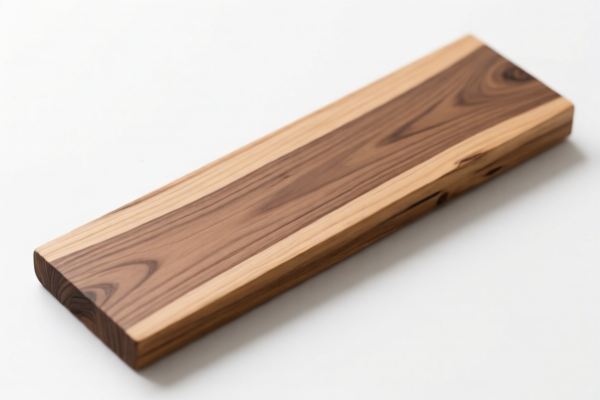
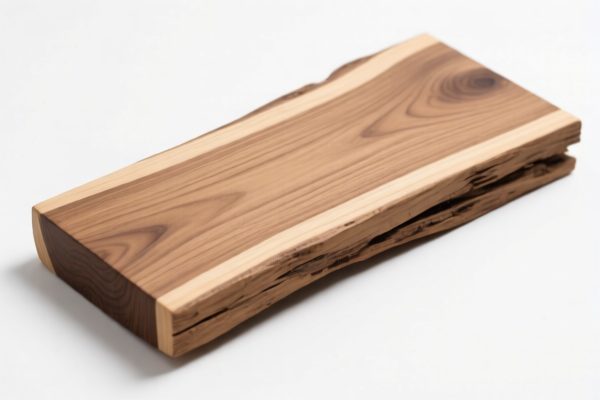
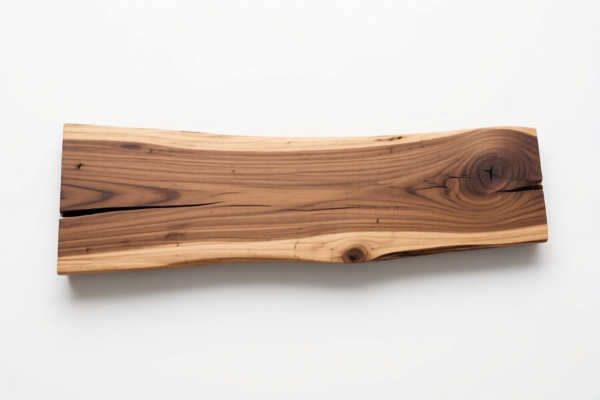
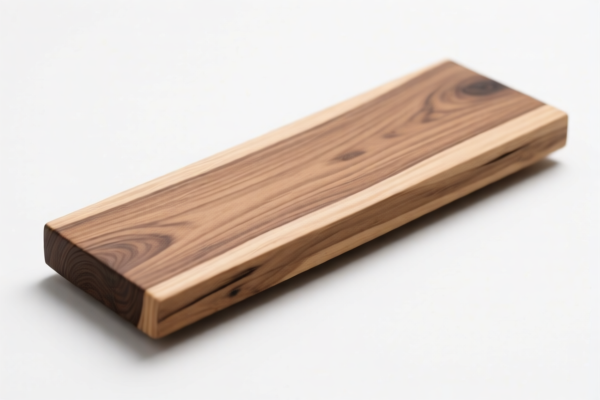
AI Analysis
🪵 Ash Wood (Ash Wood for Crafts)
🌐 HS Code Reference & Customs Clearance Guide | 2026 Latest Tariff Breakdown | Professional Compliance Strategy
📌 I. Product Definition & Classification: What is "Ash Wood for Crafts"?
Ash wood, botanically known as Fraxinus (often referred to as Ash or Manchurian Ash depending on origin), is a dense, tough, and resilient hardwood prized for its straight grain and high shock resistance. In international trade, "Ash Wood for Crafts" is not a single, static classification but varies significantly based on its processing level and physical form.
Internationally, it is primarily categorized into three stages:
- Raw Timber (Logs/Rough Sawn): Unprocessed or minimally processed logs and rough-sawn lumber.
- Primary Processed (Sawn/Chipped): Planed, edged, or roughly squared timber ready for basic woodworking.
- Sliced Veneer/Plywood Base: Thin sheets or blocks for laminating (less common for general "crafts," more for furniture).
⚠️ Key Distinction Point:
- If the wood is raw logs or rough-sawn (not planed/finished) → It falls under Chapter 44, Heading 4403 (Wood in the Rough).
- If the wood is sawn to length/width but not further worked (e.g., not sanded/painted) → It falls under Chapter 44, Heading 4407 (Wood Sawn Lengthwise).
- If it is sliced into thin sheets for veneer or other uses → It falls under Chapter 44, Heading 4408 (Veneer Sheets/Wood for Plywood).
📦 II. HS Code Classification Details (2026 Latest Tariff Authority对照)
| HS Code | Product Description | Application Scenario | Processing Level |
|---|---|---|---|
4403.99.01.40 |
Ash Logs/Rough Sawn: Ash wood (Fraxinus), in the rough or simply squared | Raw material for carving, turning, or large-scale carpentry | ❌ Unprocessed/Rough |
4407.95.00.00 |
Ash Sawn Wood: Ash wood (Fraxinus genus), sawn/chipped longitudinally | Basic lumber for furniture frames, tool handles, flooring sublayers | ✅ Sawn/Planed |
4408.90.01.56 |
Other Ash Wood Sheets/Slices: Other/Residual classification for ash | Veneer, decorative slices, or specialized craft sheets | ✅ Sliced/Thin |
🔍 Critical Reminder:
- "Crafts" is a use-case, not a HS code determinant. The Customs Authority classifies based on physical state.
- If you ship finished ash figurines or carved crafts, they may fall under Chapter 44 (Item 4420) or Chapter 95 (Toys/Novelties) depending on exact nature.
- The codes below assume raw/sawn ash wood as the primary material input for crafting.
- Do not declare "Ash Wood for Crafts" directly; use precise terms like "Ash Lumber, Rough Sawn" or "Ash Planks, Sawn."
💰 III. 2026 Latest Tariff Rate Breakdown (Including Surtaxes & Policy Add-ons)
✅ Applicable Country: United States (US)
✅ Origin: China (CN) (Note: If from other origins, check FTA benefits)
✅ Effective Date: Post-2025 Policy Continuity
🎯 1. 4403.99.01.40 —— Ash Wood, Logs/Rough Sawn
| Item | Content |
|---|---|
| Base Duty | 0% (MFN Rate) |
| USITC Section 301 Surtax | +25% (Applied to Chinese-origin wood products) |
| IEEPA Section 122 Surtax | +10% (Specific punitive tariff for Chinese wood imports under current executive orders) |
| Total Tax Rate | 35.0% |
| Calculation Basis | CIF Value × 35% |
| De Minimis Eligibility | ❌ No (Wood products are explicitly excluded from $800 de minimis exemptions for China) |
| Legal Authority Path | IEEPA:9903.01.25 → USITC:4403.99.01.40 → FOOTNOTE:9903.88.01 |
📌 Explanation:
- The 25% is the standard Section 301 duty on many wood products.
- The 10% is an additional punitive tariff (often cited as "Section 122" or specific executive action) targeting Chinese forestry products.
- Total 35% is a high barrier. You must factor this into your landed cost.
🎯 2. 4407.95.00.00 —— Ash Sawn Wood (Processed)
| Item | Content |
|---|---|
| Base Duty | 0% |
| USITC Section 301 Surtax | +25% |
| IEEPA Section 122 Surtax | +10% |
| Total Tax Rate | 35.0% |
| Calculation Basis | CIF Value × 35% |
| De Minimis Eligibility | ❌ No |
| Legal Authority Path | IEEPA:9901.25 → USITC:4407.95.00.00 → FOOTNOTE:9903.88.01 |
📌 Note:
- Even if the wood is planed or edged, it remains subject to the same high tariffs if it is still classified as "wood in general form."
- This applies to all Fraxinus species (Ash).
🎯 3. 4408.90.01.56 —— Other Ash Wood (Veneer/Slices)
| Item | Content |
|---|---|
| Base Duty | 0% |
| USITC Section 301 Surtax | +25% |
| IEEPA Section 122 Surtax | +10% |
| Total Tax Rate | 35.0% |
| Calculation Basis | CIF Value × 35% |
| De Minimis Eligibility | ❌ No |
| Legal Authority Path | IEEPA:9903.01.24 → USITC:4408.90.01.56 → FOOTNOTE:9903.88.01 |
📌 Warning:
- Even if the wood is sliced into thin sheets (high value, low volume), the tariff rate remains 35%.
- High-value veneer means higher absolute tax amounts, impacting profit margins significantly.
🛠️ IV. Customs Clearance Practical Advice (Real-World Pitfall Avoidance)
✅ 1. Required Documentation Checklist (Non-Negotiable)
| Document | Must Provide | Explanation |
|---|---|---|
| ✅ Phytosanitary Certificate | ✔️ | Critical. Wood must be treated (fumigated) to prevent pest introduction. Without it, shipment will be rejected or destroyed. |
| ✅ Commercial Invoice | ✔️ | Must specify "Ash Wood (Fraxinus)" and HS Code. Avoid vague terms like "Craft Material." |
| ✅ Packing List | ✔️ | Detail weight, volume, and number of bundles. Ensure weight matches the Phytosanitary Cert. |
| ✅ Wood Treatment Report | ✔️ | Proof of heat treatment (HT) or methyl bromide fumigation (MB). |
| ✅ Certificate of Origin | ✔️ | Required to prove origin for tariff calculation (US vs. Non-US origin changes duty structure). |
| ✅ Contract/PO | ✔️ | Supports transaction value declaration. |
⚠️ Red Flag:
- Bark must be removed. If ash wood retains significant bark, it may be classified differently or rejected for pest risk.
✅ 2. Declaration Tips (Key Mnemonic)
🔥 “Species Specific, Treatment Clear, No Bark, High Duty!”
| Scenario | Correct Declaration | Wrong Practice |
|---|---|---|
| Rough Ash Logs | 4403.99.01.40 - "Ash Wood, Rough Sawn, HT Treated" |
"Wood for Craft" → Rejection |
| Planed Ash Boards | 4407.95.00.00 - "Ash Lumber, Sawn, Planed" |
"Furniture Parts" → Wrong HS, Penalty |
| Ash Veneer Sheets | 4408.90.01.56 - "Ash Veneer, Sliced" |
"Paper/Cardboard" → Smuggling Risk |
| Finished Ash Figurines | 4420.90.00.00 (Check!)* |
4407 → Under-declared Value |
Note: Finished crafts may have different duties. Ensure you declare the final form if shipping finished goods, not raw wood.
✅ 3. Special Case Handling
| Scenario | Handling Advice |
|---|---|
| Import from Non-China Origin (e.g., USA/EU) | Base duty may still apply, but no IEEPA 10% surtax. Total tax could be 0-25% depending on FTAs. |
| Small Samples for Design | Still subject to Phytosanitary rules. No de minimis exemption for wood from China. |
| Mixed Shipment (Wood + Metal) | Declare separately. Metal parts do not get wood tariffs, but incorrect bundling causes delays. |
| Heat Treatment Marking | Ensure each bundle has the IPPC Mark (🌿 + Country Code + HT). Missing mark = Return at exporter’s expense. |
🌍 V. Global Market Comparison (2026 Latest)
| Country/Region | Recommended HS Code | Tariff (China Origin) | Certification Requirement | Notes |
|---|---|---|---|---|
| 🇺🇸 USA | 4403/4407/4408 |
35% (0% + 25% + 10%) | Phytosanitary + IPPC | Highest barrier. |
| 🇨🇳 China | 4403/4407 |
0-5% | N/A | Low duty, but check domestic trade restrictions. |
| 🇪🇺 EU | 4403/4407 |
0% (MFN) | FSC/PEFC (Voluntary), ISPM 15 | No Section 301/IEEPA surtaxes. |
| 🇬🇧 UK | 4403/4407 |
0% | ISPM 15 | Post-Brexit, no EU tariffs. |
| 🇯🇵 Japan | 4403/4407 |
0% (if RCEP/CEPT applicable) | Phytosanitary | RCEP may offer 0% if rules of origin met. |
📌 Conclusion:
- USA is the most expensive market for Chinese ash wood due to layered tariffs.
- EU/UK/Japan are more cost-effective for sourcing ash wood, provided phytosanitary standards are met.
- Consider transshipment or processing in third countries (e.g., Vietnam) to change origin, but be cautious of rules of origin fraud.
📌 VI. Common Errors & Pitfall Guide (Lessons Learned)
❌ Error 1: Declaring "Ash Wood for Crafts" without species or processing level.
👉 Consequence: Customs query, delay, potential $500+ penalty per entry.
❌ Error 2: Ignoring the IPPC Mark on pallets/boxes.
👉 Consequence: Shipment held at port, fumigation or destruction required.
❌ Error 3: Assuming "Crafts" means lower duty.
👉 Consequence: If you ship raw wood but declare as "finished goods," it’s fraud. If you ship finished goods, declare correctly under Chapter 44/95.
❌ Error 4: Not separating bark and wood.
👉 Consequence: Rejected for pest risk if bark is present.
✅ Correct Approach:
"Ash Wood (Fraxinus mandshurica), Rough Sawn, Heat Treated (HT), No Bark, IPPC Marked, HS Code 4403.99.01.40"
🎯 VII. Conclusion: Professional Declaration, Cost Control, Compliance First
🎯 Remember the Mnemonic:
🔹 "Raw Wood, 35% Duty; Treat It Well, Or It’s Shutty!"
🔹 "HS Code Depends on Form, Not Use; Declare Accurately, Avoid Abuse!"
📌 Pro Tip:
- If you are importing into the US, calculate the 35% landed cost carefully.
- If you are exporting ash wood from China, ensure your supplier provides valid Phytosanitary Certificates and IPPC marks.
- For finished ash crafts (e.g., carved bowls, figures), check Chapter 44 (4420) or Chapter 95 (9503) for potentially lower duties (often 0-5%), but ensure they are finished goods, not raw wood.
📣 Immediate Action:
📞 Contact your freight forwarder for IPPC compliance check.
📄 Request Phytosanitary Certificate from supplier before shipment.
🚀 Apply for Advance Ruling if unsure about "finished vs. raw" classification.
✨ Professional Clearance, Starting from Accurate Classification!
💼 Your Profit Margin is Protected by Precise Declarations!
Customer Reviews
About HS Code Classification
The Harmonized System (HS) is an internationally standardized nomenclature developed by the World Customs Organization (WCO) to classify traded products. Over 200 countries use the HS system as the basis for customs tariffs, trade statistics, and import/export regulations.
Each HS code follows a hierarchical structure:
- Chapter (2 digits) — Broad category of goods (e.g., Chapter 84: Machinery and Mechanical Appliances)
- Heading (4 digits) — More specific grouping within the chapter
- Subheading (6 digits) — Internationally standardized breakdown, used by all WCO member countries
- National subdivisions (8-10 digits) — Country-specific extensions for further classification, such as US HTSUS 10-digit codes
Correct HS code classification is essential for smooth customs clearance, accurate duty payment, and compliance with trade regulations. Misclassification can lead to customs delays, overpayment of duties, or penalties.
When importing from CN to US, the applicable tariff rates may include:
- Most-Favored-Nation (MFN) rate — The standard duty rate applied to WTO members
- General rate — Applied to countries without trade agreements
- Trade remedy duties — Additional tariffs such as Section 301 (anti-dumping), Section 232 (national security), or countervailing duties
The information provided on this page is for reference purposes only. For official classification, please consult with your local customs authority or a licensed customs broker.