Aspen Lumber in the Rough
CN → US| HS Code | Tariff Rate | Origin | Destination | Doc |
|---|---|---|---|---|
| 4407970079 | 35.0% | CN | US | Official Doc |
| 4407970072 | 35.0% | CN | US | Official Doc |
Product Images
AI Analysis
🌲 Aspen Lumber in the Rough: HS Code & Customs Clearance Guide
🌐 HS Code Reference & Customs Strategy | 2026 Latest Tariff Analysis | Professional Level Clearance Tactics
📌 I. Product Definition and Classification: Do You Really Understand "Aspen Lumber"?
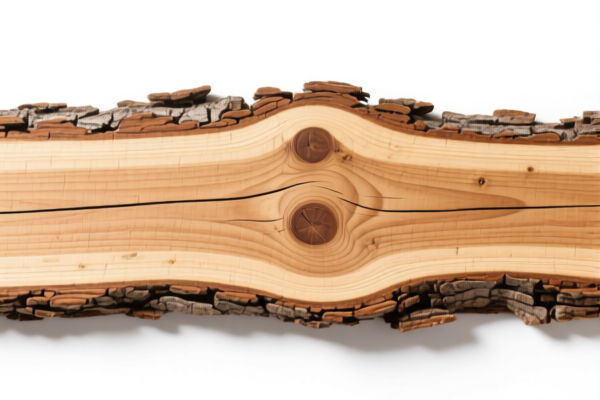
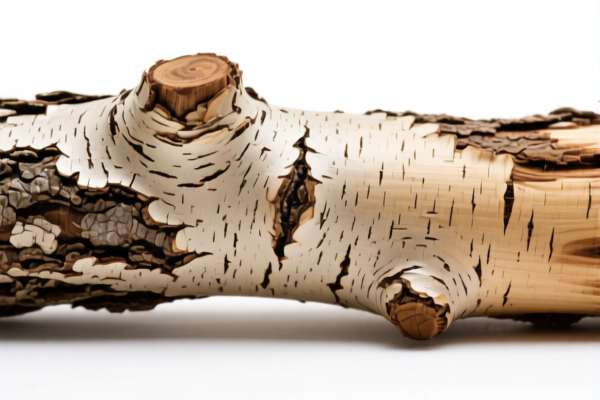
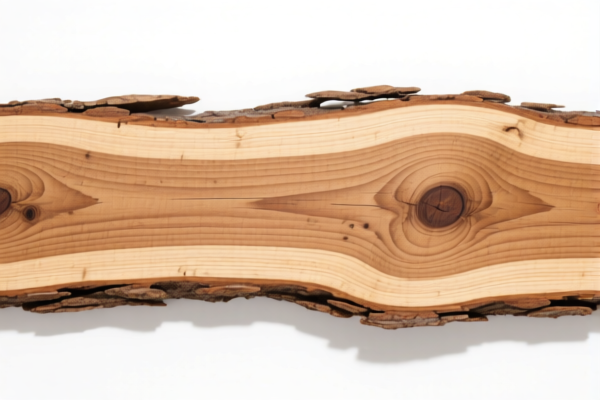
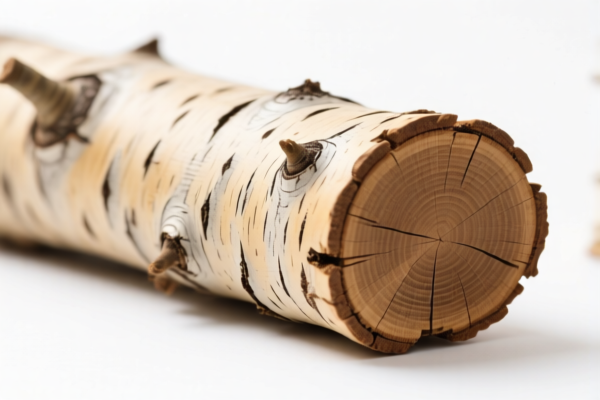
"Aspen Lumber in the Rough" refers to wood that has been sawn, chipped lengthwise, sliced, or peeled, with a thickness exceeding 6 mm. It includes wood that may be planed, sanded, or end-jointed. In international trade, this category specifically targets Poplar and Aspen (Populus spp.) species.
The critical distinction lies in the specific species of the Aspen/Poplar: 1. General Aspen/Poplar/Cottonwood: Non-specific species of Populus. 2. Yellow Poplar (Liriodendron tulipifera): Often colloquially called "Tulip Poplar" or "White Poplar," but botanically distinct from true Aspen (Populus spp.), yet grouped under specific subheadings for trade purposes in many tariff schedules.
⚠️ Key Classification Point:
- If the wood is not Liriodendron tulipifera (Yellow Poplar), but generic Aspen, Poplar, or Cottonwood → HS Code 4407.97.00.79
- If the wood is specifically Yellow Poplar (Liriodendron tulipifera) → HS Code 4407.97.00.72
📦 II. HS Code Classification Details (2026 Latest Tariff Authority Comparison)
| HS Code | Product Description | Application Scenario | Species Specificity |
|---|---|---|---|
4407.97.00.79 |
Wood of a thickness > 6mm: Other: Of poplar and aspen (Populus spp.): Other poplar; aspen; cottonwood | Standard Aspen logs, generic Poplar boards, Cottonwood planks | ❌ Not Yellow Poplar |
4407.97.00.72 |
Wood of a thickness > 6mm: Other: Of poplar and aspen (Populus spp.): Yellow poplar (Liriodendron tulipifera) | Yellow Poplar (Tulip Poplar) timber, often used for furniture, pulp, or millwork | ✅ Specific: Liriodendron tulipifera |
🔍 Important Note:
- Both codes fall under Chapter 44, heading 4407 (Wood sawn or chipped lengthwise, sliced or peeled, of a thickness exceeding 6 mm). - The distinction between.79and.72is purely botanical. Misidentifying "Yellow Poplar" as generic "Aspen" or vice versa can lead to customs audits, penalties, or reclassification fees. - "In the Rough" implies the wood has not been further processed into finished products (like flooring or molding), which would change the HS Code entirely.
💰 III. 2026 Latest Tariff Rate Breakdown (Including Additional Taxes)
✅ Applicable Country: United States (US)
✅ Origin: China (CN)
✅ Effective Time: Current trade policy (Section 301 Tariffs apply)
🎯 1. 4407.97.00.79 – Other Aspen/Poplar/Cottonwood Lumber
| Item | Content |
|---|---|
| Base Duty Rate | 0.0% (ad valorem) |
| Section 301 Additional Duty | +25.0% |
| Total Duty Rate | 25.0% |
| Tax Calculation | CIF Value × 25.0% |
| De Minimis Exemption | ❌ Not Eligible (Goods over $800 may still be subject to scrutiny if not clearly de minimis, but typically Section 301 applies to formal entries) |
| Legal Basis | USITC HTS 4407.97.00.79 → Section 301 Footnote |
📌 Explanation:
- The 25% additional duty is applied under Section 301 of the Trade Act of 1974, targeting Chinese-origin goods. - Although the base tariff is 0%, the 25% surcharge significantly increases the landed cost. - This applies to all "Other" poplar/aspen products not specifically classified as Yellow Poplar.
🎯 2. 4407.97.00.72 – Yellow Poplar (Liriodendron tulipifera) Lumber
| Item | Content |
|---|---|
| Base Duty Rate | 0.0% (ad valorem) |
| Section 301 Additional Duty | +25.0% |
| Total Duty Rate | 25.0% |
| Tax Calculation | CIF Value × 25.0% |
| De Minimis Exemption | ❌ Not Eligible |
| Legal Basis | USITC HTS 4407.97.00.72 → Section 301 Footnote |
📌 Note:
- Despite being a different species, Yellow Poplar is subject to the same 25% additional duty under current US trade policy. - The base rate remains 0%, but the total effective tariff is 25%. - Ensure botanical accuracy: If you ship Liriodendron tulipifera under.79, you may face audits for incorrect classification, though the tax rate is the same. Precision is key for compliance.
🛠️ IV. Customs Clearance Practical Advice (Real-World Pitfall Avoidance)
✅ 1. Required Documentation Checklist (Mandatory)
| Document | Must Provide | Description |
|---|---|---|
| ✅ Commercial Invoice | ✔️ | Clearly state species: "Aspen" vs. "Yellow Poplar (Liriodendron tulipifera)" |
| ✅ Packing List | ✔️ | Detail dimensions, thickness, quantity, and weight |
| ✅ Phytosanitary Certificate | ✔️ | Mandatory for wood products to prove freedom from pests |
| ✅ Fumigation Certificate | ✔️ | Proof of ISPM 15 compliance if shipped in wood packaging |
| ✅ Bill of Lading/Air Waybill | ✔️ | Standard shipping document |
| ✅ Species Verification | ✔️ | Lab report or supplier declaration confirming Populus spp. vs. Liriodendron |
✅ 2. Declaration Tips (Key Mnemonic)
🔥 "Species Matters, Thickness > 6mm, 25% Tariff Always!"
| Scenario | Correct Declaration | Wrong Practice |
|---|---|---|
| Generic Aspen/Poplar | 4407.97.00.79 |
Misclassify as Yellow Poplar → Risk of audit |
| Yellow Poplar | 4407.97.00.72 |
Call it "Generic Poplar" → Potential compliance issue |
| Wood < 6mm | Not HS 4407 (Likely HS 4409 or 4407.99) | Assume all lumber is 4407 → Wrong Code |
| Finished Furniture | Not HS 4407 (Likely HS 9403) | Declare as "Lumber" to avoid inspection → Fraud Risk |
✅ 3. Special Situation Handling
| Situation | Handling Advice |
|---|---|
| Mixed Species Shipment | Split declaration if possible; otherwise, classify under the most specific code or consult customs broker for mixed classification rules |
| Wood Packaging (Pallets) | Ensure ISPM 15 mark is visible; otherwise, risk of rejection or fumigation at destination |
| Small Sample Shipments | Even small shipments are subject to 25% duty; consider De Minimis ($800) if eligible, but verify if Section 301 applies to your specific entry type |
| Botanical Uncertainty | If unsure whether it's Aspen or Yellow Poplar, provide a supplier’s botanical declaration to support your HS Code choice |
🌍 V. Global Market Comparison (2026 Latest)
| Country/Region | Recommended HS Code | Duty Rate (China Origin) | Certification Requirement | Notes |
|---|---|---|---|---|
| 🇺🇸 USA | 4407.97.00.79 / .72 |
25% (Section 301) | Phytosanitary, ISPM 15 | High tariff impact; no exemption |
| 🇨🇳 China | 4407.97.00.79 / .72 |
Varies (Check latest) | Phytosanitary | Domestic tax policies may differ |
| 🇪🇺 EU | 4407.97.00 (approx.) |
0%~2.5% (depending on exact subheading) | FLEGT/EUTR Compliance | Strict legality verification |
| 🇬🇧 UK | 4407.97.00 |
0%~2.5% | UK Timber Regulation | Post-Brexit rules apply |
| 🇯🇵 Japan | 4407.97.00 |
0% | Phytosanitary | Generally low duties for wood |
📌 Conclusion:
- USA is the most costly market due to the 25% Section 301 tariff. - EU/UK require strict legality documentation (FLEGT/EUTR) regardless of duty rates. - Always verify ISPM 15 for packaging to avoid delays.
📌 VI. Common Errors & Pitfall Guide (Lessons Learned)
❌ Error 1: Declaring Yellow Poplar (Liriodendron) as generic Aspen |
👉 Consequence: Customs may demand proof of species; delays and potential penalties for misclassification.
❌ Error 2: Ignoring the 6mm thickness rule |
👉 Consequence: Wood ≤ 6mm falls under different HS codes (e.g., 4409) with different duties → Incorrect declaration.
❌ Error 3: Not providing Phytosanitary Certificate |
👉 Consequence: Cargo held at port, fumigation charges, or rejection/return.
❌ Error 4: Assuming "Wood" is a single HS Code |
👉 Consequence: Each species and processing method has a unique code; wrong code leads to incorrect duty calculation.
✅ Correct Practice:
"Aspen Lumber, Sawn, Thickness > 6mm, Populus spp., No. of Planks: 500, Volume: 10 CBM, Phytosanitary Cert: US-12345"
🎯 VII. Conclusion: Professional Declaration for Smooth Clearance
🎯 Remember the Mnemonic:
🔹 "Species First, Thickness Matters, 25% Tariff in USA!"
🔹 "HS Code Determines Cost, Accuracy Prevents Delay!"
📌 Pro Tip:
If your Aspen Lumber is sourced from non-Chinese origins (e.g., Canada, Russia, Europe), the 25% Section 301 tariff may not apply. Always declare the Country of Origin correctly to claim preferential or lower tariffs.
📣 Immediate Action:
📞 Consult a licensed customs broker + Provide Botanical Declaration + Apply for Pre-Ruling if shipment value is high.
🚀 Ensure smooth clearance, avoid penalties, and optimize landed costs!
✨ Professional Customs Clearance Starts with Accurate Classification!
💼 Every percentage point counts in global trade!
Customer Reviews
About HS Code Classification
The Harmonized System (HS) is an internationally standardized nomenclature developed by the World Customs Organization (WCO) to classify traded products. Over 200 countries use the HS system as the basis for customs tariffs, trade statistics, and import/export regulations.
Each HS code follows a hierarchical structure:
- Chapter (2 digits) — Broad category of goods (e.g., Chapter 84: Machinery and Mechanical Appliances)
- Heading (4 digits) — More specific grouping within the chapter
- Subheading (6 digits) — Internationally standardized breakdown, used by all WCO member countries
- National subdivisions (8-10 digits) — Country-specific extensions for further classification, such as US HTSUS 10-digit codes
Correct HS code classification is essential for smooth customs clearance, accurate duty payment, and compliance with trade regulations. Misclassification can lead to customs delays, overpayment of duties, or penalties.
When importing from CN to US, the applicable tariff rates may include:
- Most-Favored-Nation (MFN) rate — The standard duty rate applied to WTO members
- General rate — Applied to countries without trade agreements
- Trade remedy duties — Additional tariffs such as Section 301 (anti-dumping), Section 232 (national security), or countervailing duties
The information provided on this page is for reference purposes only. For official classification, please consult with your local customs authority or a licensed customs broker.