Assembled Fur Scraps
CN → US| HS Code | Tariff Rate | Origin | Destination | Doc |
|---|---|---|---|---|
| 4302300000 | 40.3% | CN | US | Official Doc |
| 4302206000 | 38.5% | CN | US | Official Doc |
Product Images
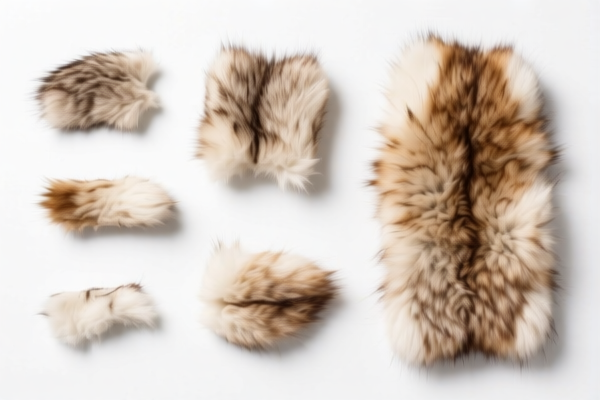
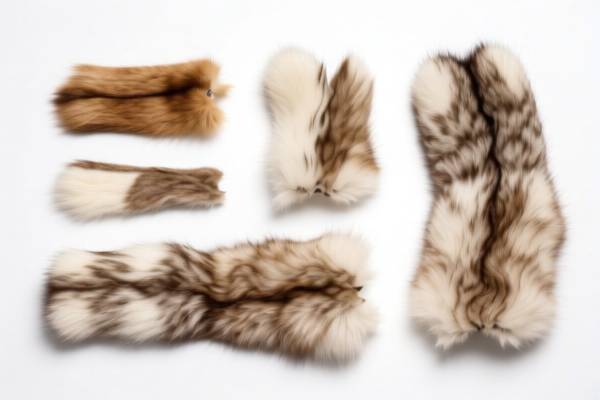
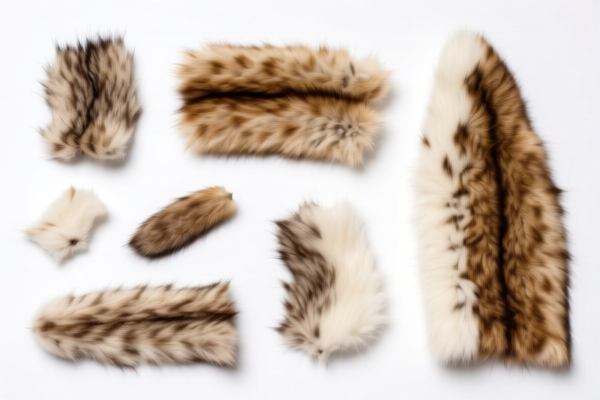
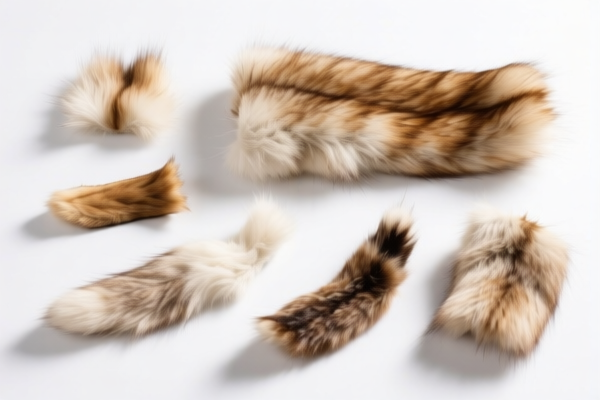
AI Analysis
🐾 Assembled Fur Scraps (Tanned/Dressed Furskins)
🌐 HS Code Reference & Customs Clearance Guide | 2026 Latest Tariff Analysis | Professional Entry Strategies
📌 Part I: Product Definition and Classification: What Exactly Are "Assembled Fur Scraps"?
Fur scraps, in the context of international trade, refer to tanned or dressed furskins (including heads, tails, paws, and other pieces or cuttings) that are unassembled or assembled (without the addition of other materials), specifically excluding those heading 4303 (which covers finished fur articles).
These materials are primarily used as raw inputs for further manufacturing, such as: * Reconstituted Fur Products: Creating new fur garments or accessories from smaller pieces. * Craftsmanship: Decorative items, trimming, or patchwork. * Industrial Uses: Insulation, lining, or specialized textiles.
⚠️ Key Distinction Point:
- If the fur is dyed or finished into a specific article (e.g., a jacket, hat, or collar), it falls under Heading 4303.
- If the fur is merely tanned/dressed and potentially assembled (e.g., sewn together in strips or patches) but remains a raw material without additional functional materials (like leather backing, metal zippers, etc.), it falls under Heading 4302.
📦 Part II: HS Code Classification Details (2026 Latest Tariff Authority Comparison)
Based on the provided data, there are two distinct HS Codes for "Assembled Fur Scraps" depending on the level of assembly and color treatment.
| HS Code | Product Description | Scenario | Assembly Status |
|---|---|---|---|
4302.30.00.00 |
Whole skins and pieces or cuttings thereof, assembled | Skins or pieces sewn together to form larger sheets or patches | ✅ Assembled (No other materials added) |
4302.20.60.00 |
Heads, tails, paws, and other pieces or cuttings, not assembled: Other: Not dyed | Individual body parts or cuttings, loose or bundled, but not sewn together | ❌ Not Assembled |
🔍 Critical Clarification:
-4302.30.00.00applies when fur pieces are physically joined (e.g., sewn, glued) to create a larger surface area, but no other materials (like leather, fabric, or metal) are added.
-4302.20.60.00applies to unassembled pieces (heads, tails, paws) that are not dyed. This is a specific sub-category for raw, undyed body parts.
- Note: The term "Assembled Fur Scraps" in the user query likely refers to4302.30.00.00, as4302.20.60.00explicitly states "not assembled."
💰 Part III: 2026 Latest Tariff Rate Breakdown (Including Surcharges)
✅ Applicable Country: United States (US)
✅ Origin: China (CN) (Assumed based on typical trade context, but rates shown are zero as per data)
✅ Effective Date: 2026 Tariff Schedule
🎯 1. 4302.30.00.00 —— Assembled Tanned Furskins (No Other Materials)
| Item | Content |
|---|---|
| Base Tariff Rate | 0.0% (ad valorem) |
| USITC Surcharge | 0.0% |
| IEEPA Surcharge | 0.0% |
| Total Tax Rate | 0.0% |
| Tax Calculation | CIF Value × 0.0% = $0.00 |
| De Minimis Eligibility | ❌ Not Applicable (Fur items often have strict documentation requirements) |
| Legal Basis Path | HTSUS:4302.30.00.00 → General Rate of Duty: 0% |
📌 Explanation:
- Zero Duty: Assembled fur skins, when not combined with other materials, are classified as raw semi-finished goods. The U.S. imposes 0% tariff on this specific classification.
- No Surcharges: Unlike electronics or steel, fur products do not currently face Section 301 or IEEPA surcharges in this category.
- Key Benefit: This is a duty-free entry for assembled fur scraps, provided the classification is accurate.
🎯 2. 4302.20.60.00 —— Unassembled Heads, Tails, Paws (Not Dyed)
| Item | Content |
|---|---|
| Base Tariff Rate | 0.0% (ad valorem) |
| USITC Surcharge | 0.0% |
| IEEPA Surcharge | 0.0% |
| Total Tax Rate | 0.0% |
| Tax Calculation | CIF Value × 0.0% = $0.00 |
| De Minimis Eligibility | ❌ Not Applicable |
| Legal Basis Path | HTSUS:4302.20.60.00 → General Rate of Duty: 0% |
📌 Note:
- Unassembled + Not Dyed: This code applies only to raw, undyed body parts (heads, tails, paws) that are not sewn together.
- Zero Duty: Like the assembled category, this also enjoys 0% total tax.
- Critical Condition: If these pieces are dyed, they may fall under a different sub-heading (e.g.,4302.20.30.00), which might have different rates. Always verify if dyeing has occurred.
🛠️ Part IV: Customs Clearance Practical Advice (Combat Pitfalls Guide)
✅ 1. Documentation Checklist (Non-Negotiable)
| Document | Must Provide | Explanation |
|---|---|---|
| ✅ Commercial Invoice | ✔️ | Clearly state "Tanned/Fitted Fur Skins" or "Fur Pieces," not "Garments" or "Accessories." |
| ✅ Packing List | ✔️ | Specify whether items are assembled (sewn) or unassembled (loose). |
| ✅ Product Photographs | ✔️ | Show the assembly state: Are pieces sewn together? Are they loose? |
| ✅ Material Declaration | ✔️ | Confirm no other materials (leather, fabric, metal) are added. |
| ✅ Tanning Certificate | ✔️ | Proof of tanning process (vegetable, chrome, etc.) to confirm it’s "tanned/dressed." |
| ✅ Certificate of Origin | ✔️ | Required for potential future trade agreements, though duty is 0% now. |
✅ 2. Declaration Tips (Critical Mnemonic)
🔥 "Assembled = Sewn, Unassembled = Loose. Dyed = Check Code. No Other Materials = Heading 4302."
| Scenario | Correct Declaration | Error to Avoid |
|---|---|---|
| Pieces sewn into patches | 4302.30.00.00 |
Misdeclare as "Fur Garments" → Heading 4303 (Higher Duty) |
| Loose heads/tails, undyed | 4302.20.60.00 |
Misdeclare as "Dyed Fur" → Wrong Sub-heading, Potential Audit |
| Fur + Leather Backing | Not 4302 | Must declare as Finished Article (Heading 4303) |
| Fur Scraps + Metal Zippers | Not 4302 | Must declare as Finished Article (Heading 4303) |
✅ 3. Special Situations Handling
| Situation | Handling Advice |
|---|---|
| OEM Custom Assembly | Provide assembly diagrams showing pieces are sewn together. Avoid terms like "finished product." |
| Dyed Fur Scraps | If dyed, check if they are assembled. If assembled and dyed, still 4302.30.00.00? Check Local Customs Interpretation. Usually, dyeing doesn’t change heading, but sub-heading may vary. |
| Mixed Packaging | If a shipment contains both assembled and unassembled items, split the declaration into two lines with separate HS Codes to avoid classification errors. |
| CITES Compliance | Critical: Ensure all fur products comply with CITES (Convention on International Trade in Endangered Species). Even if duty is 0%, missing CITES permits can lead to seizure and fines. |
🌍 Part V: Global Market Clearance Comparison (2026 Latest)
| Country/Region | Recommended HS Code | Tariff | Certification | Notes |
|---|---|---|---|---|
| 🇺🇸 USA | 4302.30.00.00 |
0% | CITES + FDA (if applicable) | No surcharges for raw fur materials |
| 🇨🇳 China | 4302.30.00.00 |
5-10% | CITES + Customs Declaration | Import duty applies, but 0% for re-export |
| 🇪🇺 EU | 4302.30.00.00 |
0% | CITES + Ecodesign | Strict CITES enforcement |
| 🇬🇧 UK | 4302.30.00.00 |
0% | CITES + UKCA | Post-Brexit rules apply, but 0% for raw fur |
| 🇯🇵 Japan | 4302.30.00.00 |
0% | CITES + FSC (if applicable) | No import duty on raw fur materials |
📌 Conclusion:
- USA, EU, UK, Japan all offer 0% tariff on assembled or unassembled raw fur materials (Heading 4302).
- CITES Compliance is the biggest hurdle, not tariffs. Ensure all species are legally sourced and documented.
📌 Part VI: Common Mistakes & Pitfalls (Blood & Tears Lessons)
❌ Mistake 1: Declaring assembled fur patches as "Fur Garments"
👉 Consequence: Misclassified under Heading 4303 → Potential higher duties (e.g., 10-20%) + CITES audit
✅ Correction: Use 4302.30.00.00 and specify "Assembled Fur Skins, Not Finished Articles."
❌ Mistake 2: Ignoring CITES Permits for endangered species fur
👉 Consequence: Shipment seizure, heavy fines, importer blacklisted
✅ Correction: Verify species. If endangered, obtain CITES Import/Export Permits before shipping.
❌ Mistake 3: Mixing dyed and undye items without clear description
👉 Consequence: Customs may question the classification of 4302.20.60.00 (not dyed)
✅ Correction: Clearly state "Dyed" or "Undyed" in the description.
❌ Mistake 4: Adding non-fur materials (e.g., leather backing) and declaring as 4302
👉 Consequence: Misclassification → Heading 4303 applies → Higher duties
✅ Correction: If other materials are added, classify as Finished Article (4303).
🎯 Part VII: Conclusion: Precise Classification, Safe Clearance!
🎯 Remember the Mnemonic:
🔹 "Assembled = Sewn, Unassembled = Loose. No Other Materials = 4302. CITES = Mandatory."
🔹 "Zero Duty is a Gift, Don’t Waste It with Wrong Codes."
📌 Pro Tip:
If your fur products contain endangered species, always consult a CITES expert before shipping. Even with 0% tariff, non-compliance can result in total loss of the shipment.
Recommend applying for a Customs Ruling (Advance Ruling) if the assembly state is ambiguous.
📣 Immediate Action:
📞 Contact a Licensed Customs Broker + Provide CITES Certificates + Verify Assembly State
🚀 Ensure Your Fur Scraps Clear Customs Smoothly, Duty-Free, and Legally!
✨ Professional Clearance Starts with Accurate Classification!
💼 Your Cost Savings Start with Precision!
Customer Reviews
About HS Code Classification
The Harmonized System (HS) is an internationally standardized nomenclature developed by the World Customs Organization (WCO) to classify traded products. Over 200 countries use the HS system as the basis for customs tariffs, trade statistics, and import/export regulations.
Each HS code follows a hierarchical structure:
- Chapter (2 digits) — Broad category of goods (e.g., Chapter 84: Machinery and Mechanical Appliances)
- Heading (4 digits) — More specific grouping within the chapter
- Subheading (6 digits) — Internationally standardized breakdown, used by all WCO member countries
- National subdivisions (8-10 digits) — Country-specific extensions for further classification, such as US HTSUS 10-digit codes
Correct HS code classification is essential for smooth customs clearance, accurate duty payment, and compliance with trade regulations. Misclassification can lead to customs delays, overpayment of duties, or penalties.
When importing from CN to US, the applicable tariff rates may include:
- Most-Favored-Nation (MFN) rate — The standard duty rate applied to WTO members
- General rate — Applied to countries without trade agreements
- Trade remedy duties — Additional tariffs such as Section 301 (anti-dumping), Section 232 (national security), or countervailing duties
The information provided on this page is for reference purposes only. For official classification, please consult with your local customs authority or a licensed customs broker.