Assembled Wood Fence Sections
CN → US| HS Code | Tariff Rate | Origin | Destination | Doc |
|---|---|---|---|---|
| 4418999150 | 38.2% | CN | US | Official Doc |
| 4407110053 | 35.0% | CN | US | Official Doc |
| 4407190093 | 35.0% | CN | US | Official Doc |
| 4409291100 | 35.0% | CN | US | Official Doc |
| 4418999195 | 38.2% | CN | US | Official Doc |
Product Images
AI Analysis
🏡 Assembled Wood Fence Sections (Pre-made Wooden Fencing)
🌐 HS Code Reference & Customs Clearance Guide | 2026 Latest Tariff Analysis | Professional-Level Strategy
📌 Part I: Product Definition & Classification: Do You Really Understand "Assembled Wood Fence Sections"?
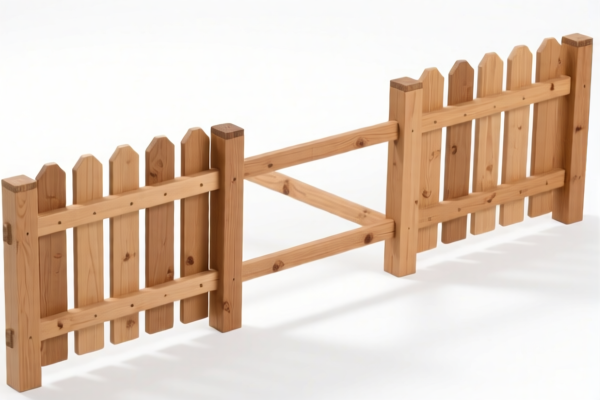
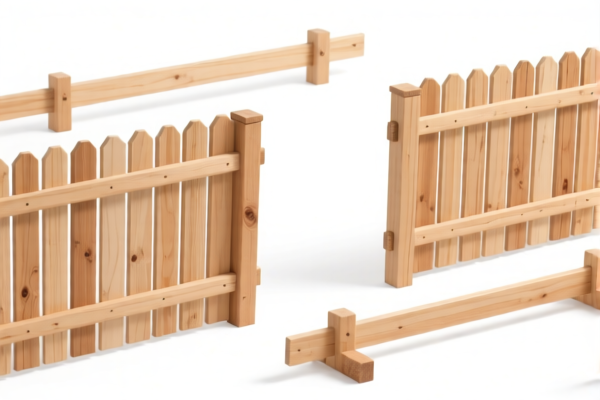
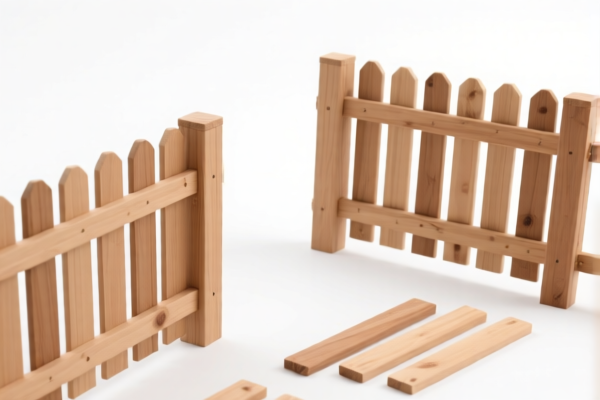
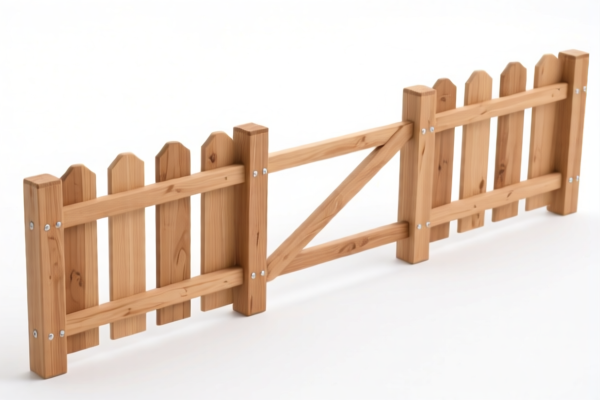
Assembled wood fence sections (often called "picket fences," "rail fences," or "pre-built fence panels") are structural wood components used for residential, commercial, or agricultural boundary marking. Unlike raw lumber, these are pre-assembled units with rails and pickets attached, ready for installation.
In international trade, they are classified based on: 1. Wood Species: Softwood (e.g., Pine, Spruce) vs. Hardwood or Other Wood. 2. Processing Level: Sawed, planed, or further processed (e.g., routed, sanded). 3. Form: Panels/Sections (assembled) vs. Single Boards/Planks.
⚠️ Key Distinction:
- Assembled Panels/Sections → Typically fall under Chapter 44.18 (Builders' joinery/carpentry).
- Individual Boards/Planks → Typically fall under Chapter 44.07 (Wood sawn/chipped) or 44.09 (Wood continuously shaped).
- Note: If the product is merely "garden fencing" made of non-wood materials, it would be elsewhere, but here we focus on WOOD.
📦 Part II: HS Code Classification Details (2026 Latest Tariff Authority Comparison)
Based on your data, here are the specific HS Codes for Assembled Wood Fence Sections and related wood products:
| HS Code | Product Description | Application Scenario | Tax Rate (Total) |
|---|---|---|---|
4418.99.91.50 |
Wooden Fence Panels/Sections (Classified as builders' joinery/panels/partitions) | Pre-assembled fence panels with rails and pickets, ready for installation | 38.2% |
4407.11.00.53 |
Sawn or Chipped Softwood (Coniferous) like Pine (Even if processed into fence board shape) | Individual softwood boards used in fencing, if not fully assembled into panels | 35.0% |
4407.19.00.93 |
Other Wood Articles > 6mm Thick (Softwood/Coniferous, other than pine) | Thickness > 6mm, processed softwood planks used in fencing | 35.0% |
4409.29.11.00 |
Wooden Board-Type Fence Sections (Continuously shaped wood) | Wood that has been continuously shaped (tongue & groove, routed, etc.) for fencing, may be assembled or pre-assembled | 35.0% |
4418.99.91.95 |
Other Wooden Builders' Items (Including Wooden Fence Panels) | Assembled wooden fence sections falling under "other" builders' carpentry/joinery | 38.2% |
🔍 Key Insight:
- "Assembled" is the keyword. If the fence is pre-assembled (rails + pickets attached), it leans towards 4418 (Builders' joinery), with a total tax of 38.2%.
- If the product is individual boards (not yet assembled into panels), it may fall under 4407 or 4409, with a total tax of 35.0%.
- Misclassification Risk: Declaring assembled panels as "wooden boards" (4407/4409) to avoid the 38.2% rate can lead to customs penalties if the assembly is evident.
💰 Part III: 2026 Latest Tariff Rate Breakdown (Including Surtaxes & Policy Add-ons)
✅ Applicable Country: United States (US)
✅ Origin: China (CN)
✅ Effective Time: Post-November 2025 (Current Status)
🎯 1. HS Code 4418.99.91.50 & 4418.99.91.95 —— Assembled Wooden Fence Panels (Builders' Joinery)
| Item | Details |
|---|---|
| Base Tariff | 3.2% (Ad valorem) |
| Section 301 Surtax | +25.0% (China-origin goods) |
| Section 122 Tariff | +10.0% (China-origin goods, specific to certain wood/wood products) |
| Total Tariff Rate | 38.2% |
| Tax Calculation | CIF Value × 38.2% |
| De Minimis Exemption | ❌ Not Eligible (Denied for Section 301/122 goods) |
| Legal Basis Path | HTSUS:4418.99.91 → Section 301: Footnote 9903.88.01 → Section 122: 10% surcharge |
📌 Explanation:
- Base 3.2%: Standard MFN rate for builders' joinery.
- 25% Surcharge: From US Trade Law Section 301 (targeting Chinese manufacturing).
- 10% Surcharge: From Section 122 (often applied to specific raw/material goods, including certain wood products).
- Total 38.2%: High cost for imported wooden fence panels from China.
🎯 2. HS Code 4407.11.00.53, 4407.19.00.93, 4409.29.11.00 —— Individual Wooden Boards/Planks (Softwood/Coniferous)
| Item | Details |
|---|---|
| Base Tariff | 0.0% (Ad valorem) |
| Section 301 Surtax | +25.0% |
| Section 122 Tariff | +10.0% |
| Total Tariff Rate | 35.0% |
| Tax Calculation | CIF Value × 35.0% |
| De Minimis Exemption | ❌ Not Eligible |
| Legal Basis Path | HTSUS:4407/4409 → Section 301: Footnote 9903.88.01 → Section 122: 10% surcharge |
📌 Explanation:
- Even though the base tariff is 0%, the 35% total is still significant.
- This rate applies to sawn wood (4407) or shaped wood (4409) used in fencing, if not fully assembled into panels.
- Comparison: Assembled panels (38.2%) are 3.2% more expensive than individual boards (35.0%) due to the higher base tariff.
🛠️ Part IV: Customs Clearance Practical Advice (Real-World Pitfall Avoidance)
✅ 1. Required Documentation Checklist (Must-Haves)
| Document | Required? | Notes |
|---|---|---|
| ✅ Product Specification Sheet | ✔️ | Must detail: Wood species (e.g., Pine, Spruce), dimensions, assembly type (panels vs. boards), treatment (e.g., pressure-treated, stained). |
| ✅ Commercial Invoice | ✔️ | Clearly state: "Assembled Wooden Fence Sections" or "Sawn Wood Boards for Fencing." Avoid vague terms like "Wood Parts." |
| ✅ Packing List | ✔️ | Specify if items are "Assembled Panels" or "Loose Boards." Mismatches here cause delays. |
| ✅ Country of Origin Certificate | ✔️ | Critical for applying/confirming Section 301 & 122 tariffs. |
| ✅ Treatment Certificate | ✔️ | If wood is pressure-treated or fumigated (ISPM 15 if solid wood packaging), provide proof. |
| ✅ Photos of Product | ✔️ | Show assembly status. Panels vs. loose boards change the HS Code. |
✅ 2. Classification Strategy (Key Mnemonic)
🔥 "Panels go to 4418 (38.2%), Boards go to 4407/09 (35.0%), Assembly Status is Key!"
| Scenario | Correct HS Code Category | Risk if Misclassified |
|---|---|---|
| Pre-assembled Panels (Rails + Pickets attached) | 4418.99.91.50 or .95 |
Declaring as "Boards" (4407) → Penalties for False Declaration, potential seizure. |
| Loose Boards/Planks (Not assembled) | 4407.11.00.53, 4407.19.00.93, 4409.29.11.00 |
Declaring as "Panels" (4418) → Overpayment of 3.2% base tariff (minor, but inefficient). |
| Mixed Shipment (Some assembled, some not) | Split Declaration | Combine in one container but list separately on invoice → Clear customs without delay. |
| Treated Wood | Same HS Codes + Add "Pressure Treated" | Failure to declare treatment → Rejection by USDA/APHIS (biological risk). |
✅ 3. Special Handling Tips
| Situation | Advice |
|---|---|
| Pressure-Treated Wood | Must be fumigated or heat-treated. Provide ISPM 15 Mark if in solid wood pallets. Declare treatment type to avoid USDA hold. |
| Stained/Painted Wood | Declare finish type. Some stains may require additional chemical safety data sheets (SDS). |
| Kit vs. Pre-assembled | If sold as a "DIY Kit" (disassembled), argue for 4407/4409 (35.0%) if components are clearly boards/planks. If "Pre-assembled," use 4418 (38.2%). |
| Volume Discount Strategy | For large imports, consider Pre-ruling from CBP to confirm classification of "assembled" status. |
🌍 Part V: Global Market Clearance Comparison (2026 Latest)
| Country/Region | Recommended HS Code (Wood Fence) | Tariff Rate (China Origin) | Certification Requirements | Notes |
|---|---|---|---|---|
| 🇺🇸 USA | 4418.99.91.50 (Panels) or 4407 (Boards) |
38.2% (Panels) / 35.0% (Boards) | None specific for wood, but USDA for treatment | High tariffs due to Section 301 & 122. |
| 🇨🇳 China | 4418 or 4407 |
5% - 10% (Standard) | CCC (if applicable) | Lower tariffs, no Section 301. |
| 🇪🇺 EU | 4418 or 4407 |
0% - 5% (if compliant) | CE (if treated with chemicals), FSC/PEFC (voluntary) | No anti-dumping, but strict phytosanitary rules. |
| 🇬🇧 UK | 4418 or 4407 |
0% - 5% | UKCA (if applicable) | Post-Brexit rules apply, similar to EU. |
| 🇨🇦 Canada | 4418 or 4407 |
0% (CUSMA if Canadian origin) | CFIA (Phytosanitary) | Free trade if originating from Canada/Mexico. |
📌 Conclusion:
- USA is the most expensive market for Chinese wooden fence sections due to Section 301 (25%) and Section 122 (10%) surcharges.
- EU/UK/Canada have lower tariffs but stricter phytosanitary inspections for wood.
- Cost-Saving Tip: If selling in the US, consider sourcing from non-China countries (e.g., Vietnam, Canada) to avoid 35-38.2% tariffs.
📌 Part VI: Common Errors & Pitfall Guide (Lessons Learned)
❌ Error 1: Declaring "Assembled Panels" as "Wooden Boards" (4407)
👉 Consequence: Customs may reclassify, apply 38.2% rate, and charge back taxes + penalties.
❌ Error 2: Not declaring "Pressure Treated" status
👉 Consequence: USDA/APHIS hold, potential destruction of cargo, or re-export.
❌ Error 3: Mixing "DIY Kits" and "Pre-assembled" in one shipment without clear separation
👉 Consequence: Customs delays, requests for additional info, potential misclassification.
❌ Error 4: Using vague descriptions like "Wood Parts" or "Fence Materials"
👉 Consequence: Higher scrutiny, delays in clearance, possible audits.
✅ Correct Approach:
"Pre-assembled Wooden Fence Panels, Pine, 4ft x 6ft, Pressure-Treated, Model XYZ"
vs.
"Sawn Pine Boards, 1x6, for Fence Construction, Untreated"
🎯 Part VII: Conclusion: Professional Classification Saves Money!
🎯 Remember the Mnemonic:
🔹 "Assembled = 4418 = 38.2%"
🔹 "Boards = 4407/09 = 35.0%"
🔹 "Treatment = USDA Check"
🔹 "Origin = 301/122 Surtaxes!"
📌 Pro Tip:
If you are importing large volumes, consider Applying for a CBP Advance Ruling to lock in the HS Code classification before shipment. This avoids surprises and ensures accurate tariff calculation.
📣 Immediate Action:
📞 Consult a licensed customs broker.
📦 Clearly mark "Assembled" vs. "Loose Boards" on packaging.
📄 Provide Phytosanitary Certificates for treated wood.
🚀 Make your wooden fence sections clear, compliant, and cost-effective!
✨ Professional Clearance Starts with Accurate Classification!
💼 Every Percentage Point of Tariff Counts!
Customer Reviews
About HS Code Classification
The Harmonized System (HS) is an internationally standardized nomenclature developed by the World Customs Organization (WCO) to classify traded products. Over 200 countries use the HS system as the basis for customs tariffs, trade statistics, and import/export regulations.
Each HS code follows a hierarchical structure:
- Chapter (2 digits) — Broad category of goods (e.g., Chapter 84: Machinery and Mechanical Appliances)
- Heading (4 digits) — More specific grouping within the chapter
- Subheading (6 digits) — Internationally standardized breakdown, used by all WCO member countries
- National subdivisions (8-10 digits) — Country-specific extensions for further classification, such as US HTSUS 10-digit codes
Correct HS code classification is essential for smooth customs clearance, accurate duty payment, and compliance with trade regulations. Misclassification can lead to customs delays, overpayment of duties, or penalties.
When importing from CN to US, the applicable tariff rates may include:
- Most-Favored-Nation (MFN) rate — The standard duty rate applied to WTO members
- General rate — Applied to countries without trade agreements
- Trade remedy duties — Additional tariffs such as Section 301 (anti-dumping), Section 232 (national security), or countervailing duties
The information provided on this page is for reference purposes only. For official classification, please consult with your local customs authority or a licensed customs broker.