Assembly Building Blocks
CN → US| HS Code | Tariff Rate | Origin | Destination | Doc |
|---|---|---|---|---|
| 4421919880 | 38.3% | CN | US | Official Doc |
| 3926400090 | 15.3% | CN | US | Official Doc |
| 9503000073 | 10.0% | CN | US | Official Doc |
| 3926400010 | 15.3% | CN | US | Official Doc |
| 4421999880 | 38.3% | CN | US | Official Doc |
Product Images
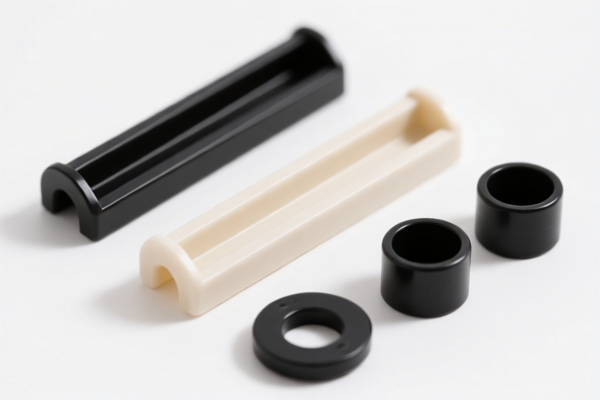
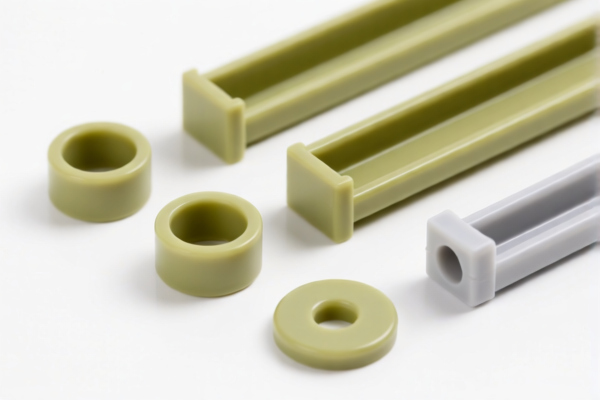
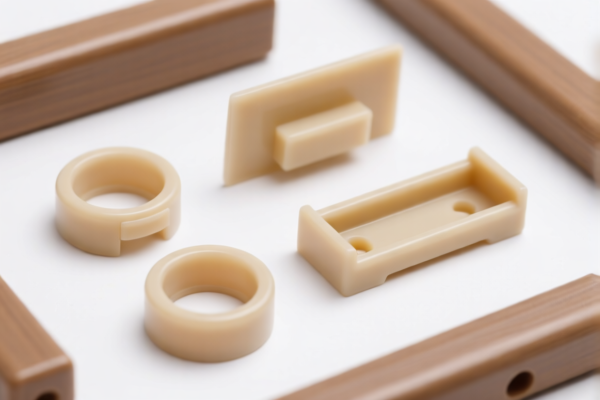
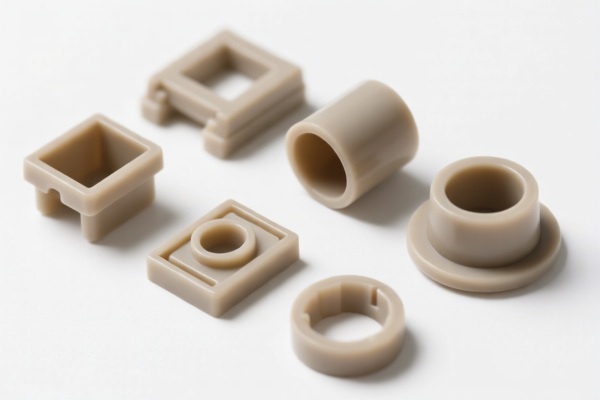
AI Analysis
🧱 Assembly Building Blocks (Toys / Educational Kits)
🌐 HS Code Reference & Clearance Guide | 2026 Latest Tariff Analysis | Strategic Clearance Strategy
📌 I. Product Definition & Classification: Do You Really Know "Building Blocks"?
Assembly Building Blocks are interlocking plastic or wooden toys used for creative construction. In international trade, they are primarily classified based on material and intended use. While most modern blocks are plastic toys, wooden variants exist. The classification significantly impacts customs duties, especially under current US trade policies.
⚠️ Key Distinction Point:
- If made of Plastic and intended for Play/Entertainment → Classified as Toys (9503)
- If made of Wood → Classified as Wooden Articles (4421)
- If considered Decorative rather than playable (rare for blocks) → May fall under Plastic Decorations (3926)
📦 II. HS Code Classification Details (2026 Latest Tariff Authority Comparison)
| HS Code | Product Description | Applicable Scenario | Material | Conflict Check |
|---|---|---|---|---|
9503.00.00.73 |
Toys, constructed from plastics; other toys | Standard Plastic Blocks (e.g., LEGO-style), educational kits, play sets | Plastic | ✅ No Conflict |
9503.00.00.71 |
Puzzles, models, or similar toys (other than puzzles) | Blocks used as models or puzzles, educational focus | Plastic/Wood* | ✅ No Conflict |
3926.40.00.90 |
Other articles of plastic: Decorative articles | Blocks classified as Decorative Items rather than toys | Plastic | ✅ No Conflict |
3926.40.00.10 |
Other articles of plastic: Decorative articles | Blocks specifically marketed as home decor or non-playable | Plastic | ✅ No Conflict |
4421.91.98.80 |
Other wooden articles: Other | Wooden Building Blocks (generic wooden toys) | Wood | ✅ No Conflict |
4421.99.98.80 |
Other wooden articles: Other | Wooden Building Blocks (fallback category for wood) | Wood | ✅ No Conflict |
🔍 Critical Reminder:
- Plastic blocks are almost always classified as Toys (9503) if intended for children/play. Misclassifying them as "Decorations" or "General Plastics" is a common error that triggers audits. - Wooden blocks must go to 4421. Do not use toy codes for wooden items. - The choice between9503.00.00.73(General Toys) and9503.00.00.71(Models/Puzzles) depends on specific product marketing and functionality, but both benefit from lower base tariffs.
💰 III. 2026 Latest Tariff Rate Breakdown (Including Surtaxes & Policy Add-ons)
✅ Applicable Country: United States (US)
✅ Origin: China (CN)
✅ Effective Date: November 10, 2025 (and subsequent imports)
🎯 1. 9503.00.00.73 & 9503.00.00.71 —— Toy Building Blocks (Plastic/Wood)
| Item | Detail |
|---|---|
| Base Duty Rate | 0.0% (ad valorem) |
| Section 301 Surtax (USITC) | +0.0% |
| IEEPA Surtax (China-specific) | +10.0% (Effective Nov 10, 2025) |
| Total Tariff Rate | 10.0% |
| Tax Calculation | CIF Value × 10% |
| De Minimis Eligibility | ❌ Not Eligible (deny_de_minimis applies due to IEEPA) |
| Legal Basis Path | IEEPA:9903.01.25 → USITC:9503.00.00.73 / 9503.00.00.71 |
📌 Explanation:
- Base Duty is 0%: Toys generally have no base MFN tariff. - IEEPA 10%: This is the critical new layer. Under the International Emergency Economic Powers Act, Chinese-origin toys are subject to a 10% additional duty. - No Section 301: Unlike electronics or steel, toys currently do not have the 25% Section 301 surcharge applied to these specific subheadings in this dataset. - Total Cost: 10% of the CIF value. This is the most favorable classification for plastic building blocks from China.
🎯 2. 3926.40.00.90 & 3926.40.00.10 —— Plastic Decorative Blocks
| Item | Detail |
|---|---|
| Base Duty Rate | 5.3% (ad valorem) |
| Section 301 Surtax (USITC) | +0.0% |
| IEEPA Surtax (China-specific) | +10.0% (Effective Nov 10, 2025) |
| Total Tariff Rate | 15.3% |
| Tax Calculation | CIF Value × 15.3% |
| De Minimis Eligibility | ❌ Not Eligible (deny_de_minimis applies) |
| Legal Basis Path | IEEPA:9903.01.24 → USITC:3926.40.00.90 / 3926.40.00.10 |
📌 Explanation:
- If Customs determines the blocks are not toys but decorative items, the base rate jumps to 5.3%. - Plus 10% IEEPA. - Total Cost: 15.3%. This is more expensive than the Toy classification (10%). Therefore, misclassifying as decoration hurts profitability.
🎯 3. 4421.91.98.80 & 4421.99.98.80 —— Wooden Building Blocks
| Item | Detail |
|---|---|
| Base Duty Rate | 3.3% (ad valorem) |
| Section 301 Surtax (USITC) | +25.0% |
| IEEPA Surtax (China-specific) | +10.0% (Effective Nov 10, 2025) |
| Total Tariff Rate | 38.3% |
| Tax Calculation | CIF Value × 38.3% |
| De Minimis Eligibility | ❌ Not Eligible (deny_de_minimis applies) |
| Legal Basis Path | IEEPA:9903.01.25 → USITC:4421.99.98.80 → FOOTNOTE:9903.88.01 (if applicable) |
📌 Explanation:
- High Tariff Alert: Wooden products from China face the 25% Section 301 surcharge in addition to the 10% IEEPA surcharge. - Base Rate: 3.3%. - Total Cost: 38.3%. This is a very high tariff. Importers should strongly consider plastic alternatives or duty-optimized supply chains for wooden blocks.
🛠️ IV. Clearance Practical Advice (Real-World Pitfall Avoidance Guide)
✅ 1. Required Documentation Checklist (Non-Negotiable)
| Document | Must Provide | Notes |
|---|---|---|
| ✅ Product Spec Sheet | ✔️ | Must clearly state "Building Blocks" or "Toy". Include age grading (e.g., 3+). |
| ✅ Material Declaration | ✔️ | Specify Plastic (PP/ABS) vs. Wood. Critical for HS Code selection. |
| ✅ Product Photos | ✔️ | Show interlocking mechanism, bright colors, and play context. |
| ✅ Commercial Invoice | ✔️ | Description must match HS Code logic (e.g., "Plastic Building Blocks for Toy Use"). |
| ✅ Country of Origin | ✔️ | Must be China (CN) to apply these specific IEEPA rates. |
| ✅ Customs Bond | ✔️ | Required for commercial entry. |
✅ 2. Declaration Strategy (Key Mantras)
🔥 "Toy First, Plastic Next, Wood Last, Decorative is Expensive!"
| Scenario | Correct Declaration | Wrong Practice |
|---|---|---|
| Standard Plastic Blocks | 9503.00.00.73 (10% Total) |
Classifying as 3926 (15.3%) → Loss of profit |
| Wooden Blocks | 4421.99.98.80 (38.3% Total) |
Attempting to call them "Plastic" → Fraud/Seizure |
| Mixed Kit (Wood+Plastic) | Separate by material in invoice | Mixing in one line item → Customs Hold/Re-classification |
| "Model" Kits (Plastic) | 9503.00.00.71 (10% Total) |
Classifying as "Art Supplies" → Higher Base Duty |
✅ 3. Special Handling
| Situation | Handling Advice |
|---|---|
| OEM Custom Blocks | Provide design drawings proving "toy" function. Avoid "decorative" language in specs. |
| Educational Kits | Emphasize "STEM Learning" and "Play" in description to support 9503 classification. |
| Wooden Blocks | Budget for 38.3% duty. Consider pricing strategy or origin shifting if possible. |
| Small Shipments | Do NOT use De Minimis (Section 321). The 10% IEEPA surcharge denies de minimis exemption. All shipments are dutiable. |
🌍 V. Global Market Clearance Comparison (2026 Latest)
| Country/Region | Recommended HS Code | Total Tariff (CN Origin) | Certification Req. | Notes |
|---|---|---|---|---|
| 🇺🇸 USA | 9503.00.00.73 |
10.0% | CPC (ASTM F963) | 38.3% for Wood. No De Minimis. |
| 🇨🇳 China | 9503.00.00.00 |
0% - 5% | CCC | Low duty for export/import within China. |
| 🇪🇺 EU | 9503.00.00 |
0% - 4.7% | CE | No IEEPA surcharge. |
| 🇬🇧 UK | 9503.00.00 |
0% - 4.7% | UKCA | Post-Brexit rules apply. |
| 🇨🇦 Canada | 9503.00.00 |
0% | CSTC | No major surtaxes on toys. |
📌 Conclusion:
- The US is the most complex market due to the 10% IEEPA surcharge and 38.3% for wood. - Plastic Toys (9503) are the most tariff-efficient classification for Chinese imports (10% total). - Wooden blocks are significantly penalized (38.3%).
📌 VI. Common Errors & Pitfalls (Blood & Tears Lessons)
❌ Error 1: Claiming De Minimis (Section 321) for blocks under $800
👉 Consequence: Denied. The IEEPA surcharge removes de minimis eligibility. You will pay 10% on every shipment, regardless of value.
❌ Error 2: Classifying Plastic Blocks as 3926 (Plastic Articles)
👉 Consequence: Higher Tax. You pay 15.3% instead of 10%. Lose 5.3% margin unnecessarily.
❌ Error 3: Calling Wooden Blocks "Plastic" to avoid 301 Tariff
👉 Consequence: Seizure & Fine. Material mismatch is easily detected via physical inspection.
❌ Error 4: Ignoring the 10% IEEPA Surcharge
👉 Consequence: Underpayment. Customs will assess back-taxes + penalties + interest.
✅ Correct Practice:
"Plastic Building Blocks, Educational Toy, ABS Material, ASTM F963 Certified, Made in China"
HS Code:9503.00.00.73
🎯 VII. Conclusion: Professional Declaration Saves Money!
🎯 Remember the Mantras:
🔹 "Toys 10%, Decor 15%, Wood 38%—Pick Wisely!"
🔹 "No De Minimis for China Toys—Declare Everything!"
🔹 "IEEPA is the New King—10% Always Applies!"
📌 Pro Tip:
If your plastic blocks are originating from Vietnam, Thailand, or Malaysia, you may avoid the IEEPA surcharge. However, ensure substantial transformation occurs in those countries. Simple assembly in China and transshipment does not qualify.
📣 Immediate Action:
📞 Contact a licensed customs broker.
📦 Provide accurate material specs and photos.
🚀 Optimize your HS Code to9503.00.00.73for the lowest 10% duty rate!
✨ Professional Clearance, Precise Classification!
💼 Your Bottom Line Depends on the Right Code!
Customer Reviews
About HS Code Classification
The Harmonized System (HS) is an internationally standardized nomenclature developed by the World Customs Organization (WCO) to classify traded products. Over 200 countries use the HS system as the basis for customs tariffs, trade statistics, and import/export regulations.
Each HS code follows a hierarchical structure:
- Chapter (2 digits) — Broad category of goods (e.g., Chapter 84: Machinery and Mechanical Appliances)
- Heading (4 digits) — More specific grouping within the chapter
- Subheading (6 digits) — Internationally standardized breakdown, used by all WCO member countries
- National subdivisions (8-10 digits) — Country-specific extensions for further classification, such as US HTSUS 10-digit codes
Correct HS code classification is essential for smooth customs clearance, accurate duty payment, and compliance with trade regulations. Misclassification can lead to customs delays, overpayment of duties, or penalties.
When importing from CN to US, the applicable tariff rates may include:
- Most-Favored-Nation (MFN) rate — The standard duty rate applied to WTO members
- General rate — Applied to countries without trade agreements
- Trade remedy duties — Additional tariffs such as Section 301 (anti-dumping), Section 232 (national security), or countervailing duties
The information provided on this page is for reference purposes only. For official classification, please consult with your local customs authority or a licensed customs broker.