Audio Decoding Cable
CN → US| HS Code | Tariff Rate | Origin | Destination | Doc |
|---|---|---|---|---|
| 8544422000 | 85.0% | CN | US | Official Doc |
| 8544429090 | 87.6% | CN | US | Official Doc |
| 8543709860 | 37.6% | CN | US | Official Doc |
| 8544499000 | 38.9% | CN | US | Official Doc |
Product Images
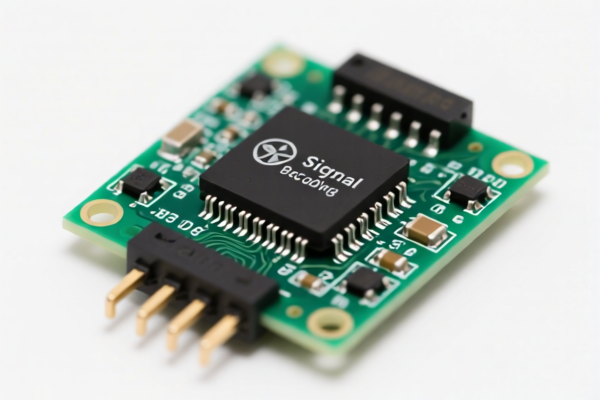
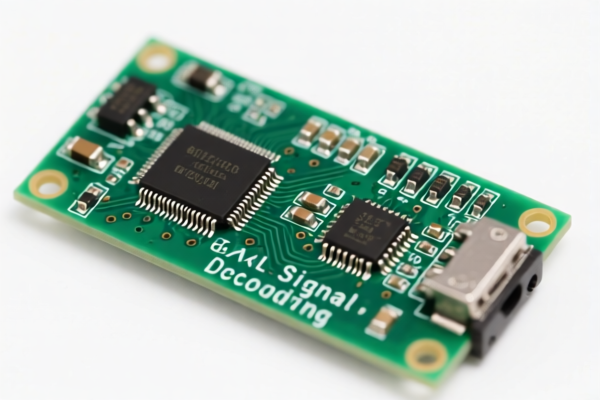
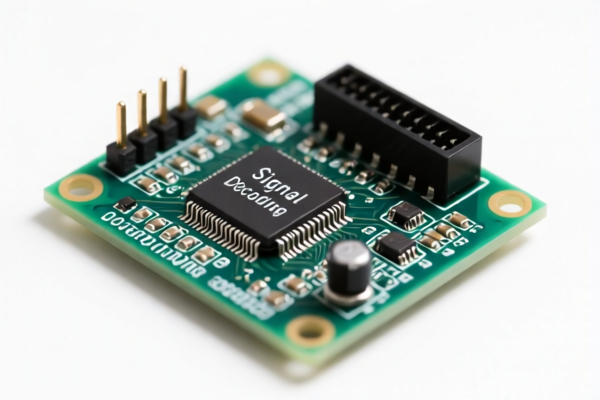
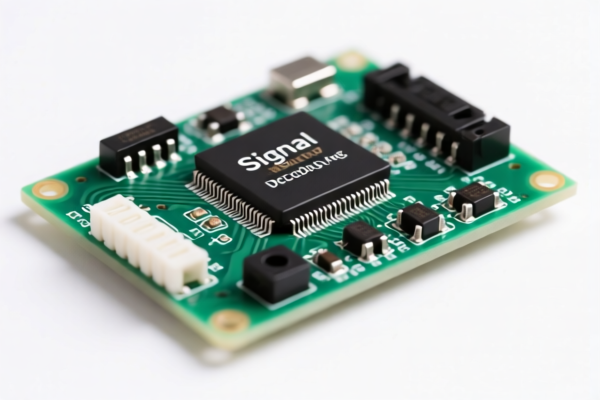
AI Analysis
🎧 Audio Decoding Cable (Audio/Video Cables)
🌐 HS Code Reference & Customs Clearance Guide | 2026 Latest Tariff Analysis | Professional Clearance Strategy
📌 1. Product Definition and Classification: Do You Really Understand "Audio Decoding Cable"?
An "Audio Decoding Cable" is a generic term often used for cables that transmit audio or video signals. In international trade, these are classified based on their electrical properties, voltage, and material composition. They generally fall under Insulated Electrical Conductors for telecommunications or audio-visual transmission.
⚠️ Key Distinction:
- If the cable is specifically for telecommunications (e.g., standard audio interconnects) → Often falls under 8544.42.20.00.
- If the cable is for general electrical wiring or non-telecom audio/video transmission → May fall under 8544.42.90.90 or 8544.49.90.00.
- If it is considered a functional electrical connection device with specific properties → May fall under 8543.70.98.60.
📦 2. HS Code Classification Details (2026 Latest Tariff Authority Comparison)
| HS Code | Product Description | Application Scenario | Voltage | Total Tax Rate (China Origin → US) |
|---|---|---|---|---|
8544.42.20.00 |
Insulated electrical conductors, for telecommunications, incl. audio/video cables, V ≤ 1000V | Standard audio cables, telecommunication wires | ≤ 1000V | 85.0% |
8544.42.90.90 |
Other insulated electrical conductors, incl. audio/video cables, V ≤ 1000V | General audio cables, non-telecom specific | ≤ 1000V | 87.6% |
8543.70.98.60 |
Electrical equipment having individual functions, not specified elsewhere | Functional electrical connection devices, metal conductor + insulation | N/A | 37.6% |
8544.49.90.00 |
Insulated electrical conductors, incl. audio/video cables, V ≤ 1000V, not elsewhere specified | General voltage ≤ 1000V audio/video cables | ≤ 1000V | 38.9% |
🔍 Key Reminder:
- The term "Audio Decoding Cable" is not a standard HS Code description. Customs will classify based on physical structure and primary use.
- Telecom-style audio cables (8544.42.20.00) and general cables (8544.42.90.90) carry very high tariffs due to Section 301 and Section 232/122 measures.
- Functional equipment (8543.70.98.60) has a lower tariff but requires proof of "individual function" beyond simple conduction.
💰 3. 2026 Latest Tariff Rate Breakdown (Including Surcharges)
✅ Applicable Country: United States (US)
✅ Origin: China (CN)
✅ Effective Date: Ongoing (2025-2026)
🎯 1. 8544.42.20.00 —— Insulated Electrical Conductors, for Telecommunications
| Item | Content |
|---|---|
| Base Tariff | 0.0% |
| Section 301 Surcharge | +25.0% |
| Section 122/232 Surcharge (Steel, Aluminum, Copper Products) | +50.0% |
| Total Tax Rate | 85.0% |
| Tax Calculation | CIF Value × 85.0% |
| De Minimis Exemption | ❌ Not Applicable |
| Legal Basis | Base 0% + 301 (25%) + 122/232 (50%) |
📌 Explanation:
- This classification is highly sensitive. If the cable contains copper, steel, or aluminum and is classified under this telecom heading, the 50% surcharge applies on top of the 25% Section 301 tariff.
- Total effective rate: 85%. This is an extremely high cost.
🎯 2. 8544.42.90.90 —— Other Insulated Electrical Conductors
| Item | Content |
|---|---|
| Base Tariff | 2.6% |
| Section 301 Surcharge | +25.0% |
| Section 122/232 Surcharge (Steel, Aluminum, Copper Products) | +50.0% |
| Total Tax Rate | 87.6% |
| Tax Calculation | CIF Value × 87.6% |
| De Minimis Exemption | ❌ Not Applicable |
| Legal Basis | Base 2.6% + 301 (25%) + 122/232 (50%) |
📌 Note:
- Even slightly higher base rate (2.6%) makes this the most expensive option.
- Applies to cables not specifically for telecommunications but still insulated conductors ≤ 1000V.
🎯 3. 8543.70.98.60 —— Electrical Equipment with Individual Functions
| Item | Content |
|---|---|
| Base Tariff | 2.6% |
| Section 301 Surcharge | +25.0% |
| Section 122 Surcharge | +10% |
| Total Tax Rate | 37.6% |
| Tax Calculation | CIF Value × 37.6% |
| De Minimis Exemption | ❌ Not Applicable |
| Legal Basis | Base 2.6% + 301 (25%) + 122 (10%) |
📌 Advantage:
- Significantly lower tariff (37.6%) if the product can be proven as a "functional device" rather than just a passive cable.
- Does not attract the 50% Section 232/122 surcharge for metals.
- Requires documentation proving "individual function" (e.g., signal decoding, conversion).
🎯 4. 8544.49.90.00 —— Other Insulated Electrical Conductors
| Item | Content |
|---|---|
| Base Tariff | 3.9% |
| Section 301 Surcharge | +25.0% |
| Section 122 Surcharge | +10% |
| Total Tax Rate | 38.9% |
| Tax Calculation | CIF Value × 38.9% |
| De Minimis Exemption | ❌ Not Applicable |
| Legal Basis | Base 3.9% + 301 (25%) + 122 (10%) |
📌 Note:
- Another lower-cost option (38.9%) if classified as a general conductor not fitting telecom or specific audio/video exclusions.
- Avoids the 50% metal surcharge.
🛠️ 4. Customs Clearance Practical Advice (Pitfall Avoidance Guide)
✅ 1. Documentation Checklist (Must-Haves)
| Document | Required | Description |
|---|---|---|
| ✅ Product Specifications | ✔️ | Detail material composition (copper, aluminum, steel), voltage, usage. |
| ✅ Circuit/Structure Diagram | ✔️ | Prove if it's a passive cable or has active decoding/functional components. |
| ✅ Product Photos | ✔️ | Clear images of connectors, labels, and internal structure. |
| ✅ Commercial Invoice | ✔️ | Accurate description: "Audio/Video Transmission Cable" or "Signal Decoder Cable". |
| ✅ Packing List | ✔️ | Itemized list, avoid mixing different HS codes in one shipment if possible. |
✅ 2. Declaration Tips (Key Strategies)
🔥 "Function Defines Code, Material Defines Surcharge!"
| Scenario | Recommended HS Code | Why? |
|---|---|---|
| Passive Audio Cable (no decoding chip) | 8544.42.20.00 or 8544.42.90.90 |
Classified as insulated conductor. High tax (85%+) due to metal surcharges. |
| Active Decoding Cable (with chip/function) | 8543.70.98.60 |
Classified as functional equipment. Lower tax (37.6%) if proven. |
| General Audio/Video Cable (non-telecom) | 8544.49.90.00 |
General conductor. Lower tax (38.9%) if not telecom-specific. |
| Misdeclaration as "Electronic Device" | ❌ Avoid | Risk of penalty, delay, and re-classification. |
✅ 3. Special Considerations
| Situation | Advice |
|---|---|
| Copper Content | If classified under 8544.42, copper triggers the 50% surcharge. Avoid if possible. |
| "Decoding" Feature | If the cable has a built-in decoder chip, argue for 8543.70.98.60 to save ~50% in taxes. |
| OEM/Custom Cables | Provide technical sheets to support functional classification. |
| Mixed Shipments | Separate passive cables from active devices in different shipments if tax difference is significant. |
🌍 5. Global Market Comparison (2026 Latest)
| Country/Region | Recommended HS Code | Tariff (China) | Remarks |
|---|---|---|---|
| 🇺🇸 USA | 8543.70.98.60 |
37.6% | Best rate if functional. 8544.42.20.00 is 85.0%. |
| 🇨🇳 China | 8544.42.20.00 |
0% | No surcharges for exports to China. |
| 🇪🇺 EU | 8544.42.20.00 |
0% | No Section 301/232 surcharges. |
| 🇬🇧 UK | 8544.42.20.00 |
0% | No surcharges. |
| 🇯🇵 Japan | 8544.42.20.00 |
0% | No surcharges. |
📌 Conclusion:
- US Market has the highest risk due to Section 301 and 232 surcharges.
- Strategic Classification is critical:8543.70.98.60or8544.49.90.00can save ~50% in taxes compared to telecom-style classification.
📌 6. Common Errors & Pitfalls (Lessons Learned)
❌ Error 1: Classifying all audio cables as 8544.42.20.00
👉 Consequence: 85% tax rate due to copper/steel surcharges.
✅ Fix: Check if cable has functional components → consider 8543.70.98.60.
❌ Error 2: Ignoring material composition
👉 Consequence: If copper is present, 50% surcharge applies under 8544.42.
✅ Fix: Use non-metallic or alternative classification if possible.
❌ Error 3: Vague description "Audio Cable"
👉 Consequence: Customs may default to highest tax bracket.
✅ Fix: Specify "Insulated Conductor" or "Functional Electrical Equipment".
✅ Correct Declaration Example:
"Audio Video Transmission Cable, Insulated Conductor, Voltage ≤ 1000V, Model XYZ, FCC Certified"
OR
"Active Audio Signal Decoder Cable, Electrical Equipment with Individual Function, Model ABC"
🎯 7. Conclusion: Precise Classification Saves Money!
🎯 Key Takeaway:
🔹 "Passive Cable = High Tax (85%) if Telecom"
🔹 "Functional Device = Lower Tax (37.6%)"
🔹 "Material Matters: Copper/Steel = 50% Surcharge"
📌 Pro Tip:
- If your "Audio Decoding Cable" has no active components, try to classify under 8544.49.90.00 (38.9%) instead of 8544.42.20.00 (85.0%).
- If it has active components, classify under 8543.70.98.60 (37.6%) and provide proof of function.
- Always consult a customs broker for pre-classification ruling to avoid penalties.
📣 Action Required:
📞 Contact your customs broker with technical specifications and circuit diagrams.
🚀 Optimize HS Code to reduce tariff burden by up to 50%.
✨ Professional Clearance, Start with Precise Classification!
💼 Every dollar saved in tariffs is pure profit!
Customer Reviews
About HS Code Classification
The Harmonized System (HS) is an internationally standardized nomenclature developed by the World Customs Organization (WCO) to classify traded products. Over 200 countries use the HS system as the basis for customs tariffs, trade statistics, and import/export regulations.
Each HS code follows a hierarchical structure:
- Chapter (2 digits) — Broad category of goods (e.g., Chapter 84: Machinery and Mechanical Appliances)
- Heading (4 digits) — More specific grouping within the chapter
- Subheading (6 digits) — Internationally standardized breakdown, used by all WCO member countries
- National subdivisions (8-10 digits) — Country-specific extensions for further classification, such as US HTSUS 10-digit codes
Correct HS code classification is essential for smooth customs clearance, accurate duty payment, and compliance with trade regulations. Misclassification can lead to customs delays, overpayment of duties, or penalties.
When importing from CN to US, the applicable tariff rates may include:
- Most-Favored-Nation (MFN) rate — The standard duty rate applied to WTO members
- General rate — Applied to countries without trade agreements
- Trade remedy duties — Additional tariffs such as Section 301 (anti-dumping), Section 232 (national security), or countervailing duties
The information provided on this page is for reference purposes only. For official classification, please consult with your local customs authority or a licensed customs broker.