Audio Receiver
CN → US| HS Code | Tariff Rate | Origin | Destination | Doc |
|---|---|---|---|---|
| 8527195025 | 10.0% | CN | US | Official Doc |
| 8527994000 | 35.0% | CN | US | Official Doc |
| 8518402000 | 35.0% | CN | US | Official Doc |
| 8518500000 | 35.0% | CN | US | Official Doc |
| 8517620090 | 35.0% | CN | US | Official Doc |
| 8517690000 | 35.0% | CN | US | Official Doc |
Product Images
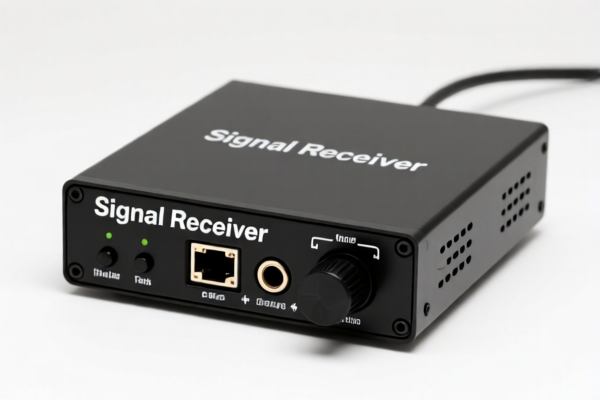
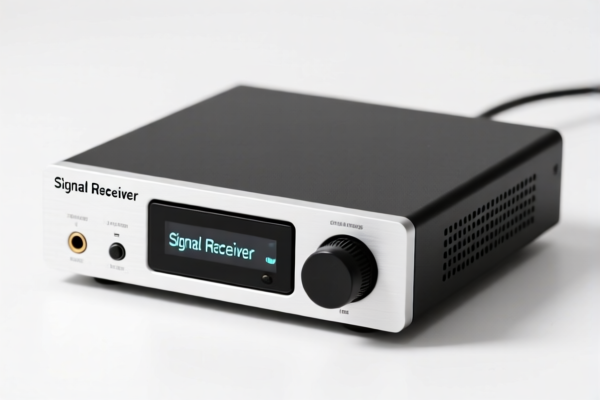
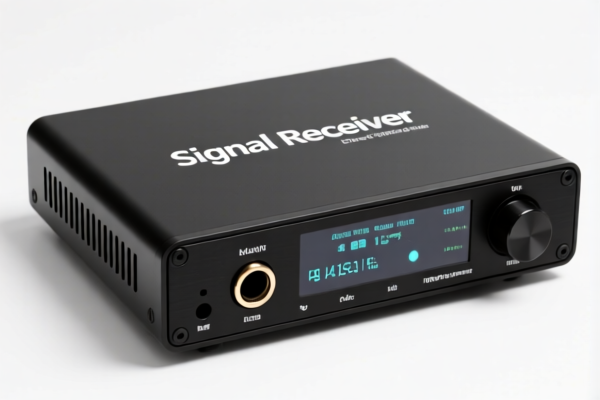
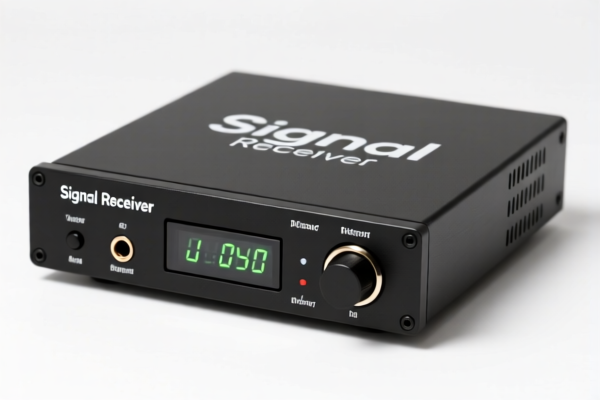
AI Analysis
📻 Audio Receiver (Audio Receivers / Radio Receivers)
🌐 HS Code Reference & Clearance Guide | 2026 Latest Tariff Analysis | Professional Customs Strategy
📌 I. Product Definition & Classification: Do You Really Understand "Audio Receivers"?
An Audio Receiver is a complex electronic device that combines an AM/FM radio tuner with a multi-channel audio power amplifier and often includes inputs for various audio sources (Bluetooth, HDMI, Optical, etc.). In international trade, the classification is critical because it determines whether the product is treated as a broadcast receiver, an audio signal processor, or a data transmission device.
Key Distinction Points: * Broadcast Receivers (8527): Devices primarily designed to receive radio signals (AM/FM/SAT) for audio playback. * Audio Processing/Amplification (8518): Devices primarily designed to process or amplify audio signals, even if they have receiving capabilities. * Data Transmission (8517): Devices primarily designed for receiving data, voice, or images over networks (e.g., IP-based audio streams, though traditional "Audio Receivers" usually fall here only if explicitly defined as data devices without primary radio function).
⚠️ Critical Warning:
Misclassification leads to massive tariff discrepancies. For example,8527.19.50.25has a 10% total tax, while8527.99.40.00has a 35% total tax. A 25% difference can wipe out profit margins.
📦 II. HS Code Classification Details (2026 Latest Tariff Authority对照)
| HS Code | Product Description (Based on Provided Data) | Tax Rate (Total) | Tax Breakdown |
|---|---|---|---|
8527.19.50.25 |
Audio receiver belongs to broadcasting equipment; matches other categories with no external power supply conflict. | 10.0% | Base: 0%, Additional: 0%, Section 301: 10% |
8527.99.40.00 |
Audio receiver belongs to broadcasting equipment; fits "other" category definition with no material/form conflict. | 35.0% | Base: 0%, Additional: 25%, Section 301: 10% |
8518.40.20.00 |
Audio receiver belongs to audio signal processing equipment; matches audio electric amplifier category with no material conflict. | 35.0% | Base: 0%, Additional: 25%, Section 301: 10% |
8518.50.00.00 |
Audio receiver belongs to audio signal processing; consistent with electric sound amplifier groups and related components. | 35.0% | Base: 0%, Additional: 25%, Section 301: 10% |
8517.62.00.90 |
Audio receiver fits the description of receiving voice, image, or other data; electronic device with no material conflict. | 35.0% | Base: 0%, Additional: 25%, Section 301: 10% |
8517.69.00.00 |
Audio receiver belongs to data transmission receiving equipment; fits "other" catch-all category with no material conflict. | 35.0% | Base: 0%, Additional: 25%, Section 301: 10% |
🔍 Key Observation:
- Only8527.19.50.25offers a low tariff of 10%.
- All other 5 codes carry a high tariff of 35% (0% Base + 25% Section 301 Additional + 10% IEEPA/Other).
- The difference lies in the primary function claimed and the specific technical definition used in customs documentation.
💰 III. 2026 Latest Tariff Rate Details (Including Surcharges & Policy Add-ons)
✅ Applicable Country: United States (US)
✅ Origin: China (CN)
✅ Effective Date: 2025 onwards (Subject to current Section 301 and IEEPA rules)
🎯 1. 8527.19.50.25 —— Broadcasting Equipment (Specific Sub-category)
| Item | Content |
|---|---|
| Base Rate | 0% (ad valorem) |
| Section 301 Additional Duty | 0% (Specific exemption or sub-category exclusion applies here) |
| IEEPA/Other Additional | +10% |
| Total Rate | 10% |
| Tax Calculation | CIF Value × 10% |
| De Minimis Exemption | ❌ Not applicable for Section 301 goods usually, but rate is lower. |
| Legal Basis Path | USITC:8527.19.50.25 → Section 301 Exclusion (if applicable) → IEEPA:9903.01.24 |
📌 Explanation:
- This code represents a specific subset of broadcasting receivers where Section 301 additional duties (25%) do NOT apply.
- The 10% tax is likely due to a specific IEEPA provision or a negotiated exemption for this precise sub-category.
- Advantage: Significantly lower cost. Must prove the device is a standard "radio receiver" under this specific sub-heading.
🎯 2. 8527.99.40.00 —— Other Broadcasting Equipment
| Item | Content |
|---|---|
| Base Rate | 0% |
| Section 301 Additional Duty | +25% |
| IEEPA/Other Additional | +10% |
| Total Rate | 35% |
| Tax Calculation | CIF × 35% |
| De Minimis Exemption | ❌ Not applicable |
| Legal Basis Path | IEEPA:9903.01.24 → USITC:8527.99.40.00 → Section 301 Footnote |
📌 Explanation:
- Classified as "Other" broadcasting equipment.
- Subject to the full 25% Section 301 tariff + 10% IEEPA.
- Common for multi-functional receivers that don't fit the specific "19.50" sub-category.
🎯 3–6. Audio Processing (8518) & Data Transmission (8517) Codes
| Item | Content |
|---|---|
| Base Rate | 0% |
| Section 301 Additional Duty | +25% |
| IEEPA/Other Additional | +10% |
| Total Rate | 35% |
| Tax Calculation | CIF × 35% |
| De Minimis Exemption | ❌ Not applicable |
| Legal Basis Path | Varies by code, but all include Section 301:25% + IEEPA:10% |
📌 Explanation:
-8518.40.20.00&8518.50.00.00: Classified as Amplifiers/Signal Processors. If customs determines the primary function is amplification rather than broadcasting, these codes apply.
-8517.62.00.90&8517.69.00.00: Classified as Data Transmission/Receivers. If the device is marketed as an "IP Audio Receiver" or "Network Audio Receiver" primarily for data streaming (not radio tuning), these codes may be used.
- All carry 35%: No Section 301 exemption for these sub-categories.
🛠️ IV. Customs Clearance Practical Advice (Battle-Tested Pitfall Guide)
✅ 1. Required Documentation Checklist
| Document | Must Provide | Description |
|---|---|---|
| ✅ Product Specification Sheet | ✔️ | Clearly define primary function: "Radio Tuner + Amplifier" vs. "Network Audio Processor". |
| ✅ Circuit Diagram / Block Diagram | ✔️ | To prove presence/absence of radio tuning circuits (AM/FM) vs. pure digital audio processing. |
| ✅ Product Photos (Including Labels) | ✔️ | Show input/output ports (Antenna inputs vs. Ethernet/HDMI only). |
| ✅ Third-Party Test Reports | ✔️ | FCC ID, CE, RoHS. FCC ID is crucial for 8527 classification (Radio/TV Broadcast Equipment). |
| ✅ Commercial Invoice | ✔️ | Accurate description: e.g., "AM/FM Stereo Receiver with Bluetooth" vs. "Network Audio Streamer". |
| ✅ Packing List | ✔️ | Detail all components (remote, antenna, power cord) to avoid "missing parts" penalties. |
✅ 2. Declaration Strategy (Key Mantra)
🔥 "Function Defines Code; Radio = 8527; Amp = 8518; Data = 8517. Choose Wisely!"
| Scenario | Correct Declaration | Risk if Wrong |
|---|---|---|
| Device has Antenna Input & AM/FM Tuning | 8527.19.50.25 (if eligible) or 8527.99.40.00 |
If declared as 8517, risk of 35% + penalties. If declared as 8527.19.50.25 but fails technical check, penalty. |
| Device is Bluetooth/Wi-Fi Only (No Radio Tuner) | 8517.62.00.90 or 8517.69.00.00 |
If declared as 8527, customs may reject due to lack of radio function. |
| Device is Amplifier + DAC (No Tuner, No Network) | 8518.40.20.00 or 8518.50.00.00 |
If declared as 8527, risk of misclassification. |
| Multi-Function (Radio + Bluetooth + Amp) | 8527.19.50.25 (Best Case) |
If rejected, falls back to 35%. Must provide strong evidence of "Broadcasting" as primary function. |
📌 Pro Tip:
- To qualify for8527.19.50.25(10%), the device MUST have a functional radio tuner (AM/FM).
- If the radio tuner is "dummy" or non-functional, customs will reclassify to8518or8517(35%).
- Provide FCC Certification showing "Radio Receiver" classification to support8527.
✅ 3. Special Cases Handling
| Situation | Recommendation |
|---|---|
| Hybrid Device (Radio + Network) | Declare as Radio Receiver (8527). Primary function is often interpreted as radio if antenna port exists. |
| Smart Audio Receiver (No Radio) | Declare as Data Transmission (8517) or Amplifier (8518). Do not claim radio features. |
| OEM Custom Device | Provide design schematics proving primary function. |
| High-Value Luxury Receiver | Consider Advance Ruling (Pre-classification) to lock in 8527.19.50.25 if eligible. |
🌍 V. Global Market Clearance Comparison (2026 Latest)
| Country/Region | Recommended HS Code | Tariff (China Origin) | Certification | Notes |
|---|---|---|---|---|
| 🇺🇸 USA | 8527.19.50.25 |
10% (Best Case) | FCC + RoHS | 35% if misclassified as 8517/8518 or 8527.99. |
| 🇪🇺 EU | 8527.13.00 / 8527.19.00 |
0% (Generally) | CE + UKCA | No Section 301. Focus on safety standards. |
| 🇨🇳 China | 8527.13.00.00 |
0% - 5% | CCC (if applicable) | Domestic market standards. |
| 🇬🇧 UK | 8527.19.00 |
0% | UKCA | Post-Brexit rules apply. |
📌 Conclusion:
- USA is the only market with punitive tariffs (35%) for misclassified audio electronics.
- Precision in declaration is paramount. The 25% difference between 10% and 35% is huge.
📌 VI. Common Mistakes & Pitfall Guide (Lessons Learned)
❌ Mistake 1: Declaring a Bluetooth Speaker as an Audio Receiver.
👉 Consequence: Customs may reclassify to 8518 or 8517 → 35% tax instead of potential lower rates for speakers.
❌ Mistake 2: Omitting Antenna Port in description.
👉 Consequence: Customs assumes no radio function → Rejection of 8527 classification → 35% tax.
❌ Mistake 3: Using "Audio System" as generic name.
👉 Consequence: Ambiguity leads to manual review → Delay + Potential Misclassification.
❌ Mistake 4: Assuming all receivers are 8527.
👉 Consequence: If device lacks radio tuner, 8527 is invalid. Must use 8518 (Amplifier) or 8517 (Data).
✅ Correct Approach:
"Network Audio Receiver with Bluetooth, HDMI, and AM/FM Radio Tuner, Model XYZ, FCC Certified"
→ Supports8527.19.50.25(10%)."Smart Audio Streamer with Amplifier, No Radio Tuner, Model ABC"
→ Supports8517.62.00.90or8518.40.20.00(35%).
🎯 VII. Conclusion: Professional Classification Saves Money!
🎯 Remember the Mantra:
🔹 "Radio Antenna = 8527 (Potentially 10%); No Radio = 8518/8517 (35%)."
🔹 "FCC ID is Your Best Friend for 8527 Classification."
📌 Tips:
- If your device has AM/FM radio, aggressively pursue
8527.19.50.25to save 25% in tariffs.- If your device is digital-only, prepare for 35% tax but ensure correct
8517/8518classification to avoid penalties.- Always apply for an Advance Ruling if the device is hybrid (Radio + Network) to secure the lower rate.
📣 Immediate Action:
📞 Consult a licensed customs broker with your FCC ID and circuit diagram.
🚀 Accurate classification is not just compliance—it's profitability!
✨ Professional Clearance Starts with Precise Classification!
💼 Every dollar saved on tariffs is a dollar earned!
Customer Reviews
About HS Code Classification
The Harmonized System (HS) is an internationally standardized nomenclature developed by the World Customs Organization (WCO) to classify traded products. Over 200 countries use the HS system as the basis for customs tariffs, trade statistics, and import/export regulations.
Each HS code follows a hierarchical structure:
- Chapter (2 digits) — Broad category of goods (e.g., Chapter 84: Machinery and Mechanical Appliances)
- Heading (4 digits) — More specific grouping within the chapter
- Subheading (6 digits) — Internationally standardized breakdown, used by all WCO member countries
- National subdivisions (8-10 digits) — Country-specific extensions for further classification, such as US HTSUS 10-digit codes
Correct HS code classification is essential for smooth customs clearance, accurate duty payment, and compliance with trade regulations. Misclassification can lead to customs delays, overpayment of duties, or penalties.
When importing from CN to US, the applicable tariff rates may include:
- Most-Favored-Nation (MFN) rate — The standard duty rate applied to WTO members
- General rate — Applied to countries without trade agreements
- Trade remedy duties — Additional tariffs such as Section 301 (anti-dumping), Section 232 (national security), or countervailing duties
The information provided on this page is for reference purposes only. For official classification, please consult with your local customs authority or a licensed customs broker.