Audio Splitter
CN → US| HS Code | Tariff Rate | Origin | Destination | Doc |
|---|---|---|---|---|
| 8518908100 | 35.0% | CN | US | Official Doc |
| 8518402000 | 35.0% | CN | US | Official Doc |
| 8536904000 | 35.0% | CN | US | Official Doc |
| 8536908530 | 35.0% | CN | US | Official Doc |
| 8544429090 | 87.6% | CN | US | Official Doc |
Product Images
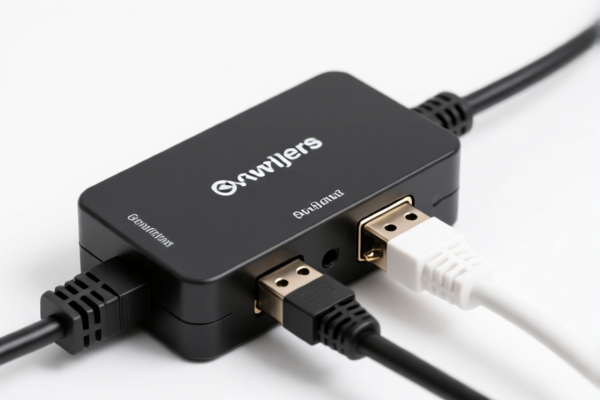
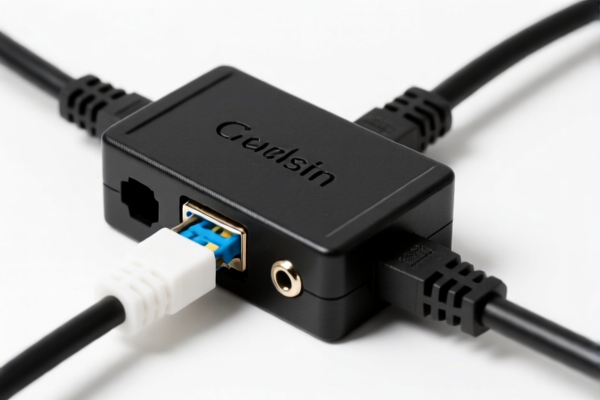
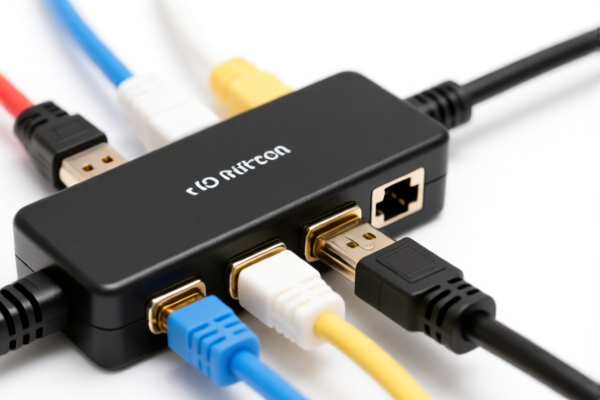
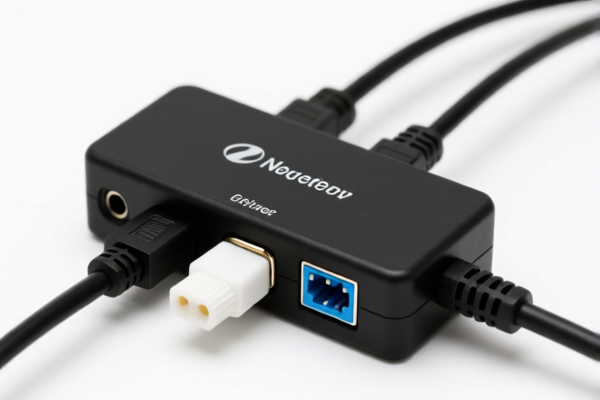
AI Analysis
🔌 Audio Splitter (Signal Distribution Devices)
🌐 HS Code Reference & Customs Clearance Guide | 2026 Latest Tariff Analysis | Professional Clearance Strategy
📌 I. Product Definition & Classification: What is an "Audio Splitter"?
An Audio Splitter (also known as a Y-Cable, Headphone Splitter, or Signal Distributor) is a device used to divide a single audio signal source into multiple output paths. In international trade, its classification depends heavily on whether it is treated as a standalone electronic component, a connector accessory, or a complete signal processing unit.
⚠️ Key Classification Distinction:
- Pure Electronic Component/Accessory: Often classified under Headphone Amplifiers or Electrical Connectors if it acts as a passive pass-through or simple circuit branch.
- Active Signal Processor: If it contains active electronics to separate or manage signals, it aligns with Amplifiers.
- Connector/Plug Assembly: If it is primarily a wiring harness with connectors (e.g., 3.5mm jacks), it may fall under Electrical Apparatus for Voltage ≤ 1,000V.
📦 II. HS Code Classification Details (Based on Provided Data)
| HS Code | Product Description | Application Logic | Tax Rate |
|---|---|---|---|
8518.90.81.00 |
Parts and accessories of sound recording/reproducing apparatus | Treated as an electronic component/accessory for audio equipment; no material conflict with "Other" category. | 35.0% |
8518.40.20.00 |
Audio Frequency Amplifiers | Functionally matches audio signal processing devices; inferred as an electronic component/finished good for audio equipment. | 35.0% |
8536.90.40.00 |
Connectors and junction blocks for voltage ≤ 1,000V | Functions as a circuit connecting device; consistent with wiring terminals and electrical connection components. | 35.0% |
8536.90.85.30 |
Other electrical apparatus for circuits ≤ 1,000V | Used as an electrical circuit connecting device; aligns with connectors, junction boxes, etc. | 35.0% |
8544.42.90.90 |
Electrical conductors, fitted with connectors | Classified as a connection/distribution device made of electrical conductors; fits the form of "conductor with connectors." | 87.6% |
🔍 Critical Insight:
- Codes8518and8536result in a 35% total tax rate.
- Code8544triggers a significantly higher rate of 87.6% due to specific material-based additional tariffs (Steel, Aluminum, Copper).
- Misclassification as8544can nearly double your duty costs compared to8518or8536.
💰 III. 2026 Latest Tariff Rate Breakdown (Including Surtaxes & Policy Add-ons)
✅ Applicable Country: United States (US)
✅ Origin: China (CN)
✅ Effective Date: November 10, 2025 (and subsequent imports)
🎯 1. 8518.90.81.00 & 8518.40.20.00 — Audio Components / Amplifiers
| Item | Detail |
|---|---|
| Base Tariff | 0.0% |
| Section 301 Surtax | +25.0% (USITC) |
| IEEPA Section 122 Tariff | +10.0% (Targeting China/HK) |
| Total Tax Rate | 35.0% |
| Calculation Basis | CIF Value × 35% |
| De Minimis Exemption | ❌ Not Eligible (Subject to strict scrutiny) |
| Legal Path | Base: 0% → Sec 301: +25% → IEEPA: +10% |
📌 Explanation:
- These codes are favored for audio splitters as they are viewed as part of the "audio equipment ecosystem."
- The total rate is 35%, which is manageable but still high.
- No de minimis exemption applies, meaning small shipments are not tax-free.
🎯 2. 8536.90.40.00 & 8536.90.85.30 — Electrical Connectors
| Item | Detail |
|---|---|
| Base Tariff | 0.0% |
| Section 301 Surtax | +25.0% |
| IEEPA Section 122 Tariff | +10.0% |
| Total Tax Rate | 35.0% |
| Calculation Basis | CIF Value × 35% |
| De Minimis Exemption | ❌ Not Eligible |
| Legal Path | Base: 0% → Sec 301: +25% → IEEPA: +10% |
📌 Explanation:
- If the splitter is primarily a wired connector assembly (e.g., Y-cable with plugs), these codes are appropriate.
- The rate is identical to the audio codes (35%).
- Ensure the product description emphasizes "electrical connection" to avoid being flagged as an "active" device.
🎯 3. 8544.42.90.90 — Conductors with Connectors (⚠️ HIGH RISK)
| Item | Detail |
|---|---|
| Base Tariff | 2.6% |
| Section 301 Surtax | +25.0% |
| IEEPA Section 122 Tariff | +10.0% |
| Steel/Aluminum/Copper Surtax | +50.0% (Material-specific) |
| Total Tax Rate | 87.6% |
| Calculation Basis | CIF Value × 87.6% |
| De Minimis Exemption | ❌ Not Eligible |
| Legal Path | Base: 2.6% → Sec 301: +25% → IEEPA: +10% → Material Surtax: +50% |
📌 Explanation:
- This is the most dangerous classification for audio splitters.
- The 50% additional tariff applies if the conductors contain steel, aluminum, or copper components that trigger the specific provision.
- 87.6% is catastrophic for profit margins. Avoid this code unless the product is strictly defined as a raw electrical conductor assembly without audio-specific functionality.
🛠️ IV. Customs Clearance Practical Advice (Battle-Tested Tips)
✅ 1. Required Documentation Checklist
| Document | Required | Notes |
|---|---|---|
| Product Spec Sheet | ✔️ | Must specify: Input/Output ports, impedance, voltage, and whether it is active/passive. |
| Circuit Diagram | ✔️ | Critical to distinguish between "Connector" (8536) and "Amplifier/Component" (8518). |
| Product Photos | ✔️ | Clear images of connectors, labels, and internal structure. |
| Commercial Invoice | ✔️ | Describe as "Audio Signal Splitter" or "Electrical Connector Assembly" – NOT "Cable" if using 8536. |
| Origin Certificate (CO) | ✔️ | Required for US origin verification. |
| Packing List | ✔️ | Detail components to prevent "parts" vs. "complete good" disputes. |
✅ 2. Declaration Strategy (Key Mantras)
🔥 "Passive = Connector/Accessory, Active = Amplifier, Copper = Disaster!"
| Scenario | Recommended HS Code | Risk Level |
|---|---|---|
| Passive Y-Cable (3.5mm to Dual 3.5mm) | 8536.90.40.00 or 8536.90.85.30 |
🟢 Low (35%) |
| Splitter with Amplification (Powered) | 8518.40.20.00 or 8518.90.81.00 |
🟢 Low (35%) |
| Generic Copper Wire Harness | 8544.42.90.90 |
🔴 HIGH (87.6%) – Avoid! |
📌 Warning:
- Do not describe the product simply as "Cable" or "Wire" in the customs declaration. This invites classification under8544, leading to the 87.6% tax.
- Emphasize "Audio Signal Processing" or "Electrical Connection" to guide customs toward8518or8536.
✅ 3. Special Circumstances
| Situation | Advice |
|---|---|
| Active vs. Passive | If the device has a power input (USB/Battery) and chip, use 8518. If just wires/plugs, use 8536. |
| Mixed Shipments | If shipping both splitters and plain cables, declare separately. Combining them may trigger audits on the whole lot. |
| Material Composition | If the conductors are copper, ensure the declaration focuses on the function (audio splitting/connection) rather than the material to avoid 8544. |
🌍 V. Global Market Comparison (2026 Update)
| Country/Region | Recommended HS Code | Estimated Duty | Key Certification | Notes |
|---|---|---|---|---|
| 🇺🇸 USA | 8518.90.81.00 / 8536.90.40.00 |
35% | FCC, RoHS | Avoid 8544 (87.6%) |
| 🇨🇳 China | 8518.90.81.00 |
5-10% | CCC | Lower import duty, no surtax |
| 🇪🇺 EU | 8518.90.81.00 |
0-2% | CE, RoHS | Very competitive |
| 🇬🇧 UK | 8518.90.81.00 |
0% | UKCA | Post-Brexit alignment with EU |
📌 Conclusion:
- The US market is the most costly due to Section 301 and IEEPA tariffs.
- Correct classification is critical: A 52.6% tax difference exists between the "safe" codes (35%) and the "trap" code (87.6%).
📌 VI. Common Mistakes & Pitfalls (Lessons Learned)
❌ Mistake 1: Declaring Audio Splitter as "Electrical Cable" (8544)
👉 Consequence: Tax jumps to 87.6% due to copper/aluminum surtax.
👉 Solution: Use 8536 (Connectors) or 8518 (Audio Parts).
❌ Mistake 2: Ignoring IEEPA 10% Surcharge
👉 Consequence: Underestimating total landed cost by 10%.
👉 Solution: Always include IEEPA 10% in cost calculations for China-origin goods.
❌ Mistake 3: Failing to Provide Circuit Diagrams
👉 Consequence: Customs may reclassify based on "best available evidence," often leading to higher rates.
👉 Solution: Always submit technical specs proving it's a connector or audio accessory.
🎯 VII. Final Verdict: Professional Declaration, Cost Savings!
🎯 Remember the Mantra:
🔹 "Passive Audio = Connector (8536) or Audio Part (8518) → 35%"
🔹 "Active Audio = Amplifier (8518) → 35%"
🔹 "Copper Wire = Trap (8544) → 87.6%"
🔹 "Wrong Code = 52% Tax Hike! Don't Be Fooled!"
📌 Pro Tip:
- If your audio splitters contain active chips (e.g., DACs, amplifiers), declare under 8518.
- If they are purely passive (just splitting signal), declare under 8536.
- NEVER declare as generic electrical conductors (8544) unless you have no choice and accept the 87.6% rate.
📣 Immediate Action:
📞 Consult a Customs Broker + Provide Product Schematics + Verify Material Composition
🚀 Secure Your 35% Rate, Avoid the 87.6% Pitfall, Maximize Your Profit!
✨ Precise Classification Starts Here!
💼 Every Percent Saved is Pure Profit!
Customer Reviews
About HS Code Classification
The Harmonized System (HS) is an internationally standardized nomenclature developed by the World Customs Organization (WCO) to classify traded products. Over 200 countries use the HS system as the basis for customs tariffs, trade statistics, and import/export regulations.
Each HS code follows a hierarchical structure:
- Chapter (2 digits) — Broad category of goods (e.g., Chapter 84: Machinery and Mechanical Appliances)
- Heading (4 digits) — More specific grouping within the chapter
- Subheading (6 digits) — Internationally standardized breakdown, used by all WCO member countries
- National subdivisions (8-10 digits) — Country-specific extensions for further classification, such as US HTSUS 10-digit codes
Correct HS code classification is essential for smooth customs clearance, accurate duty payment, and compliance with trade regulations. Misclassification can lead to customs delays, overpayment of duties, or penalties.
When importing from CN to US, the applicable tariff rates may include:
- Most-Favored-Nation (MFN) rate — The standard duty rate applied to WTO members
- General rate — Applied to countries without trade agreements
- Trade remedy duties — Additional tariffs such as Section 301 (anti-dumping), Section 232 (national security), or countervailing duties
The information provided on this page is for reference purposes only. For official classification, please consult with your local customs authority or a licensed customs broker.