Auto Parts
CN → US| HS Code | Tariff Rate | Origin | Destination | Doc |
|---|---|---|---|---|
| 8708295160 | 0.0% | CN | US | Official Doc |
| 8512202080 | 35.0% | CN | US | Official Doc |
| 8708106050 | 87.5% | CN | US | Official Doc |
| 8512909000 | 37.5% | CN | US | Official Doc |
| 8302496055 | 90.7% | CN | US | Official Doc |
Product Images
AI Analysis
🚗 Auto Parts: Global Tariff & Customs Clearance Guide (2026 Edition)
🌐 HS Code Reference & Customs Strategy | High-Tariff Risk Analysis | Professional Compliance Guide
📌 I. Product Definition & Classification: What Exactly Are "Auto Parts"?
"Auto Parts" is a broad category encompassing components, accessories, and sub-assemblies used for the maintenance, repair, or installation of motor vehicles or bicycles. In international trade, they are not a single homogeneous commodity. Misclassification is the #1 cause of customs delays and unexpected duties.
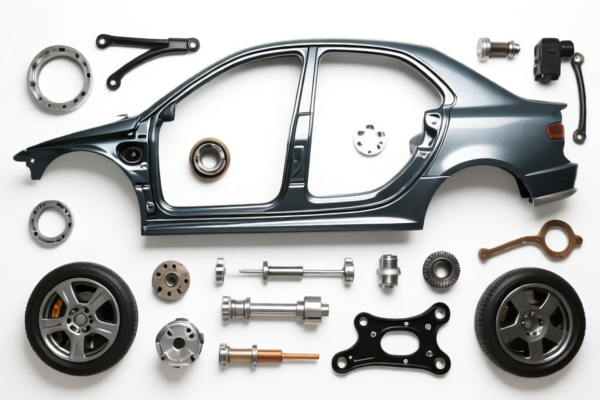
Key Distinctions: * Vehicle Body Parts: Frames, doors, bumpers, panels. * Lighting & Signaling Devices: Headlights, taillights, turn signals, brake lights. * Mounting & Fastening Hardware: Latches, locks, hinges, brackets. * Bicycle Accessories: Specific components for two-wheeled vehicles (often categorized separately from motor vehicles).
⚠️ Critical Warning:
- Material Matters: Parts made of steel, aluminum, or copper may trigger Section 232 (Steel/Aluminum) or specific Section 301 surcharges. - Function Matters: A "light" is classified differently than a "bracket," even if both are plastic. - End-Use Matters: Are they for a car, a truck, or a bicycle? Each has distinct HS codes.
📦 二、HS Code Classification Matrix (Based on Provided Data)
| HS Code | Product Description | Scope & Application | Tariff Complexity |
|---|---|---|---|
8708.10.60.50 |
Vehicle Parts (General) | Parts & accessories for motor vehicles (general category). High likelihood of matching via "residual category" principle. | 🚨 EXTREME |
8512.90.90.00 |
Electrical Lighting/Signaling Parts | Parts for electrical lighting or signaling devices (e.g., housings, reflectors). No material/form conflict. | ⚠️ HIGH |
8708.29.51.60 |
Body Parts & Accessories | Other parts & accessories for vehicle bodies (e.g., bumpers, panels). Highly matched by use. | 🚨 EXTREME |
8512.20.20.80 |
Lighting Equipment | Electrical equipment for lighting or signaling (e.g., complete headlights, taillights). No material conflict. | ⚠️ HIGH |
8302.49.60.55 |
Bicycle Accessories | Mounting fittings, hinges, catches & similar articles (specifically for bicycles). Matched by default for accessories. | 🚨 EXTREME |
🔍 Key Insight:
- 8708 series covers general automotive components.
- 8512 series covers electrical lighting/signaling components.
- 8302 series covers hardware/fasteners, here specified for bicycles.
- Note on Tariffs: The provided data indicates significant US-specific punitive tariffs (Section 301, Section 232, and IEEPA), leading to effective tax rates between 2.5% and 90.7%.
💰 三、Detailed Tariff Breakdown (2026 Latest Rates)
✅ Jurisdiction: United States (US)
✅ Origin: Likely China (implied by specific surcharges like 122 Clause/Section 301 and IEEPA)
✅ Effective Date: Current Trade War Regimes
🎯 1. 8708.10.60.50 & 8708.29.51.60 — General Auto Parts & Body Parts
These codes attract the highest possible combined tariff due to material composition (Steel/Aluminum/Copper).
| Tax Component | Rate | Source/Clause | Explanation |
|---|---|---|---|
| Basic Duty | 2.5% | MFN Rate | Standard Most Favored Nation rate for auto parts. |
| Section 301 Surcharge | 25.0% | Trade Act Sec 301 | Additional duty on Chinese imports. |
| Section 232 / Clause 122 | 50.0% | Steel/Aluminum/Copper | Critical: If the part contains steel, aluminum, or copper, an additional 50% tariff applies under specific trade clauses (often referred to as Clause 122 or similar metal restrictions). |
| IEEPA Surcharge | 10.0% | Int'l Emergency Econ. Powers Act | Additional levy on Chinese-origin goods. |
| TOTAL EFFECTIVE RATE | 87.5% | (2.5 + 25 + 50 + 10) |
📌 Strategy:
- If your part is pure plastic or rubber, avoid these codes if possible, as they seem to trigger the 50% metal surcharge.
- Check Material Composition: If the part is <50% metal, argue for exclusion from the metal surcharge (complex and requires strong proof).
🎯 2. 8512.90.90.00 & 8512.20.20.80 — Lighting & Signaling Parts
These codes attract Section 301 and IEEPA surcharges but NOT the heavy metal surcharge (unless specified otherwise by specific metal content rules).
| Tax Component | Rate | Source/Clause | Explanation |
|---|---|---|---|
| Basic Duty | 0.0% - 2.5% | MFN Rate | Varies slightly between 8512.20 and 8512.90. |
| Section 301 Surcharge | 25.0% | Trade Act Sec 301 | Additional duty on Chinese imports. |
| IEEPA Surcharge | 10.0% | Int'l Emergency Econ. Powers Act | Additional levy on Chinese-origin goods. |
| Metal Surcharge? | 0% | N/A | No 50% steel/aluminum surcharge applied in the data. |
| TOTAL EFFECTIVE RATE | 35.0% - 37.5% | (0/2.5 + 25 + 10) |
📌 Strategy:
- This is significantly cheaper than general auto parts.
- Ensure the product is correctly described as electrical lighting equipment (headlights, taillights) or parts thereof.
🎯 3. 8302.49.60.55 — Bicycle Accessories
Surprisingly high rate due to metal content assumptions.
| Tax Component | Rate | Source/Clause | Explanation |
|---|---|---|---|
| Basic Duty | 5.7% | MFN Rate | Base rate for base metal mountings. |
| Section 301 Surcharge | 25.0% | Trade Act Sec 301 | Additional duty on Chinese imports. |
| Section 232 / Clause 122 | 50.0% | Steel/Aluminum/Copper | Critical: High likelihood of metal content triggering 50% surcharge. |
| IEEPA Surcharge | 10.0% | Int'l Emergency Econ. Powers Act | Additional levy on Chinese-origin goods. |
| TOTAL EFFECTIVE RATE | 90.7% | (5.7 + 25 + 50 + 10) |
📌 Strategy:
- This is the most expensive category.
- If the item is a plastic hinge or non-metal mount, dispute the metal surcharge.
- Consider if the item can be classified under a different HS code that excludes metal surcharges.
🛠️ IV. Customs Clearance Practical Advice (Avoiding the Pitfalls)
✅ 1. Documentation Checklist (Mandatory)
| Document | Required? | Purpose |
|---|---|---|
| Commercial Invoice | ✅ Yes | Must clearly state "Auto Part for [Make/Model]" or "Bicycle Accessory." Avoid vague terms like "Plastic Piece." |
| Product Specification Sheet | ✅ Yes | Detail material composition (e.g., "80% ABS Plastic, 20% Steel Mounting Bracket"). Crucial for proving metal content <50%. |
| Part Number & OEM Reference | ✅ Yes | Helps customs identify the exact part. |
| Material Declaration | ✅ Yes | Explicitly state: "Contains Steel," "Contains Aluminum," or "Non-Metallic." |
| Bill of Lading / Air Waybill | ✅ Yes | Standard shipping documents. |
✅ 2. Classification Strategy (The "Golden Rules")
| Scenario | Correct Approach | Why? |
|---|---|---|
| Headlight Assembly | Use 8512.20.20.80 |
Lower total tax (35%) vs. general auto part (87.5%). Electrical classification is key. |
| Bumper (Steel) | Use 8708.29.51.60 |
High tax (87.5%) is unavoidable due to steel content. Ensure correct description to avoid fraud penalties. |
| Plastic Dashboard Trim | Use 8708.10.60.50 |
But argue against metal surcharge if possible. If it's 100% plastic, the 50% metal tax might be contestable. |
| Bicycle Screw | Use 8302.49.60.55 |
High tax (90.7%). Consider if "Fasteners" (Chapter 73) might apply, but data specifies bike accessories. |
✅ 3. Critical Tips for Low-Risk Clearance
- Avoid "General" Descriptions: Never use "Auto Parts" alone. Use "Right Headlight for Toyota Camry 2020" or "Aluminum Alloy Wheel Cover for Honda Civic."
- Metal Content Proof: If you want to avoid the 50% Section 232/Clause 122 surcharge, provide a material breakdown proving the part is primarily plastic, rubber, or glass.
- Separate Shipments: If possible, ship electrical parts (8512) separately from structural/body parts (8708) to optimize classification.
- Bicycle vs. Auto: Be careful not to misclassify bicycle parts as auto parts or vice versa. Customs can penalize for misclassification.
🌍 V. Global Market Comparison (Quick Reference)
| Market | Primary Concern | Tariff Trend | Recommendation |
|---|---|---|---|
| 🇺🇸 USA | Section 301 & 232 | Very High (2.5% - 90.7%) | Use precise HS codes. Avoid metal surcharges where possible. |
| 🇨🇳 China | Standard MFN | Low (0-10%) | Standard clearance. No punitive tariffs. |
| 🇪🇺 EU | CBAM (Carbon) | Moderate | Focus on carbon footprint documentation for steel/aluminum parts. |
| 🇨🇦 Canada | USMCA | Low (if compliant) | Ensure origin rules are met for free trade access. |
📌 Conclusion:
- USA is the highest-risk market for auto parts due to layered punitive tariffs.
- Electrical parts (8512) are cheaper to import than structural/body parts (8708) or metal hardware (8302).
- Material declaration is your best defense against the 50% metal surcharge.
📌 VI. Common Mistakes & Blood-Tested Lessons
❌ Mistake 1: Declaring a steel bumper as "Plastic Part" to avoid metal tax.
👉 Result: Customs audit, fine, and seizure. Always be accurate.
❌ Mistake 2: Using "Auto Accessory" for a bicycle part.
👉 Result: Misclassification penalty. Use 8302 for bikes.
❌ Mistake 3: Ignoring IEEPA 10% surcharge.
👉 Result: Underpayment of duties, leading to debt collection by CBP.
✅ Correct Practice:
"Headlight Assembly, LED, 12V, Part# XYZ, Contains Glass & Plastic Housing, Origin: China, Declared Value: $100."
🎯 VII. Final Verdict: Save Costs, Ensure Compliance
🎯 Remember This:
🔹 "Electrical Parts = 35% Tax (Best Case)"
🔹 "Metal Parts = 87.5% - 90.7% Tax (Worst Case)"
🔹 "Plastic Parts = Argue for Exclusion from Metal Tax"
📣 Immediate Action Required:
📞 Contact your customs broker with the material composition of your parts.
📄 Request a pre-ruling if the part contains mixed materials.
🚀 Optimize your supply chain to favor electrical components over structural metal parts if tariffs are prohibitive.
✨ Professional Customs Clearance Starts with Precise Classification!
💼 Every percent of tariff saved is pure profit!
Customer Reviews
About HS Code Classification
The Harmonized System (HS) is an internationally standardized nomenclature developed by the World Customs Organization (WCO) to classify traded products. Over 200 countries use the HS system as the basis for customs tariffs, trade statistics, and import/export regulations.
Each HS code follows a hierarchical structure:
- Chapter (2 digits) — Broad category of goods (e.g., Chapter 84: Machinery and Mechanical Appliances)
- Heading (4 digits) — More specific grouping within the chapter
- Subheading (6 digits) — Internationally standardized breakdown, used by all WCO member countries
- National subdivisions (8-10 digits) — Country-specific extensions for further classification, such as US HTSUS 10-digit codes
Correct HS code classification is essential for smooth customs clearance, accurate duty payment, and compliance with trade regulations. Misclassification can lead to customs delays, overpayment of duties, or penalties.
When importing from CN to US, the applicable tariff rates may include:
- Most-Favored-Nation (MFN) rate — The standard duty rate applied to WTO members
- General rate — Applied to countries without trade agreements
- Trade remedy duties — Additional tariffs such as Section 301 (anti-dumping), Section 232 (national security), or countervailing duties
The information provided on this page is for reference purposes only. For official classification, please consult with your local customs authority or a licensed customs broker.