Auto Parts Remote Key
CN → US| HS Code | Tariff Rate | Origin | Destination | Doc |
|---|---|---|---|---|
| 8512909000 | 37.5% | CN | US | Official Doc |
| 8543709860 | 37.6% | CN | US | Official Doc |
| 8543706000 | 35.0% | CN | US | Official Doc |
Product Images
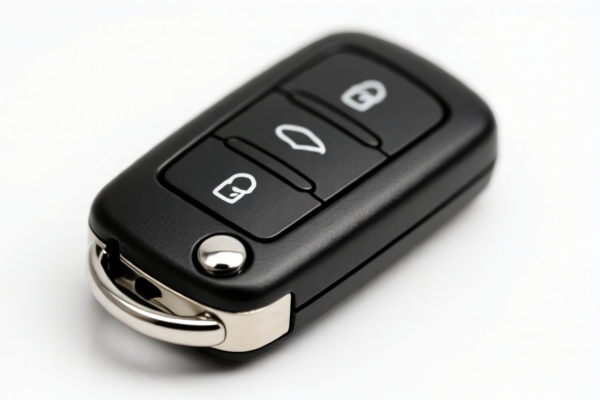
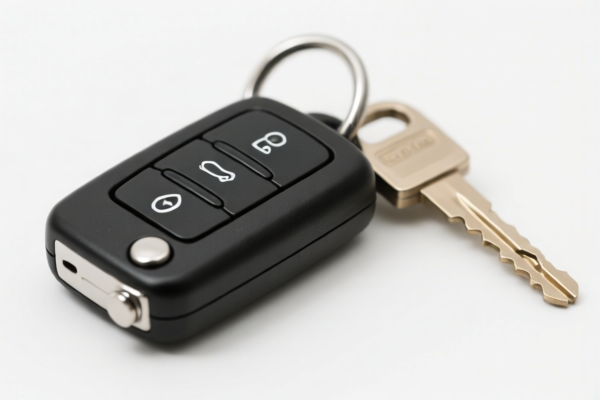
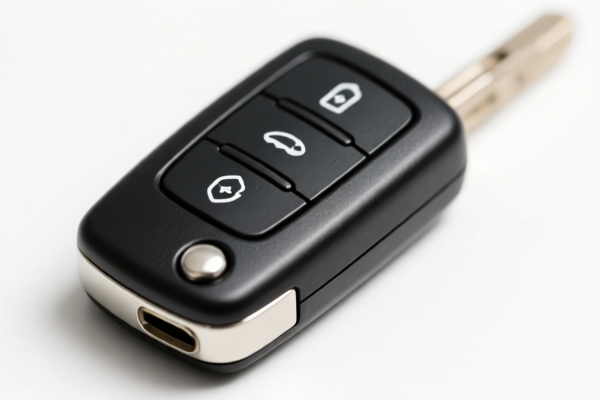
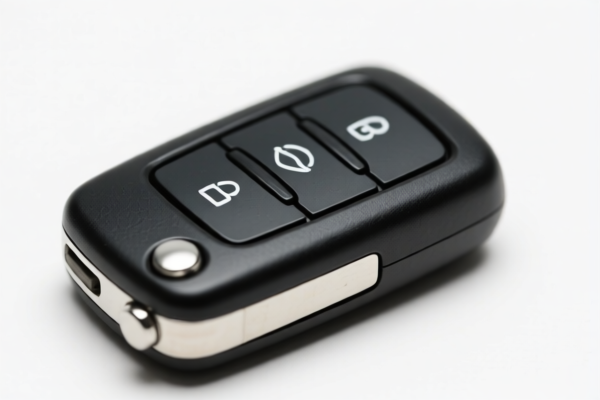
AI Analysis
🔑 Auto Parts Remote Key (Car Keys)
🌐 HS Code Reference & Customs Clearance Guide | 2026 Latest Tariff Analysis | Professional Clearance Strategy
📌 I. Product Definition and Classification: Do You Really Understand "Remote Keys"?
The automotive remote key is not just a simple mechanical tool; it is a sophisticated electro-mechanical device that serves as a critical component of vehicle signaling and control systems. In international trade, its classification depends heavily on its functional integration and specific technological implementation.
Core Functional Categories: * Standard Vehicle Accessories: Keys functioning primarily as part of the vehicle's immobilizer or door lock system. * Standalone Electronic Devices: Keys with advanced, independent functional modules (e.g., wireless connectivity, start-stop automation) that may fall under general electronic apparatus categories if they exceed standard automotive part definitions.
⚠️ Key Classification Distinction:
- If the key is explicitly designed as a replacement part/accessory for a specific vehicle brand/model and functions as a signal/control component → Classified under Automotive Parts (Chapter 85).
- If the key has independent electronic functionality unrelated to standard automotive signaling (e.g., complex standalone interface devices) → May be classified under Other Machines/Devices (Chapter 85).
📦 II. HS Code Classification Details (2026 Latest Tariff Authority Comparison)
Based on the provided data, here are the three potential HS Codes for "Auto Parts Remote Key," each with distinct tax implications and regulatory reasons.
| HS Code | Product Description | Reason for Classification | Total Tax Rate |
|---|---|---|---|
8512.90.90.00 |
Parts of Electrical Signaling or Visual/Acoustic Signaling Apparatus for Vehicles | The remote key is considered a part of the vehicle's signal/control system. It fits the "parts and accessories" attribute for automotive signaling devices. | 37.5% |
8543.70.98.60 |
Other Machines and Apparatus Having Individual Functions | Classified as a standalone electronic/mechanical device. It does not fit specifically into amplifiers or musical instrument effect pedals, falling into the "catch-all" category for other machinery. | 37.6% |
8543.70.60.00 |
Other Machines and Apparatus (Specific Function: Key Start/Connect) | Classified under "Other" due to its specific function (key start/connection). It follows the catch-all principle for devices with specific functions, with no material conflicts. | 35.0% |
🔍 Critical Insight:
-8512.90.90.00is the most traditional classification for standard car keys, viewing them strictly as automotive parts.
-8543.70.98.60and8543.70.60.00reflect a more technological view, treating the key as an independent electronic apparatus.
- Tax Difference: There is a 2.6% difference in total tax rate between the lowest (8543.70.60.00) and highest (8543.70.98.60) classifications.
💰 III. 2026 Latest Tariff Rate Breakdown (Including Surtaxes & Policy Add-ons)
✅ Applicable Country: United States (US)
✅ Origin: China (CN)
✅ Effective Time: Current rates include Section 301 and IEEPA surcharges.
🎯 1. 8512.90.90.00 – Automotive Signal/Control Equipment Parts
| Item | Content |
|---|---|
| Base Tariff | 2.5% (Ad Valorem) |
| Section 301 Surcharge | +25.0% |
| IEEPA Surcharge (Section 122) | +10.0% |
| Total Effective Rate | 37.5% |
| Tax Calculation | CIF Value × 37.5% |
| De Minimis Eligibility | ❌ Not Eligible (Deny De Minimis) |
| Legal Basis Path | Base: 8512.90.90.00 → Section 301: +25% → IEEPA: +10% |
📌 Explanation:
- This is the most common classification for standard replacement keys.
- The 37.5% rate is significantly higher than base auto parts rates due to U.S.-China trade tensions.
- No de minimis exemption applies, meaning even small batches are subject to full tax.
🎯 2. 8543.70.98.60 – Other Machines/Devices (General Catch-All)
| Item | Content |
|---|---|
| Base Tariff | 2.6% |
| Section 301 Surcharge | +25.0% |
| IEEPA Surcharge (Section 122) | +10.0% |
| Total Effective Rate | 37.6% |
| Tax Calculation | CIF Value × 37.6% |
| De Minimis Eligibility | ❌ Not Eligible |
| Legal Basis Path | Base: 8543.70.98.60 → Section 301: +25% → IEEPA: +10% |
📌 Note:
- This classification is riskier due to the "catch-all" nature. Customs may challenge whether the device truly has "individual function" separate from the vehicle.
- The rate is the highest among the options.
🎯 3. 8543.70.60.00 – Other Machines/Devices (Specific Function)
| Item | Content |
|---|---|
| Base Tariff | 0.0% |
| Section 301 Surcharge | +25.0% |
| IEEPA Surcharge (Section 122) | +10.0% |
| Total Effective Rate | 35.0% |
| Tax Calculation | CIF Value × 35.0% |
| De Minimis Eligibility | ❌ Not Eligible |
| Legal Basis Path | Base: 8543.70.60.00 → Section 301: +25% → IEEPA: +10% |
📌 Advantage:
- This code offers the lowest total tax rate (35%) due to a 0% base tariff.
- Condition: Must clearly demonstrate the key's specific functional role (e.g., "key start/connection device") without conflicting with automotive part definitions.
- Risk: Customs may scrutinize this classification more heavily, requiring detailed technical documentation to prove it fits "other devices" rather than "auto parts."
🛠️ IV. Customs Clearance Practical Advice (Pitfall Avoidance Guide)
✅ 1. Document Preparation Checklist (Mandatory)
| Document | Required | Notes |
|---|---|---|
| Product Specification Sheet | ✔️ | Must detail: Frequency, chip type, encryption method, compatibility models. |
| Function Description | ✔️ | Clearly state: Is it a "part of vehicle system" or "standalone electronic device"? |
| Product Photos (Label/Chip) | ✔️ | Show model number, FCC ID (if applicable), and any branding. |
| Test Reports | ✔️ | FCC Part 15, RoHS, CE (if applicable). Crucial for electronic devices. |
| Commercial Invoice | ✔️ | Use precise description: e.g., "Remote Key Fob for [Brand] Vehicle" or "Wireless Key Entry System Module." |
| Origin Certificate (CO) | ✔️ | Required for China origin verification. |
| Packing List | ✔️ | Ensure consistent quantity and weight with invoice. |
✅ 2. Declaration Tips (Key Mantras)
🔥 "Function First, Description Precise, Tax Optimization Possible!"
| Scenario | Recommended HS Code | Risk Level | Tax Rate |
|---|---|---|---|
| Standard Replacement Key | 8512.90.90.00 |
Low | 37.5% |
| Advanced Key with Standalone Features | 8543.70.60.00 |
Medium | 35.0% (Best) |
| Unspecified Electronic Device | 8543.70.98.60 |
High | 37.6% |
| Misclassified as General Electronics | 8543.70.99.00 |
High | Variable |
📌 Strategy:
- If you can prove the key has specific independent functionality (e.g., wireless connectivity module not tied to a single vehicle brand), consider8543.70.60.00for cost savings.
- Otherwise, stick to8512.90.90.00for simplicity and lower audit risk.
✅ 3. Special Cases Handling
| Scenario | Handling Advice |
|---|---|
| OEM Custom Keys | Provide end-customer agreement and technical specs to prove automotive part status. |
| Smart Keys with NFC/Bluetooth | Highlight "standalone connectivity function" to argue for 8543 classification. |
| Keys with Built-in Batteries | Ensure lithium battery compliance (UN38.3) is documented to avoid shipping delays. |
| High-Value Keys | Consider Advance Ruling from CBP to lock in classification before shipment. |
🌍 V. Global Market Comparison (2026 Overview)
| Country/Region | Recommended HS Code | Tariff (China Origin) | Certification | Notes |
|---|---|---|---|---|
| 🇺🇸 USA | 8512.90.90.00 or 8543.70.60.00 |
37.5% or 35.0% | FCC, DOT (if applicable) | Highest surcharges globally. |
| 🇨🇳 China | 8512.90.90.00 |
5% | CCC (if applicable) | No surcharges. |
| 🇪🇺 EU | 8543.70.99.80 |
0-1.5% | CE, E-Mark | No surcharges. |
| 🇬🇧 UK | 8543.70.99.80 |
0-1.5% | UKCA | Post-Brexit rules apply. |
| 🇯🇵 Japan | 8543.70.90.00 |
0-1.5% | PSE | Low tariffs. |
📌 Conclusion:
- The US market is the most challenging due to Section 301 and IEEPA surcharges.
- Tax optimization through correct HS Code selection (8543.70.60.00vs.8512.90.90.00) can save 2.5% on CIF value.
- For non-US markets, tariffs are significantly lower, reducing cost pressure.
📌 VI. Common Errors & Pitfall Guide (Lessons Learned)
❌ Error 1: Declaring as "Car Accessory" without specifying function
👉 Consequence: Customs may assign a higher default rate or delay clearance.
❌ Error 2: Misclassifying as general "Electronics" without justification
👉 Consequence: Rejection by customs, leading to redeclaration and storage fees.
❌ Error 3: Ignoring FCC Certification for electronic keys
👉 Consequence: Shipment seized at US border for non-compliance.
❌ Error 4: Assuming all keys are 8512.90.90.00
👉 Consequence: Missing out on potential 35.0% rate under 8543.70.60.00 if functionality justifies it.
✅ Correct Approach:
"Remote Key Fob for [Brand] Vehicle, Model XYZ, FCC Certified, with Wireless Connection Module, Includes Battery"
🎯 VII. Conclusion: Professional Declaration, Cost Optimization!
🎯 Remember the Mantra:
🔹 "Auto Part vs. Electronic Device: Function Defines Code."
🔹 "37.5% vs. 35.0%: A 2.5% Difference is Worth the Documentation."
🔹 "No De Minimis for China Origin: Plan for Full Tax!"
📌 Pro Tip:
- If your remote keys have advanced standalone features (e.g., Bluetooth 5.0, NFC, standalone app connectivity), provide detailed technical specs to support
8543.70.60.00classification.- For standard keys,
8512.90.90.00is safer and simpler.- Always apply for an Advance Ruling if shipping high volumes to the US.
📣 Immediate Action Required:
📞 Consult a Customs Broker + Prepare Technical Docs + Apply for Advance Ruling
🚀 Ensure Smooth Clearance, Minimize Tax Burden, Maximize Profit!
✨ Professional Clearance Starts with Accurate Classification!
💼 Every Percent of Tax Saved is Pure Profit!
Customer Reviews
About HS Code Classification
The Harmonized System (HS) is an internationally standardized nomenclature developed by the World Customs Organization (WCO) to classify traded products. Over 200 countries use the HS system as the basis for customs tariffs, trade statistics, and import/export regulations.
Each HS code follows a hierarchical structure:
- Chapter (2 digits) — Broad category of goods (e.g., Chapter 84: Machinery and Mechanical Appliances)
- Heading (4 digits) — More specific grouping within the chapter
- Subheading (6 digits) — Internationally standardized breakdown, used by all WCO member countries
- National subdivisions (8-10 digits) — Country-specific extensions for further classification, such as US HTSUS 10-digit codes
Correct HS code classification is essential for smooth customs clearance, accurate duty payment, and compliance with trade regulations. Misclassification can lead to customs delays, overpayment of duties, or penalties.
When importing from CN to US, the applicable tariff rates may include:
- Most-Favored-Nation (MFN) rate — The standard duty rate applied to WTO members
- General rate — Applied to countries without trade agreements
- Trade remedy duties — Additional tariffs such as Section 301 (anti-dumping), Section 232 (national security), or countervailing duties
The information provided on this page is for reference purposes only. For official classification, please consult with your local customs authority or a licensed customs broker.