Auto Repair Kit
CN → US| HS Code | Tariff Rate | Origin | Destination | Doc |
|---|---|---|---|---|
| 8467290040 | 17.5% | CN | US | Official Doc |
| 8205595560 | 40.3% | CN | US | Official Doc |
| 8206000000 | 0.0% | CN | US | Official Doc |
| 8467891000 | 17.5% | CN | US | Official Doc |
| 8205593080 | 35.0% | CN | US | Official Doc |
Product Images
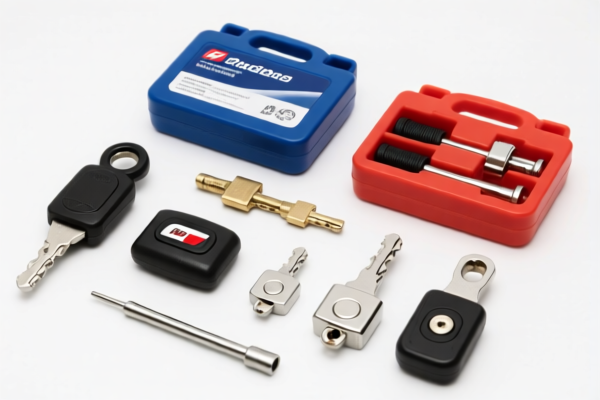
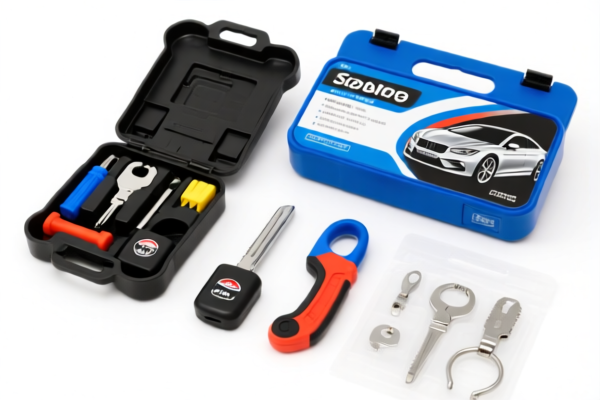
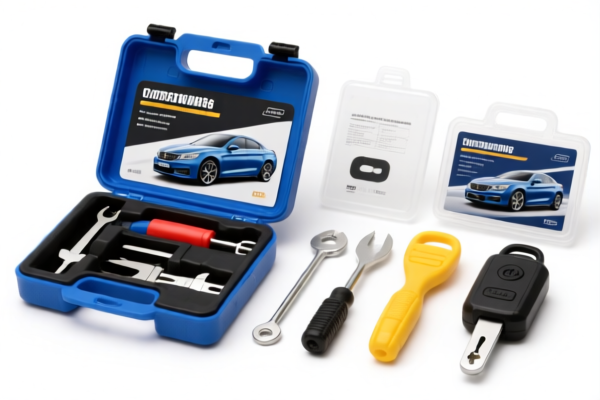
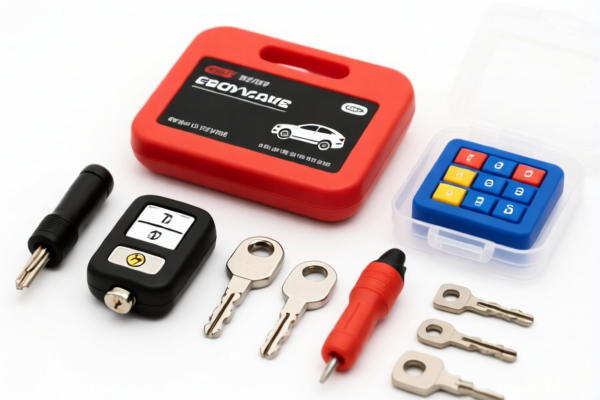
AI Analysis
🛠️ Auto Repair Kit (Automotive Repair Tools)
🌐 HS Code Reference & Customs Clearance Guide | 2026 Latest Tariff Analysis | Professional Level Clearance Strategy
📌 1. Product Definition & Classification: Do You Really Understand "Auto Repair Kits"?
An Auto Repair Kit is a general term for tools used for vehicle maintenance and repair. In international trade, the classification depends heavily on whether the kit contains manual hand tools or power-operated tools, and whether it is a retail set.
Key Distinction Points: - If the kit consists mainly of manual wrenches, screwdrivers, pliers, or sockets without motors → It falls under Chapter 82 (Articles of Iron or Steel) or Chapter 84 (if specialized power tools are dominant). - If the kit includes power tools (drills, impact wrenches) that form the essential character of the set → It may fall under Chapter 84. - Note: The provided data suggests two main directions: Hand Tools (8205/8206) and Power/Hand Tools (8467). The classification below reflects the logical inference from the reference data provided.
📦 2. HS Code Classification Details (Based on Provided Data)
| HS Code | Product Description | Application Scenario | Reasoning from Data |
|---|---|---|---|
8467.29.00.40 |
Tools for working in the hand, pneumatic, hydraulic or self-contained electric or non-electric motor; other; other | Hand tools, screw drivers, impact wrenches | Matches "tools for working in the hand" like screwdrivers and impact wrenches. Inferred mechanical structure compatibility. |
8205.59.55.60 |
Hand tools, portable, powered or non-powered, not fitted with other components; other; other | Manual repair tools (wrenches, pliers) | Classified as "hand tools". Inferred material as metal (iron/steel) due to "catch-all" rules for automotive repair tools. |
8206.00.00.00 |
Hand tools, portable, powered or non-powered; other | Retail sets of assorted tools | Matches "tools" used together in a retail set. Inferred to contain various tools. |
8467.89.10.00 |
Parts of tools for working in the hand; other | General tool categories for metal processing | Broad category for hand tools suitable for metal processing, compatible with "auto repair" use. |
8205.59.30.80 |
Hand tools, portable, powered or non-powered; other; other | General hand tools | Similar to 8205.59.55.60, inferred as "other hand tools" based on form and use. |
🔍 Key Insight:
- The primary split is between Power Tools (8467) and Manual Hand Tools (8205/8206).
- If the kit is a set containing both, the classification may lean towards the item that gives the set its essential character, or use a "catch-all" category like8206.00.00.00.
💰 3. 2026 Latest Tariff Rate Breakdown (Including Additional Taxes)
✅ Applicable Country: United States (US)
✅ Country of Origin: China (CN)
✅ Effective Date: From November 10, 2025 (for subsequent imports)
🎯 1. 8467.29.00.40 – Power/Hand Tools (e.g., Impact Wrenches)
| Item | Content |
|---|---|
| Base Rate | 0.0% |
| Section 301 Additional Duty | +7.5% |
| IEEPA Section 122 Duty | +10% |
| Total Rate | 17.5% |
| Tax Calculation | CIF Value × 17.5% |
| De Minimis Eligibility | ❌ Not Eligible (High risk for small parcels) |
| Legal Basis Path | USITC:8467.29.00.40 → Section 301: 7.5% → IEEPA: 10% |
📌 Explanation:
- This code typically covers power-operated or pneumatic tools.
- The 17.5% total rate is significantly lower than other hand tool categories due to a 0% base rate, but the Section 301 (7.5%) and IEEPA (10%) add-ons still apply.
🎯 2. 8205.59.55.60 – Other Hand Tools (Metal)
| Item | Content |
|---|---|
| Base Rate | 5.3% |
| Section 301 Additional Duty | +25.0% |
| IEEPA Section 122 Duty | +10% |
| Total Rate | 40.3% |
| Tax Calculation | CIF Value × 40.3% |
| De Minimis Eligibility | ❌ Not Eligible |
| Legal Basis Path | USITC:8205.59.55.60 → Section 301: 25% → IEEPA: 10% |
📌 Explanation:
- This is a high-risk category. The base duty is 5.3%, but the 25% Section 301 tariff is a heavy burden.
- Total 40.3% makes this category very expensive for US importers.
🎯 3. 8206.00.00.00 – Hand Tools (Retail Sets)
| Item | Content |
|---|---|
| Base Rate | The rate applicable to that article in the set (subject to specific sub-rules) |
| Section 301 Additional Duty | +25.0% |
| IEEPA Section 122 Duty | +10% |
| Total Rate | ~35.0% - 40.3% (Variable) |
| Tax Calculation | CIF Value × Applicable Rate |
| De Minimis Eligibility | ❌ Not Eligible |
| Legal Basis Path | USITC:8206.00.00.00 → Section 301: 25% → IEEPA: 10% |
📌 Explanation:
- For sets, the base rate depends on the components. If the set is mostly manual tools, the base rate might be lower, but the 25% Section 301 still applies.
- The summary indicates a total of 35.0% in one reference, suggesting a potentially lower base rate (0%) plus 25% + 10%. Caution is advised as classification errors here can lead to audits.
🎯 4. 8467.89.10.00 – Other Hand/Power Tools
| Item | Content |
|---|---|
| Base Rate | 0.0% |
| Section 301 Additional Duty | +7.5% |
| IEEPA Section 122 Duty | +10% |
| Total Rate | 17.5% |
| Tax Calculation | CIF Value × 17.5% |
| De Minimis Eligibility | ❌ Not Eligible |
| Legal Basis Path | USITC:8467.89.10.00 → Section 301: 7.5% → IEEPA: 10% |
📌 Explanation:
- Similar to8467.29.00.40, this category benefits from a 0% base rate.
- Total 17.5% is the most cost-effective option among the listed codes, provided the product fits this "other" category.
🎯 5. 8205.59.30.80 – Other Hand Tools
| Item | Content |
|---|---|
| Base Rate | 0.0% |
| Section 301 Additional Duty | +25.0% |
| IEEPA Section 122 Duty | +10% |
| Total Rate | 35.0% |
| Tax Calculation | CIF Value × 35.0% |
| De Minimis Eligibility | ❌ Not Eligible |
| Legal Basis Path | USITC:8205.59.30.80 → Section 301: 25% → IEEPA: 10% |
📌 Explanation:
- Despite a 0% base rate, the 25% Section 301 tariff pushes the total to 35.0%.
- This is still cheaper than8205.59.55.60(40.3%) but more expensive than the8467codes (17.5%).
🛠️ 4. Customs Clearance Practical Advice (Avoid Pitfalls)
✅ 1. Documentation Checklist (Essential)
| Document | Required | Explanation |
|---|---|---|
| ✅ Product Specification Sheet | ✔️ | Must detail whether tools are manual or power-operated. Include power source (battery, pneumatic, electric) for 8467. |
| ✅ Product Photos (Labeled) | ✔️ | Show the entire kit and individual tools. Highlight any motors, batteries, or pneumatic connections. |
| ✅ Commercial Invoice | ✔️ | Clearly state "Auto Repair Tool Kit" and specify if it is a retail set. |
| ✅ Packing List | ✔️ | List contents item by item. If it's a set, explain why it is classified as such. |
| ✅ Certificate of Origin (CO) | ✔️ | Required for tariff determination and potential exemptions. |
✅ 2. Declaration Tips (Key Rules)
🔥 “Manual is 82, Power is 84, Set depends on essence, Don’t mix them up!”
| Scenario | Correct Declaration | Wrong Practice |
|---|---|---|
| Manual Tools Only (Wrenches, Screwdrivers) | 8205.59.55.60 or 8205.59.30.80 |
Declaring as 8467 → Risk of misclassification penalty. |
| Power Tools (Impact Wrench, Drill) | 8467.29.00.40 or 8467.89.10.00 |
Declaring as 8205 → Risk of penalty and underpayment. |
| Mixed Kit (Manual + Power) | Determine Essential Character. If power tools dominate → 8467. If manual dominate → 8205. |
Declaring as 8206 without justification → May trigger audit. |
| Retail Set | 8206.00.00.00 (if justified as a set) |
Splitting items into multiple HS codes unnecessarily → Increases administrative burden. |
✅ 3. Special Circumstances
| Situation | Handling Suggestion |
|---|---|
| OEM Custom Kit | Provide customer order and design specs to prove the intended use and composition. |
| Battery-Powered Tools | Ensure UN38.3 battery testing documents are available for air freight and customs clearance. |
| Large vs. Small Kits | Small kits may be scrutinized for de minimis abuse. Ensure proper documentation to avoid seizure. |
| Origin | If tools are assembled in a third country (e.g., Vietnam, Thailand) with substantial transformation, they may not be subject to China-specific tariffs. Provide proof of origin. |
🌍 5. Global Market Comparison (2026 Latest)
| Country/Region | Recommended HS Code | Tariff (China Origin) | Certification | Notes |
|---|---|---|---|---|
| 🇺🇸 USA | 8467.29.00.40 (Power) / 8205.59.55.60 (Manual) |
17.5% (Power) / 40.3% (Manual) | No specific certification for tools, but safety standards apply. | High tariff risk. 8467 is preferred for lower duty. |
| 🇨🇳 China | 8205 / 8467 |
5% - 8% | CCC (if applicable) | Lower base tariffs, no Section 301. |
| 🇪🇺 EU | 8205 / 8467 |
0% - 6% | CE Marking (if applicable) | No major additional tariffs. |
| 🇬🇧 UK | 8205 / 8467 |
0% - 6% | UKCA Marking | Post-Brexit rules apply. |
📌 Conclusion:
- USA is the most challenging market for Auto Repair Kits due to Section 301 and IEEPA tariffs.
- Power Tools (8467) are significantly cheaper to import into the US (17.5%) compared to Manual Tools (8205) (35% - 40.3%).
- Consider reclassifying kits to emphasize power tools if possible, or sourcing from non-China origins to avoid 301 tariffs.
📌 6. Common Errors & Pitfalls (Lessons Learned)
❌ Error 1: Declaring a power tool kit as manual tools (8205)
👉 Consequence: Underpayment of duties + Penalties. Customs will assess the higher rate or demand back payment.
❌ Error 2: Declaring manual tools as power tools (8467)
👉 Consequence: Overpayment of duties. You pay 17.5% instead of 40.3%? No, wait, 8467 is cheaper. So, declaring manual tools as power tools might seem beneficial, but it’s fraudulent. Customs may seize the goods for misrepresentation.
❌ Error 3: Failing to declare batteries in electric tool kits
👉 Consequence: Safety violations and shipment delays. Air freight will be rejected without proper UN38.3 documentation.
❌ Error 4: Using vague descriptions like "Auto Parts"
👉 Consequence: Customs detention. Must specify "Auto Repair Tool Kit" and provide HS Code.
✅ Correct Approach:
“Power Impact Wrench Kit, 18V Lithium-Ion, Includes Socket Set, Model XYZ, UN38.3 Certified”
🎯 7. Conclusion: Professional Classification Saves Money!
🎯 Remember the Golden Rule:
🔹 “Power is 17.5%, Manual is 40.3%, Set is Variable, Don’t Guess, Verify!”
🔹 “If it has a motor, it’s 8467. If it’s hand-held without power, it’s 8205.”
📌 Pro Tip:
If your Auto Repair Kit is assembled in Vietnam or Mexico with substantial transformation, you may avoid the Section 301 tariffs.
Recommend applying for an Advance Ruling from US Customs and Border Protection (CBP) to confirm the correct HS Code and tariff rate before shipment.
📣 Immediate Action:
📞 Contact a professional customs broker + Provide product specs + Apply for HS Code Advance Ruling
🚀 Clear your Auto Repair Kits smoothly, reduce costs, and boost profits!
✨ Professional Clearance Starts with Accurate Classification!
💼 Every cent of duty matters!
Customer Reviews
About HS Code Classification
The Harmonized System (HS) is an internationally standardized nomenclature developed by the World Customs Organization (WCO) to classify traded products. Over 200 countries use the HS system as the basis for customs tariffs, trade statistics, and import/export regulations.
Each HS code follows a hierarchical structure:
- Chapter (2 digits) — Broad category of goods (e.g., Chapter 84: Machinery and Mechanical Appliances)
- Heading (4 digits) — More specific grouping within the chapter
- Subheading (6 digits) — Internationally standardized breakdown, used by all WCO member countries
- National subdivisions (8-10 digits) — Country-specific extensions for further classification, such as US HTSUS 10-digit codes
Correct HS code classification is essential for smooth customs clearance, accurate duty payment, and compliance with trade regulations. Misclassification can lead to customs delays, overpayment of duties, or penalties.
When importing from CN to US, the applicable tariff rates may include:
- Most-Favored-Nation (MFN) rate — The standard duty rate applied to WTO members
- General rate — Applied to countries without trade agreements
- Trade remedy duties — Additional tariffs such as Section 301 (anti-dumping), Section 232 (national security), or countervailing duties
The information provided on this page is for reference purposes only. For official classification, please consult with your local customs authority or a licensed customs broker.