Automatic Candy Machine
CN → US| HS Code | Tariff Rate | Origin | Destination | Doc |
|---|---|---|---|---|
| 8479896500 | 20.3% | CN | US | Official Doc |
| 8479899560 | 37.5% | CN | US | Official Doc |
| 8438200000 | 17.5% | CN | US | Official Doc |
| 8438909030 | 37.8% | CN | US | Official Doc |
Product Images
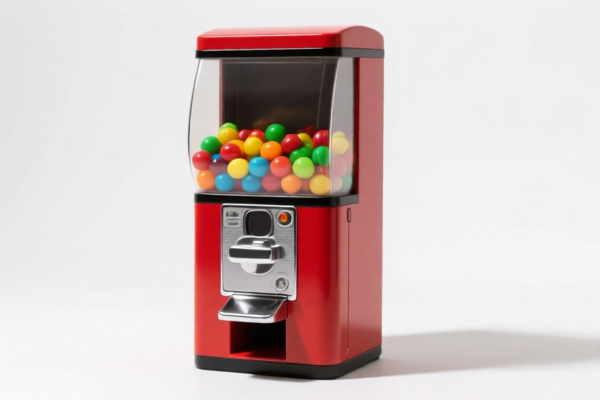
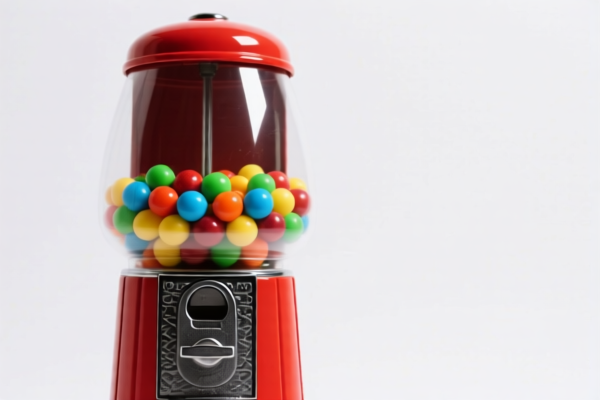
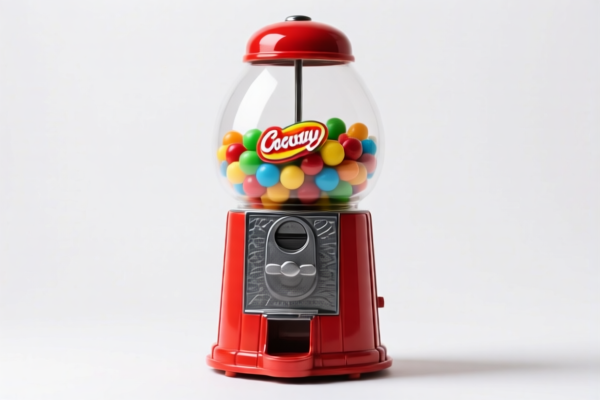
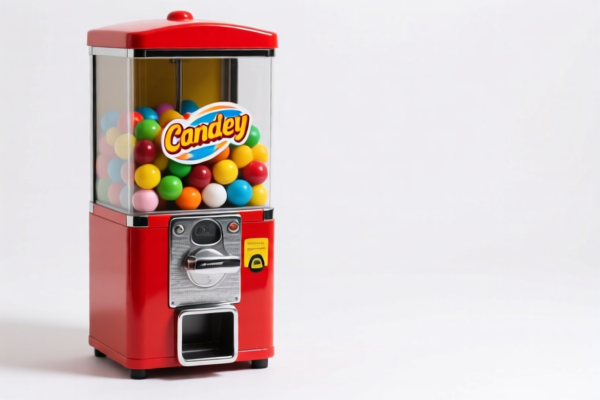
AI Analysis
🍬 The Automatic Candy Machine (Industrial Confectionery Machinery)
🌐 HS Code Reference & Customs Clearance Guide | 2026 Latest Tariff Analysis | Professional Clearance Strategy
📌 I. Product Definition & Classification: What Exactly is an "Automatic Candy Machine"?
In international trade, the term "Automatic Candy Machine" is ambiguous. It typically refers to industrial machinery for the industrial preparation or manufacture of confectionery, cocoa, or chocolate. However, customs classification depends strictly on whether the item is the complete machine or just a part/component.
Two Main Categories:
- The Complete Manufacturing Line/Machine: Equipment used to mix, cook, molding, or process confectionery products (e.g., chocolate tempering machines, candy depositors, cookie forming machines).
- Key Feature: It performs the industrial process of making food.
- Parts & Accessories: Specific components designed solely for the machinery mentioned above (e.g., specific molds, nozzles, gears, or control panels for confectionery machines).
- Key Feature: It cannot function independently; it is essential for the confectionery machine.
⚠️ Critical Distinction:
- If the item is a standalone machine for making candy/chocolate → It belongs to HS Code 8438.20.00.00.
- If the item is a generic mechanical appliance with an individual function not specific to food preparation (or a mixed-use machine) → It may fall under HS Code 8479.89.65.00.
- If the item is a specific part for confectionery machinery → It belongs to HS Code 8438.90.90.30.
📦 II. HS Code Classification Details (2026 Latest Tariff Authority Comparison)
Based on the provided data, here is the precise breakdown for "Automatic Candy Machine" related items:
| HS Code | Product Description | Applicable Scenario | Tax Rate |
|---|---|---|---|
8438.20.00.00 |
Machinery for the manufacture of confectionery, cocoa or chocolate | Core Classification. Industrial machines used to mix, knead, deposit, or shape candy/chocolate. | 7.5% |
8438.90.90.30 |
Parts: Other Of machinery for the manufacture of confectionery, cocoa or chocolate | Spare Parts. Specific components (molds, cutters, hoppers) exclusively for confectionery machines. | 0.0% |
8479.89.65.00 |
Electromechanical appliances with self-contained electric motor: Other | General Machinery. If the "candy machine" is actually a generic mechanical device (e.g., a specialized packaging unit or non-food mixing device) that doesn't fit the specific "food preparation" definition strictly, or if it's a multi-purpose industrial machine. | 10.3% |
8479.89.95.60 |
Other Automotive maintenance machines | Irrelevant. Note: This code is for automotive maintenance. It is likely included in the source data as a distractor or for unrelated machinery. Do NOT use for candy machines. | 0.0% |
🔍 Key Reminder:
- Do not confuse "Candy Making Machine" with "Vending Machine" (HS 8479.89.95.60 is for automotive maintenance, not vending!).
- If the machine is strictly for food processing (candy/chocolate), 8438.20.00.00 is the most accurate primary classification.
- If you are importing spare parts (not a full machine), use 8438.90.90.30 to benefit from the 0% tax.
💰 III. 2026 Latest Tariff Rate Details (Detailed Tax Breakdown)
✅ Applicable Country: United States (US)
✅ Origin: China (CN)
✅ Effective Time: Current rates (includes Section 301/IEEPA surcharges where applicable)
🎯 1. 8438.20.00.00 —— Machinery for the Manufacture of Confectionery, Cocoa, or Chocolate
| Item | Content |
|---|---|
| Base Tariff | 0.0% (ad valorem) |
| Section 301/IEEPA Surcharge | +7.5% |
| Total Tax Rate | 7.5% |
| Tax Calculation | CIF Value × 7.5% |
| De Minimis Exemption | ❌ Not Eligible (For shipments over $800, but generally machinery requires formal entry) |
| Legal Basis | Base Rate 0% + Additional Tariff 7.5% |
📌 Explanation:
- While the Base Tariff for food processing machinery is often 0%, the additional 7.5% tariff applies to Chinese-origin goods under current trade policies.
- This is a moderate tariff compared to electronics or steel, but still a significant cost factor.
🎯 2. 8438.90.90.30 —— Parts for Confectionery/Cocoa/Chocolate Machinery
| Item | Content |
|---|---|
| Base Tariff | 0.0% |
| Section 301/IEEPA Surcharge | 0.0% |
| Total Tax Rate | 0.0% |
| Tax Calculation | CIF Value × 0% |
| De Minimis Exemption | ✅ Eligible (If value < $800 per shipment, may enter duty-free under de minimis, but ensure proper classification) |
| Legal Basis | Base Rate 0% + Additional Tariff 0% |
📌 Strategy:
- If you are importing replacement parts (e.g., screw extruders, molding plates), ensure the commercial invoice clearly states "Parts for Confectionery Machinery" and uses HS 8438.90.90.30.
- This results in zero duty, saving you 7.5% compared to importing the whole machine or misclassifying it.
🎯 3. 8479.89.65.00 —— Other Electromechanical Appliances (Misclassification Risk)
| Item | Content |
|---|---|
| Base Tariff | 2.8% |
| Section 301/IEEPA Surcharge | +7.5% |
| Total Tax Rate | 10.3% |
| Tax Calculation | CIF Value × 10.3% |
| De Minimis Exemption | ❌ Not Eligible |
| Legal Basis | Base Rate 2.8% + Additional Tariff 7.5% |
📌 Warning:
- If customs determines your machine is not primarily for food preparation (e.g., it’s a general-purpose mixer or packaging machine) and classifies it under 8479.89.65.00, the tax jumps to 10.3%.
- This is 2.8% higher than the correct confectionery classification. Always provide detailed technical manuals proving the food-grade, industrial candy-making function to argue for 8438.20.00.00.
🛠️ IV. Customs Clearance Practical Advice (Pitfall Avoidance Guide)
✅ 1. Document Checklist (Essential)
| Document | Required | Description |
|---|---|---|
| ✅ Commercial Invoice | ✔️ | Must clearly state: "Industrial Machinery for Manufacture of Candy/Chocolate" |
| ✅ Packing List | ✔️ | Detail dimensions, weight, and whether items are "Machine" or "Parts" |
| ✅ Technical Manual/Schematics | ✔️ | Proves the machine’s function is industrial food preparation (critical for 8438.20) |
| ✅ Product Photos | ✔️ | Show the machine in operation or clear labeling (e.g., "Confectionery Depositor") |
| ✅ Certificate of Origin | ✔️ | Confirm China origin to apply correct surcharge rates |
| ✅ List of Parts | ✔️ | If importing parts with a machine, separate them on the invoice to apply 0% tax to parts |
✅ 2. Declaration Tips (Key Mnemonic)
🔥 "Food Function First, Parts Separate, Code Specific, Tax Savings Clear!"
| Scenario | Correct Declaration | Incorrect Action |
|---|---|---|
| New Candy Machine | 8438.20.00.00 (Machinery for confectionery) |
Misclassifying as "General Machine" (8479...) → 10.3% Tax |
| Spare Parts (Molds, Nozzles) | 8438.90.90.30 (Parts for confectionery machinery) |
Declaring as "Machine Parts" generally → Risk of 7.5% if not specific enough |
| Packaging Machine (Non-Food Contact) | 8479.89.65.00 (If not strictly food prep) |
Declaring as "Candy Machine" → Risk of misclassification audit |
| Vending Machine (Not Industrial) | Not in Data | Do not use 8479.89.95.60 (Automotive) |
✅ 3. Special Cases
| Scenario | Recommendation |
|---|---|
| Mixed Shipment (Machine + Parts) | Separate Line Items on Invoice. Machine under 8438.20 (7.5%), Parts under 8438.90 (0%). This saves tax on the parts. |
| Used Machinery | Provide maintenance records and age documentation. Tariff rates are the same, but inspection may be stricter. |
| Smart/Automated Features | Ensure the "automatic" nature (robots, AI) doesn’t push it into 8479 (General Machinery) if it’s still primarily for food. Stick to 8438 if food function is primary. |
🌍 V. Global Market Comparison (2026)
| Country/Region | Recommended HS Code | Tariff (China Origin) | Notes |
|---|---|---|---|
| 🇺🇸 USA | 8438.20.00.00 |
7.5% | Base 0% + 7.5% surcharge. Parts (8438.90) are 0%. |
| 🇨🇳 China | 8438.20.00.00 |
~7-9% (Check local) | Import duties may differ; focus on US exports. |
| 🇪🇺 EU | 8438.20 |
~0-3% | Usually lower tariffs, but check for anti-dumping or specific food machinery rules. |
| 🇬🇧 UK | 8438.20 |
~0-5% | Post-Brexit tariffs may vary; verify UK Global Tariff. |
📌 Conclusion:
- The US market is the primary focus here, with a 7.5% effective rate for the machine and 0% for parts.
- Part separation is the key cost-saving strategy.
📌 VI. Common Errors & Pitfall Guide (Lessons Learned)
❌ Error 1: Declaring a Candy Machine as "General Mechanical Equipment" (8479.89.65.00)
👉 Consequence: Pay 10.3% instead of 7.5%.
👉 Fix: Provide technical proof that the machine is specifically for food/confectionery.
❌ Error 2: Packing spare parts (molds) with the machine and declaring everything as one line item under the machine code
👉 Consequence: Parts are taxed at 7.5% instead of 0%.
👉 Fix: Split the invoice. List "Candy Machine" and "Spare Parts" separately.
❌ Error 3: Using HS 8479.89.95.60 (Automotive Maintenance) for a Candy Machine
👉 Consequence: Rejection or heavy penalties for wrong classification. This code is for cars, not food!
👉 Fix: Always use 8438 for food processing machinery.
✅ Correct Declaration Example:
"Industrial Automatic Chocolate Tempering and Depositing Machine, Model XYZ, for Confectionery Manufacturing" → 8438.20.00.00
"Replacement Molding Plates for Candy Machine, Model ABC" → 8438.90.90.30
🎯 VII. Conclusion: Professional Declaration, Cost Optimization!
🎯 Remember the Mnemonic:
🔹 "Machine for Food: 7.5% (Save 2.8% by being specific)"
🔹 "Parts for Candy: 0% (Split them to save big!)"
🔹 "Don't mix with Automotive or General Machinery!"
📌 Pro Tip:
If you are importing a new production line, consider shipping critical spare parts separately (if value allows) or explicitly itemized to leverage the 0% tariff on parts.
For high-value machinery, consider applying for a Pre-Ruling from US Customs (CBP) to confirm 8438.20.00.00 classification and avoid post-clearance audits.
📣 Immediate Action:
📞 Consult a licensed customs broker.
📄 Prepare detailed technical specifications proving food processing function.
🚀 Clear your Candy Machines smoothly, save on tariffs, and keep your production sweet!
✨ Professional Clearance Starts with Precise Classification!
💼 Every percentage point counts in your margin!
Customer Reviews
About HS Code Classification
The Harmonized System (HS) is an internationally standardized nomenclature developed by the World Customs Organization (WCO) to classify traded products. Over 200 countries use the HS system as the basis for customs tariffs, trade statistics, and import/export regulations.
Each HS code follows a hierarchical structure:
- Chapter (2 digits) — Broad category of goods (e.g., Chapter 84: Machinery and Mechanical Appliances)
- Heading (4 digits) — More specific grouping within the chapter
- Subheading (6 digits) — Internationally standardized breakdown, used by all WCO member countries
- National subdivisions (8-10 digits) — Country-specific extensions for further classification, such as US HTSUS 10-digit codes
Correct HS code classification is essential for smooth customs clearance, accurate duty payment, and compliance with trade regulations. Misclassification can lead to customs delays, overpayment of duties, or penalties.
When importing from CN to US, the applicable tariff rates may include:
- Most-Favored-Nation (MFN) rate — The standard duty rate applied to WTO members
- General rate — Applied to countries without trade agreements
- Trade remedy duties — Additional tariffs such as Section 301 (anti-dumping), Section 232 (national security), or countervailing duties
The information provided on this page is for reference purposes only. For official classification, please consult with your local customs authority or a licensed customs broker.