Automatic Curling Iron
CN → US| HS Code | Tariff Rate | Origin | Destination | Doc |
|---|---|---|---|---|
| 8516320040 | 13.9% | CN | US | Official Doc |
| 8516320020 | 13.9% | CN | US | Official Doc |
| 8543908885 | 85.0% | CN | US | Official Doc |
Product Images


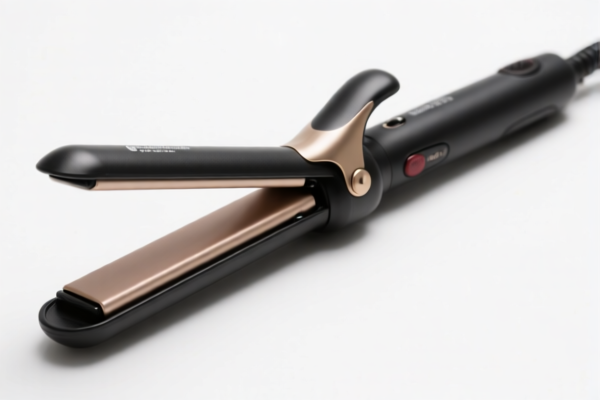
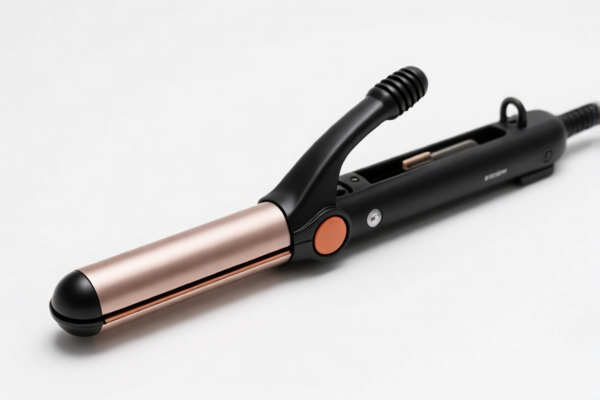
AI Analysis
🌀 Automatic Curling Iron (Auto-Curlers)
🌐 HS Code Reference & Clearance Guide | 2026 Tax Regime Full Analysis | Professional Customs Strategy
📌 I. Product Definition & Classification: Do You Know What Your "Curler" Actually Is?
The Automatic Curling Iron is a high-tech personal beauty device that automates the hair curling process using rotating barrels and heated ceramic or tourmaline surfaces. In international trade, its classification hinges entirely on function, control logic, and electrical integration.
Unlike traditional manual curling rods, automatic versions contain sensors, rotating motors, and programmable control circuits. This distinction pushes many models into the "Electrical Apparatus for Personal Care" category, while others are classified as mere "parts" or "other electrical equipment" depending on their construction.
⚠️ Key Distinction Points:
- Fully Integrated Units (Motor + Heating Element + Control Board + Housing) → Often classified under 8516 (Heating Apparatus for Hair).
- Heating Elements Only (No motor/intelligent control) or Generic Parts → May be misclassified or forced into 8543 (Other Electrical Machines).
- Material Specifics: If classified as a "part" containing specific metals (Steel/Aluminum/Copper), additional punitive tariffs may apply.
📦 II. HS Code Classification Details (2026 Latest Tariff Regime)
Based on the specific technical attributes of the device, here are the three primary classification paths found in the data:
| HS Code | Product Description | Scenario & Functionality | Tax Rate (Total) |
|---|---|---|---|
8516.32.00.20 |
Automatic Curling Iron (Heated Hair Styling Apparatus) | Standard Model: Fully functional device with rotating barrel, heating element, and control circuit. Matches specific "Curling Iron" sub-category. | 13.9% |
8516.32.00.40 |
Automatic Curling Iron (Electric Hair Styling Equipment) | Broad Category: Fits under "Electric Hair Styling Equipment." Functionally identical to 20 but listed as a broader functional attribute. | 13.9% |
8543.90.88.85 |
Curling Iron (Generic Electrical Heating Part/Other) | Risk Zone: Classified as a "Part" of electrical equipment or "Other" electrical machine. Often triggered if the device is deemed a component or if specific Steel/Aluminum/Copper content is highlighted in the declaration. | 85.0% |
🔍 Critical Analysis:
- Codes 8516.32.00.20 & 40: These are the correct and optimal classifications for finished, standalone automatic curling irons. They attract a manageable 13.9% total tariff.
- Code 8543.90.88.85: This is a DANGEROUS classification for this product. It treats the device as a generic part or "other" electrical item. If the customs officer deems the device contains specific metals (Steel/Aluminum/Copper) or lacks the "heating apparatus for hair" specificity, the tax jumps to 85.0%.
- Why the 85%? The tax detail reveals a "Steel, Aluminum, Copper Products" surcharge of 50%, combined with a 25% Section 232-style tariff and a 10% Section 301/122 tariff.
💰 III. 2026 Detailed Tariff Rate Breakdown
✅ Applicable Market: China Export to USA (Implicit context based on "122 Clause" and Section 301 logic)
✅ Effective Time: Current & 2026 Projection
✅ Product Origin: China (CN)
🎯 1. 8516.32.00.20 & 8516.32.00.40 —— The "Optimal" Path (Automatic Curling Iron)
This is the intended classification for finished Electric Hair Styling Equipment.
| Item | Content |
|---|---|
| Base Tariff | 3.9% (Ad valorem) |
| Section 301 / Add-on Tariff | 0.0% (None applied to this specific sub-category in this dataset) |
| "122 Clause" / Section 301 | +10.0% (China-specific punitive tariff) |
| Total Effective Rate | 13.9% |
| Tax Calculation | CIF Value × 13.9% |
| De Minimis | ❌ Not Applicable (Standard commercial shipments) |
📌 Explanation:
- The Base 3.9% is the standard Most-Favored-Nation (MFN) rate for electric hair dryers/straighteners/curlers.
- The 10% "122 Clause" (likely referencing specific Section 301 actions targeting Chinese consumer electronics/beauty devices) is the only additional layer.
- Result: A relatively low total cost of entry.
🎯 2. 8543.90.88.85 —— The "Risk" Path (Generic Part / Other Electrical)
This classification triggers the Maximum Punitive Tariff due to material and categorization issues.
| Item | Content |
|---|---|
| Base Tariff | 0.0% (Often 0% for "Other" electrical machines) |
| Section 232 (Steel/Aluminum/Copper) | +50.0% (Heavy penalty for metal content) |
| Section 301 / Add-on Tariff | +25.0% (Generic "China" surcharge) |
| "122 Clause" | +10.0% (China-specific penalty) |
| Total Effective Rate | 85.0% |
| Tax Calculation | CIF Value × 85.0% |
| De Minimis | ❌ Not Applicable |
📌 Explanation:
- The Trap: If the HS Code is assigned to8543.90.88.85, the Customs officer assumes the product is a "Part" or a generic machine containing Steel, Aluminum, or Copper.
- The Math: 0% (Base) + 25% (General) + 10% (Clause 122) + 50% (Metal Penalty) = 85%.
- Impact: This turns a $100 product into a $185 duty item, making the product uncompetitive.
🛠️ IV. Clearance Practical Advice (Combat Guide)
✅ 1. Preparation Checklist (Must-Haves)
| Document | Requirement | Why it matters |
|---|---|---|
| ✅ Technical Spec Sheet | Mandatory | Must explicitly state "Automatic Hair Curling," "Rotating Barrel," "Heating Element," and "Control Board." Proves it is 8516. |
| ✅ Schematic / Circuit Diagram | Mandatory | Shows the device is a complete "Heating Apparatus," not just a "Part." Essential to avoid 8543 classification. |
| ✅ Product Photos (Labeled) | Mandatory | Show the power cord, rotating mechanism, and brand. Prevents the "generic part" assumption. |
| ✅ Commercial Invoice | Mandatory | Crucial: Must NOT use generic terms like "Electric Heater" or "Parts." Use: "Automatic Curling Iron, Model XYZ, Electric Hair Styling Device" |
| ✅ Declaration of Material Composition | High Priority | If asked, clarify that the "heating element" is ceramic/tourmaline, not primarily "Steel/Aluminum/Copper" to avoid the 50% metal surcharge. |
✅ 2. Declaration Strategy (The "Golden Rules")
🔥 "Don't be a Part, Be a Product!"
| Scenario | Correct Declaration | Fatal Error |
|---|---|---|
| Finished Device | HS: 8516.32.00.20 Desc: "Automatic Curling Iron, Electric Hair Styling Equipment" |
Using HS 8543.90.88.85 Desc: "Curling Iron, Part, Electrical Machine" |
| Material Focus | Highlight Ceramic/Tourmaline heating plates. | Highlighting Steel Housing or Aluminum Barrel without context. |
| Function | Emphasize "Automatic Rotation" and "Temperature Control." | Describing it as a simple "Heating Rod." |
✅ 3. Special Case Handling
| Situation | Action |
|---|---|
| Mixed Materials | If the device has significant metal weight, argue that the function (hair curling) overrides the material, pushing it to 8516. |
| OEM Branding | Ensure the brand name matches the invoice. Generic "White Label" items are more likely to be scrutinized. |
| Suspicion of Metal Surcharge | If Customs flags the 50% "Steel/Aluminum/Copper" surcharge, provide a Material Declaration proving the core heating element is non-metal (ceramic/tourmaline). |
🌍 V. Market Comparison & Risk Summary (2026)
| HS Code | Classification Logic | Total Tax | Risk Level | Recommendation |
|---|---|---|---|---|
8516.32.00.20 |
Correct: Heating Apparatus for Hair | 13.9% | 🟢 Low | USE THIS. Clearly define as hair styling tool. |
8516.32.00.40 |
Correct: Electric Hair Styling (Broad) | 13.9% | 🟢 Low | USE THIS. Equivalent to 20. |
8543.90.88.85 |
Incorrect/Risky: Part / Other Electrical | 85.0% | 🔴 Critical | AVOID. Leads to 50% metal penalty. |
📌 Conclusion:
- 8516.32.00.xx is the only safe path for Automatic Curling Irons.
- 8543.90.88.85 is a trap that results in an 85% tax, effectively killing your profit margin.
- The key to avoiding the 50% metal surcharge is to prove the device is a finished consumer appliance (8516), not a component or metal-heavy part (8543).
📌 VI. Common Mistakes & Avoidance (Blood Lessons)
❌ Mistake 1: Describing the product as "Heating Rod" or "Curling Part" on the invoice.
👉 Result: Customs classifies as 8543 → 85% Tax.
❌ Mistake 2: Highlighting the metal casing in the technical description without context.
👉 Result: Triggering the 50% Steel/Aluminum/Copper surcharge.
❌ Mistake 3: Using a generic HS Code search result like "8543" instead of the specific "8516.32".
👉 Result: High audit risk and delayed customs release.
✅ Correct Strategy:
"Automatic Curling Iron, Model [X], Electric Hair Styling Device, Ceramic Heating Barrel, Automatic Rotation Function. HS Code 8516.32.00.20."
🎯 VII. Final Verdict: Professional Clearance, Cost Control!
🎯 Remember the Mantra:
🔹 "8516 is Beauty, 8543 is Metal Trap."
🔹 "13.9% is Profit, 85% is Loss."
🔹 "Define the Function, Not the Material!"
📌 Pro Tip:
If your product contains a rotating motor and digital temperature control, it MUST be classified under 8516.32 (Heating Apparatus). Do not let a generic "Electrical Machine" code (8543) sneak in, or you will pay an extra 71% tax.
🚀 Action Step:
1. Update your commercial invoice to explicitly state "Automatic Curling Iron (HS 8516.32.00.20/40)".
2. Prepare a technical datasheet highlighting the hair-styling function.
3. Avoid the term "Part" or "Component" in your shipment description.
✨ Precision Classification = Maximized Profit!
💼 Don't let 85% tax ruin your business model.
Customer Reviews
About HS Code Classification
The Harmonized System (HS) is an internationally standardized nomenclature developed by the World Customs Organization (WCO) to classify traded products. Over 200 countries use the HS system as the basis for customs tariffs, trade statistics, and import/export regulations.
Each HS code follows a hierarchical structure:
- Chapter (2 digits) — Broad category of goods (e.g., Chapter 84: Machinery and Mechanical Appliances)
- Heading (4 digits) — More specific grouping within the chapter
- Subheading (6 digits) — Internationally standardized breakdown, used by all WCO member countries
- National subdivisions (8-10 digits) — Country-specific extensions for further classification, such as US HTSUS 10-digit codes
Correct HS code classification is essential for smooth customs clearance, accurate duty payment, and compliance with trade regulations. Misclassification can lead to customs delays, overpayment of duties, or penalties.
When importing from CN to US, the applicable tariff rates may include:
- Most-Favored-Nation (MFN) rate — The standard duty rate applied to WTO members
- General rate — Applied to countries without trade agreements
- Trade remedy duties — Additional tariffs such as Section 301 (anti-dumping), Section 232 (national security), or countervailing duties
The information provided on this page is for reference purposes only. For official classification, please consult with your local customs authority or a licensed customs broker.